Orthodontist + maxillofacial surgeon · One team, one roof
Jaw and Face Correction Treatment in Coimbatore
Some bite and facial concerns cannot be fixed by moving teeth alone — because the problem sits in the jaw itself. Jaw and face correction realigns how your jaws grow, sit and meet, so your bite works, your profile balances, and everyday things like chewing, speaking and closing your lips stop taking effort. Depending on your age and how significant the discrepancy is, that can mean guiding jaw growth in a child, adjusting tooth positions to compensate in an adult, or corrective jaw surgery (orthognathic surgery) for the cases that genuinely need it. At Arasu Dental Care, this treatment sits with two specialists working as one team — Dr. P.S. Sree Cumar, MDS in Orthodontics & Dentofacial Orthopedics, and Dr. P.R. Gouthaman, our oral & maxillofacial surgeon — at both our Coimbatore branches.
Treatment Details
Everything about jaw & face correction
The First Question
Is the problem in your teeth — or in your jaw?
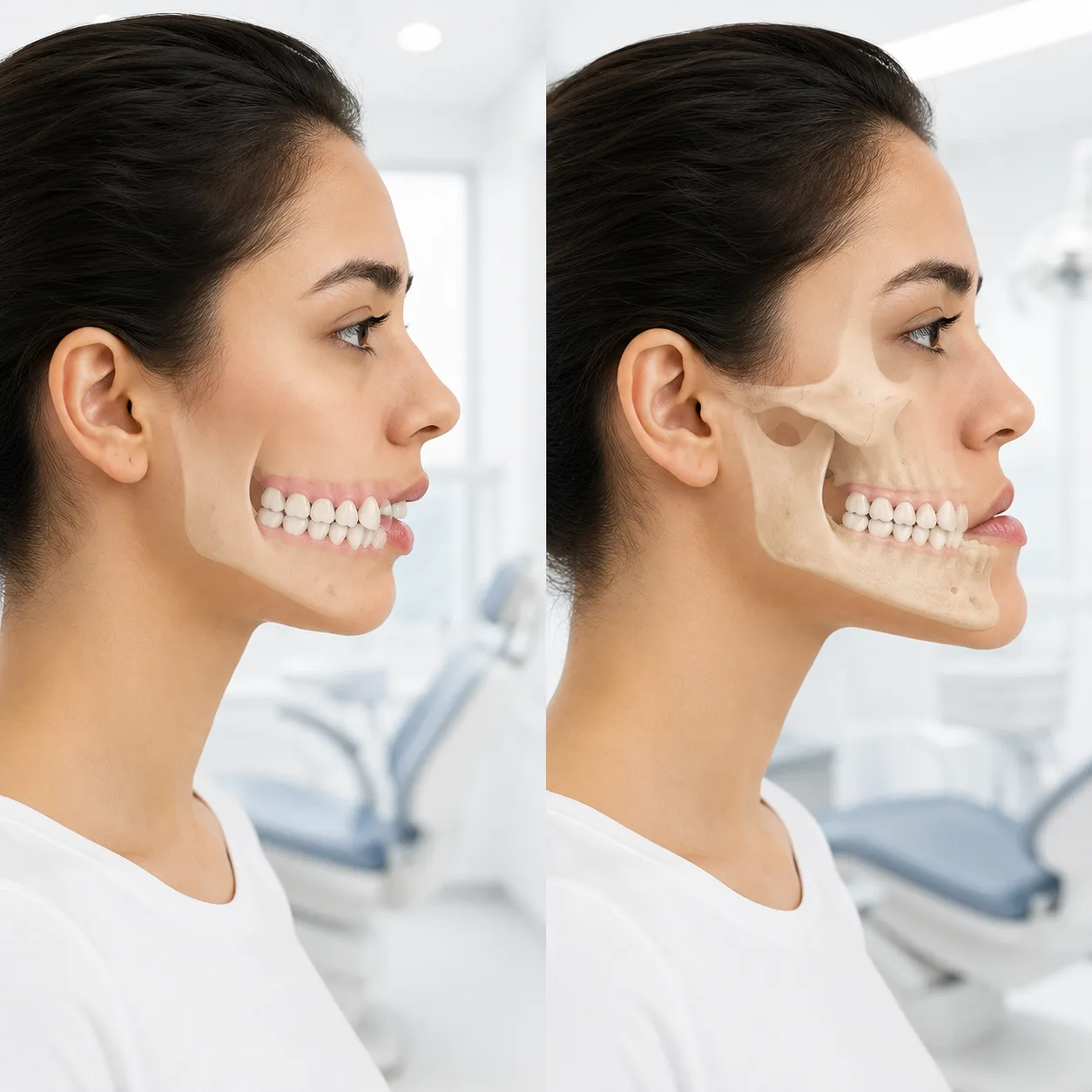
This is the first question we answer, because it decides everything that follows. Crooked teeth on well-aligned jaws are corrected with braces or clear aligners alone. But when the jaws themselves are out of proportion — one grown too far forward, the other too little, or the two out of sync vertically or sideways — tooth movement alone cannot close that gap.
Research consistently estimates that around 5% of the general population has a jaw discrepancy significant enough that orthodontics alone cannot fully correct it.
The honest part: many people who worry their jaw is "wrong" actually have a dental problem that braces can fully correct — and some who have lived for years with "just crooked teeth" have a skeletal pattern that explains why earlier treatment relapsed. We tell you which one you are after records and analysis, not after a glance.
Not sure whether your concern is in the teeth or the jaw? One consultation answers that question.
Signs the jaw is involved usually look like this
| What you notice | What it often means | Read more |
|---|---|---|
| Lower jaw and chin sit forward; lower teeth bite in front of upper | Underbite — lower jaw overgrowth or upper jaw deficiency (the most common surgical pattern) | Underbite |
| Receding chin; upper teeth far ahead of lower | Deep overbite with a set-back lower jaw | Overbite |
| Front teeth never meet, even with back teeth closed | Open bite — often a vertical jaw discrepancy | Open bite |
| Bite shifted to one side; face looks asymmetric | Crossbite with a transverse or asymmetric jaw pattern | Crossbite |
| A lot of gum shows when you smile | Sometimes a vertically long upper jaw, not just a gum issue | Gummy smile |
| Lips strain to close; mouth rests open | Protrusion or vertical excess involving the jaw | Protruding teeth |
Your Options
The three routes to a corrected jaw — and who each is for
Growth guidance
While the jaw is still growing, we can steer it. Myofunctional and functional appliances — one of Dr. Sree Cumar's named areas of expertise — encourage a deficient jaw to grow forward, hold back excess growth, or widen a narrow upper jaw. Timing is everything: this window closes as growth ends, which is one reason we recommend an orthodontic check by around age 7. Handled at the right age, growth guidance can prevent a future surgical case altogether. See our braces for children page for how early treatment works.
- Who: children & young teens, jaw still growing
- Changes: jaw growth direction & proportion
- Duration: 12–24 months, timed to growth
Orthodontic camouflage
Once growth has finished, a mild jaw discrepancy can often be compensated for by positioning the teeth so the bite works and the smile looks balanced — without touching the jaw itself. It is a genuine and common solution, with a limit: camouflage corrects the bite, not the underlying facial proportions. We are upfront about what it can and cannot change for your case.
- Who: adults, mild–moderate discrepancy
- Changes: bite & tooth position; not facial skeleton
- Duration: 18–24 months
Corrective jaw surgery (orthognathic)
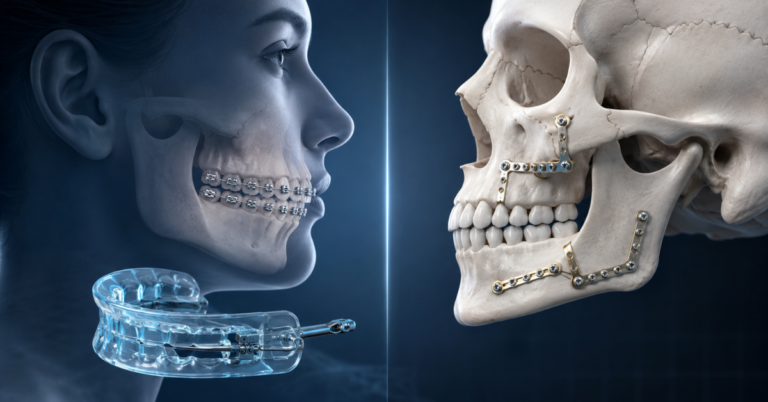
When the jaws are far enough out of alignment that neither growth guidance nor camouflage can deliver a working bite and balanced face, the jaw itself is repositioned surgically. Orthodontics before and after the surgery aligns the teeth so they meet correctly in the jaw's new position. This is the definitive fix for significant underbites, severe overbites, open bites and facial asymmetry.
- Who: adults, significant skeletal discrepancy
- Changes: jaw position, bite & facial balance
- Duration: 2–3 years incl. braces before & after
Your Specialists
The two specialists this treatment needs — in one clinic
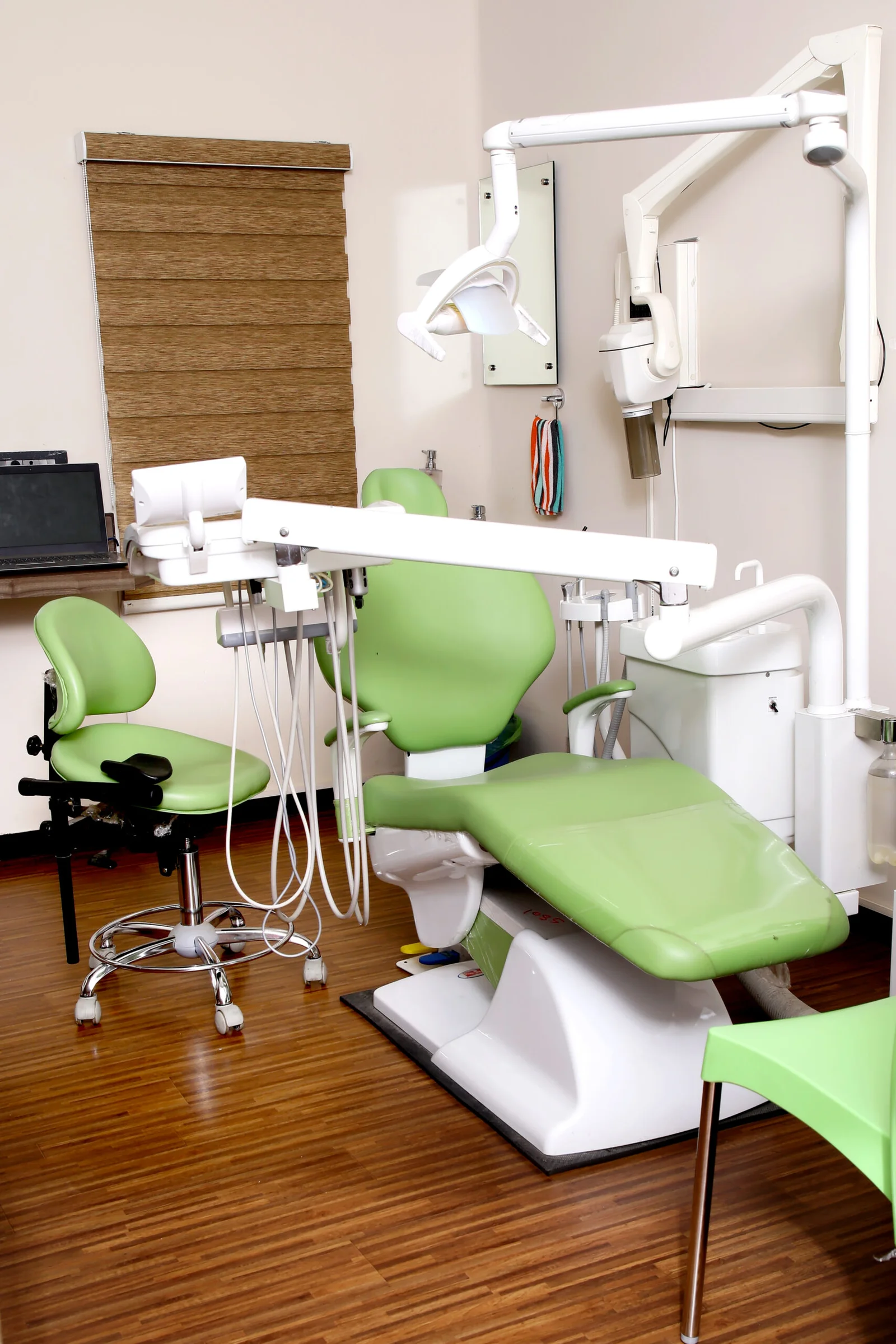
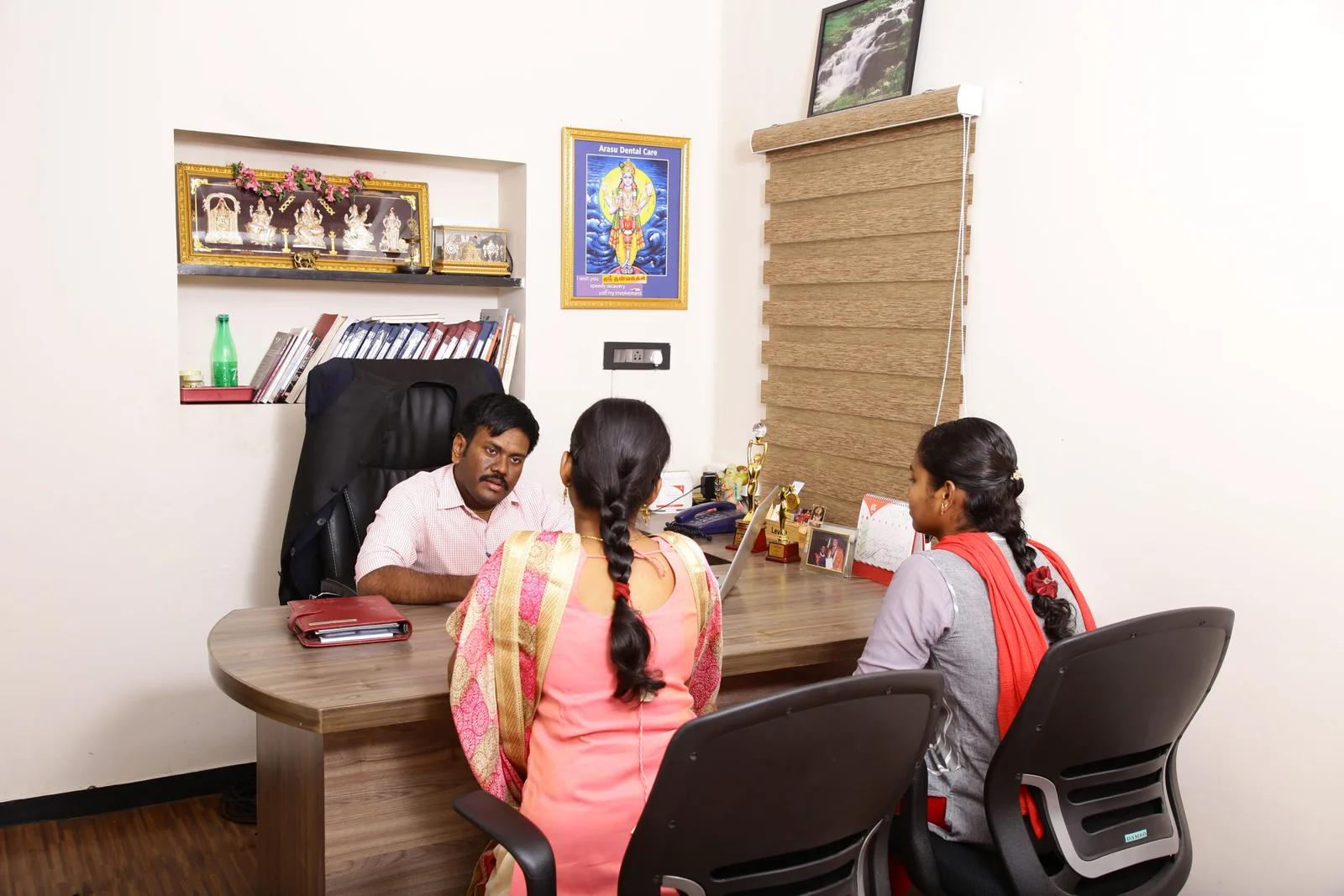
Jaw correction lives at the junction of orthodontics and surgery. Your case is planned by Dr. P.S. Sree Cumar, MDS in Orthodontics & Dentofacial Orthopedics — jaw-growth and jaw-relationship correction is his trained speciality — and the surgical repositioning is performed by Dr. P.R. Gouthaman, MDS, our oral & maxillofacial surgeon. One team, one plan, no referrals across the city between phases.

The Process
What does orthognathic surgery involve?
If surgery is your route, you should know the full shape of it before you commit — it is a staged journey, not a single operation.
Records & joint planning
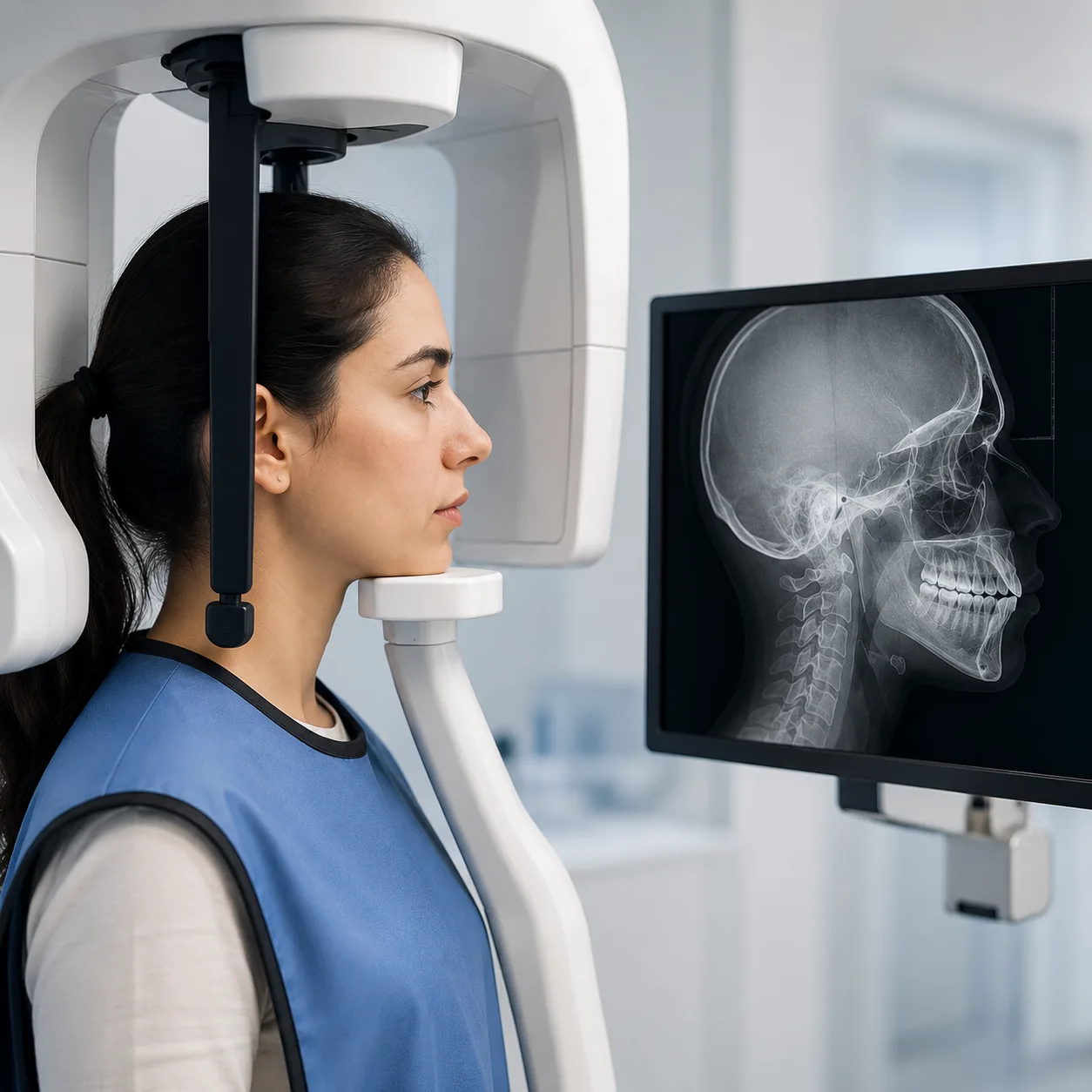
X-rays, scans, photographs and bite records. Dr. Sree Cumar and Dr. Gouthaman plan the case together — how the teeth must move first, and exactly how the jaw will be repositioned.
Pre-surgical orthodontics (usually 12–18 months)
Braces align your teeth into the position they need to occupy in the corrected jaw. Honest warning: your bite often looks temporarily worse during this phase — the teeth are being placed for where the jaw is going, not where it is.
The surgery
Performed under general anaesthesia in a hospital setting by our maxillofacial surgeon. The jaw (upper, lower or both) is repositioned and stabilised with small plates. Incisions are made inside the mouth, so there are typically no visible facial scars.
Recovery
Expect around 2–4 weeks away from work or college, a soft diet for several weeks, and facial swelling that resolves over the first month while the deeper healing continues for months. We guide you through each stage.
Post-surgical orthodontics (usually 6–12 months)
Fine-tuning the bite in the new jaw position, followed by retainers — the same rule as every orthodontic treatment: retainers are what keep the result.
Honest Considerations
What to weigh before you decide
The growth-guidance window is real and it closes
A jaw pattern that can be steered at 9 may need surgery at 19. If you are a parent and something about your child's bite or profile looks off, an early assessment costs little and can change the entire path.
Camouflage has limits
It can give you a working bite and a good smile — it will not change facial proportions. If the facial change is what matters most to you, camouflage will disappoint, and we would rather tell you that at the consultation.
Surgery is a commitment measured in years
Braces before, hospital surgery, recovery, braces after — typically 2–3 years end to end. The results are correspondingly definitive, but nobody should enter that pathway without understanding its length.
Your face will change — that is the point
Repositioning a jaw changes your profile, and for most patients that change is exactly what they wanted. We plan it with you beforehand so you see and understand the projected change before consenting — never after.
Not every jaw concern needs correction
Mild asymmetry is normal — almost nobody's face is perfectly symmetric — and a functional, healthy bite on a mildly asymmetric face often needs no treatment at all. We will say so when that is the honest answer.
An Important Distinction
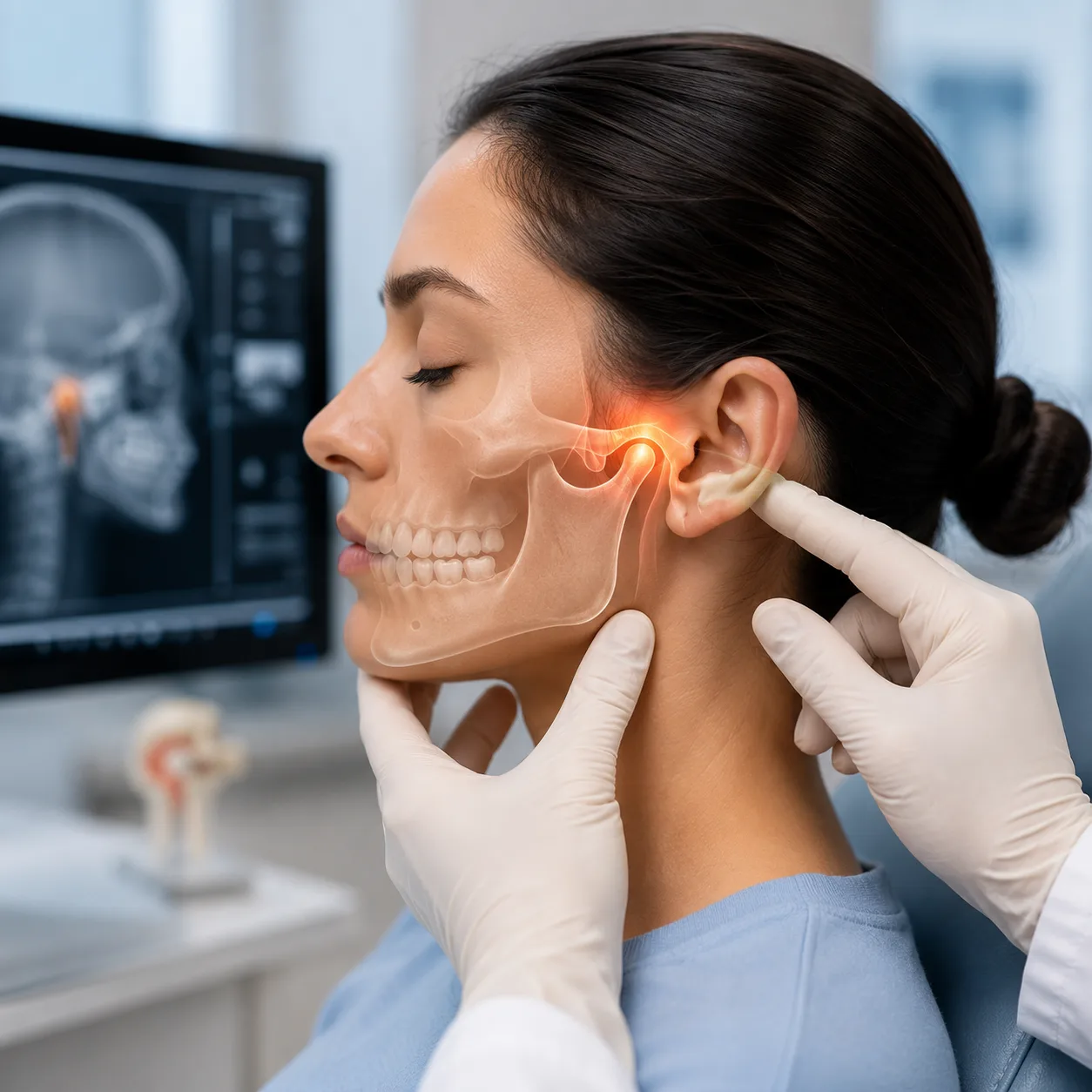
Jaw pain is not the same as jaw misalignment
A jaw that clicks, locks or aches is usually a joint and muscle problem — a TMJ disorder — not a skeletal alignment problem, and it needs its own assessment first. The two do overlap: research in skeletal Class II patients referred for jaw surgery found TMJ disorder present in close to half of them.
That overlap is exactly why having the same clinician — Dr. Sree Cumar is also our TMJ specialist — assess both matters: jaw surgery is not a treatment for jaw pain, and treating the joint sometimes resolves what looked like an alignment issue.
If pain is your main symptom, start with our TMJ and jaw pain treatment — or simply come in, and we will point you down the right path.
Cost
Jaw correction cost in Coimbatore
Because the three routes are so different, costs vary widely. What shapes your figure: which route you need, whether one jaw or both is involved (for surgical cases), hospital and anaesthesia charges, the length of the orthodontic phases, and appliances or retainers included in the plan.
| Route | Typical range at Arasu | Notes |
|---|---|---|
| Growth-guidance appliances | ₹ — (confirmed at consultation) | Appliance + monitoring visits |
| Camouflage orthodontics | ₹ — (confirmed at consultation) | Priced as braces/aligner treatment |
| Orthognathic surgery (single jaw) | ₹ — (confirmed at consultation) | Incl. hospital charges; excl. ortho phases |
| Orthognathic surgery (both jaws) | ₹ — (confirmed at consultation) | Case-dependent |
Two things we always clarify at the consultation: exactly what your written quote includes at each stage, and whether your health insurance may contribute — corrective jaw surgery performed for functional reasons (chewing, speech, airway) is sometimes covered, and we help you check your policy rather than assume either way. EMI options are available for the orthodontic phases. If your case turns out to be dental rather than skeletal, our braces cost guide covers those figures.
Real Results
Real jaw correction results
Genuine Arasu surgical and growth-guidance cases only, shared with patient consent — never stock imagery.
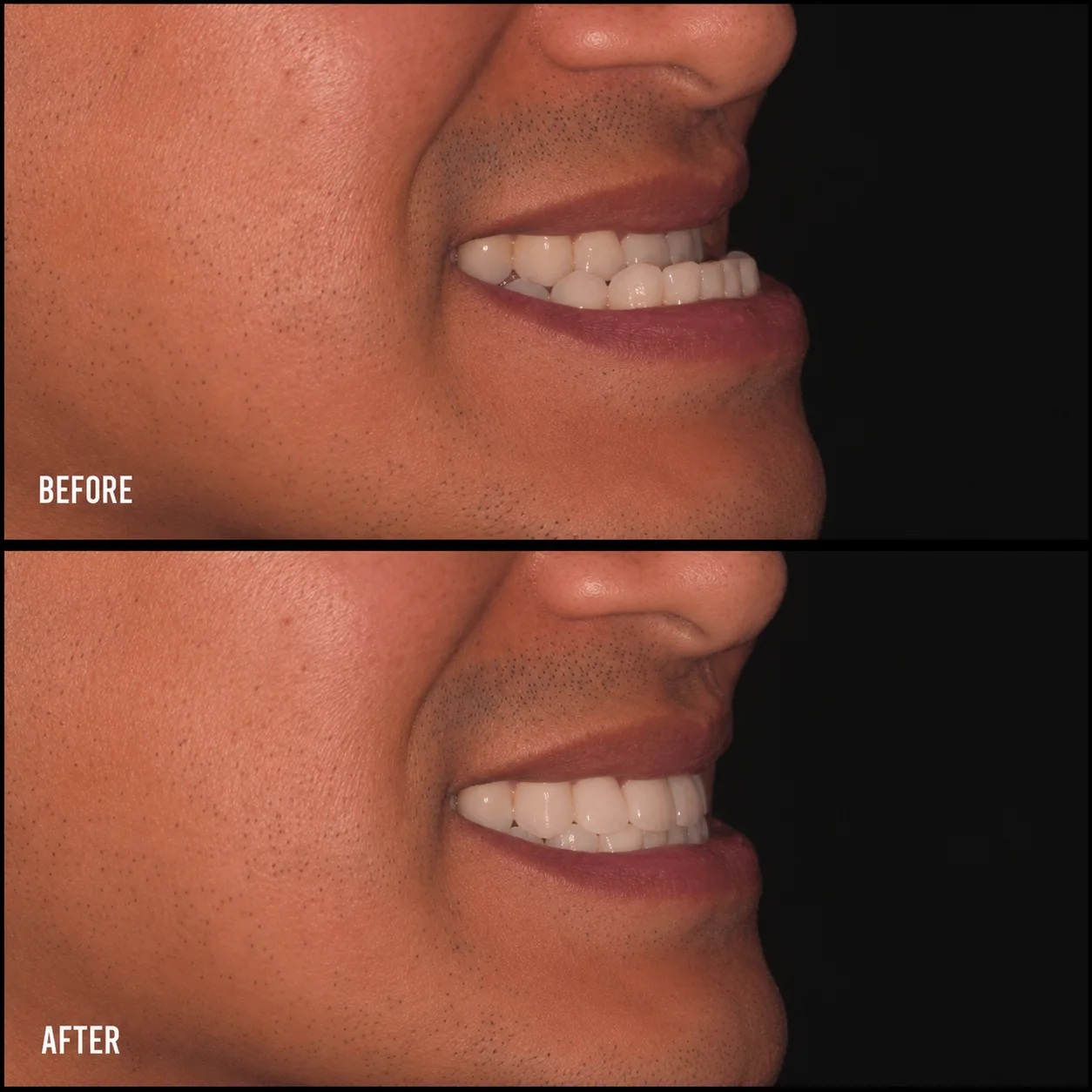
Underbite corrected surgically
Orthognathic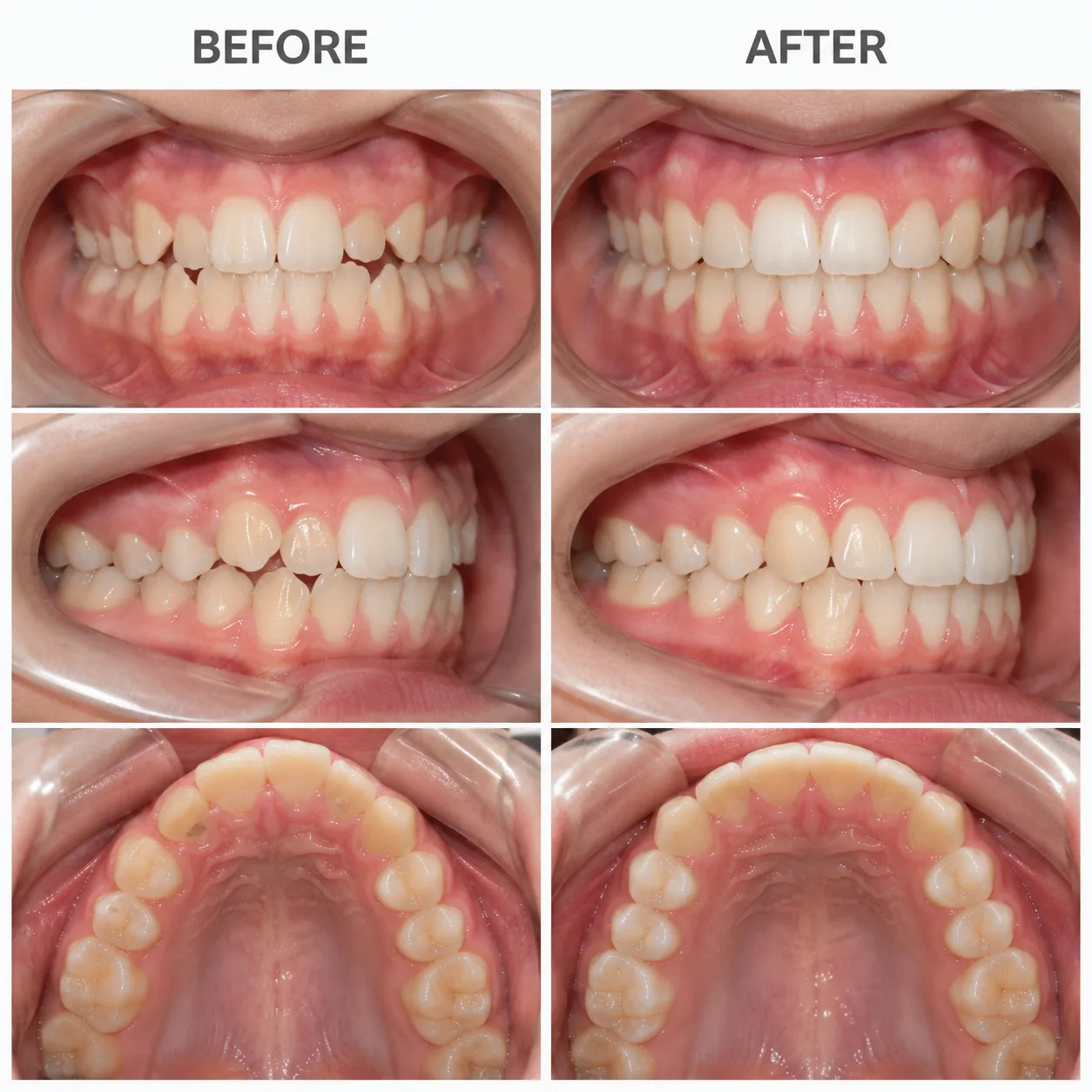
Jaw growth guided early
Growth guidance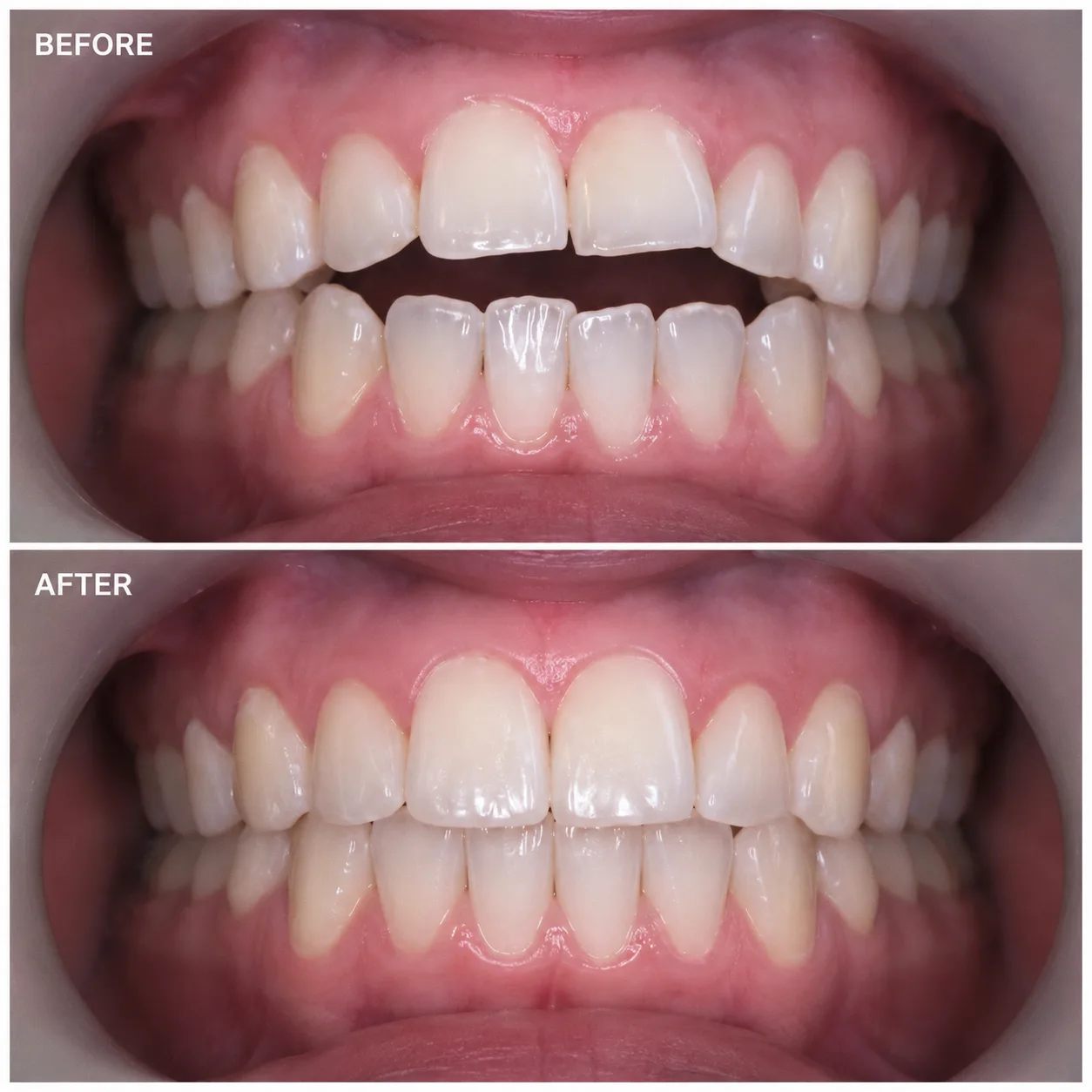
Open bite closed
Bite correction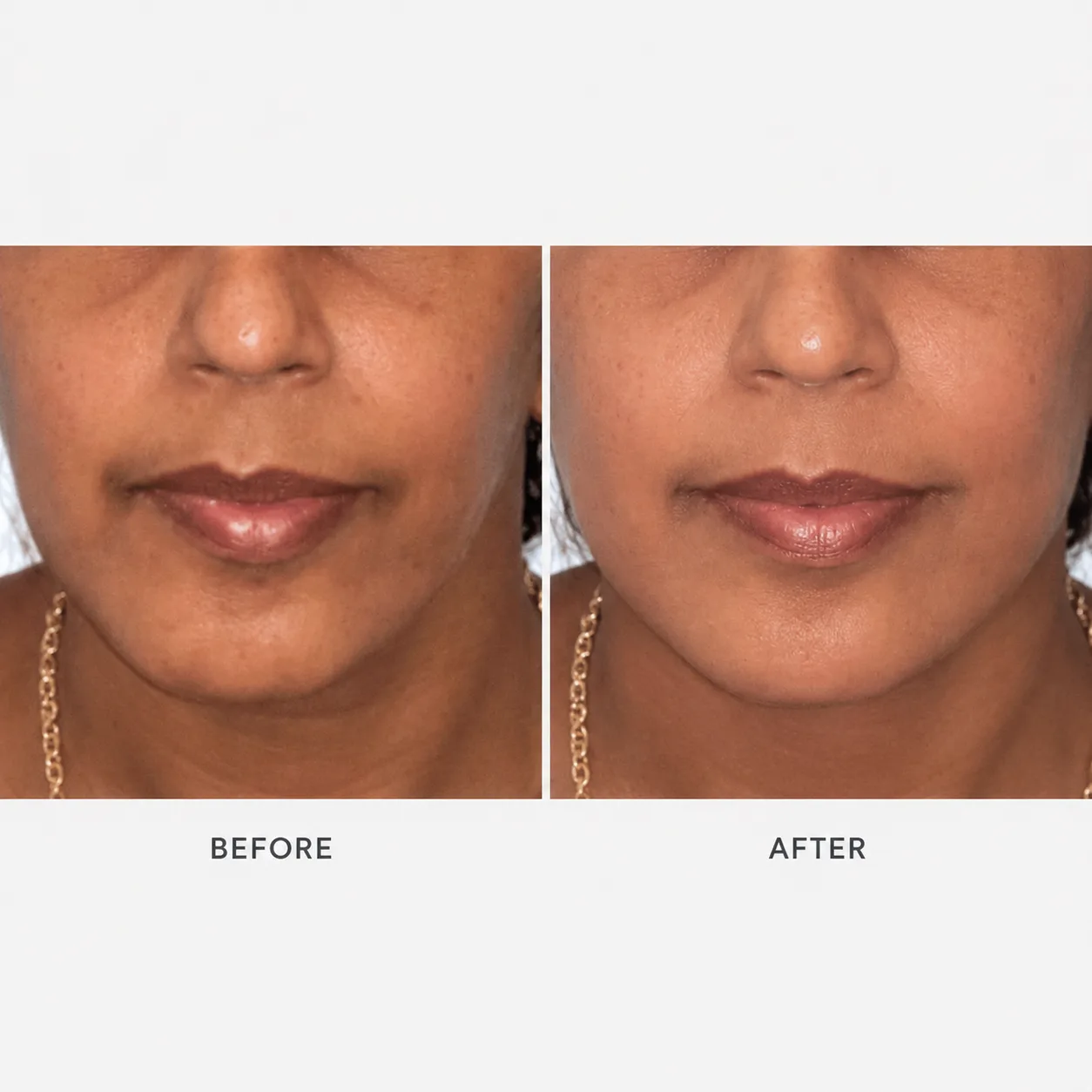
Facial asymmetry corrected
Orthognathic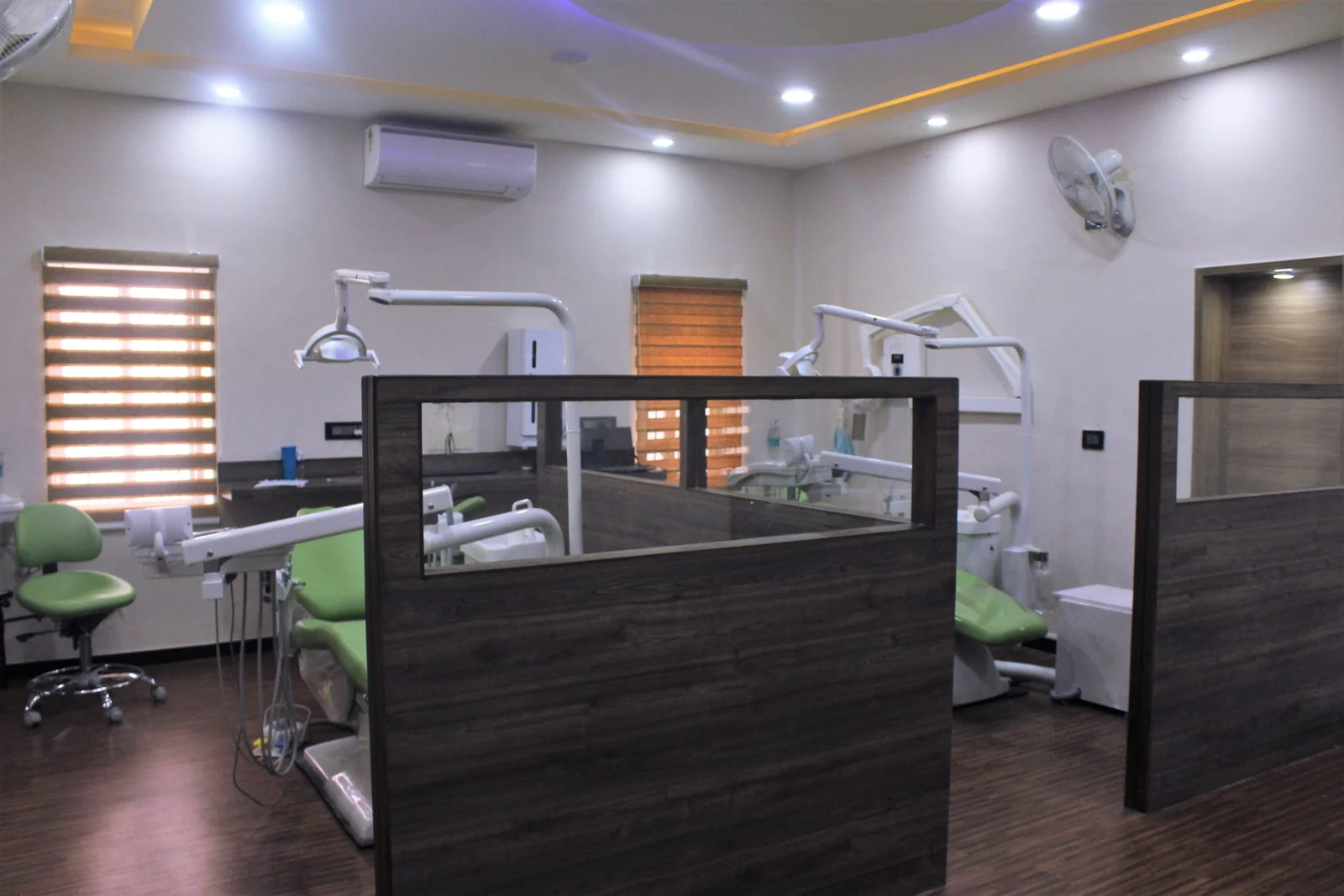
Patient Reviews
Rated 4.8 on Google
 Google Reviews
Clear, honest treatment plan — they explained every step before starting.
Courteous, professional and thorough at every visit.
The team made a long treatment journey easy and comfortable.
Excellent service, friendly doctor, and affordable cost compared to other clinics.
From The Blog
Related reading on jaw correction
Can a jaw be corrected without surgery? The honest answer
Read article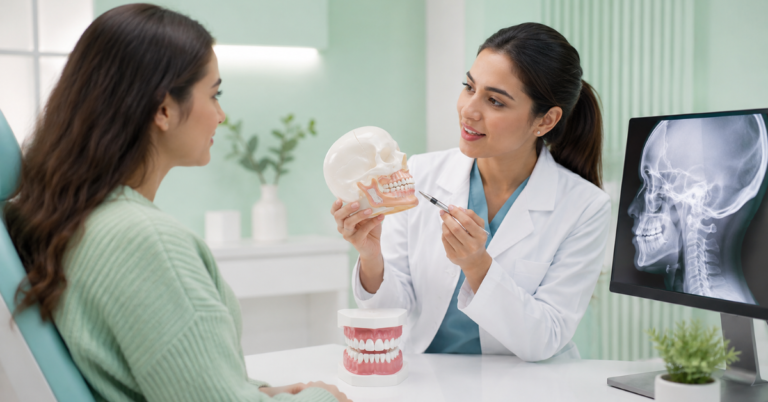
Skeletal or dental? Who needs jaw treatment
Read article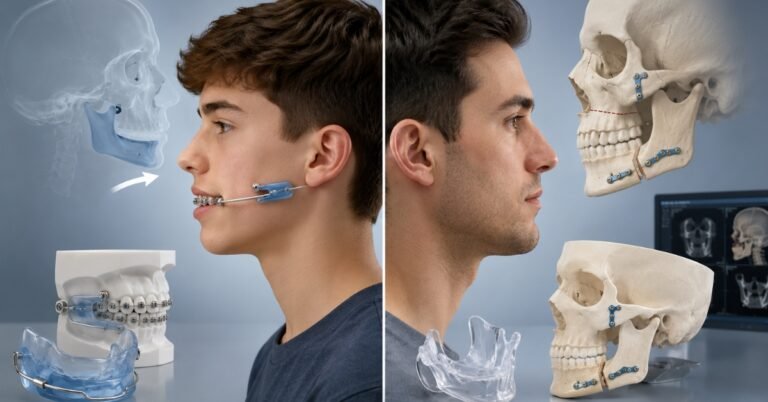
Growth modification vs jaw surgery: why timing matters
Read article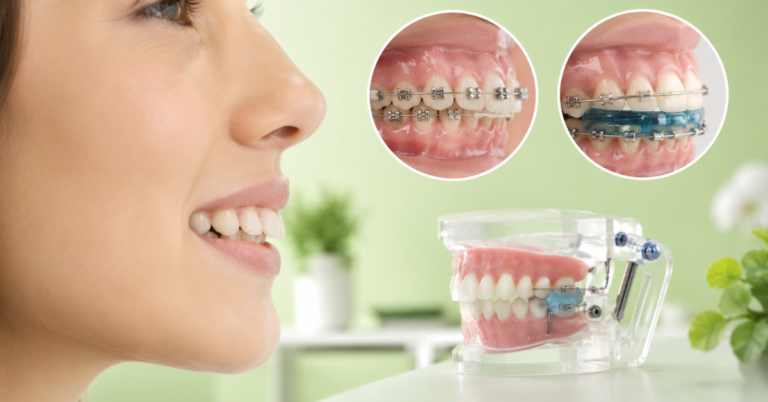
Overbite correction: treatment options and results
Read article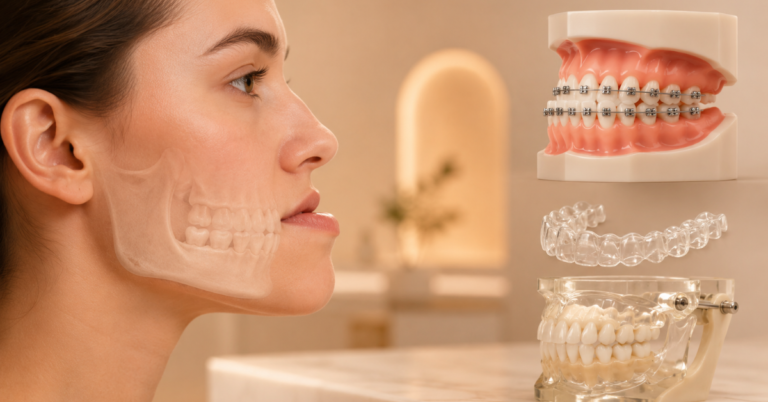
Underbite correction: from growth guidance to surgery
Read article
Open bite treatment: orthodontic solutions
Read articleMore From Arasu
Our other services
Orthodontic Treatment
Braces Treatment
Clear Aligners
TMJ Disorder Care
Dental Implants
Root Canal Treatment
Smile Designing
Cosmetic Dentistry
Scaling & Cleaning
Teeth Whitening
Dental Crowns
Dental Bridges
Dental Veneers
Wisdom Tooth Removal
Tooth Extraction
Kids Dentistry
Gum Disease Treatment
Oral Surgery