Can Jaw Alignment Be Corrected Without Surgery? Non-Surgical vs Surgical Options Explained
Have you ever noticed that your bite doesn’t quite line up, or that your jaw feels slightly off-centre when you close your mouth? You’re not alone — and the good news is that jaw alignment without surgery is genuinely possible for many people, depending on the cause and severity of the problem.
For years, the only answer offered for a misaligned jaw was orthognathic (jaw) surgery. But modern orthodontics has changed that conversation considerably. Today, mild to moderate cases can often be corrected comfortably with braces, clear aligners, or specialised appliances — no operating room required.
In this guide, our team at Arasu Dental Care, Coimbatore — led by orthodontist and tmj specialist in coimbatore Dr. P.S. Sree Cumar — walks you through how non-surgical jaw correction works, when surgery becomes necessary, and how to understand which option genuinely suits your needs. No exaggerated promises, just clear, honest information to help you make a confident decision.
What Is Jaw Misalignment (Malocclusion)?
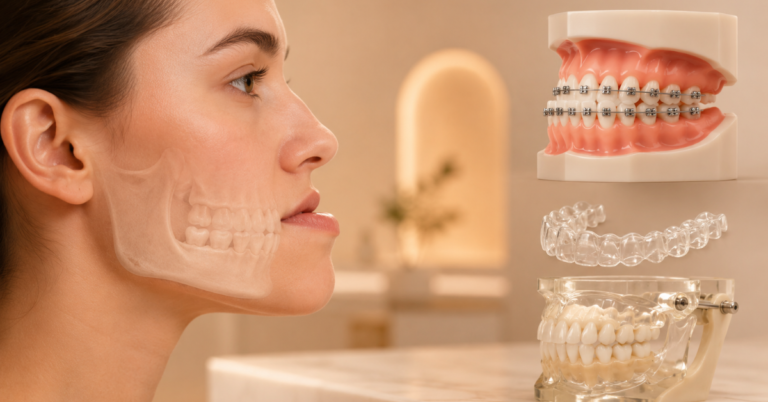
Jaw misalignment, medically known as malocclusion, happens when your upper and lower jaws don’t fit together as they should. This affects more than your smile — it can influence how you chew, speak, breathe, and even how balanced your face looks.
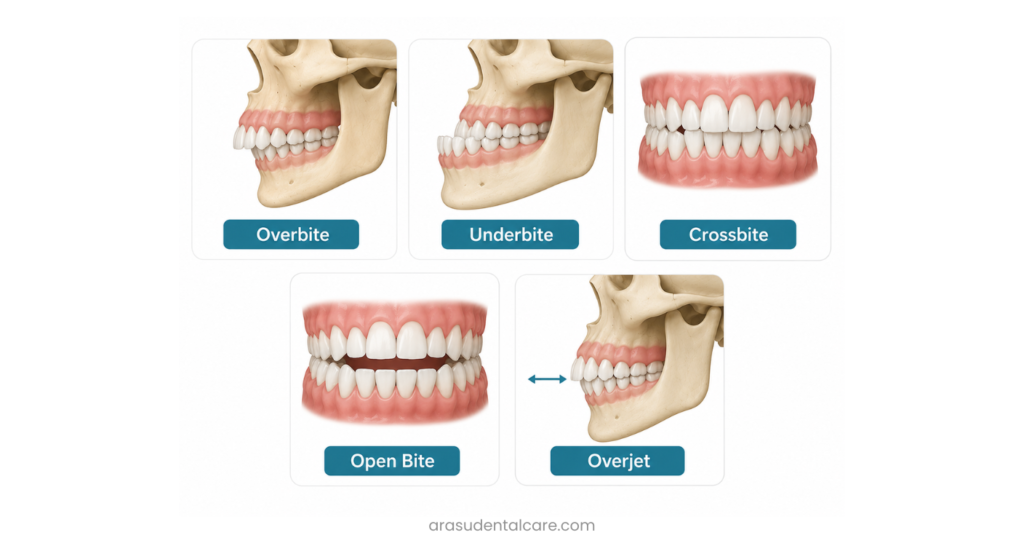
The common types of malocclusion include:
- Overbite — upper front teeth sit too far ahead of the lower teeth
- Underbite — lower jaw and teeth extend beyond the upper
- Crossbite — some upper teeth bite inside the lower teeth
- Open bite — upper and lower teeth don’t touch when you close
- Overjet — upper front teeth protrude horizontally (“buck teeth” appearance)
Understanding which category your bite falls into is the first step, because the treatment path differs significantly for each.
Common Signs You May Have a Misaligned Jaw
Many people live with jaw misalignment for years without realising it, often mistaking the symptoms for stress or minor dental sensitivity. Watch for these signs:
- Difficulty biting or chewing comfortably
- Clicking, popping, or pain in the jaw joint (TMJ)
- Frequent headaches, earaches, or neck tension
- Teeth that wear unevenly
- Your jaw shifting to one side when you open wide
- Noticeable facial asymmetry
- Speech difficulties or trouble closing your lips at rest
In our experience: Patients often arrive at our R.S. Puram clinic believing their recurring headaches are unrelated to their teeth. After a proper bite evaluation, the connection frequently becomes clear — and that’s exactly why a professional assessment matters more than self-diagnosis.
What Causes Jaw Misalignment?
|
Cause |
How It Affects the Jaw |
|
Genetics |
Inherited jaw size or shape differences (most common) |
|
Childhood habits |
Thumb-sucking, prolonged pacifier use, tongue thrusting |
|
Mouth breathing |
Can alter natural jaw and facial development in children |
|
Trauma or injury |
An accident can shift the jaw’s natural position |
|
Tooth loss |
Missing teeth allow remaining teeth to shift, changing the bite |
|
TMJ disorders |
Joint problems can cause the jaw to deviate over time |
Identifying the root cause is essential, because it determines whether the issue is dental (tooth position) or skeletal (bone position) — and that distinction guides everything that follows.
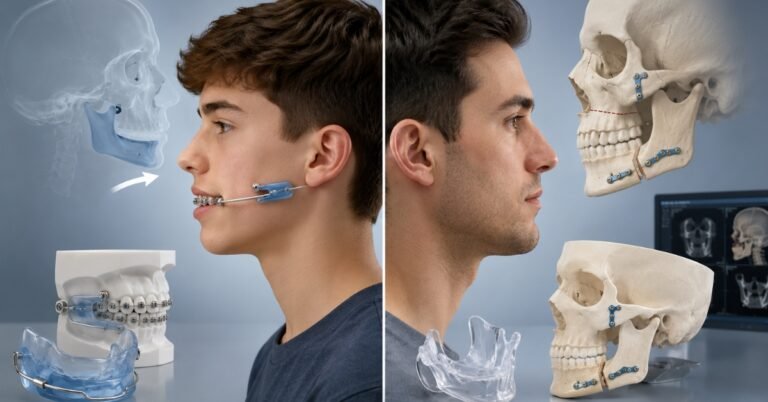
Can Jaw Alignment Be Corrected Without Surgery?
Yes — in mild to moderate cases, jaw alignment without surgery is not only possible but often the recommended first approach. The key factor is whether the problem is dental (how your teeth are positioned) or skeletal (how your jawbones are positioned).
When the issue is primarily dental, orthodontic treatment can realign your teeth and guide your bite into a more balanced, functional position. When the discrepancy is purely skeletal and significant, surgery may eventually be needed — but even then, non-surgical “camouflage” treatment can sometimes deliver excellent results, as the American Association of Orthodontists notes regarding modern compensation techniques.
The honest answer? It depends on your individual diagnosis. A 3D scan and bite analysis tell us far more than any online checklist ever could.
Non-Surgical Jaw Alignment Options Explained
Here are the most effective, evidence-based non-surgical approaches available today.
1. Braces (Traditional & Ceramic)
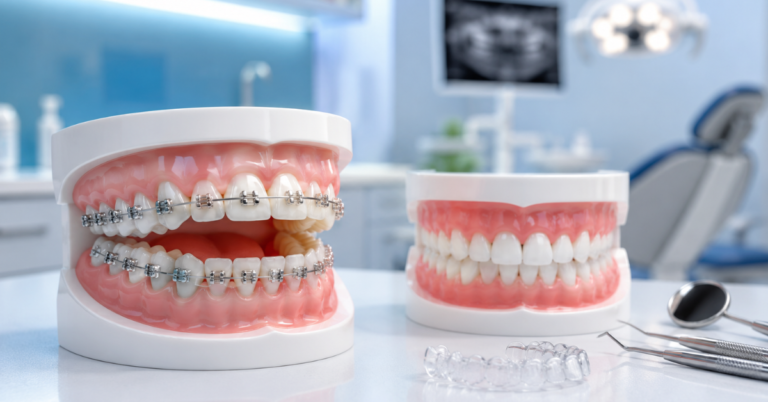
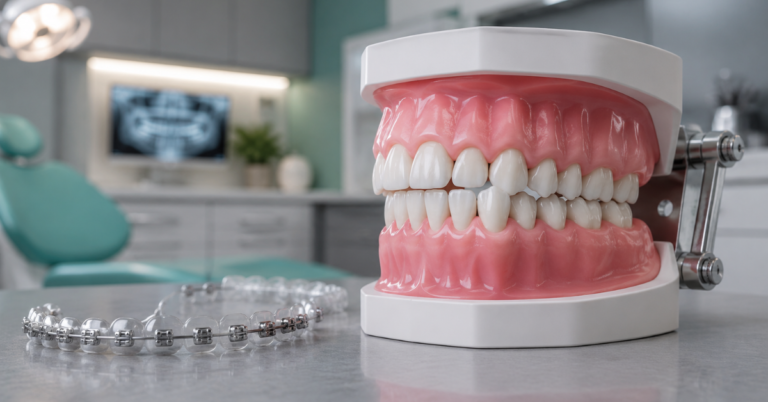
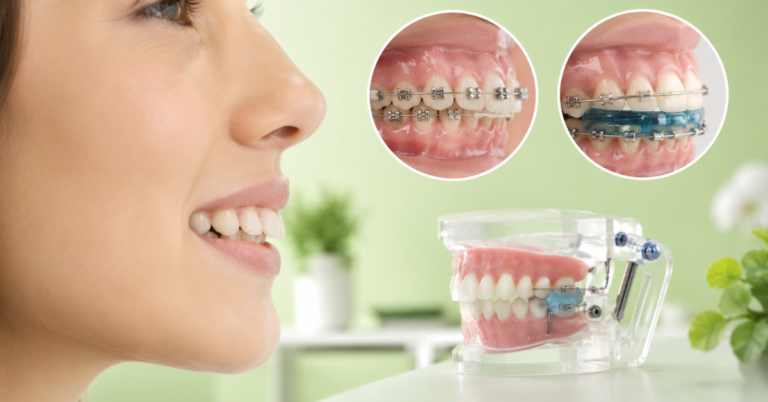
Braces remain the gold standard for precise, controlled correction — especially for complex or moderate-to-severe bite issues. By applying gentle, continuous pressure, braces reposition teeth and influence jaw movement over time.
When combined with elastics (rubber bands), braces can encourage the upper and lower jaws into better balance, correcting many overbites and underbites without surgery.
2. Clear Aligners (Invisalign)
For adults who prefer a discreet option, clear aligners can address mild to moderate misalignments. These removable, nearly invisible trays gradually shift teeth and improve how the jaws meet.
They’re ideal for working professionals, though for more complex cases they may be paired with attachments or elastics to increase precision.
3. Functional Jaw Orthopedics (Best for Children)
This is one of orthodontics’ most powerful tools — and a particular strength of our founder, Dr. Sree Cumar, who specialises in myofunctional and functional appliances.
In growing children and teenagers, devices like twin blocks, Herbst, or Forsus appliances can guide jaw growth into the correct position. Early intervention (around ages 7–14) can often reduce or eliminate the need for surgery later in life.
4. Palatal Expanders
When the upper jaw is too narrow — causing crossbites or crowding — an expander widens the upper arch to create space and improve balance. Modern expanders can benefit select adult patients too.
5. Occlusal Splints & Bite Adjustments
For adults with bite imbalance or TMJ discomfort, custom splints help reposition the jaw and relax the surrounding muscles. Minor tooth reshaping can sometimes refine how teeth meet.
6. TMJ Therapy & Myofunctional Exercises
When misalignment links to a TMJ disorder, conservative care — physical therapy, targeted exercises, posture correction, and stress management — can significantly relieve symptoms. The National Institute of Dental and Craniofacial Research recommends starting with the least invasive, reversible treatments first.
When Is Jaw Surgery Necessary?
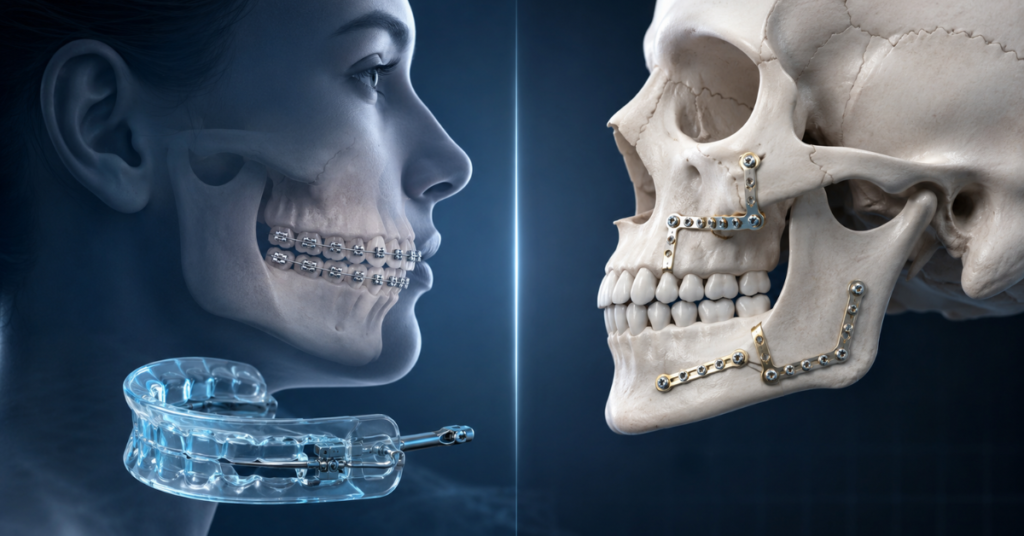
We believe in being honest about limitations. Non-surgical orthodontics is remarkable, but it cannot reshape the bones themselves. Orthognathic (corrective jaw) surgery becomes the appropriate choice when:
- The jawbones are significantly underdeveloped or overgrown
- Severe skeletal misalignment affects chewing, speech, or breathing
- There is pronounced facial asymmetry that orthodontics alone can’t correct
- Chronic TMJ dysfunction persists despite conservative treatment
- Sleep apnoea is linked to jaw structure
Importantly, such cases are relatively uncommon, and surgery is typically combined with orthodontic treatment for the best outcome.
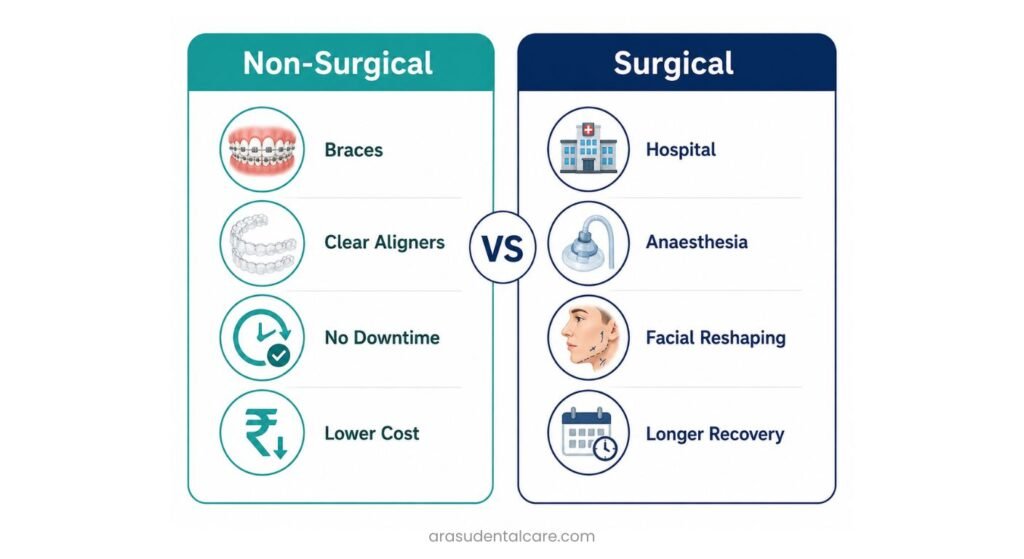
Non-Surgical vs Surgical Jaw Correction: A Side-by-Side Comparison
|
Factor |
Non-Surgical Orthodontics |
Surgical (Orthognathic) |
|
Best for |
Mild to moderate, mostly dental issues |
Severe skeletal discrepancies |
|
Recovery time |
None — daily life continues normally |
Hospital stay + weeks of recovery |
|
Anaesthesia |
Not required |
General anaesthesia |
|
Facial profile change |
Subtle improvement |
Significant structural change possible |
|
Treatment duration |
Typically 12–32 months |
Orthodontics + surgery + healing |
|
Comfort level |
Comfortable; mild pressure after adjustments |
Performed under appropriate anaesthesia |
|
Relative cost |
Generally lower |
Higher (surgical + hospital costs) |
Honest insight: Non-surgical treatment can beautifully straighten teeth and improve your bite, but it cannot correct pre-existing facial asymmetry the way surgery can. The right path depends entirely on your goals and diagnosis — which is a decision we make with you, never for you.
What to Expect: The Non-Surgical Treatment Journey
At Arasu Dental Care, every treatment plan is personalised. Here’s the typical process:
Step 1 — Comprehensive EvaluationWe begin with digital scans and 3D imaging to assess your bite, jaw joint, and facial symmetry — revealing whether the issue is dental, skeletal, or both.
Step 2 — Personalised Treatment PlanBased on your diagnosis, we recommend a tailored combination of braces, clear aligners, or functional appliances, and explain every available option clearly.
Step 3 — Step-by-Step CorrectionControlled orthodontic forces gradually guide your teeth and bite into better alignment, with periodic adjustments to maintain steady, comfortable progress.
Step 4 — Retention & StabilityOnce alignment is achieved, retainers or night guards help maintain your new bite and prevent relapse — a crucial final stage many patients underestimate.
Realistic Expectations for Adults
Non-surgical jaw alignment isn’t an overnight fix. Most treatments take 12 to 24 months, depending on complexity. You’ll typically notice gradual improvements in bite comfort, symmetry, and facial harmony along the way.
Consistency matters: wearing elastics as instructed and attending follow-up visits directly affects your results. The reward is a balanced, functional bite achieved comfortably — no surgery required.
Frequently Asked Questions
1. Can braces fix jaw alignment in adults?Yes. Braces can correct mild to moderate jaw alignment issues in adults, not just teenagers. By applying gentle, sustained pressure — often with elastics — they guide both teeth and bite into better balance.
2. Can Invisalign really fix a misaligned jaw?In many mild to moderate cases, y