Jaw Growth Modification vs Jaw Surgery
If your child has been told they have a “bad bite,” an underbite, or a small lower jaw, you’re probably weighing one big question: can it be corrected naturally, or will surgery be needed? Understanding jaw growth modification vs surgery is the first step toward making a confident, well-informed decision. The right choice often comes down to one critical factor — your child’s age and remaining jaw growth.
At Arasu Dental Care, our orthodontist-led team evaluates each case individually before recommending any treatment. This guide will help you understand both options clearly, so you know what your next step should be.
What Is Jaw Growth Modification?
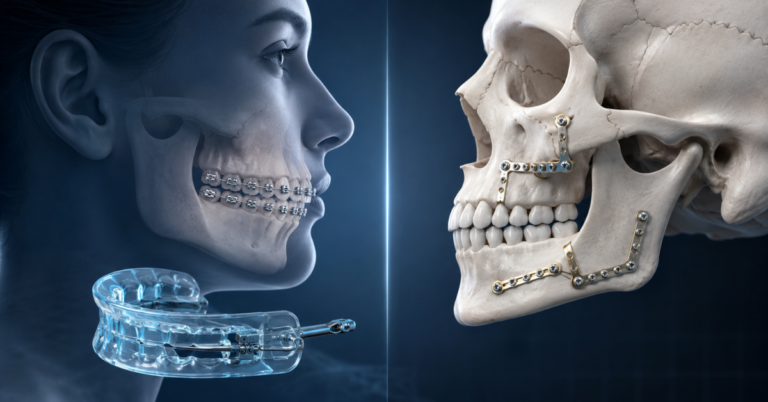
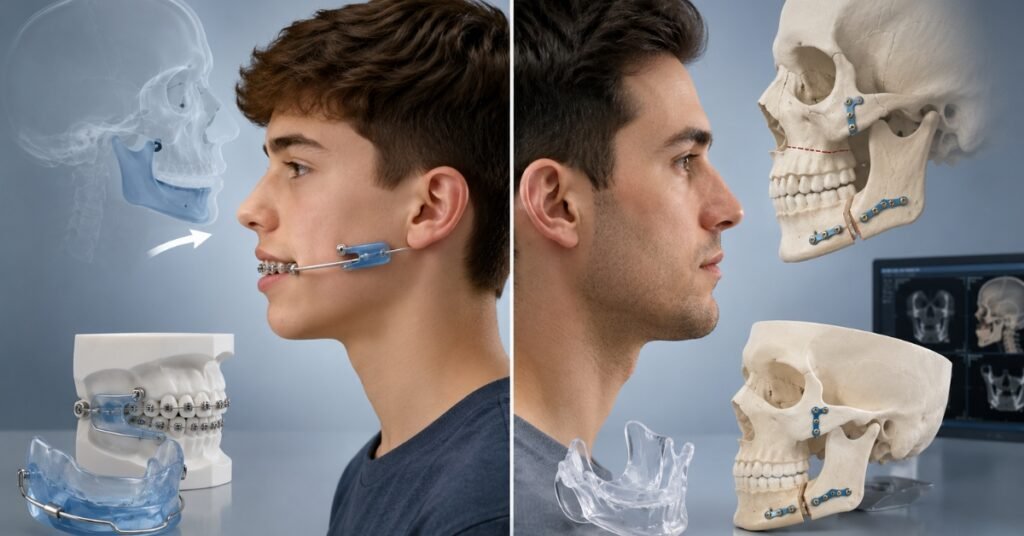
Jaw growth modification is a non-surgical orthodontic approach that guides the natural growth of a child’s jaws while the bones are still developing. Because children’s bones haven’t fully matured, special appliances can gently influence how the upper and lower jaws grow and relate to each other.
This is also known as dentofacial orthopaedics — and it’s one of the biggest advantages of an early orthodontic evaluation.
The goal is simple: improve the jaw relationship during growth so that more invasive treatment may be avoided later. When timed correctly, growth modification can create a balanced bite and better facial symmetry without surgery.
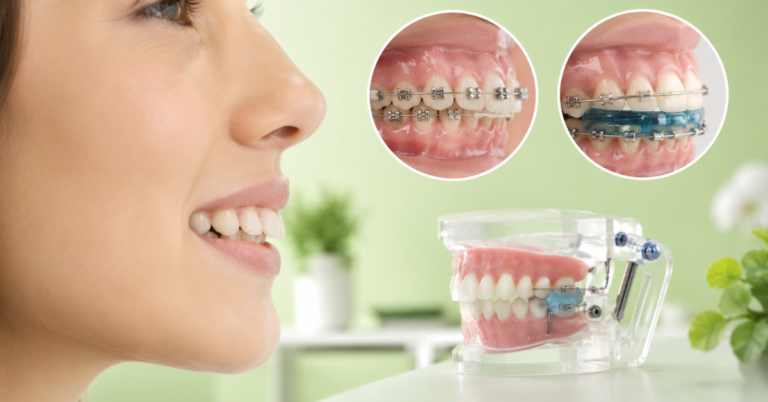
Common Appliances Used in Growth Modification
|
Appliance |
What It Does |
Typical Use |
|
Twin Block |
Encourages the lower jaw to grow forward |
Small lower jaw (Class II) |
|
Herbst Appliance |
Fixed appliance guiding the lower jaw forward 24/7 |
Class II correction, low compliance cases |
|
Palatal Expander |
Widens a narrow upper jaw |
Crossbites, crowding |
|
Reverse (Face Mask) Headgear |
Pulls a small upper jaw forward |
Underbite, small upper jaw |
It’s important to set realistic expectations. Published research in PLOS ONE shows that while functional appliances are clinically effective at correcting overbites, much of the improvement is dentoalveolar (tooth and surrounding bone changes) rather than large, permanent skeletal growth.
In other words — these appliances optimise and harness natural growth. They don’t magically “grow” a brand-new jaw.
What Is Jaw Surgery (Orthognathic Surgery)?
Jaw surgery, or orthognathic surgery, corrects the actual skeletal structure of the jaws once growth is complete. Braces can move teeth, but they cannot change the size, shape, or position of the jawbone itself. That’s where surgery becomes the reliable option.
Orthognathic surgery is performed by an oral surgeon and maxillofacial surgeon in close coordination with your orthodontist. According to the Cleveland Clinic, the procedure has a success rate of nearly 94%, with most patients reporting significantly improved quality of life.
The Three Main Types of Jaw Surgery
- Maxillary osteotomy — corrects the upper jaw when it sticks out too much or too little
- Mandibular osteotomy — repositions a lower jaw that protrudes or recedes
- Bimaxillary (double jaw) surgery — corrects both jaws together
In most cases, surgery is only performed after the jaws stop growing — typically ages 16–18 for females and 18–21 for males, as noted by the Mayo Clinic.
Jaw Growth Modification vs Surgery: The Key Difference
The single most important factor separating these two treatments is timing and growth potential.
Here’s the simplest way to understand it:
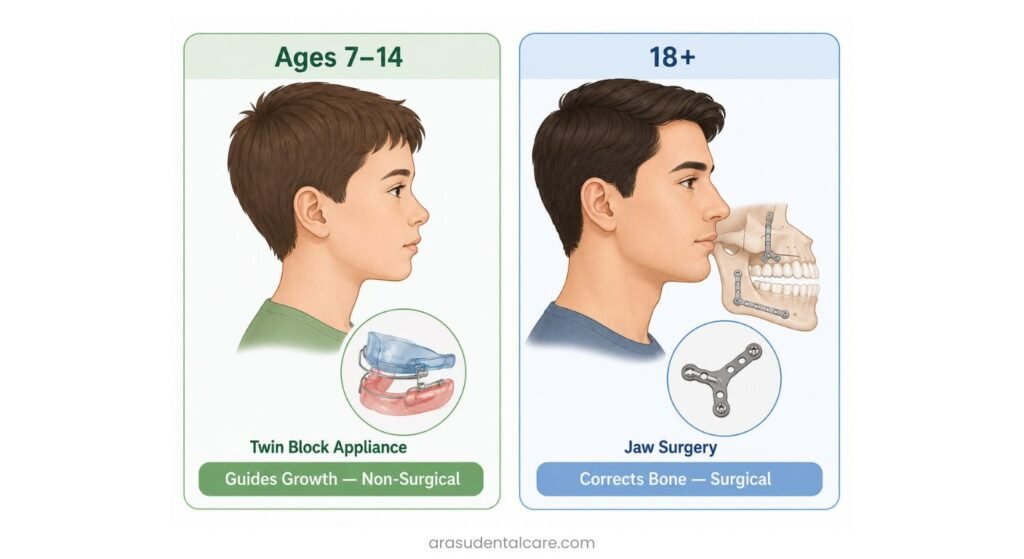
- Still growing? → Growth modification may be possible
- Growth complete? → Surgery is the predictable option for significant discrepancies
A landmark study from the University of North Carolina on Class II patients confirmed that clinicians rely heavily on a patient’s age when deciding between orthodontic and surgical correction. Interestingly, the same research found that a wide range of severity can be treated successfully with orthodontic treatment throughout adolescence — which is why an individual expert assessment matters so much.
Side-by-Side Comparison
|
Factor |
Growth Modification |
Jaw Surgery |
|
Ideal age |
7–14 years (growing) |
16–21+ years (growth complete) |
|
Approach |
Non-surgical appliances |
Surgical bone repositioning |
|
What it changes |
Guides jaw growth + teeth |
Skeletal structure permanently |
|
Recovery |
None — daily appliance wear |
6 weeks initial, up to 12 months full |
|
Best for |
Mild–moderate discrepancies |
Severe skeletal discrepancies |
|
Anaesthesia |
Not required |
General anaesthesia |
When Is Growth Modification the Right Choice?
Growth modification works best when nature is already working in your favour. The ideal treatment window aligns with the pubertal growth spurt — usually ages 10–13 in girls and 11–14 in boys.
Your child may be a candidate if they have:
- A small or underdeveloped lower jaw (mandibular retrognathia)
- A small upper jaw causing an early underbite
- A narrow upper jaw or crossbite
- A mild-to-moderate overbite (typically up to 6–7 mm of overjet)
Early intervention can reduce the need for future surgery, improve facial balance, and — importantly for many children — boost confidence during sensitive teenage years.
One real-world point we emphasise with parents: appliances like the Twin Block only work when they’re actually worn. Removable devices need 22+ hours of daily wear. For children where consistent wear is a concern, a fixed appliance such as the Herbst may be a more reliable path.
When Is Jaw Surgery Necessary?
Even with early treatment, not every skeletal discrepancy can be corrected during growth. Once the jaws have fully matured, the bone structure can only be changed surgically.
Surgery may be recommended when:
- The upper and lower jaws are significantly misaligned
- There is severe overbite, underbite, or open bite
- Breathing issues such as obstructive sleep apnea are linked to jaw position
- There is chronic jaw pain, difficulty chewing, or speech problems
- Facial asymmetry affects both function and appearance
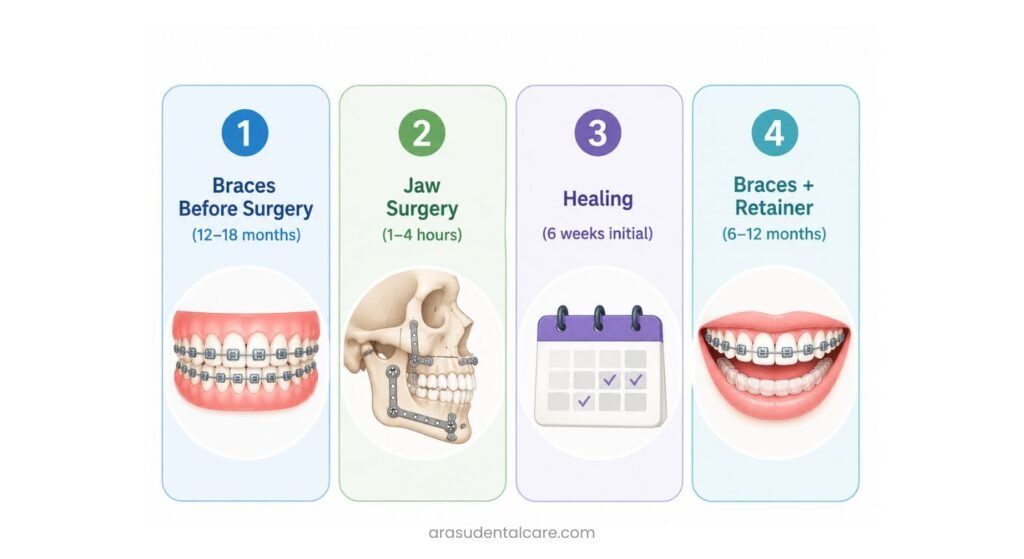
It’s worth understanding that surgery isn’t a standalone event. It’s typically a two- to three-year combined process of braces and surgery working together.
How the Jaw Surgery Process Works (Step-by-Step)
- Pre-surgical orthodontics (12–18 months): Braces align the teeth within each jaw — sometimes making the bite look worse temporarily.
- Surgery: The surgeon repositions the jawbones and secures them with small plates and screws, usually through incisions inside the mouth.
- Post-surgical orthodontics (6–12 months): Braces fine-tune the final bite for a stable, lasting result.
- Retention: A retainer holds everything in place once braces are removed.
What About Borderline Cases? (Orthodontic Camouflage)
Between growth modification and full surgery lies a third option: orthodontic camouflage.
This approach uses braces or aligners to make the teeth fit together better without surgically moving the jaws — sometimes by extracting a premolar to create space. It can create a functional, comfortable bite in borderline cases.
The trade-off? Camouflage masks the skeletal discrepancy rather than correcting it. It won’t change the chin profile or facial proportions. For mild cases, it’s an excellent, less invasive solution. For severe skeletal issues, it may leave the underlying problem unaddressed.
This is exactly why a thorough evaluation — often including 3D imaging and cephalometric analysis — is so valuable before any decision is made.
How Our Specialists Decide
At Arasu Dental Care, the choice between growth modification, surgery, or camouflage is never one-size-fits-all. Led by our founder Dr. P.S. Sree Cumar — an orthodontist and dentofacial orthopaedics specialist dentist — our team evaluates four key factors:
- Age and remaining growth potential
- Severity of the jaw discrepancy
- Whether consistent appliance wear is realistic
- Your child’s (and your) treatment goals
Our approach is simple: we explain all available options clearly and help you choose the least invasive route that achieves a stable, healthy, and lasting result. You should always walk away feeling informed — never pressured.
Frequently Asked Questions
1. Can jaw growth modification really avoid jaw surgery?Yes — but only while your child is still growing. When started at the right age (typically 7–14), appliances can guide jaw development and correct mild-to-moderate discrepancies, potentially avoiding surgery later. Once growth is complete, these appliances lose their effectiveness.
2. At what age is jaw growth modification most effective?The ideal window is during the pubertal growth spurt — roughly ages 10–13 in girls and 11–14 in boys. This is when natural jaw growth can be harnessed most effectively.
3. Is jaw surgery painful?Surgery is performed under general anaesthesia, so your child will be asleep and won’t feel the procedure. Afterwards, swelling and tenderness are managed comfortably with prescribed medication. Most discomfort eases within one to two weeks.
4. How long is recovery after jaw surgery?Initial healing takes about six weeks, with most people returning to school or work in three to four weeks. Complete bone healing can take up to 12 months.
5. Do functional appliances actually grow the jaw?Not exactly. Research shows these appliances mainly guide growth and reposition teeth and surrounding bone, rather than creating large amounts of new jawbone. They optimise the natural growth that’s already happening.
6. What happens if we miss the growth modification window?If significant skeletal issues remain after growth is complete, orthognathic surgery becomes the most predictable option. In milder cases, orthodontic camouflage may still achieve a good functional result.
**7. How do I know which option my child needs?