Underbite Correction: Treatment Options Explained
If you’ve noticed your lower teeth sitting in front of your upper teeth, you’re likely exploring underbite correction and wondering which option is right for you or your child. An underbite — clinically known as a Class III malocclusion — affects roughly 5% to 10% of people, and the good news is that it’s a highly correctable condition.
At Arasu Dental Care, our orthodontic team led by Dr. P.S. Sree Cumar evaluates each underbite individually, because the right treatment depends entirely on your age, the severity, and whether the issue lies in your teeth or your jawbones.
This guide explains everything you need to make a confident, informed decision — from how an underbite is diagnosed to every treatment option available today.
What Is an Underbite?
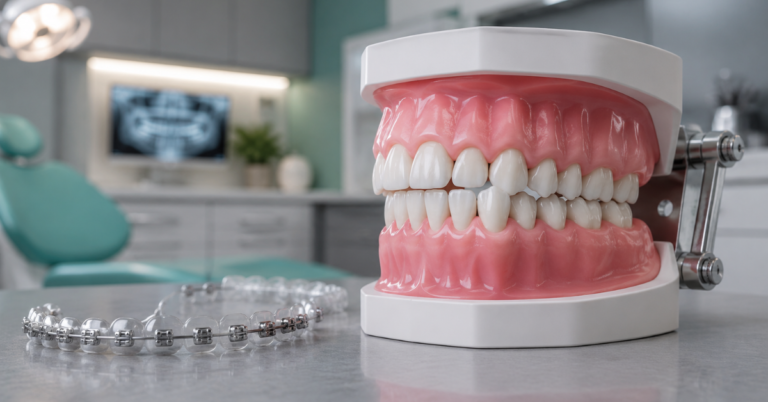
An underbite occurs when your lower front teeth and jaw extend beyond your upper front teeth when your mouth is closed. In a healthy bite, your upper teeth should sit slightly in front of your lower teeth, allowing your back teeth to meet comfortably.
Underbites range widely in severity:
- Mild underbite — your upper and lower teeth almost meet; often barely noticeable.
- Moderate underbite — visible misalignment that may affect chewing or speech.
- Severe underbite — the lower jaw protrudes noticeably, sometimes called mandibular prognathism.
Understanding why you have an underbite matters, because it directly shapes the treatment that will actually work for you.
Dental vs. Skeletal Underbite: Why the Difference Matters
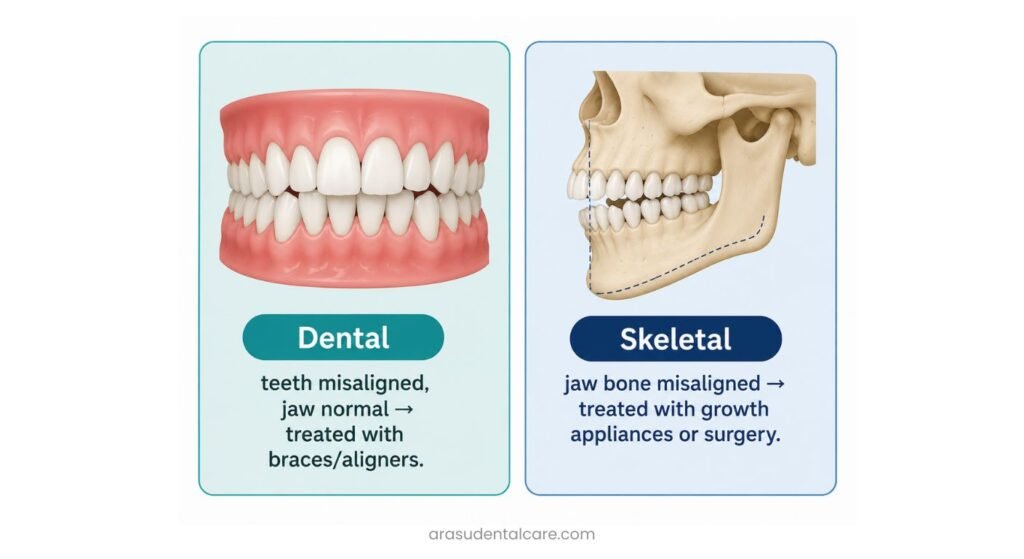
This is the single most important distinction in underbite correction — and one many patients are never clearly told about.
|
Type |
What’s Causing It |
Typical Treatment Approach |
|
Dental underbite |
The jawbones are positioned normally, but the teeth are tilted or misaligned |
Braces or clear aligners |
|
Skeletal underbite |
The lower jaw is too far forward or the upper jaw is underdeveloped |
Growth appliances (children) or jaw surgery (adults) |
A dental underbite can often be corrected with orthodontic treatment alone. A skeletal underbite — where the bones themselves are misaligned — may need growth guidance in children or surgical repositioning in adults.
This is why an accurate diagnosis from an experienced specialist is essential. Treating a skeletal problem as if it were purely dental often leads to incomplete or unstable results.
What Causes an Underbite?
Underbites develop from a mix of inherited and behavioural factors. Knowing the cause helps your orthodontist plan more predictable outcomes.
Genetics — The most common cause. The shape and size of your jaw are inherited traits, so if an underbite runs in your family, you’re more likely to develop one.
Prolonged childhood habits — Extended thumb-sucking, pacifier use beyond age 3, bottle-feeding past infancy, and tongue-thrusting can all influence how the jaw develops.
Jaw growth imbalance — Sometimes the lower jaw simply grows faster or larger than the upper jaw.
Injury or trauma — A facial or jaw injury can shift alignment, and bones don’t always heal in perfect position.
Tumours — A rare cause, but growths in the mouth or jaw can affect bite alignment.
According to the American Association of Orthodontists, bite problems like underbites are among the most common reasons families seek early orthodontic evaluation.
Signs and Symptoms of an Underbite
A mild underbite may cause no symptoms at all. More noticeable cases can produce:
- A prominent or forward-positioned lower jaw and chin
- Difficulty biting into foods like sandwiches or apples
- Discomfort or pain while chewing or speaking
- Speech differences, particularly with “s” and “f” sounds
- Uneven or accelerated tooth wear
- Jaw fatigue, headaches, or TMJ joint discomfort
- Mouth breathing, bad breath, or in some cases sleep-disordered breathing
- Reduced confidence about facial appearance
In our experience, many adult patients come to us not because of pain, but because the underbite has become more pronounced over the years — which can happen as jawbones mature and harden.
At What Age Should You Correct an Underbite?
Timing genuinely matters with underbites, and it’s one of the questions we hear most from parents.
Best window — ages 7 to 10: This is when jaw bones are still developing. Orthodontists can often guide growth gently, frequently avoiding surgery later in life. The American Association of Orthodontists recommends a child’s first orthodontic evaluation by age 7.
Teenagers: Many cases can still be addressed with braces, aligners, and growth-supporting appliances if some growth remains.
Adults: Jawbones have fully matured, so skeletal underbites may need surgical correction. However, many adult dental underbites are successfully treated with braces or aligners alone.
The key takeaway: earlier evaluation gives you more options and often simpler, more comfortable treatment.
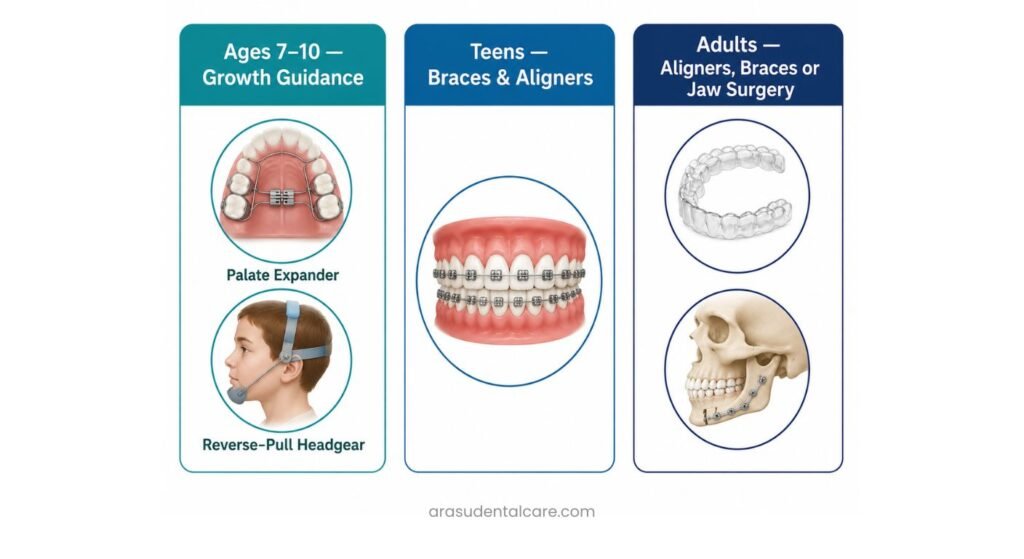
Underbite Correction Treatment Options
Here is a complete breakdown of the treatments available, organised by how they work and who they suit best.
1. Braces (Metal or Ceramic)
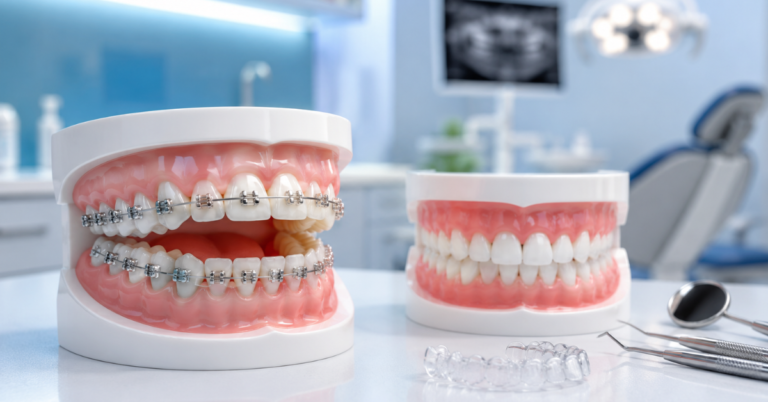
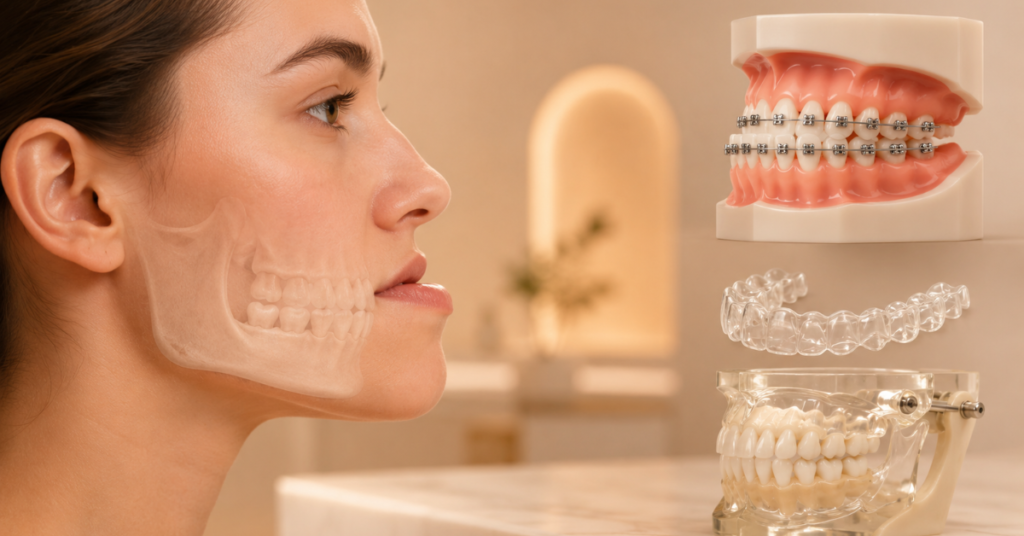
Braces remain one of the most effective and reliable ways to correct dental underbites. Brackets and wires gradually move teeth into proper alignment, often combined with elastics to coordinate the upper and lower arches.
Ceramic braces blend with your natural tooth colour for a more discreet option. Treatment typically takes 18 to 36 months, followed by a retainer to maintain results.
2. Clear Aligners (Including Invisalign)
For appropriate dental underbites, clear aligners in coimbatore offer a nearly invisible, comfortable alternative. Modern aligner systems use precision attachments and staged movements designed specifically for Class III correction.
Aligners suit image-conscious teens and adults who prefer a removable, low-profile option — though consistent wear (around 22 hours daily) is essential for predictable outcomes.
3. Palatal (Upper Jaw) Expanders
Used primarily in growing children, a palatal expander gradually widens an underdeveloped upper jaw so it aligns better with the lower jaw. It’s especially effective when combined with other growth appliances during a child’s developmental window.
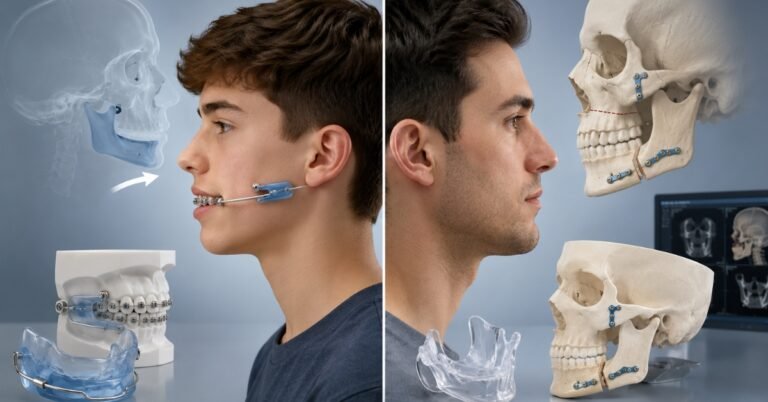
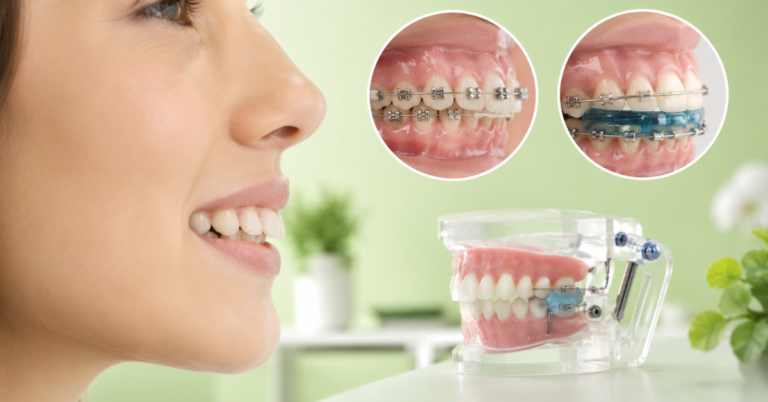
4. Reverse-Pull Headgear (Protraction Facemask)
For children around 10 and younger, a reverse-pull facemask gently encourages the upper jaw to grow forward. The device rests on the forehead and chin, using elastics connected to the upper jaw.
Worn mainly at home and during sleep, its success depends heavily on consistent daily wear — typically 12 to 14 hours.
5. Tooth Extraction
When crowding contributes to the underbite, removing select teeth can create space for proper alignment. This is usually done alongside braces rather than as a standalone fix.
6. Orthognathic (Jaw) Surgery
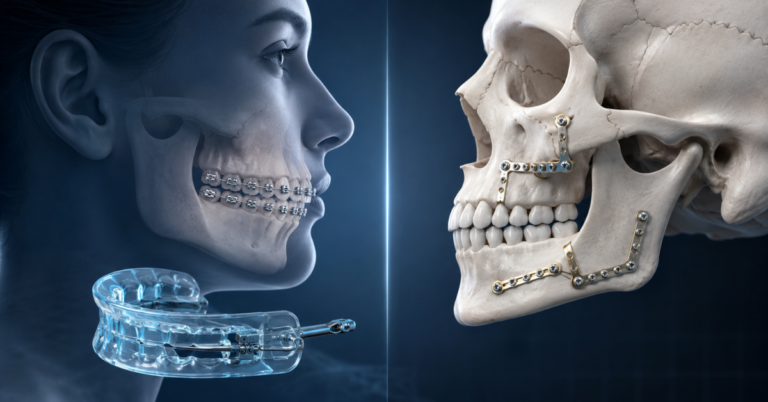
For moderate to severe skeletal underbites in adults, corrective jaw surgery may be the most stable, long-term solution. Performed by an oral surgeon, it repositions one or both jaws and is combined with orthodontics before and after surgery.
Common procedures include mandibular setback (moving the lower jaw back) and maxillary advancement (moving the upper jaw forward). According to Cleveland Clinic, surgery is far more common in adults whose jaw bones have finished growing.
Treatment Comparison at a Glance
|
Treatment |
Best For |
Age Group |
Typical Duration |
|
Metal/Ceramic Braces |
Dental underbites |
Teens & adults |
18–36 months |
|
Clear Aligners |
Mild–moderate dental cases |
Teens & adults |
12–24 months |
|
Palatal Expander |
Narrow upper jaw |
Children |
Several months |
|
Reverse-Pull Headgear |
Underdeveloped upper jaw |
Children under 10 |
6–12 months |
|
Tooth Extraction |
Crowding-related underbites |
Varies |
With braces |
|
Jaw Surgery |
Severe skeletal underbites |
Adults |
12–24 months (incl. ortho) |
What to Expect: Your Treatment Journey
Every plan we create is personalised, but most patients follow a similar path:
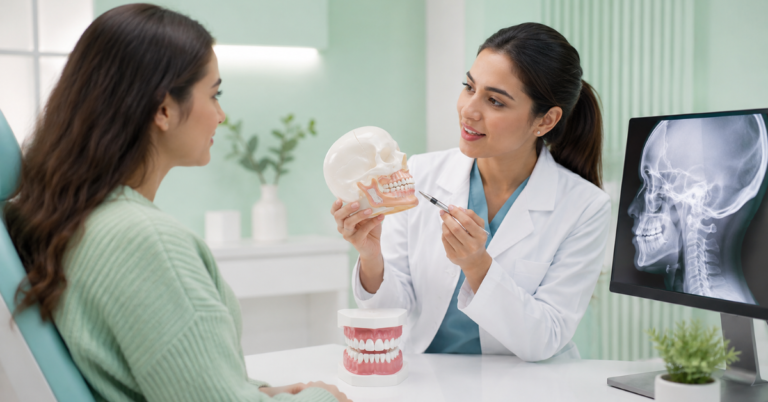
Step 1 — Consultation & Records: A comprehensive exam including photographs, X-rays, and digital scans to assess your teeth, jaw alignment, and facial balance.
Step 2 — Diagnosis & Planning: We determine whether your underbite is dental or skeletal, then explain all suitable options along with timelines and transparent costs.
Step 3 — Active Treatment: Braces, aligners, growth appliances, or surgical coordination — guided by regular reviews.
Step 4 — Finishing & Detailing: Fine-tuning your bite and aesthetics in the final phase.
Step 5 — Retention: Retainers maintain your new bite and protect your long-term result.
Throughout this process, our priority is keeping you comfortable, informed, and confident at every stage.
Why Early and Expert Care Matters
An untreated underbite rarely improves on its own — and can gradually worsen with age. Over time it may contribute to:
- Increased risk of tooth decay and gum disease (misaligned teeth create hidden spaces for bacteria)
- Chronic jaw strain and TMJ disorders
- Accelerated tooth wear and chipping
- Chewing and speech difficulties
- Reduced self-confidence
The encouraging news, as the Australian Society of Orthodontists notes, is that most underbites — especially mild to moderate cases — can be corrected without surgery when caught early.
Frequently Asked Questions
1. Can an underbite be fixed without surgery?Yes. Mild to moderate underbites — particularly dental underbites — are often corrected with braces or clear aligners. Surgery is generally reserved for severe skeletal cases in adults whose jaw growth is complete.
**2. What