Overbite Correction Treatment: Options & Results
If you have ever felt that your upper front teeth overlap your lower teeth a little too much, you may be living with an overbite — and you are far from alone. Overbite correction is one of the most common reasons people seek orthodontic care, and the good news is that modern dentistry offers safe, effective and comfortable ways to fix it at almost any age.
At Arasu Dental Care, we believe every patient deserves to understand their condition before deciding on treatment. This guide explains what an overbite is, why it matters for your long-term oral health, and the treatment options available — written in plain language so you can make a confident, informed decision.
What Is an Overbite?
An overbite is a type of malocclusion (a “bad bite”) where your upper front teeth overlap your lower front teeth more than they should.
A small overlap is completely normal and even necessary for proper chewing and speech. Most healthy bites show around 2–4 millimetres of overlap. It becomes a concern when that overlap is excessive — often called a deep bite.
Overbite vs. Overjet — They’re Not the Same
These two terms are frequently confused:
|
Term |
What It Means |
Common Name |
|
Overbite |
Vertical overlap — upper teeth cover lower teeth too much |
“Deep bite” |
|
Overjet |
Horizontal protrusion — upper teeth stick out forward |
“Buck teeth” |
Some people have both at the same time, which is why a proper orthodontic assessment matters.
Dental vs. Skeletal Overbite
Understanding the cause of your overbite shapes the entire treatment plan:
- Dental overbite — the teeth are misaligned, but the jaws are in a reasonable position.
- Skeletal overbite — the jaw structure itself is misaligned, often requiring more comprehensive treatment.
According to the Cleveland Clinic, an untreated overbite can contribute to jaw pain, tooth erosion and gum disease over time — so it’s worth getting evaluated even if the issue seems purely cosmetic.
What Causes an Overbite?
In our clinical experience, overbites usually stem from one of two sources: genetics or childhood habits.
Genetic factors:
- Inherited jaw shape or size
- A naturally small lower jaw or large upper jaw
Habit-related factors:
- Prolonged thumb-sucking or pacifier use past age 3
- Tongue-thrusting
- Extended bottle-feeding
- Nail-biting or chewing on pens
- Teeth grinding (bruxism)
We frequently see early-stage overbites in children who carried thumb-sucking habits beyond toddlerhood. The encouraging part: caught early, many of these cases respond beautifully to gentle, growth-guiding treatment.
Why Overbite Correction Matters (It’s Not Just Cosmetic)
Many patients arrive thinking an overbite is purely about appearance. The reality is that an uncorrected overbite can affect your everyday comfort and long-term oral health.
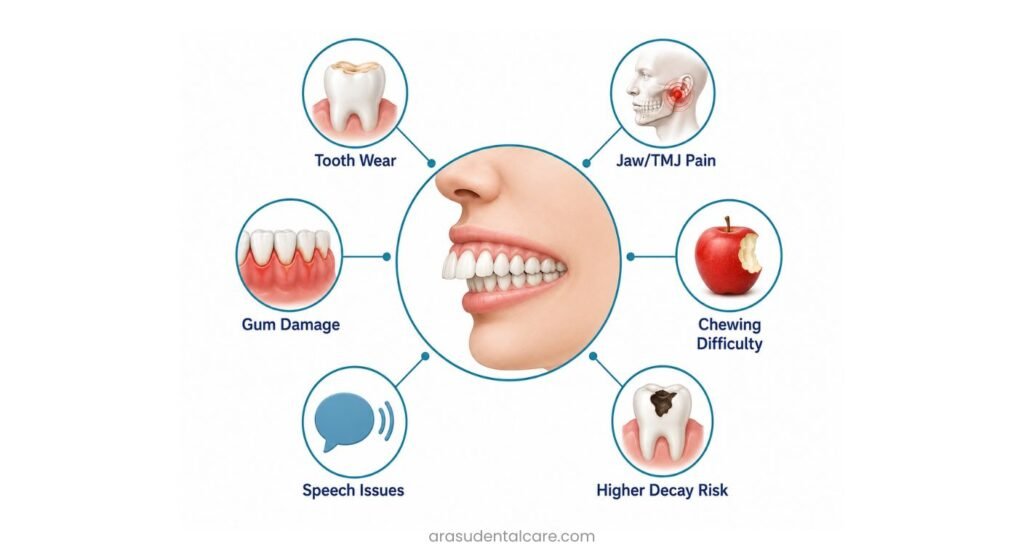
Common problems linked to overbites:
- Tooth wear — uneven pressure wears down enamel prematurely
- Jaw pain and TMJ disorders — strain on the jaw joint can cause clicking, stiffness and headaches
- Gum damage — in severe cases, lower teeth may bite into the roof of the mouth
- Chewing and digestion issues — a poor bite makes eating less efficient
- Speech difficulties — including lisping
- Higher decay risk — overlapping teeth are harder to clean
As a clinic with founder-led expertise in TMJ and orthodontics, we often see how correcting the bite relieves jaw tension and headaches that patients didn’t even realise were connected to their teeth.
How Is an Overbite Diagnosed?
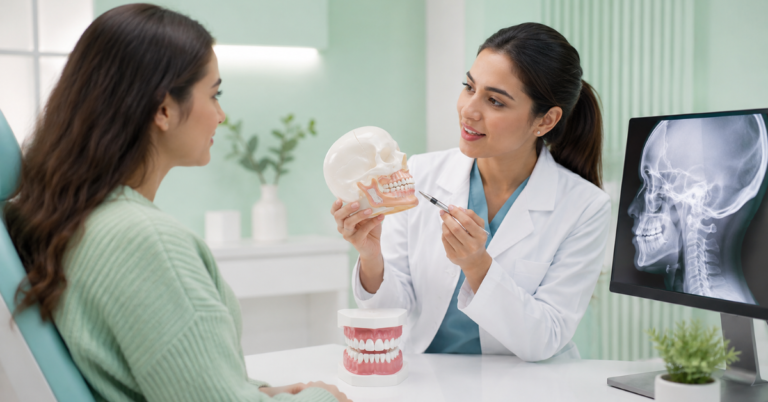
Correct diagnosis is the foundation of predictable results. At an orthodontic consultation, your specialist will:
- Examine your bite and jaw alignment during a physical check
- Take dental X-rays or 3D imaging to study how your teeth and jaws relate
- Record impressions or digital scans to plan tooth movement precisely
- Determine whether the overbite is dental or skeletal — the key factor in choosing treatment
This thorough approach ensures we recommend only the treatment you genuinely need — never an unnecessary upsell.
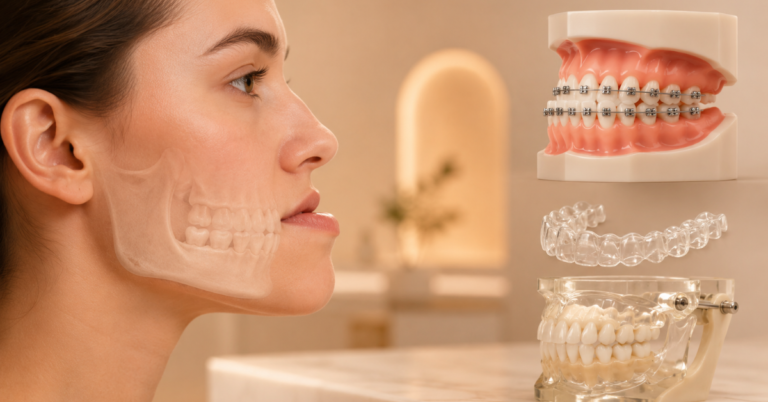
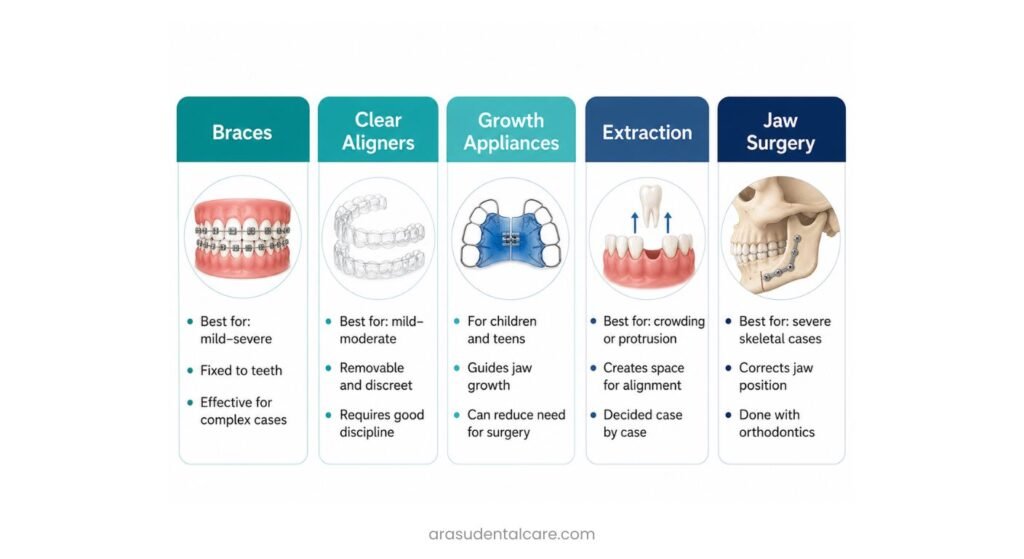
Overbite Correction Treatment Options
The right approach depends on your age, the severity of the overbite, and whether the cause is dental or skeletal. Here are the main options explained.
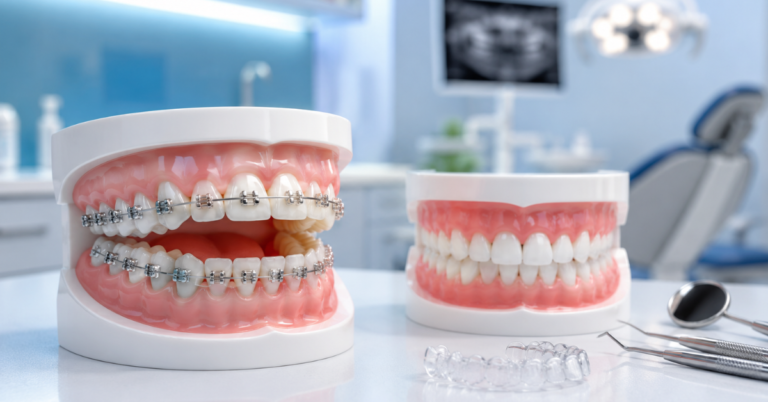
1. Braces — The Time-Tested Solution
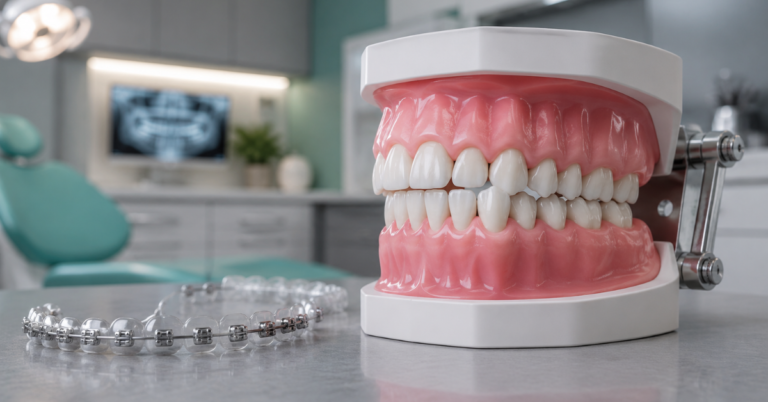
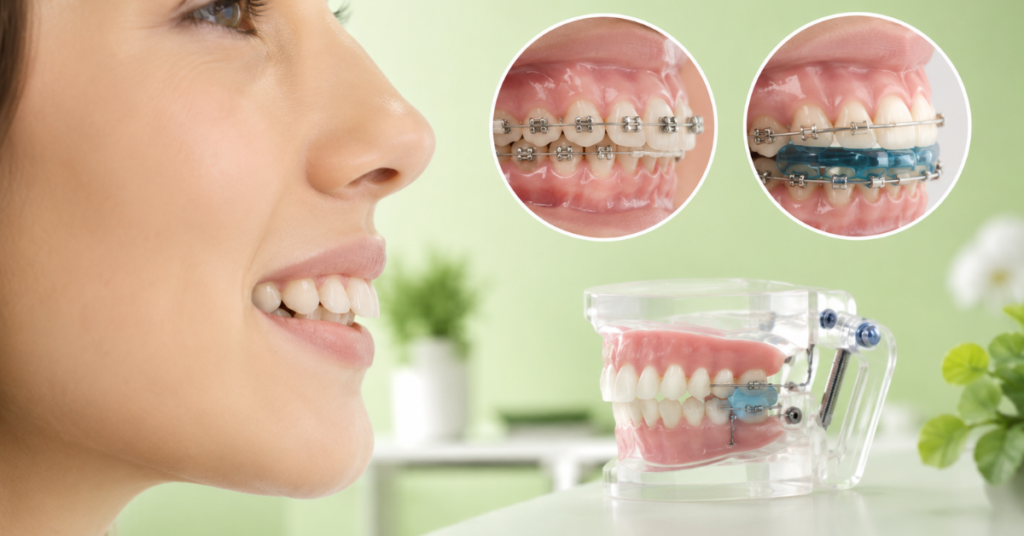
Fixed braces remain one of the most effective methods, especially for moderate to severe overbites. They give your orthodontist precise control over tooth movement.
Types of braces:
- Metal braces — highly effective, even for complex cases
- Ceramic braces — tooth-coloured and more discreet
- Lingual braces — fixed behind the teeth, virtually invisible
How braces correct an overbite (two stages):
|
Stage |
What Happens |
|
Stage 1 |
Brackets and archwires straighten and align the teeth |
|
Stage 2 |
Elastics, springs or coils gradually shift the jawline into better alignment |
Treatment usually takes 6 to 24 months, depending on severity. You may feel mild soreness after adjustments — this is normal and easily managed with over-the-counter pain relief.
2. Clear Aligners (Invisalign) — Discreet & Removable
For mild to moderate overbites, clear aligners offer an excellent, near-invisible alternative. These custom-made trays gradually shift teeth and are removable for eating and brushing.
Key points to know:
- Must be worn 20–22 hours a day to work
- Easier to keep teeth clean — no dietary restrictions
- Best suited to cases driven by tooth position rather than jaw structure
The trade-off is commitment — aligners only work if you wear them consistently.
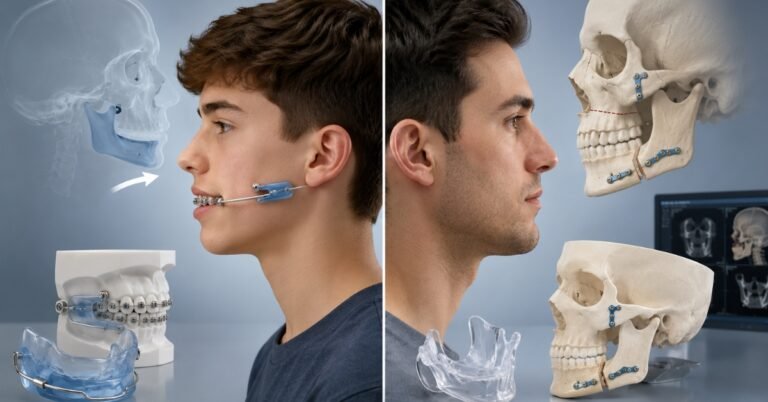
3. Growth-Guiding Appliances (Mainly for Children)
Because children’s jaws are still developing, dentists can often correct an overbite without braces alone. Options include:
- Palate expanders — widen the upper jaw during growth spurts
- Functional appliances (e.g. Herbst, Twin Block) — guide lower jaw growth
- Headgear — corrects jaw positioning
- Habit-breaking appliances — for thumb-sucking or tongue-thrusting
The American Association of Orthodontists recommends a child’s first orthodontic check by around age 7, when early issues are easiest to guide.
4. Tooth Extraction
In crowded cases, removing one or more teeth may create the space needed to move remaining teeth into proper alignment — often speeding up overall treatment.
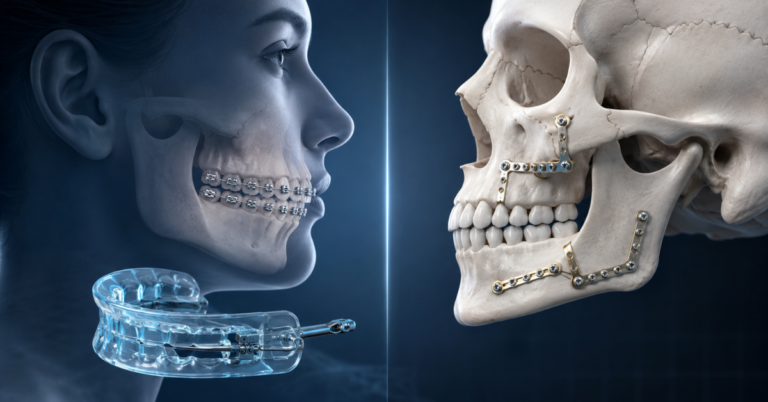
5. Corrective Jaw Surgery (Severe Skeletal Cases)
For severe skeletal overbites in adults whose jaws have stopped growing, orthognathic surgery may be the most effective option. This surgically repositions the jaw and is always combined with braces — typically 12–18 months before surgery and several months after.
Surgical cases are relatively rare, but when needed, they deliver transformative, stable results.
How Long Does Overbite Correction Take?
Every case is unique, but here’s a general guide based on treatment type:
|
Treatment |
Typical Duration |
|
Clear aligners (mild–moderate) |
6–18 months |
|
Braces (moderate) |
12–24 months |
|
Braces + jaw surgery (severe) |
24–36 months |
|
Growth appliances (children) |
Varies with growth |
Most patients begin to see noticeable improvement within the first few months.
What Happens After Treatment? (Retention Matters)
Achieving a corrected bite is only half the journey — keeping it is the other half.
Once active treatment ends, your teeth need time for the surrounding bone, gums and muscles to settle. To prevent teeth from drifting back, you’ll wear a retainer:
- Full-time for the first few months
- Then usually only at night, often long-term
Consistent retainer use is the single most important factor in maintaining your results for life.
Can You Fix an Overbite Naturally?
This is a common question. While jaw exercises may help relieve mild jaw tension, they cannot structurally correct a true overbite. An overbite involves the position of teeth and jawbone — these require professional orthodontic guidance to move safely and predictably.
Be cautious of online claims promising overbite correction through exercises alone. For real, lasting results, an orthodontic assessment is essential.
Frequently Asked Questions
1. How much overbite is considered normal?An overlap of roughly 2–4 mm between upper and lower front teeth is normal and healthy. Anything beyond this may benefit from evaluation and possible treatment.
2. Is overbite correction comfortable?Modern techniques have made treatment far more comfortable than in the past. Some mild soreness after adjustments is normal and manageable. At our clinic, treatments are carried out gently and, where needed, under appropriate anaesthesia.
3. Can adults get their overbite corrected?Absolutely. There’s no age limit — adults achieve excellent results. Treatment may take slightly longer because adult jawbones have finished growing, but predictable outcomes are very achievable.
4. Will braces or aligners work better for my overbite?Both can correct an overbite effectively. Braces offer more control for complex or severe cases, while aligners suit mild-to-moderate cases and those wanting a discreet option. Your orthodontist will help you choose the best fit for your needs.
5. Can an overbite correct itself without treatment?Generally, no — and untreated overbites can worsen over time. In young children with developing jaws, some changes occur naturally during tooth eruption, but most overbites need professional care.
6. Does overbite correction require surgery?Most cases do not. Surgery is reserved for severe skeletal overbites, usually in adults. The majority of overbites are corrected with braces or aligners alone.
7. Will my insurance or EMI cover overbite treatment?Coverage varies by provider and plan. We’re happy to explain available payment options transparently during your consultation.
8. What happens if I leave an overbite untreated?Possible long-term effects include tooth wear, jaw pain, TMJ disorders, gum damage and difficulty chewing. Early treatment helps prevent these complications.
The Bottom Line