Every stage of gum disease · one specialist team
Gum Disease Treatment in Coimbatore
Healthy gums are what hold your teeth in place — and our periodontal care is built around exactly that: stopping gum infection before it costs you teeth. At Arasu Dental Care, our periodontist treats every stage of gum disease at our R.S. Puram and Saibaba Colony clinics — from early gum infection (gingivitis) that can still be fully reversed, to advanced pyorrhea (periodontitis) that needs deeper cleaning or surgical care to save your teeth. If your gums bleed when you brush, that is not normal — it is the earliest and most treatable warning sign, and treating it now is far simpler than treating it a year from now.
Medically reviewed by the Arasu Dental Care clinical team · Last reviewed July 2026
Where To Start
Do these signs mean you need gum treatment?
Gum disease announces itself quietly. Most of our periodontal patients first noticed one of these — and waited longer than they should have. See which of these sounds like you.
Blood on your toothbrush or when you spit — the single most common early sign, and the one most people ignore.
Red, swollen, or tender gums instead of firm, pale-pink tissue.
Bad breath or a bad taste that keeps returning even after brushing.
Gums pulling away from your teeth, or teeth that look longer than before.
New sensitivity near the gum line when you eat or drink.
Loose or shifting teeth, new gaps opening up, or a change in how your bite meets.
Pus between your teeth and gums.
Seeing the first three?
You're most likely at the early, reversible stage — a professional cleaning and better home care may be all you need.
Seeing the last three?
The infection has moved below the gum line, and you should see our periodontist soon: at that stage, every month of delay costs supporting bone that doesn't grow back on its own.
Understanding It
The two stages: gum infection (gingivitis) and pyorrhea (periodontitis)
What patients call “gum problems” is really one disease moving through stages — and the stage decides both the treatment and how completely you recover. This is the first thing we establish at your consultation.
| Stage | What's happening | What you'll notice | Reversible? | How we treat it |
|---|---|---|---|---|
| Gingivitis (gum infection) | Plaque along the gum line irritates the gums; inflammation is limited to gum tissue — no bone involvement yet. | Bleeding while brushing, redness, mild swelling. | Yes — fully | Professional scaling and polishing + guided home care. |
| Early–moderate periodontitis | Infection moves below the gum line; pockets form between tooth and gum, and supporting bone starts to dissolve. | Persistent bad breath, gum recession, sensitivity, deeper bleeding. | Stopped & stabilised | Deep cleaning (scaling and root planing), often with laser-assisted therapy. |
| Advanced periodontitis (pyorrhea) | Significant bone loss around the teeth; deep pockets harbour infection that cleaning alone can't reach. | Loose teeth, pus, gaps opening, bite changes. | Managed to save teeth | Flap surgery, gum grafting where needed, then lifelong periodontal maintenance. |
The Cause
What causes gum disease?
The trigger is always the same: plaque — the soft bacterial film that forms on teeth daily — hardening into tartar that brushing can't remove. But whether that turns into serious gum disease depends on your risk factors, and this is where your treatment plan becomes personal. The ones we weigh most carefully at your consultation:
Tobacco in any form
Smoking, chewing tobacco, or pan masala. Tobacco users develop gum disease earlier, more severely, and heal slower after treatment — which is why we plan more frequent maintenance for them.
Diabetes — a two-way street
Uncontrolled sugar levels worsen gum infection, and active gum infection makes sugar levels harder to control. If you're diabetic, gum care is part of managing your diabetes, not separate from it.
Hormonal changes
Pregnancy, puberty, and menopause all make gums more reaction-prone — the tissue responds more strongly to the same amount of plaque.
Family history & other factors
Family history, crowded teeth that trap plaque, certain medications, and long-term stress all raise your risk and shape how often you should be seen.
The Treatment Ladder
How we treat gum disease at Arasu Dental Care
Periodontal treatment at our clinics follows a ladder: we always start with the least invasive option that can actually resolve your stage of disease, and step up only when the infection demands it. Your treatment is planned and carried out by — our periodontist and laser specialist, who holds an Associate Fellowship in Laser Dentistry from the World Clinical Laser Institute (USA) and handles our periodontal surgeries and grafting cases.
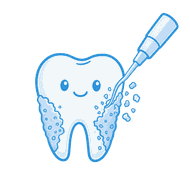
Professional scaling and polishing
For early gum infectionA thorough professional cleaning above and just below the gum line removes the plaque and tartar causing the inflammation. For gingivitis, this single visit — paired with the home-care technique we coach you on — is usually the whole treatment. Gums typically stop bleeding and firm up within a couple of weeks. Most patients need this only once or twice a year.
Teeth scaling & cleaningDeep cleaning (scaling and root planing)
Below the gum lineOnce pockets have formed, ordinary cleaning can't reach the tartar on the root surfaces. Deep cleaning works section by section under local anaesthesia — you feel pressure, not pain — cleaning the roots and smoothing them so the gum can reattach. It's typically completed across two to four visits, and it is the workhorse of periodontal treatment: for most early-to-moderate periodontitis, done properly and maintained, it's the step that stops the disease.
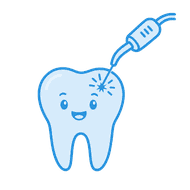
Laser-assisted gum therapy
Minimally invasiveWhere it suits the case, our periodontist uses a soft-tissue laser alongside deep cleaning to disinfect pockets and remove diseased tissue with less bleeding, less post-treatment discomfort, and faster healing than conventional instruments alone — often with no sutures. It's particularly useful for anxious patients and for diabetic patients where gentle healing matters.
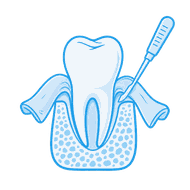
How laser gum therapy worksFlap surgery
Deep pocketsWhen pockets are too deep for instruments to clean blind, we lift the gum in a minor surgical procedure, clean the root and bone surfaces under direct vision, and stitch the gum snugly back — shrinking the pocket so it stays cleanable. It sounds more dramatic than it feels: it's done under local anaesthesia, and most patients are back to routine in a few days.
Dental flap surgeryGum grafting
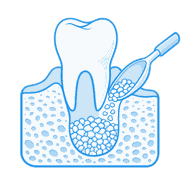
Rebuilding receded gumsWhere gum disease or aggressive brushing has left roots exposed, grafting covers the exposed root with tissue, protecting it from sensitivity and further recession. Receded gums don't grow back on their own — grafting is how we restore coverage.
Gum grafting — candidacy & recoveryPeriodontal maintenance
What keeps the resultHere's the part many clinics undersell: treating periodontitis is a two-part job, and the second part is yours and ours together. After active treatment, we place you on a recall every three to four months — more frequent than a routine check-up, because pockets recolonise with bacteria in roughly that window. Patients who keep their maintenance visits keep their teeth; patients who don't usually see the disease return within a year or two. We tell you this upfront because the maintenance plan is part of the treatment decision, not an afterthought.
Straight Answers
Can gum disease be reversed? An honest answer
Gingivitis — yes, completely
Caught while the infection is still limited to the gum tissue, a professional cleaning and consistent home care return your gums to full health, typically within two to three weeks.
Periodontitis — controlled, not cured
We want to be straight with you, because clinics that promise more are overpromising: once supporting bone is lost, it does not regrow on its own. What treatment genuinely achieves — and this is worth a great deal — is stopping the disease where it stands, keeping the teeth you have, eliminating the infection, bleeding and bad breath, and in selected cases rebuilding some support with grafting.
The Cost Of Waiting
What happens if gum disease is left untreated?
Untreated, the sequence is predictable — and periodontitis remains one of the leading causes of adult tooth loss. Replacing lost teeth well (with dental implants or bridges) costs many times more than the gum treatment that would have prevented the loss — and implants themselves need healthy gums to succeed.
Beyond the mouth, research links chronic gum infection with harder-to-control diabetes and with cardiovascular risk. The evidence continues to evolve, but the direction is consistent enough that we treat gum health as part of your overall health — particularly for our diabetic patients.
The untreated sequence
- 1Pockets deepen between tooth and gum
- 2Supporting bone dissolves
- 3Teeth loosen and shift
- 4Teeth are eventually lost
Cost
Gum treatment cost in Coimbatore
Costs at Arasu Dental Care depend on the stage of disease and the number of teeth involved — which is why every plan starts with an examination and a written estimate before any treatment begins. Our current ranges:
| Treatment | Cost at Arasu Dental Care | Notes |
|---|---|---|
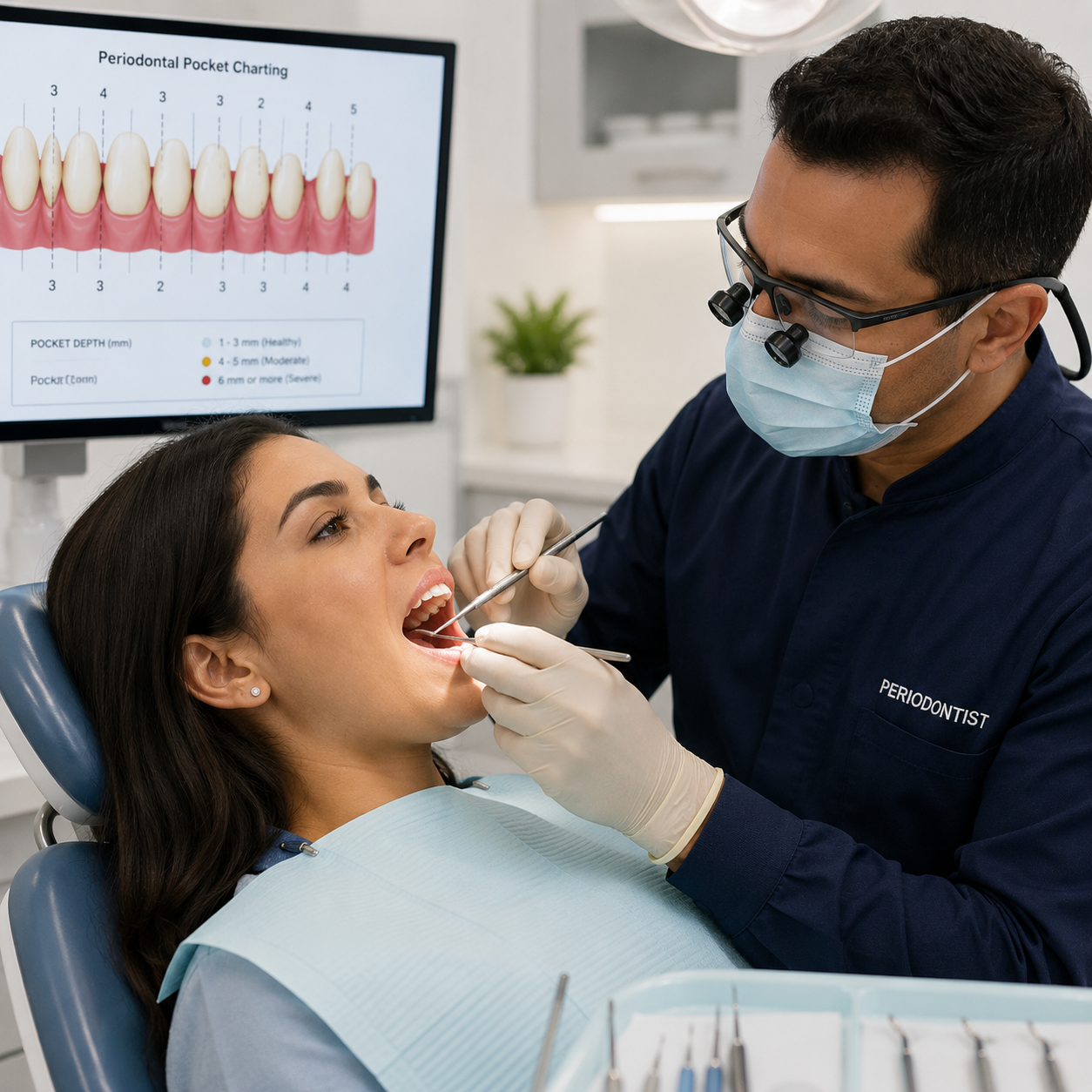
| Consultation & gum examination | ₹300 – ₹500 | Includes pocket charting where indicated |
| Professional teeth cleaning (scaling & polishing) | ₹1,500 – ₹3,000 | Per session · treatment for gingivitis & routine prevention |
| Deep cleaning (scaling & root planing) | ₹12,000 – ₹15,000 | Full-mouth, typically across 2–4 visits |
| Laser-assisted gum therapy | Quoted with your plan | Case-based · confirmed after examination |
| Flap surgery | Quoted after examination | Per quadrant |
| Gum grafting | Quoted after examination | Depends on sites treated & graft type |
Not sure which stage you're at? A consultation settles it in one visit — call R.S. Puram on +91 88380 22157 or Saibaba Colony on +91 74491 88777, open 10 AM–8:30 PM every day.
Book a gum check-upGet Started
Bleeding gums? Start with a clear diagnosis
Tell us a little about your gums and pick a time that suits you. We start by establishing your stage — gingivitis or periodontitis — because the stage decides the treatment and how completely you recover.
- Your stage established before any treatment plan
- Periodontist-led · laser therapy available in-house
- Written, itemised estimate first · EMI on surgical plans
Why Arasu
Why patients choose Arasu Dental Care for gum treatment
Your gum treatment here is periodontist-led, and being a multispecialty clinic matters for gum patients specifically: if a tooth genuinely can't be saved, our implantologists and prosthodontist plan the replacement under the same roof, coordinated with your gum treatment rather than bolted on after it.
Periodontist-led, not delegated
Gum surgery, grafting and laser therapy are performed by — a qualified periodontist with a WCLI (USA) laser dentistry fellowship — not handed off as a side procedure.
Minimally invasive by design
The laser-assisted techniques she trained in exist precisely to make gum treatment gentler and healing faster — with less bleeding and, often, no sutures.
Multispecialty under one roof
If a tooth can't be saved, our implantologists and prosthodontist plan the replacement alongside your gum treatment — coordinated, not bolted on afterwards.
Two branches, open all week
R.S. Puram and Saibaba Colony are open 10 AM – 8:30 PM, all seven days — with transparent, itemised estimates before any treatment starts.
Patient Reviews
Rated 4.8 on Google
 Google Reviews
My gums bled for months and I ignored it. The periodontist explained I was at the early stage and a deep cleaning across a few visits sorted it out. The bleeding has completely stopped.
Had laser gum therapy along with deep cleaning — much gentler than I expected and healed fast. As a diabetic I was nervous, but they coordinated everything and were very reassuring.
They were honest that my case needed flap surgery, and gave me a written estimate before starting. No pressure, no surprises. My teeth feel firm again and they set up a maintenance schedule.
Went for receding gums and had grafting done. Clear explanation of what it could and couldn't fix. The recession has stopped and the sensitivity is gone. Grateful for the straight talk.
FAQs
Gum treatment — your questions answered
Early gum disease (gingivitis) is fully reversible with professional cleaning and good home care. Established periodontitis can't be reversed, but it can be reliably stopped and controlled — you keep your teeth, and the bleeding, swelling and bad breath resolve. Outcomes vary with stage, health factors like diabetes, and how well maintenance visits are kept.
Deep cleaning is done under local anaesthesia, so you feel pressure and vibration rather than pain. Mild soreness and sensitivity for a few days afterwards is normal and settles on its own. Where laser-assisted therapy is used, most patients report noticeably less discomfort.
Some patients feel their teeth are “looser” after cleaning — what's actually happened is that hardened tartar, which was splinting the teeth like cement, has been removed. The cleaning hasn't loosened anything; it has exposed how much support the disease had already taken. That firmness returns as the gums heal and reattach.
A routine cleaning takes one visit. Deep cleaning is typically completed in two to four visits, cleaning the mouth in sections. Surgical treatment is planned per case — usually one visit per quadrant plus a review. We map the full schedule at your consultation so you know the commitment before you start.
No — gum tissue that has receded doesn't regenerate by itself. What we can do is stop the recession from progressing and, where indicated, surgically cover exposed roots with gum grafting.
At Arasu Dental Care, professional cleaning is ₹1,500–₹3,000 per session and full-mouth deep cleaning is ₹12,000–₹15,000. Surgical treatments like flap surgery and grafting are quoted individually after examination. Every patient receives a written, itemised estimate before treatment begins.
Two things, in this order: keep your periodontal maintenance visits every three to four months, and keep the home-care routine we coach you on (technique matters more than effort). Patients who do both hold their results for the long term; skipping maintenance is the single most common reason gum disease returns.
Book your gum consultation at Arasu Dental Care
Bleeding gums are your teeth asking for help early
And early is when treatment is simplest, gentlest, and least expensive. Walk in or call whichever branch is closer — same specialists, same standard of care. Open 10 AM – 8:30 PM, all seven days · WhatsApp +91 96007 56297.