Oral & maxillofacial surgery · in-house surgeon
When a tooth is too damaged to save, a wisdom tooth is stuck and painful, or a tongue-tie is getting in the way of feeding or speech, oral surgery is what puts it right — and at Arasu Dental Care, it's handled by our in-house oral and maxillofacial surgeon rather than referred elsewhere. From a straightforward extraction to a fully impacted wisdom tooth, a frenectomy, or surgical preparation before an implant, we carry out the procedure under local anaesthesia, with sedation available if you're anxious, so you stay comfortable throughout.
Impacted wisdom teeth alone affect a large share of adults here — in south Indian populations, studies put third-molar impaction at close to 38%. If you're weighing a surgical procedure, this page explains when it's actually needed, what it involves, what recovery looks like, and what it costs at our two branches, open all seven days.
Open all seven days, 10:00 AM – 8:30 PM · R.S. Puram +91 88380 22157 · Saibaba Colony +91 74491 88777
Not sure whether your tooth needs to come out? A consultation and X-ray will tell you clearly — book at our R.S. Puram branch on +91 88380 22157 or Saibaba Colony on +91 74491 88777. We're open every day, 10:00 AM to 8:30 PM.
When it's the right call
Oral surgery covers any procedure that involves surgically reaching a tooth, the gum, or the jawbone — not only the complicated cases. You're likely to need it if one of these sounds like you:
A tooth broken below the gumline or too decayed to restore, that has to be removed surgically rather than with a simple tooth extraction.
An impacted or partly erupted wisdom tooth that keeps getting infected. Recurrent gum infection (pericoronitis) and decay are the two most common reasons wisdom teeth are removed — in Indian clinic studies, the majority of cases.
Pain, swelling or a bad taste around a back tooth that keeps coming back — often the sign of an impacted lower wisdom tooth.
A baby or child with a tongue-tie or lip-tie that's affecting feeding, speech or the spacing of the teeth.
An impacted canine or other tooth that needs to be surgically exposed so it can be guided into place with braces.
A cyst, lump or an ulcer that won't heal and needs to be removed and checked.
Missing bone for a dental implant — where a graft or sinus lift is needed before the implant can go in.
A jaw or bite problem that needs surgical correction alongside orthodontic treatment.
What we do
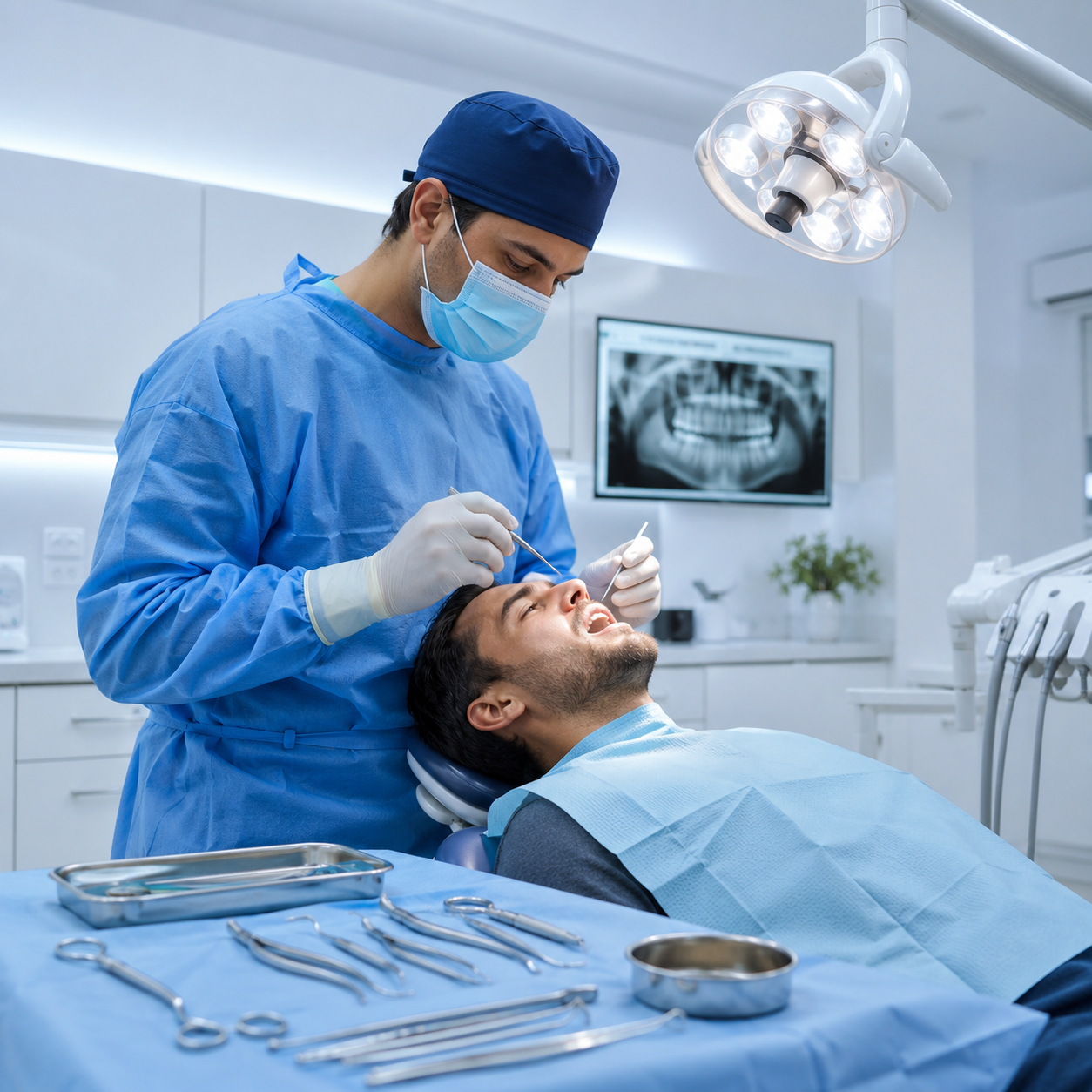
Most oral surgery is done comfortably in our clinic under local anaesthesia — with sedation for nervous patients — and planned from a digital X-ray or CBCT scan so there are no surprises on the day. Your procedure is carried out by Dr. P.R. Gouthaman, our oral and maxillofacial surgeon (MDS, Oral & Maxillofacial Surgery), who handles complex extractions and facial-surgical work routinely.
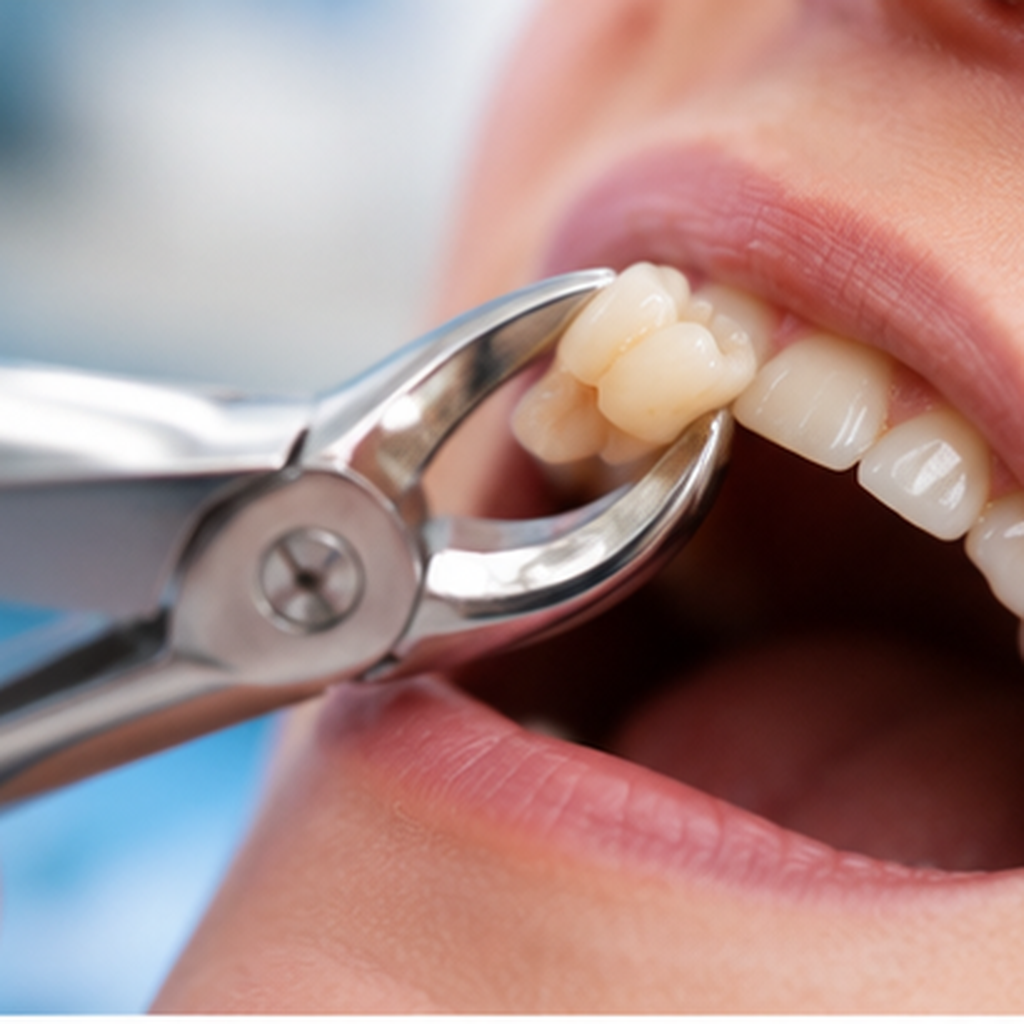
Where a tooth is beyond saving, we remove it as gently as possible. A fully erupted tooth usually comes out with a simple extraction; one that's broken at the gumline, badly decayed or awkwardly rooted needs a surgical extraction, where we ease back the gum and remove the tooth in sections.
We plan replacement in the same conversation, so you know how a bridge or an implant would restore the gap.
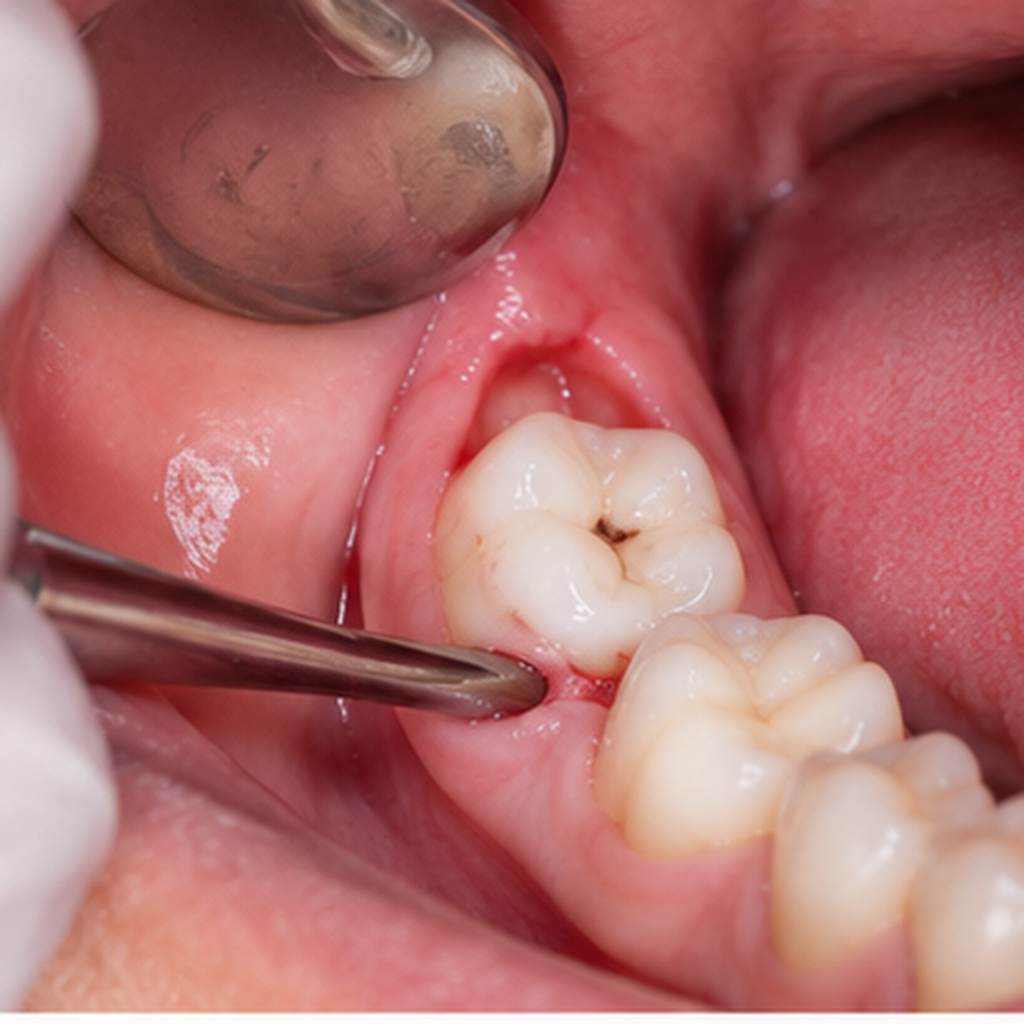
An erupted wisdom tooth that's simply decayed can often be taken out routinely. An impacted or partly erupted one — the kind that causes recurring pain and infection — is removed surgically. We take an OPG or CBCT first to see exactly how the tooth sits against the nerve and the neighbouring molar, which keeps the procedure predictable.
Full detail sits on our wisdom tooth removal page.
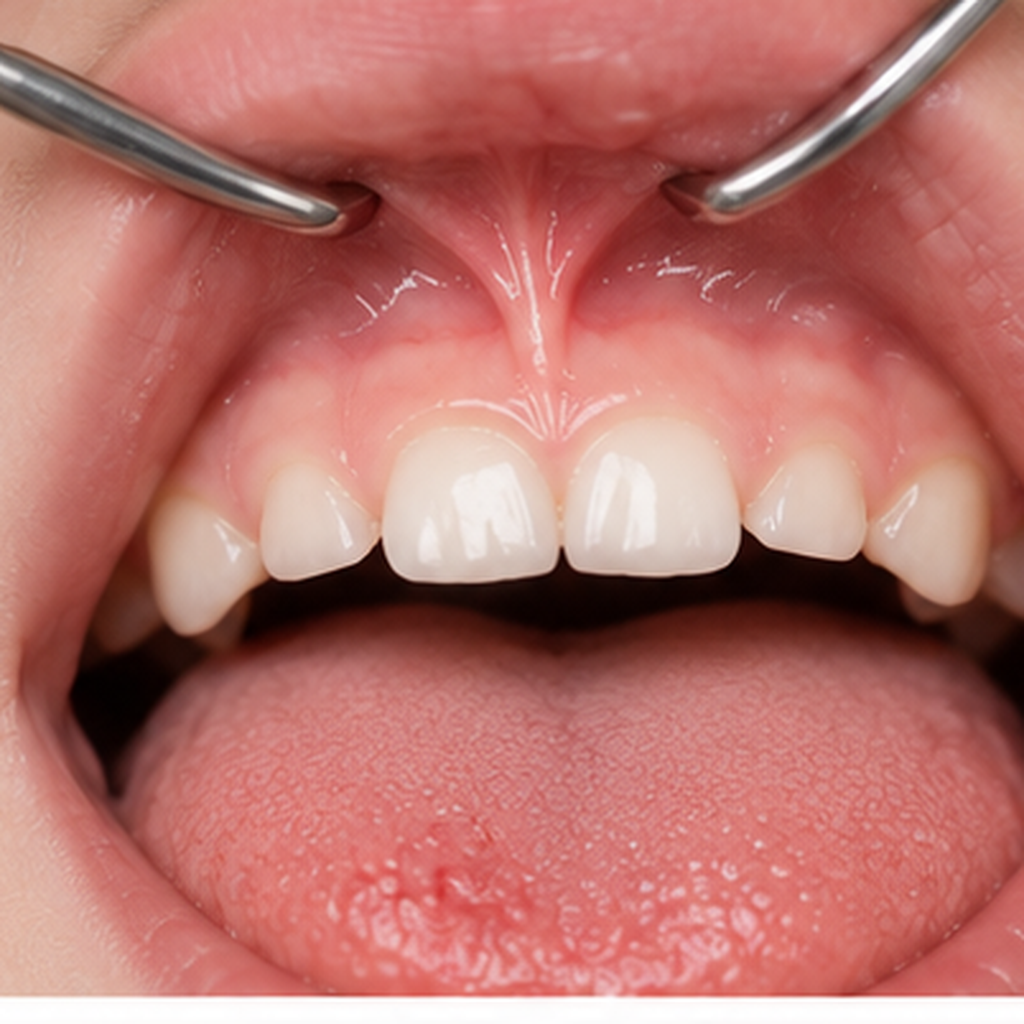
A tight band under the tongue (tongue-tie) or lip can restrict feeding in babies, speech in children, and gum health in adults. When it's genuinely causing a problem, we release it — often with a laser, which means little bleeding and quick healing.
Tongue-tie affects roughly 4–10% of newborns, but not every case needs surgery, so we assess whether a release will actually help before recommending one.
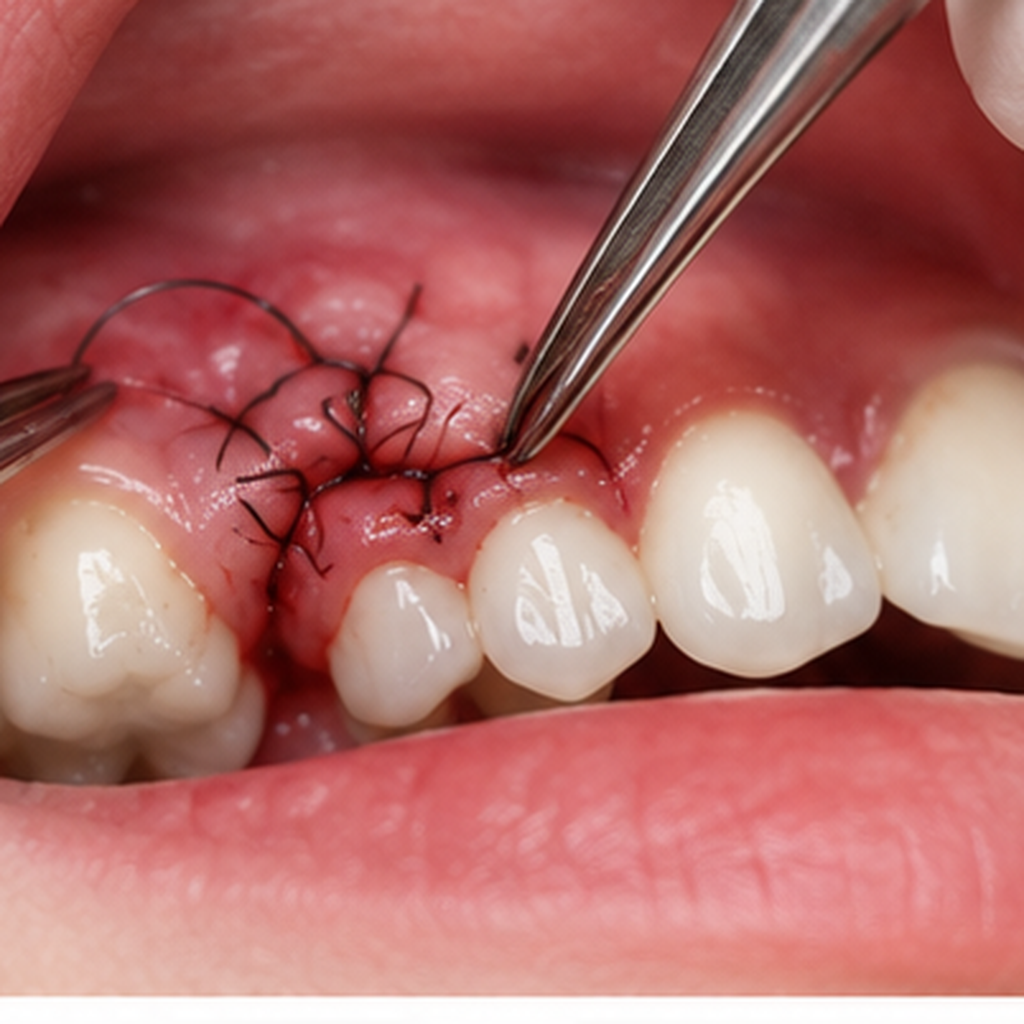
This covers surgically exposing an impacted tooth for orthodontics, removing small cysts and lumps or biopsying an ulcer that won't heal, root-end surgery (apicoectomy) to save a tooth after a failed root canal, and smoothing bone or reshaping gum before dentures.
These are day procedures done under local anaesthesia.
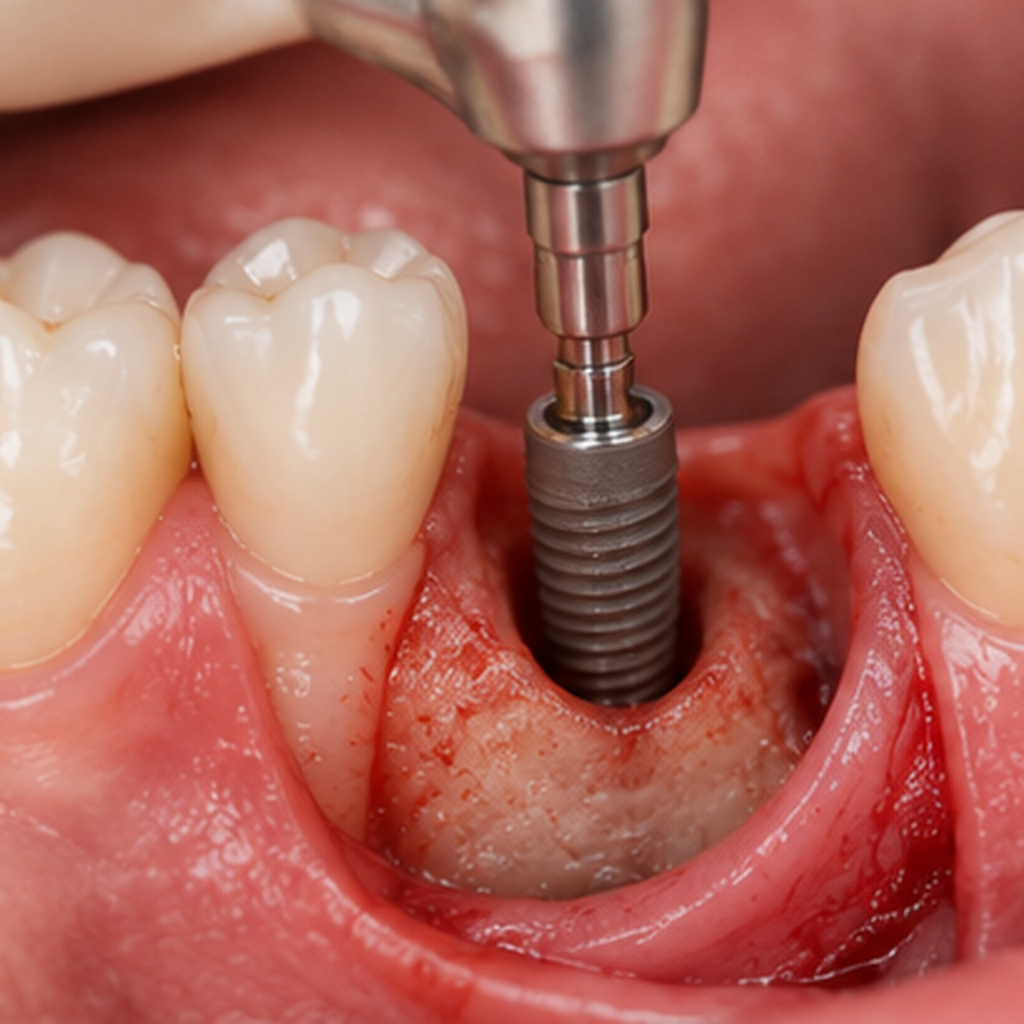
When there isn't enough bone to hold an implant, the surgical groundwork — bone grafting, a sinus lift, or guided implant placement — is done here by our implant team rather than being sent out.
That keeps your surgery and your tooth replacement under one roof and one plan.
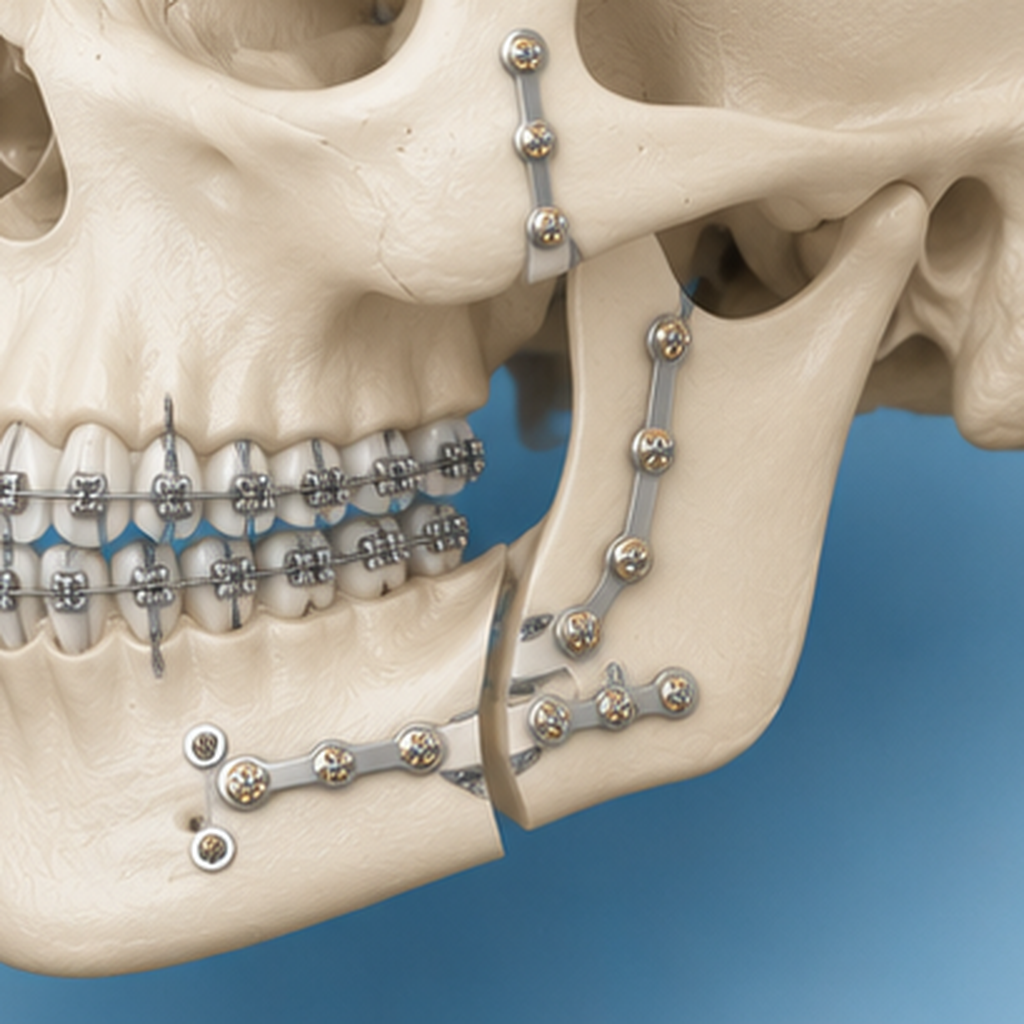
A jaw that's too far forward or back, an open bite, or marked facial asymmetry sometimes needs surgical correction planned together with braces or aligners. Our founder, Dr. P.S. Sree Cumar, leads jaw and TMJ work, and we co-plan these cases across orthodontics and surgery.
If jaw pain rather than alignment is your main concern, our TMJ and jaw pain page is the better starting point.
Extraction, implant preparation and tooth replacement are planned together by one multispecialty team — and because both branches are open every day, a tooth causing pain or infection can usually be seen the same day. For anxious patients, sedation is available; ask us at the consultation.
Seen in the clinic
A well-planned removal clears a tooth that can't be saved and settles the infection that came with it; where a tooth is lost, we plan how the gap is restored. The images below are from cases treated at our clinics.
clinic-photo: impacted / broken tooth on OPG
Clinic-supplied photo or X-ray showing the impacted, broken-down or infected tooth before surgery.
clinic-photo: healed site + planned restoration
Clinic-supplied photo of the healed site, with the planned tooth replacement where relevant.
What to expect
Every case starts with an assessment and imaging. We look at the tooth or the area, talk through what's involved, and agree the plan and cost before anything is booked. Here's how it goes.
STEP 1
We look at the tooth or the area on an X-ray or CBCT, talk through what's involved, and agree the plan and cost before anything is booked — so there are no surprises on the day.
STEP 2
The area is fully numbed with local anaesthetic, and we offer sedation if you'd rather be more relaxed. A simple extraction usually takes 15–30 minutes; a surgical wisdom tooth takes a little longer. You'll feel pressure and movement, not sharp pain.
STEP 3
Stitches are often placed (many dissolve on their own). Some swelling and mild discomfort are normal and usually peak around the second or third day, then settle. Most people are back to a normal routine within a few days.
Straight talk
We'd rather you go in with realistic expectations than an oversell. A few things worth knowing:
Cost
Cost depends on the procedure and how complex it is — a simple extraction sits at one end, a fully impacted wisdom tooth or a surgical case at the other. What moves the price:
Simple or surgical — whether the removal is straightforward or needs a surgical approach.
How deeply a tooth is impacted — partially or fully impacted wisdom teeth take longer.
The imaging needed — a small X-ray, an OPG or a 3D CBCT scan.
Whether you choose sedation, and how many teeth are treated in one visit.
| Procedure | Indicative range (₹) | Notes |
|---|---|---|
| Consultation | ₹300 – ₹500 | Assessment to decide whether surgery is needed. |
| Dental X-ray (IOPA) | ₹200 – ₹300 | Single-tooth X-ray. |
| OPG (full-jaw X-ray) | ₹400 – ₹600 | Panoramic view of both jaws. |
| CBCT scan (3D imaging) | ₹1,000 – ₹4,000 | 3D scan to plan around the nerve and neighbouring teeth. |
| Simple / erupted tooth extraction | ₹1,500 – ₹3,500 | Straightforward removal under local anaesthesia (per tooth). |
| Surgical wisdom tooth (partially impacted) | ₹4,000 – ₹6,000 | Surgical removal of a partly erupted lower/upper third molar. |
| Surgical wisdom tooth (fully impacted) | ₹4,000 – ₹8,000 * | Fully impacted third molar planned from OPG/CBCT. |
| Frenectomy · cyst/lesion removal · corrective jaw surgery | Confirmed at consultation | Quoted after assessment and scan. |
Want a firm number for your case?Send us your X-ray or book a consultation, and we'll give you a written estimate before you commit to anything. R.S. Puram +91 88380 22157 · Saibaba Colony +91 74491 88777.
Ask us for an estimateWho treats you
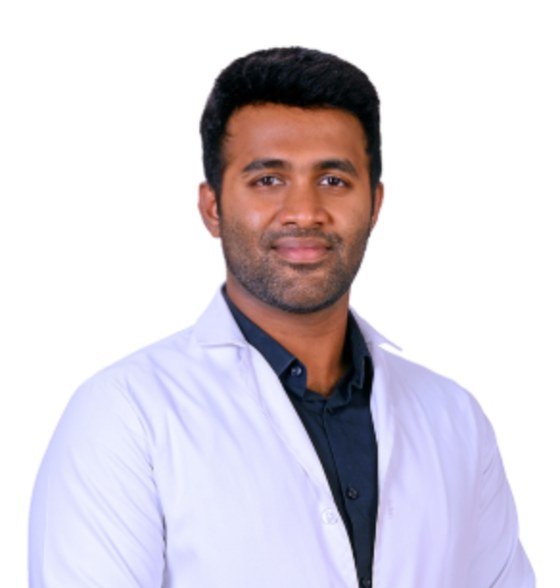
Your surgery is carried out by Dr. P.R. Gouthaman (MDS, Oral & Maxillofacial Surgery), who performs complex extractions and facial-surgical work routinely — so your case is handled here, not referred out. For bite-related and corrective jaw cases, founder Dr. P.S. Sree Cumar leads jaw and TMJ care, and the two co-plan across orthodontics and surgery.
Get Started
Tell us a little about the problem and pick a time that suits you. A painful or broken tooth, a stuck wisdom tooth, a tongue-tie, or planning around an implant — all welcome, at whichever branch is closer. Send your X-ray ahead and we'll be ready for you.
Getting a painful or infected tooth seen early is simpler than waiting.
Why Arasu
A tooth causing pain or infection can't always wait for a weekday appointment — so it matters that both our Coimbatore branches are open every day, 10 AM to 8:30 PM, and that everything that might come next happens under one roof.
Dr. P.R. Gouthaman (MDS, OMFS) performs complex extractions and facial-surgical work routinely — so your case is handled here, not referred out.
Founder Dr. P.S. Sree Cumar leads jaw and TMJ care, which matters for bite-related and corrective cases.
Extraction, implant preparation and tooth replacement are planned together by one multispecialty team, so you're not shuttled between clinics.
Sedation is available, and our approach is built around keeping you calm and comfortable throughout.
OPG and CBCT imaging let us plan around the nerve and surrounding teeth for a predictable result.
Both branches are open 10 AM – 8:30 PM, Monday to Sunday, with costs explained upfront.
Bring your X-ray — we'll tell you honestly whether surgery is needed
R.S. Puram: 129, W Sambandam Road, Coimbatore 641002 · +91 88380 22157 · Saibaba Colony: 160, NSR Road, Coimbatore 641011 · +91 74491 88777. Open 10:00 AM – 8:30 PM · WhatsApp +91 96007 56297.
Patient Reviews
Impacted lower wisdom tooth that had been giving me trouble for months. They took a 3D scan first, explained exactly how it sat against the nerve, and the removal was calm and quick. Swelling settled in a couple of days.
My broken back tooth needed a surgical extraction. Everything — the plan, the cost, the aftercare — was explained before we started, and they planned the implant in the same visit. No being sent to another clinic.
Brought my baby in for a tongue-tie affecting feeding. They assessed properly instead of rushing to surgery, did a quick laser release, and were reassuring the whole way through.
Very anxious patient here. The sedation option made a huge difference — I was comfortable throughout, and being open on a Sunday meant I didn't have to wait in pain.
FAQs
The area is fully numbed with local anaesthetic, so you feel pressure and movement rather than sharp pain, and sedation is available if you're anxious. Most of the discomfort people expect is actually the infection or pain that brought them in — which the procedure relieves. Mild soreness afterwards is normal and managed with pain relief.
A tooth that's fully through the gum usually comes out with a simple extraction. One that's broken at the gumline, badly decayed, or impacted (common with lower wisdom teeth) needs a surgical extraction. An X-ray or scan at your consultation tells us which — and what it will cost — before we begin.
Not always. A wisdom tooth that's fully erupted, working normally and easy to clean can often be watched rather than removed. We recommend removal when it's impacted, repeatedly infected, decayed, or crowding the teeth in front of it.
Most people are back to a normal routine within a few days. Swelling and mild discomfort usually peak around day two or three and then settle. Sticking to soft food, avoiding smoking, and following aftercare closely for the first few days is what keeps healing on track. Recovery times vary from person to person.
Dry socket is when the blood clot over the healing socket is lost too early, leaving it painful. It's uncommon after routine extractions and a little more likely after impacted lower wisdom teeth. Not smoking, not rinsing hard for the first day, and following aftercare keep the risk low — and if it happens, it's easily treated.
Yes. Alongside local anaesthesia, we offer sedation so anxious patients can have surgery comfortably. Let us know at the consultation and we'll plan for it.
Not every tongue-tie does. When a tight band is genuinely restricting feeding, speech or oral health, a quick release — often with a laser — helps. When it's mild, we may suggest support first. We assess before recommending anything.
We plan replacement in the same conversation. Depending on your case, that may mean a bridge or an implant, and sometimes bone grafting first. Doing the surgery and the replacement plan together means one team and one timeline rather than starting over elsewhere.
Medical disclaimer: this page is general information, not a diagnosis. Individual results vary based on your oral health, the tooth involved and how closely aftercare is followed. Consult our dentists for a personalised assessment.
Book your oral surgery consultation at Arasu Dental Care
Bring your X-ray or book a consultation and we'll assess the tooth or the area, plan around the nerve, and give you a written estimate before anything begins. Open 10 AM – 8:30 PM, all seven days · WhatsApp +91 96007 56297.
More From Arasu