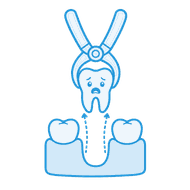
X-ray-guided removal · only when there's a clear reason
At Arasu Dental Care, wisdom tooth removal gets you out of pain and protects the healthy teeth around it — whether your third molar is pressing on its neighbour, half-erupted and trapping food and infection, or fully buried in the jaw. We take an X-ray first, map exactly where the tooth and the nearby nerve sit, and remove it under local anaesthesia so the procedure stays comfortable from start to finish.
It's the right step when a wisdom tooth is impacted, repeatedly infected, decayed beyond repair, or crowding the teeth in front of it. If yours is healthy, fully erupted and easy to clean, we'll tell you that too — removal isn't automatic, and we only recommend it when there's a clear reason.
Open all seven days, 10:00 AM – 8:30 PM · R.S. Puram +91 88380 22157 · Saibaba Colony +91 74491 88777
Not sure whether your wisdom tooth actually needs to come out? Book a consultation at either branch and an X-ray will tell you clearly — R.S. Puram +91 88380 22157 or Saibaba Colony +91 74491 88777. Open every day, 10:00 AM to 8:30 PM.
The honest answer
Not every wisdom tooth has to come out. The honest answer depends on how yours has come through and whether it's causing — or clearly heading toward — trouble. After an examination and an X-ray, we can tell you which situation you're in. We usually recommend removal when:
It's impacted — stuck against the tooth in front or angled under the gum, where it can damage the neighbouring molar. Impacted third molars are common, affecting anywhere from roughly a quarter to more than two-thirds of adults depending on how it's measured.
It keeps getting infected — a half-erupted tooth traps food and bacteria under a flap of gum (pericoronitis). Regular professional scaling and cleaning can help, but a tooth that flares up again and again is usually better out.
It's decayed — wisdom teeth sit so far back they're hard to clean, so they decay early and often can't be reliably restored.
It's crowding or pressing your other teeth, or sitting where a cyst could form around it.
What's involved
How your removal is done comes down to one thing: whether the tooth has erupted into the mouth, or is still trapped in gum and bone.
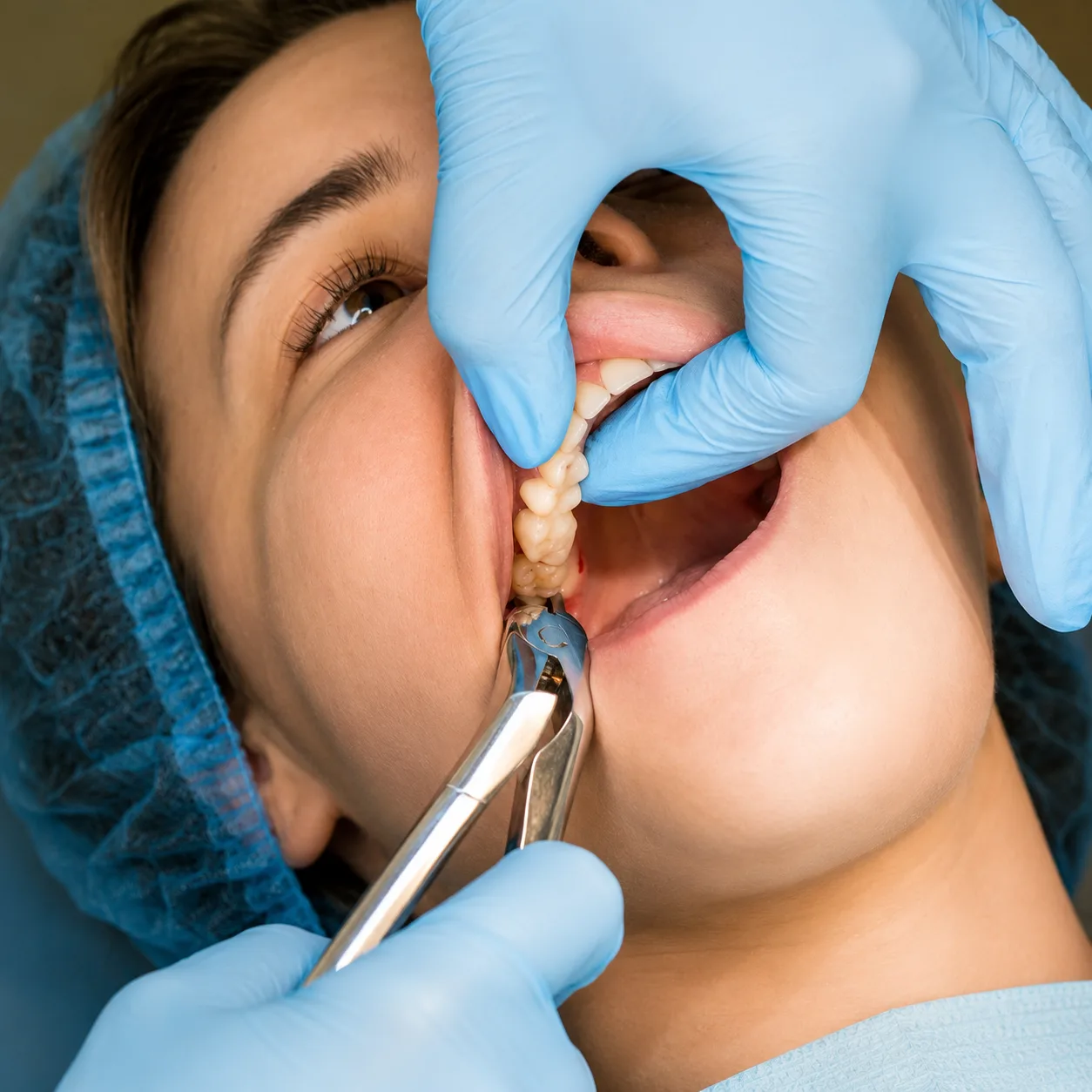
A simple extraction is for a wisdom tooth that has come through normally. We numb the area with local anaesthesia, ease the tooth loose, and lift it out. It's usually done in a single short appointment, and most people are surprised by how straightforward it is.
A surgical extraction is for an impacted tooth — one that's partly or fully under the gum or bone. We make a small opening in the gum, remove a little bone if needed to reach the tooth, and often divide it into pieces so it comes out cleanly through a smaller space. A stitch or two closes the site. This is routine oral surgery for us, and it's still done under local anaesthesia in the chair — general anaesthesia is rarely needed for a third molar.
Either way, we image the tooth first. For lower wisdom teeth especially, the X-ray — and an OPG or 3D scan where the case calls for it — shows us how close the roots sit to the nerve in the jaw, so we plan the safest route before we start.
| Type of removal | When we use it | What's involved |
|---|---|---|
| Simple extraction | A wisdom tooth that has erupted normally into the mouth | Numb, loosen, lift out · short visit |
| Surgical extraction | An impacted tooth partly or fully under the gum or bone | Small gum opening, often divided, stitched |
Want to know exactly what a routine removal feels like, step by step?We walk through it in our guide on what happens during a simple tooth extraction.
Read the step-by-step guideHealing well
Most people are back to their normal routine within a few days. Recovery generally takes one to two weeks to settle fully, but the disruptive part is short. It varies from person to person, and surgical cases take a little longer than simple ones.
FIRST 24 HOURS
Expect a gauze pad, a little oozing, and the numbness wearing off. Rest, keep your head slightly raised, and use a cold pack on the cheek.
DAY 2–4
Swelling and discomfort tend to peak around the third or fourth day, then ease steadily. This is the point to stay on your painkillers as prescribed.
DAY 5 ONWARD
Pain and swelling drop off and most people return to work or college. If pain instead gets worse after day four, call us — it can signal an infection we can treat quickly.
Individual results vary depending on the tooth, the type of extraction, your general health and how closely aftercare is followed. A personalised assessment with our dentists is the only way to know what's realistic for your case.
Straight talk
A wisdom tooth extraction is a common, well-understood procedure — but it's still surgery, and we'd rather you go in knowing the real picture.
The most common worry, especially for lower wisdom teeth, is numbness in the lip or tongue from the nerve that runs through the lower jaw. This is exactly why we image the tooth first — to see where that nerve sits relative to the roots and plan around it. Serious, lasting nerve injury is uncommon.
If the clot over the socket is lost, healing slows and the site becomes painful for a few days. It happens in roughly 1 in 20 routine extractions, and more often with surgical removal of lower wisdom teeth — which is why the no-straw, no-smoking advice matters so much. It's treatable, and we'll see you promptly if it happens.
In younger patients the roots aren't fully formed and the bone is softer, so removal — and recovery — tends to be simpler. That's worth weighing if a tooth is likely to need removing eventually.
You don't have to remove healthy wisdom teeth just because one is a problem. We'll recommend taking out only what genuinely needs to come out — though if several are impacted, doing them together can save you a second recovery. We'll talk you through what makes sense for your case.
Cost
What a wisdom tooth removal costs depends mostly on how the tooth is positioned. A simple extraction of an erupted tooth sits at the lower end; a surgical removal of a fully impacted lower tooth — more time, imaging, and skill — sits higher. What moves the figure:
How the tooth is positioned — erupted and simple, or partly to fully impacted and surgical.
The imaging your case needs — an X-ray, an OPG, or a CBCT 3D scan for tricky lower teeth.
How many are removed — one tooth, or several taken out in a single visit.
Any follow-up care — review visits or suture removal the site needs to settle.
Not sure what your case would cost?A consultation and X-ray give you an exact plan and price, not a guess. R.S. Puram +91 88380 22157 · Saibaba Colony +91 74491 88777.
Get your estimateWho treats you
Wisdom teeth are where careful planning matters most. Impacted and surgical removals are carried out by Dr. P.R. Gouthaman (MDS, Oral & Maxillofacial Surgery), who manages these cases as part of regular practice. Your case is handled here, not referred out.

Get Started
If a wisdom tooth is causing you pain, swelling, or worry, the first step is simply to have it looked at. We'll examine it, take an X-ray, tell you honestly whether it needs to come out, and if it does, plan the safest, most comfortable way to do it. Send your X-ray ahead and we'll be ready for you.
Getting a troublesome wisdom tooth seen early is simpler than waiting.
Why Arasu
Wisdom teeth are where careful planning matters most, and it's a procedure we handle routinely across both branches.
Every extraction is planned from an X-ray — and an OPG or 3D scan for tricky lower teeth — so we know exactly where the roots and the nerve are before we begin.
Impacted and surgical cases are managed by Dr. P.R. Gouthaman (MDS, Oral & Maxillofacial Surgery) as part of regular practice.
You can be seen in R.S. Puram or Saibaba Colony, both open every day, 10 AM to 8:30 PM — useful when a wisdom tooth flares up and you need to be seen quickly.
If the tooth can actually be saved rather than removed — for instance with root canal treatment — or if you later want a gap restored, the right specialist is already in the building.
Bring your X-ray — an exam and a scan give you a straight answer
R.S. Puram: 129, W Sambandam Road, Coimbatore 641002 · +91 88380 22157 · Saibaba Colony: 160, NSR Road, Coimbatore 641011 · +91 74491 88777. Open 10:00 AM – 8:30 PM · WhatsApp +91 96007 56297.
Patient Reviews
A lower wisdom tooth had been flaring up for months. They took an OPG, showed me exactly where the nerve was, and removed it surgically. Calmer than I expected and back to work in three days.
Went in sure I'd need all four out. They said only one was a problem and monitored the rest — no over-treatment. Honest advice you don't always get.
Half-erupted wisdom tooth kept getting infected. Simple extraction, over in a short appointment, clear aftercare and dissolving stitches. No dry socket. Being open on Sunday helped.
The X-ray, the plan and the cost were all explained before we started. What I feared most — the nerve — was exactly what they'd planned around. Genuinely reassuring.
FAQs
The procedure itself is done under local anaesthesia, so you'll feel pressure but not pain while it's carried out. Afterwards, as the numbness wears off, expect some soreness for a few days — manageable with the painkillers we prescribe. Most people describe it as far easier than they feared.
A nerve runs through the lower jaw near the roots of lower wisdom teeth, which is why we always image the tooth first and plan around it. Temporary altered sensation is uncommon and usually settles; lasting injury is rare. Imaging the anatomy beforehand is the key safeguard.
Almost all wisdom tooth removals — including surgical ones — are done under local anaesthesia, with you awake and comfortable. General anaesthesia is rarely needed for a third molar.
They can, and for some patients that's the sensible choice — one recovery instead of several. But we never remove healthy teeth just to round up the number. We'll recommend only what your case needs.
Most people return to routine in three to five days, with full healing over one to two weeks. Surgical removals take a little longer than simple ones. Results vary from person to person.
Stick to soft, cool foods for the first few days — curd rice, idli, pongal, smoothies. Avoid straws, smoking, and hard or very hot food until the site settles.
Usually not — we typically use dissolving stitches that disappear on their own. If non-dissolving ones are used, we remove them in a brief visit around 7–10 days later.
Some swelling and soreness peaking around day three is normal. If pain worsens after day four, you develop a fever, or bleeding doesn't settle, call us — these can point to infection or dry socket, both of which we treat quickly.
Medical disclaimer: this page is general information, not a diagnosis. Individual results vary based on your oral health, the tooth involved and how closely aftercare is followed. Consult our dentists for a personalised assessment.
Book your wisdom tooth consultation at Arasu Dental Care
If a wisdom tooth is causing you pain, swelling, or worry, the first step is simply to have it looked at. We'll examine it, take an X-ray, and tell you honestly whether it needs to come out. Open 10 AM – 8:30 PM, all week · WhatsApp +91 96007 56297.
More From Arasu