Bite correction & habit therapy by an MDS orthodontist & TMJ specialist

Open Bite Treatment in Coimbatore

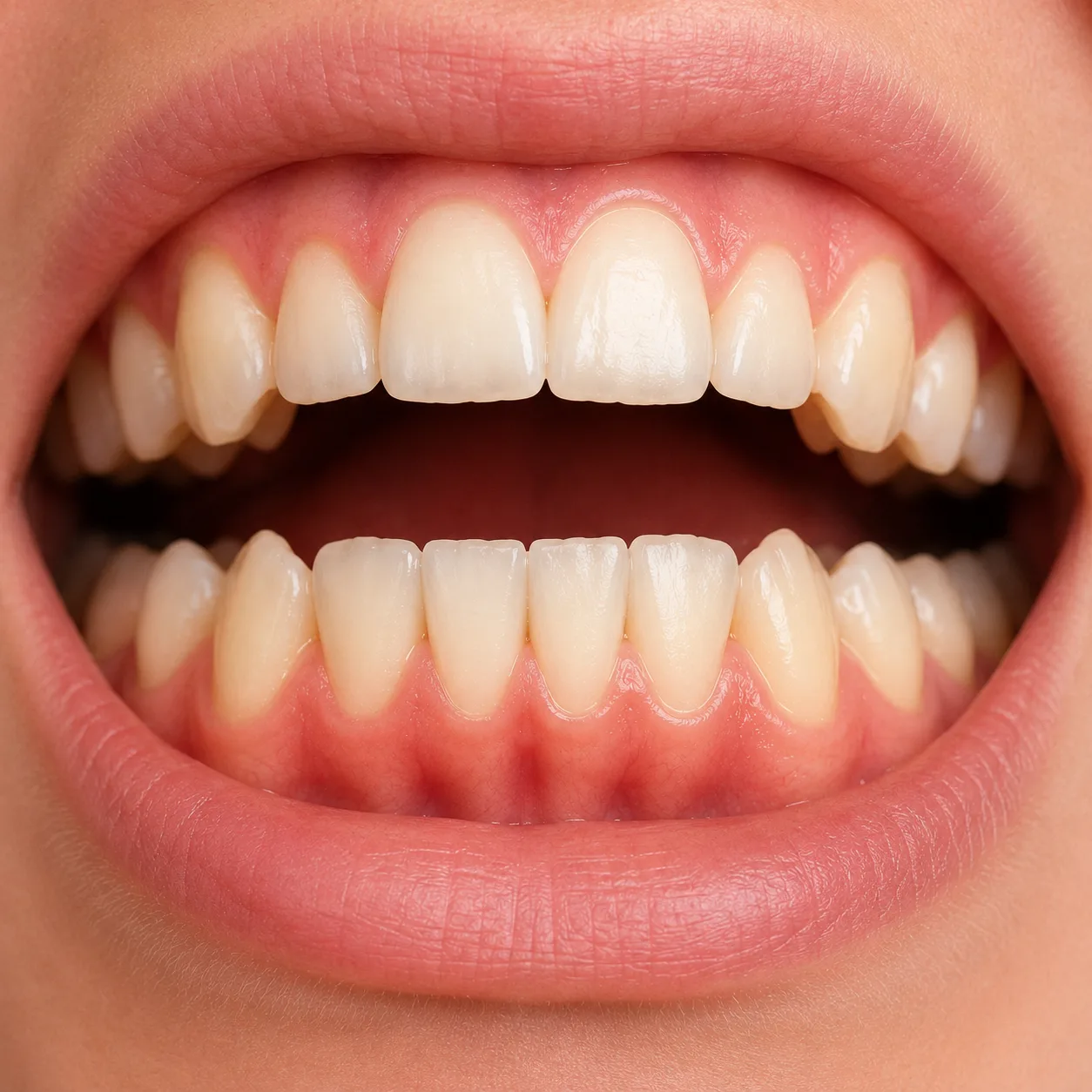
If your front teeth don't touch when you close your mouth — leaving a visible gap even when your back teeth are together — you have an open bite, and it affects more than your smile. Biting into food with your front teeth becomes difficult, certain speech sounds (especially “s” and “z”) can slip into a lisp, and your back teeth take chewing load they weren't designed to carry alone.

At Arasu Dental Care, open bite correction is planned by Dr. P.S. Sree Cumar, our founder and MDS orthodontist — a Fellow of the World Federation of Orthodontists (USA) and Dentist of the Year (South Region) at the Economic Times Healthcare Awards 2023 — whose specialisation in myofunctional appliances is directly relevant here, because most open bites begin with a habit, not just the teeth. We treat open bites with braces or clear aligners at both our R.S. Puram and Saibaba Colony branches, open all seven days.

Call us

Open all seven days, 10:00 AM – 8:30 PM · R.S. Puram +91 88380 22157 · Saibaba Colony +91 74491 88777
MDS orthodontist-ledEvery open bite planned by a specialist, not a checklist
Habit therapy in-houseTongue-thrust & sucking habits treated, not ignored
Two Coimbatore branchesR.S. Puram & Saibaba Colony
Open all 7 days10:00 AM – 8:30 PM, both branches
Rated by 1,100+ patients4.8 on Google

Know your problem

Is this the problem you're seeing?

An open bite is one of the less common bite problems, which is partly why it gets missed. Around 17% of people seeking orthodontic treatment present with an anterior open bite, and studies place its prevalence in children and adolescents at roughly 11–16.5%, falling as children grow — many early open bites self-correct when a sucking habit stops in time. The signs that matter for your decision:

The signs that matter for your decision

  • Your front teeth don't meet when your back teeth are fully closed — you can see a gap or even slide your tongue through it.
  • You bite sandwiches, dosa or fruit with your side teeth because the front ones can't cut through.
  • A lisp or air escaping on “s” sounds, or a tongue that pushes forward against the teeth when you swallow.
  • In children: a thumb-sucking, pacifier or prolonged bottle habit past age 3–4, with the front teeth visibly lifting apart.

There are two forms. An anterior open bite — the common one — is the front-teeth gap described above. A posterior open bite, where back teeth on one or both sides fail to meet, is rarer and usually shows up as inefficient chewing. Both are diagnosed the same way at your consultation: a clinical exam plus an OPG X-ray, and a cephalometric assessment when we need to see whether the open bite is dental (tooth position) or skeletal (jaw growth pattern) — a distinction that decides your entire treatment route.

Cause decides the treatment

What causes it — and why the cause decides the treatment

Most open bites are habit-driven. Research on Indian children identifies thumb and digit sucking as the single most important cause of anterior open bite in the early years, with tongue thrusting — the tongue pressing forward between the teeth on every swallow — keeping the bite open long after the original habit stops.

The majority of cases

Habit-driven open bites

Thumb and digit sucking, tongue thrusting, mouth breathing and prolonged pacifier use all contribute the same way: constant forward pressure that holds the front teeth apart while the back teeth keep erupting. Because the force is the cause, the force has to be removed — which is why habit therapy sits at the centre of the plan.

A smaller group

Skeletal open bites

A smaller group of open bites is skeletal — a vertical jaw growth pattern the person is born with — and no amount of tooth movement alone fixes those fully. These are the cases that may need growth modification or jaw correction, which is exactly why we identify them before treatment starts.

This is why we assess the cause before we plan anything. Straightening the teeth while a tongue thrust continues is the classic reason open bite corrections relapse — the habit simply pushes the teeth apart again. Where a habit is active, we combine orthodontics with habit correction: tongue cribs, myofunctional appliances and swallowing retraining, which is precisely the appliance category Dr. Sree Cumar specialised in. For children still growing, early habit interception is often the difference between a short corrective phase now and full braces later — our pediatric dentistry team handles habit-breaking appliances for young children.

Why timing matters

What happens if you leave it untreated

An untreated open bite doesn't stay a cosmetic issue. Because your front teeth never share the biting load, your back teeth do all the work — accelerating wear, and in some patients straining the jaw joint enough to produce TMJ-type jaw pain. Speech patterns that develop around the gap become harder to retrain with age. And in growing children, the longer the habit and open bite persist, the more the jaw grows around it, pushing a straightforward dental correction toward a complex skeletal one. None of this means panic — it means the earlier we assess it, the simpler and cheaper the fix tends to be.

Treatment options

How we correct an open bite at Arasu Dental Care

Treatment depends on your age, the cause, and whether the open bite is dental or skeletal. For the large majority of dental open bites, the route is orthodontic:

TreatmentSuited forHow it closes the biteTypical duration
Clear alignersMild to moderate anterior open bites in teens and adults; patients who want a discreet optionProgrammed intrusion of back teeth and controlled extrusion of front teeth; the aligner material itself acts as a bite block, which makes aligners genuinely effective for open bites12–24 months
BracesModerate to severe open bites; cases needing precise vertical control or combined with elasticsBrackets, archwires and vertical elastics bring the front teeth into contact while controlling the back teeth18–30 months
Habit correction appliancesChildren and any patient with an active tongue thrust or sucking habitTongue cribs and myofunctional appliances retrain the tongue and remove the force holding the bite open — used alone in young children or alongside braces/aligners6–12 months, often overlapping
Jaw correctionSevere skeletal open bites in adults where tooth movement alone cannot close the biteGrowth modification in adolescents, or orthognathic surgery combined with orthodontics in adultsCase-dependent; we refer honestly when this is the right route
3.3 mm

A point worth knowing before you compare options: open bite is one of the corrections where clear aligners perform particularly well. A 2023 study in the American Journal of Orthodontics following anterior open bite patients treated with aligners recorded an average bite closure of 3.3 mm, and only 6% of patients showed relapse after more than a year in retention. That doesn't make aligners right for every case — severe and skeletal open bites still do better with braces or combined approaches — but it means the discreet option is a genuinely clinical one here, not a compromise. At your consultation we'll tell you plainly which route fits your bite, and why.

Before you commit

Honest considerations before you start

Two things we'll be straight with you about

  • Relapse is the real risk with open bites, and we plan for it from day one. Across all treatment approaches, research puts long-term open bite correction success at around 77% at three-year follow-up — better than its old reputation, but lower than simpler tooth-alignment corrections. The difference between staying corrected and relapsing almost always comes down to two things: whether the tongue habit was actually retrained, and whether retainers were worn as prescribed. That is why our treatment plans include habit therapy where a thrust is present, and why we're direct about retention being a long-term commitment, not an afterthought. Results vary between patients based on the severity of the open bite, the underlying cause, age, and how consistently aligners, elastics and retainers are worn.
  • If your open bite is skeletal, we will tell you at the assessment stage — not after months of tooth movement. Camouflaging a mild skeletal open bite orthodontically is sometimes reasonable, and we'll explain the trade-off; a severe one needs jaw correction, and pretending otherwise wastes your time and money.

Transparent pricing

Open bite treatment cost in Coimbatore

Because open bite correction is orthodontic, your cost follows the appliance you choose and the complexity of your case. Our current ranges:

TreatmentCost range (₹)Typically suits
Consultation₹300 – ₹500Assessment and treatment plan
OPG X-ray (diagnosis)₹400 – ₹600Confirms dental vs skeletal open bite
Metal braces₹30,000 – ₹50,000All open bite types; the workhorse option
Ceramic braces₹35,000 – ₹70,000Same mechanics, less visible
Self-ligating braces₹50,000 – ₹80,000Comfort-focused fixed option
Lingual braces₹70,000 – ₹1,00,000Fixed treatment hidden behind the teeth
Clear aligners — mild case₹50,000 – ₹70,000Mild anterior open bites
Clear aligners — complex case₹1,50,000 – ₹3,00,000Multi-tooth or combined corrections
Habit correction appliance (tongue crib / myofunctional)Case-by-caseQuoted after assessment; type and duration vary by age

Prices are subject to individual consultation — the exact figure depends on the severity of the open bite, whether habit therapy runs alongside, and the appliance you choose. We accept UPI, cards, cash and EMI options, and we'll give you the full written cost before treatment begins, with no additions mid-way. For a detailed breakdown by appliance, see our braces cost guide and clear aligners cost guide.

Not sure whether yours is a habit, dental or skeletal open bite?A single consultation with our orthodontist settles it — call R.S. Puram on +91 88380 22157 or Saibaba Colony on +91 74491 88777.

Book a consultation

Why Arasu

Why treat your open bite at Arasu Dental Care

Open bite is the malocclusion where the orthodontist's grasp of habit mechanics matters most, and it's a specific strength here. You get the full route under one roof — diagnosis, habit therapy, braces or aligners, and retention — at both branches, open 10 AM to 8:30 PM every day of the week, with transparent written costs before you commit.

The habit is treated, not just the teeth

Dr. P.S. Sree Cumar is an MDS orthodontist whose stated clinical focus includes myofunctional and fixed appliances and clear aligners — the exact toolkit open bite correction draws on. Because most open bites begin with a habit, retraining the tongue is built into the plan, not bolted on afterwards.

The bite and the jaw joint, assessed together

Open bites can strain the jaw joint, so the same specialist who plans your correction also handles the TMJ and jaw-pain cases open bites sometimes create — one plan, not two disconnected ones.

A full team for every age

He is supported by Dr. Sneha K Achuthan, MDS, for teen orthodontics, and our pediatric team for early habit interception in young children — so a child, a teen and an adult are each seen by the right hands.

Open every day, transparent costs

Both branches open all seven days, 10 AM to 8:30 PM, with the full written cost given before you commit. R.S. Puram (+91 88380 22157) · Saibaba Colony (+91 74491 88777).
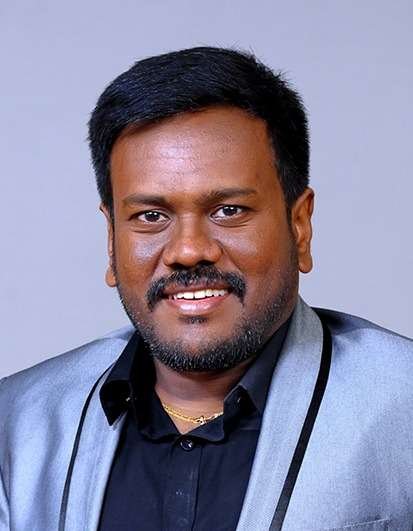
Dr. P.S. Sree Cumar, MDS Orthodontist and founder of Arasu Dental Care, Coimbatore

Dr. P.S. Sree Cumar, MDS

Founder · Orthodontics & Dentofacial Orthopedics · Fellow, World Federation of Orthodontists (USA)

Named Dentist of the Year – South Region at the 2023 Economic Times Healthcare Awards, and Senior Lecturer at RVS Dental College. His stated focus on myofunctional and fixed appliances and clear aligners — alongside TMJ care — is the exact toolkit open bite correction draws on. View profile

Dr. Sneha K Achuthan, MDS Orthodontist at Arasu Dental Care, Coimbatore

Dr. Sneha K Achuthan, MDS

Orthodontist

Supports teen orthodontic and bite-correction cases across both branches. View profile

FAQs

Frequently asked questions about open bite treatment

Yes, in most cases. Dental open bites — the majority — respond to braces or clear aligners, usually combined with habit correction if a tongue thrust is present. Surgery only enters the picture for severe skeletal open bites in adults, and we tell you at the diagnosis stage if yours falls in that category.

Yes — open bite is one of the corrections aligners handle well, because the aligner material sits between the back teeth and helps intrude them while the front teeth are brought together. A 2023 study recorded an average 3.3 mm bite closure with only 6% relapse after a year-plus in retention. Severe cases still do better with braces; we'll assess which applies to you.

It can — if the sucking or tongue habit stops early enough, many open bites in young children self-correct as the adult teeth erupt. That window closes as the child grows. If the habit persists past age 3–4 or the gap is widening, an early assessment lets us intercept with a simple habit appliance rather than full braces later.

Typically 12–24 months with aligners for mild to moderate cases and 18–30 months with braces for more complex ones, plus a retention phase afterwards. Habit correction, where needed, usually runs in parallel rather than adding time. Your timeline depends on severity, age and how consistently appliances are worn — results vary.

Almost always because the tongue habit that caused the open bite was never retrained — the tongue keeps pushing the teeth apart after the braces come off. Long-term studies put overall success around 77% at three years. Our plans include habit therapy where a thrust is present and a clear retention protocol, which is where that risk is actually managed.

At Arasu Dental Care, braces for open bite correction range from ₹30,000 (metal) to ₹1,00,000 (lingual), and clear aligners from ₹50,000 for mild cases to ₹3,00,000 for complex ones. The exact figure depends on severity and appliance choice — you'll get a full written quote at consultation, and EMI options are available.

It can. The gap between the front teeth lets air escape on sounds like “s” and “z”, producing a lisp, and the tongue often adapts by thrusting forward — which then keeps the bite open. Closing the bite and retraining the swallow together typically improves speech, though long-established patterns in adults may also benefit from speech therapy.

Still have a question? Call either branch, or book a visit and we'll answer it in person — open all 7 days. For other symptoms, start at our dental problems guide.

Individual results vary based on the type and severity of the open bite, the underlying cause, age, and how consistently appliances and retainers are worn. Consult with our orthodontist for a personalized assessment. Statistics reflect published dental research, not a promise of individual outcomes.

Arasu Dental Care — open all 7 days, 10:00 AM – 8:30 PM

Book your open bite assessment

Whether it's a front-teeth gap that won't close, chewing that lands on the wrong teeth, or a child's thumb habit that hasn't stopped — the first step is one visit with our orthodontic team. You'll leave knowing whether yours is a habit, dental or skeletal open bite, and exactly what correcting it will involve and cost. WhatsApp +91 96007 56297 · arasudentalcare@gmail.com.

R.S. Puram (main branch)

129, W Sambandam Road, R.S. Puram, Coimbatore, Tamil Nadu 641002
10 AM – 8:30 PM, Monday–Sunday

Saibaba Colony

160, NSR Road (above Donuts Cake Shop), Saibaba Colony, Coimbatore, Tamil Nadu 641011
10 AM – 8:30 PM, Monday–Sunday