If your dentist has recommended a crown for a damaged or weak tooth, you may have come across the option of metal dental crowns. These crowns are one of the oldest and most trusted restorations in dentistry, known mainly for their strength and long lifespan.
Many patients feel unsure about which crown material is right for them. Understanding the different types of metal dental crowns can help you make a calm and informed decision with your dentist.
In this guide, we explain what metal crowns are, the different types available, when they are recommended, and how they compare with other crown options. The goal is to give you clear, honest information without any pressure.
What Is a Metal Dental Crown?
A metal crown is a tooth-shaped cap made entirely from metal or a metal alloy. It is placed over a damaged tooth to restore its shape, strength, and chewing function.
Unlike tooth-coloured crowns, metal crowns have a silver or gold appearance. Because of this, they are usually placed on back teeth where they are not easily visible during a smile.
Metal crowns are often chosen for their durability. According to the American Dental Association, they can last many years when cared for properly.
Why Metal Crowns Are Still Used in Modern Dentistry
Even with newer materials like zirconia and ceramic, metal crowns continue to hold an important place in dental care. They are especially useful for molars that handle heavy biting and chewing forces.
Dentists often recommend metal crowns when strength matters more than appearance. They also require less tooth reduction compared to other crown types, which helps preserve more of your natural tooth.
Types of Metal Dental Crowns
There are several types of metal crowns, and each one has its own properties. The right choice depends on your tooth location, bite pressure, budget, and personal health factors.
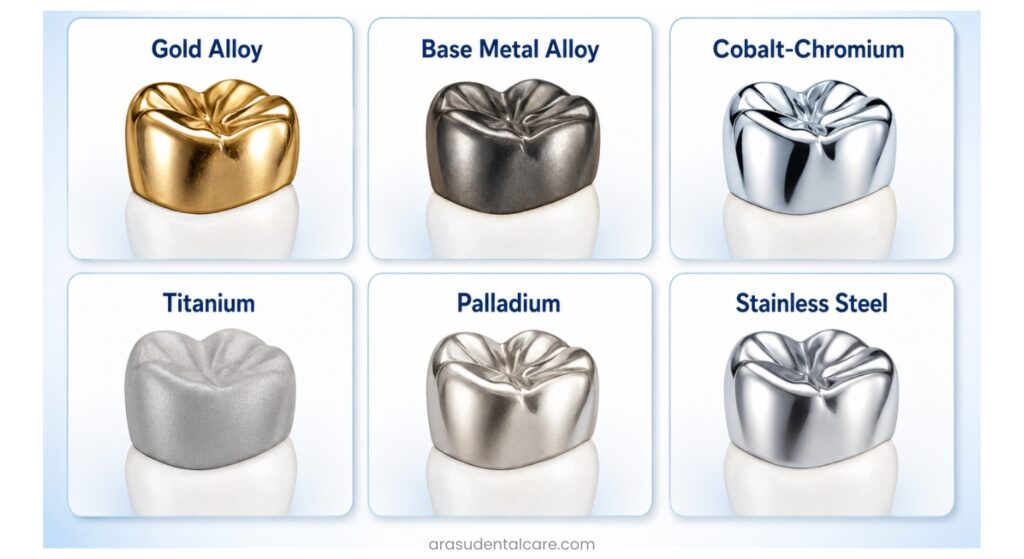
1. Gold Alloy Crowns
Composition: Gold alloy crowns are made from a mix of gold, copper, and small amounts of other metals.These crowns are valued for their excellent fit, gentle wear on opposing teeth, and long lifespan.
Best For: Patients who need a durable crown on a back molar.Gold crowns rarely chip or crack and work well for people with strong biting forces.
Drawback: The yellow colour makes them noticeable.They are also more expensive due to the cost of gold.
2. Base Metal Alloy Crowns
Composition: These crowns are made from non-precious metals such as nickel, chromium, or cobalt-chromium.They are strong, affordable, and resistant to corrosion.
Best For: Patients looking for a budget-friendly yet long-lasting restoration.They are commonly used for posterior teeth where strength is the main priority.
Drawback: Some patients may have a nickel sensitivity or allergy.Your dentist can suggest a nickel-free alternative if needed.
3. Cobalt-Chromium Crowns
Composition: A widely used alloy in modern dentistry, combining cobalt and chromium for high strength.This alloy is biocompatible and generally well tolerated.
Best For: Patients who need a strong, allergy-friendly metal crown at a reasonable cost.It is also a popular choice for crowns used as part of a dental bridge.
Drawback: Like other metal crowns, the silver-grey shade is visible.This makes it less ideal for front teeth.
4. Titanium Crowns
Composition: Made from titanium, a metal known for being lightweight, strong, and highly biocompatible. It is the same material widely used in dental implants.
Best For: Patients with metal sensitivities or those who already have titanium implants.Titanium is gentle on the gums and resists corrosion well.
Drawback: Titanium crowns are usually more expensive than base metal options.They also have a darker grey appearance.
5. Palladium-Based Crowns
Composition: A semi-precious metal crown that contains palladium along with other metals.It offers a good balance between cost and quality.
Best For: Patients who want a strong crown without the higher cost of pure gold.Palladium is also resistant to tarnishing.
Drawback: Availability may vary based on the clinic and lab.The metallic shade remains visible.
6. Stainless Steel Crowns (Mostly for Children)
Composition: Pre-formed crowns made from stainless steel.They are mainly used as a temporary or short-term solution.
Best For: Children who need protection for a baby tooth after a pulp treatment.They are also used as a temporary crown for adults while the permanent crown is being prepared.
Drawback: Not designed for long-term use in permanent teeth.They naturally come off when a baby tooth falls out.
When Does a Dentist Recommend a Metal Crown?
Metal crowns are not the right choice for every tooth. A dentist considers several factors before suggesting them.
For back molars with heavy chewing pressure: Metal crowns can handle strong biting forces without cracking.This makes them ideal for hidden teeth that do daily heavy work.
For patients who grind their teeth: People with bruxism often wear down softer crown materials.A metal crown can resist this pressure more effectively.
When less tooth reduction is preferred: Metal crowns are thinner than ceramic crowns.This allows your dentist to remove only a small amount of natural tooth structure.
For root canal treated molars: A tooth that has had a root canal treatment becomes more brittle.A strong metal crown helps protect it from future fractures.
For dental bridges on back teeth: Metal crowns can serve as strong supports for fixed bridges.They handle the additional load very well.
Advantages of Metal Dental Crowns
Excellent strength and durability: Metal crowns can last 15 to 30 years or more in many cases.They are less likely to chip or break compared to porcelain options.
Minimal tooth reduction needed: Your dentist only needs to remove a thin layer of enamel.This helps preserve more of the natural tooth.
Gentle on opposing teeth: Gold and certain alloys do not wear down the opposite tooth easily.This is helpful for long-term oral health.
Good biocompatibility: Most metal alloys are well tolerated by the body. Allergic reactions are rare with modern materials.
Strong resistance to fractures: Even under heavy bite pressure, metal crowns rarely crack.This makes them reliable for posterior teeth.
According to research published in The Journal of the American Dental Association, full-metal crowns continue to show some of the highest long-term survival rates among all crown types.
For More, Read Our Latest blog: Advantages of Metal Crown : Procedure and Cost
Disadvantages to Consider
Metallic appearance: The silver or gold colour does not match natural teeth.This is why metal crowns are usually avoided in the smile zone.
Possible metal sensitivity: Some patients may react to nickel or other base metals.Your dentist can recommend a hypoallergenic option if needed.
Temperature sensitivity: Metal conducts heat and cold more than ceramic materials.You may feel temporary sensitivity after placement, but it usually settles down.
Cost can vary: Gold and titanium crowns are more expensive than base metal options.Your dentist can help you choose what suits your budget.
Metal Crowns vs Other Crown Types
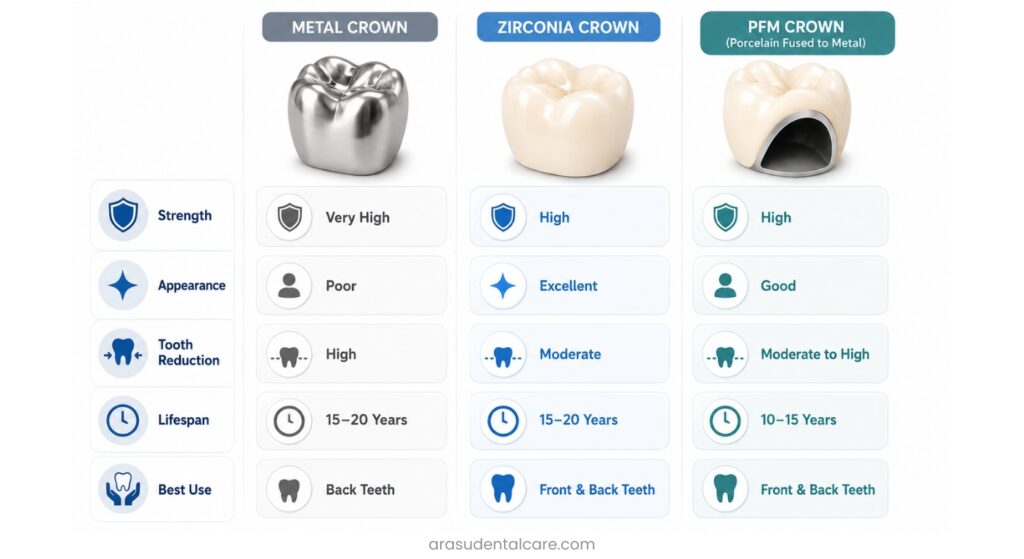
| Feature | Metal Crowns | PFM Crowns | Zirconia / Ceramic |
| Strength | Very high | High | High |
| Aesthetics | Low | Moderate | Very natural |
| Tooth Reduction | Minimal | Moderate | Moderate |
| Lifespan | 15–30+ years | 10–15 years | 10–15 years |
| Best Use | Back teeth | Front & back | Front & back |
Your dentist will help match the right crown type to your specific tooth and oral health needs.
What to Expect During a Metal Crown Procedure
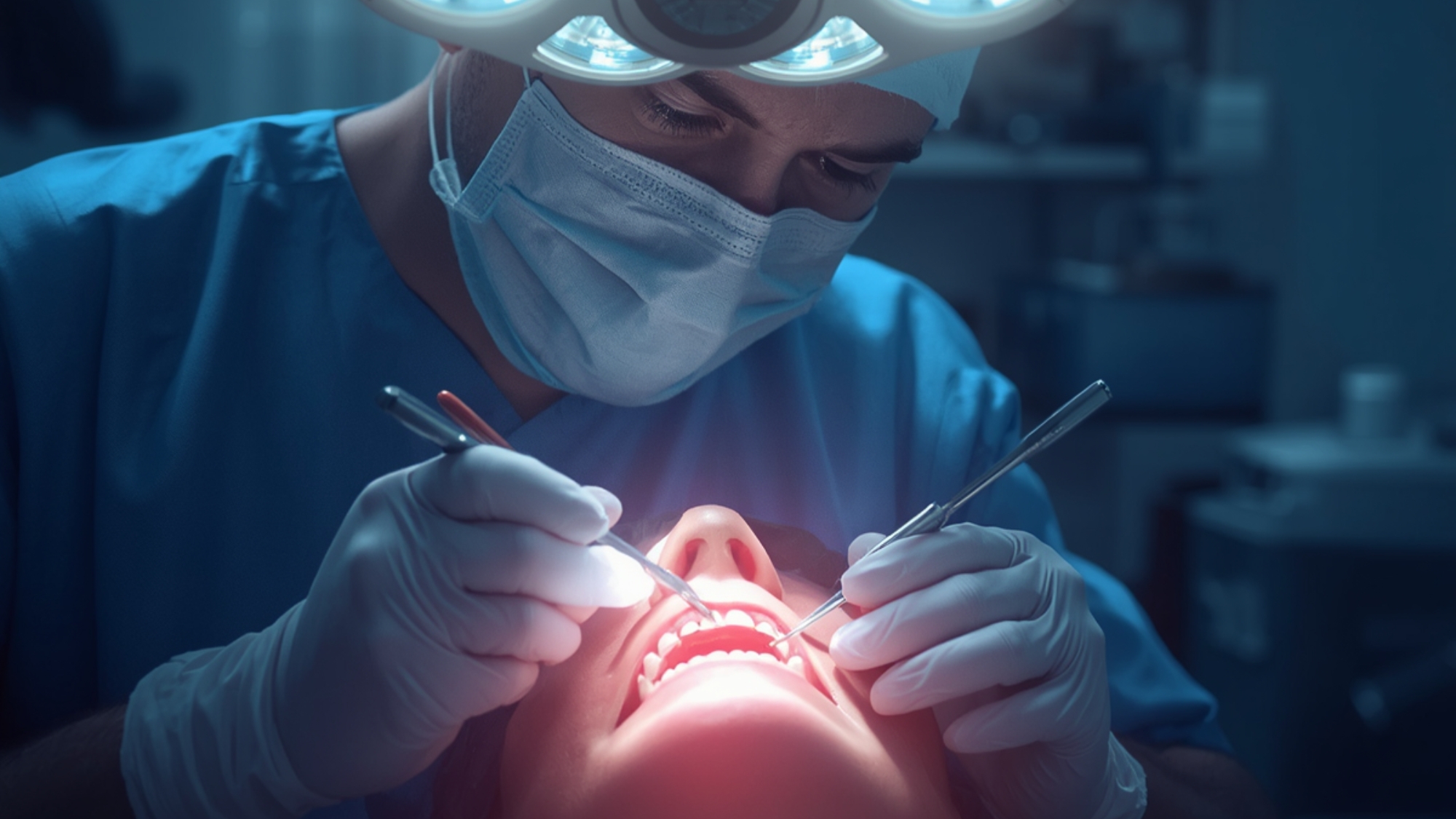
The procedure usually takes two visits, although some clinics offer same-day options. Your dentist will first examine the tooth and take an X-ray to confirm if a crown is the right choice.
Tooth preparation: A small layer of the tooth is gently shaped to make room for the crown.Local anaesthesia is used so the process is comfortable.
Impression or digital scan: Your dentist will take an impression of the prepared tooth.This is sent to a dental lab where your crown is custom-made.
Temporary crown placement: A temporary crown is placed while the permanent one is prepared.You can eat and speak normally with it.
Final fitting: Once ready, your permanent metal crown is checked for fit and bite.It is then cemented securely in place.
Recovery is usually smooth, with mild sensitivity for a few days. The Cleveland Clinic notes that most patients return to normal activities right after the appointment.
How to Care for Your Metal Crown
A metal crown can last for decades when cared for well. Good oral hygiene helps protect both the crown and the natural tooth beneath it.
Brush twice daily with a soft-bristled brush: This keeps the gum line healthy and prevents decay around the crown.Use a fluoride toothpaste for added protection.
Floss gently around the crown: Cleaning between teeth removes plaque that a toothbrush cannot reach.This helps prevent gum issues.
Avoid biting very hard objects: Ice, hard candy, and pen caps can damage even a strong metal crown.Be mindful, especially in the first few weeks.
Visit your dentist regularly: Routine check-ups help spot any small issues early. Professional cleaning also keeps your crown looking and feeling great.
Final Thoughts
Metal dental crowns have stood the test of time for a reason — their strength, longevity, and reliability make them one of the most practical restorations available, particularly for back teeth that bear the heaviest chewing forces. With several types to choose from, including gold alloy, cobalt-chromium, titanium, and more, there is a metal crown option to suit different budgets, bite requirements, and health considerations. The right type for your tooth depends on factors that only a thorough clinical examination can determine.
If you have a damaged molar, a root canal-treated tooth, or are simply unsure whether a metal crown is the right choice for you, the best first step is always a proper dental assessment.
At Arasu Dental Care in Coimbatore, we take the time to understand your dental needs and explain your crown options clearly — whether that is a metal crown, zirconia, or something else entirely. Our goal is to help you make a decision that works for your tooth, your bite, and your budget. Book a consultation with us today and let us find the right restoration for your smile.
Frequently Asked Questions
1. Are metal dental crowns safe for long-term use?
Yes, metal crowns are generally safe and have been used in dentistry for decades. Your dentist will ensure the material chosen suits your health and any allergies.
2. How long do metal crowns last?
On average, metal crowns last 15 to 30 years. Some can last even longer with good oral hygiene and regular dental checkup near me visits.
3. Will a metal crown look very obvious?
Metal crowns have a silver or gold colour, so they can be visible. This is why they are mostly placed on back teeth that are not seen when you smile.
4. Will a metal crown be visible when I smile?
Metal crowns are most commonly placed on back molars, which are not usually visible during a normal smile. However, if you smile widely or your back teeth are more exposed, the metallic colour may be noticeable.
5. Can I get a metal crown if I grind my teeth?
Metal crowns are actually one of the better choices for patients who grind or clench their teeth, as they are more resistant to wear and fracture than ceramic alternatives.
6. How do I know if my metal crown needs to be replaced?
Signs that a metal crown may need replacement include persistent pain or sensitivity around the tooth, a loose or ill-fitting feel, visible damage, a bad taste or odour near the crown, or decay detected underneath during a routine check-up.