What Is Laser Gum Contouring and Its Benefits
If your gums look uneven or cover too much of your teeth when you smile, laser gum contouring may be the gentle solution you have been looking for. This modern cosmetic dental procedure uses a focused dental laser to reshape the gum line and bring better balance to your smile.
Many patients feel self-conscious about a “gummy smile” or short-looking teeth. The good news is that today’s laser technology makes gum reshaping more comfortable, precise, and quicker to heal than older surgical methods.
In this guide, we will explain what laser gum contouring is, why it is done, who needs it, and what to expect during treatment and recovery.
What Is Laser Gum Contouring?
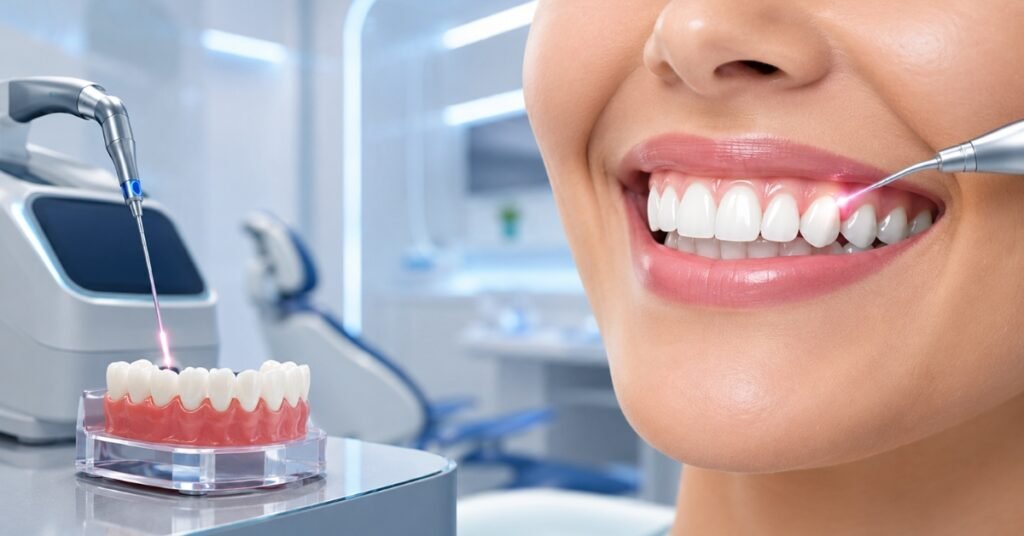
Laser gum contouring is a cosmetic dental treatment that reshapes the gum line using a soft-tissue dental laser. The laser gently removes or sculpts excess gum tissue to expose more of the natural tooth and create a more even, balanced smile.
It is also called gum reshaping, gingival sculpting, or laser gingivectomy. The procedure is usually done by a periodontist or a cosmetic dentist in coimbatore trained in laser dentistry.
Unlike traditional gum surgery that uses a scalpel, the laser seals tissue as it works. This means less bleeding, fewer stitches, and a faster healing experience for most patients.
According to a clinical study published in the Journal of International Oral Health, diode laser gum contouring offers predictable results with minimal post-operative discomfort, making it a popular choice for treating gummy smiles.
Why Is Laser Gum Contouring Done?
Gum contouring is mostly done for cosmetic reasons, but it can also support better oral health in certain cases. Your dentist will examine your gums, teeth, and bite before suggesting this treatment.
Here are the main reasons people choose laser gum contouring:
- Gummy smile correction: When too much gum tissue shows above the teeth while smiling, the teeth can appear short or square. Laser contouring exposes more of the natural tooth surface and brings harmony to the smile.
- Uneven gum line: Some people have gums that sit higher on one tooth and lower on another. Reshaping evens out the gum line and gives a more symmetrical appearance.
- Excess gum tissue from braces: Wearing braces for a long time can sometimes cause gum overgrowth. Laser contouring removes this extra tissue safely.
- Preparation for crowns or veneers: When planning cosmetic restorations, slight gum reshaping helps achieve the right tooth proportion and a natural finish.
- Improved oral hygiene access: In some cases, uneven gum margins make brushing and flossing difficult. Reshaping can help patients clean these areas more easily.
How Does Laser Gum Contouring Work?
The procedure uses a soft-tissue diode laser, which has a high affinity for the pigmented tissue in your gums. The laser energy precisely removes the excess tissue while sealing small blood vessels at the same time.
This control allows the dentist to shape the gums with great accuracy. The result is a cleaner surgical field, less bleeding, and a more comfortable experience compared to scalpel surgery.
The American Academy of Periodontology recognizes laser-assisted procedures as a modern option in soft tissue management when performed by trained clinicians.
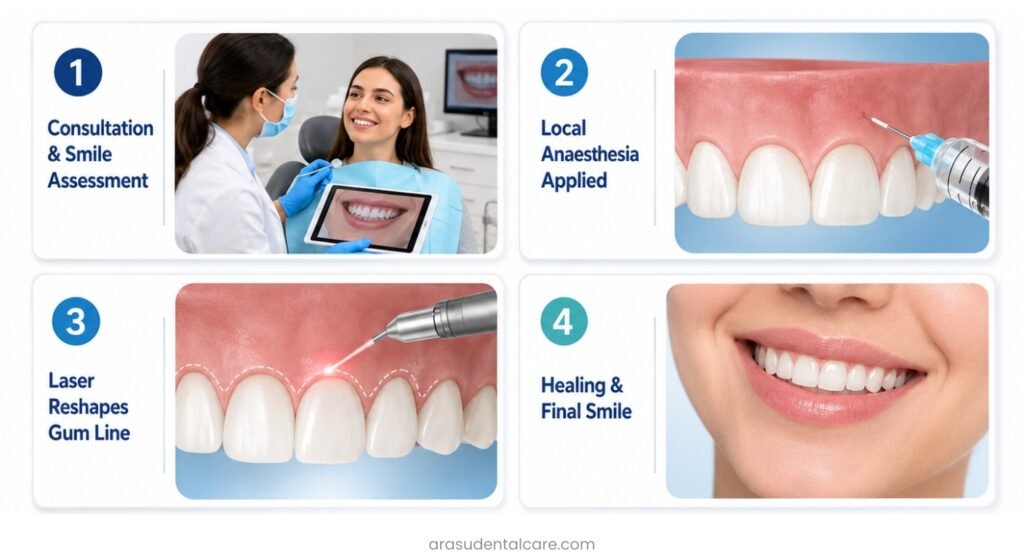
Step-by-Step: What to Expect During the Procedure
Understanding the steps can help reduce any nervousness you may feel before treatment.
- Initial consultation: The dentist will examine your gums, take photos, and discuss what you would like to change. A dental exam helps rule out gum disease or other issues that need treatment first.
- Treatment planning: Your dentist may mark the new gum line on your gums or use a small stent to guide the reshaping. This step ensures predictable results.
- Local anesthesia: A numbing gel and local anesthetic are applied to keep you comfortable. You will stay awake but should not feel pain.
- Laser reshaping: The dentist gently guides the laser tip along the marked line to remove excess tissue and shape the gums.
- Final polishing: The gum margins are smoothed and checked for symmetry. The treatment usually takes between 30 minutes and 2 hours, depending on the number of teeth involved.
Key Benefits of Laser Gum Contouring
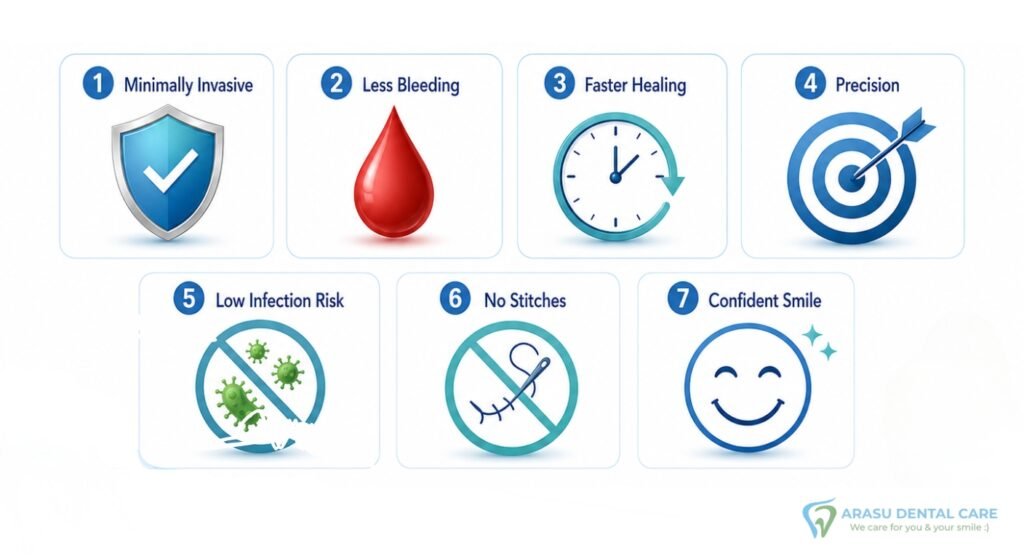
Laser-based gum reshaping offers several advantages over older surgical methods. These benefits make it a preferred choice for both patients and clinicians.
- Minimally invasive: The laser only targets the soft tissue that needs to be reshaped. Surrounding healthy gum tissue is preserved.
- Less bleeding and swelling: The laser seals blood vessels as it cuts, which keeps the area clean and reduces post-operative swelling.
- Faster healing: Most patients return to normal activities within a day or two. Full gum healing often takes about one to two weeks.
- Greater precision: The laser allows the dentist to sculpt gums with fine accuracy. This is especially helpful for cosmetic cases where symmetry matters.
- Lower risk of infection: The laser sterilizes the area as it works, which lowers the chance of bacteria entering the treated tissue.
- Reduced need for stitches: In most cases, sutures are not required because the laser naturally seals the tissue.
- Improved smile confidence: A balanced gum line can make teeth look longer, more proportionate, and aesthetically pleasing.
Who Is a Good Candidate for Laser Gum Contouring?
Not everyone needs gum reshaping, and a proper dental examination is essential before deciding. In general, you may be a good candidate if:
- You have a gummy smile: When more than 3 mm of gum tissue shows above your teeth during a full smile, contouring can help create better balance.
- Your gum line is uneven: Asymmetry between teeth can affect how your smile looks even when your teeth are healthy.
- You have short-looking teeth: Sometimes the teeth are the right size but appear small because the gums cover too much of them, a condition called altered passive eruption.
- You are planning cosmetic dentistry: Patients getting veneers, crowns, or smile makeovers often benefit from gum reshaping for a more refined finish.
- Your oral health is good: Active gum disease, deep cavities, or untreated infections must be managed first before any cosmetic procedure.
Your dentist will also check your bone levels, biologic width, and lip position to make sure laser contouring is the right option for you.
What to Expect After the Procedure
Recovery from laser gum contouring is usually smooth, but a few simple steps help your gums heal well.
- Mild soreness or tenderness: Some discomfort is common for a day or two. Over-the-counter pain relievers, as advised by your dentist, are usually enough.
- Soft food diet: Stick to soft foods like yogurt, soup, mashed vegetables, and smoothies for the first few days. Avoid spicy, crunchy, or seeded foods.
- Gentle oral hygiene: Brush carefully around the treated area. Your dentist may recommend a mild antibacterial mouthwash.
- Avoid strenuous activity: Skip heavy exercise for a few days to reduce swelling and support healing.
- Follow-up visit: A short review appointment helps confirm that healing is on track and the gum shape is settling well.
Most patients see their final gum contour within 2 to 4 weeks, although small refinements may take a little longer.
Are There Any Risks?
Laser gum contouring is considered a safe procedure when performed by a trained dentist. Still, like any dental treatment, it has a few possible risks:
- Minor gum regrowth: In rare cases, gum tissue can grow back, especially if underlying bone was not adjusted when needed.
- Temporary sensitivity: Some patients may notice mild tooth sensitivity for a short period after treatment.
- Infection: Although uncommon, infection can occur if aftercare instructions are not followed.
- Uneven healing: Healing can vary slightly between individuals, which is why follow-up visits are important.
Your dentist will discuss these possibilities and how to reduce them before starting treatment.
Laser Gum Contouring vs Traditional Gum Surgery
Both methods aim to reshape the gum line, but the experience is different.
- Comfort: Laser treatment is generally more comfortable, with less bleeding and minimal need for sutures. Traditional surgery may involve more post-operative tenderness.
- Healing time: Laser patients often heal faster, while scalpel-based surgery may need a longer recovery.
- Precision: Lasers allow fine control, especially helpful for cosmetic shaping. Traditional tools are still effective but may be less precise in delicate areas.
- Suitability: Some advanced cases involving bone reshaping may still require conventional periodontal surgery. Your dentist will guide you based on your specific needs.
For more information on periodontal procedures, you can refer to Cleveland Clinic’s resource on gum contouring.
Final Thoughts
Laser gum contouring is a modern, minimally invasive way to reshape your gum line and bring genuine balance to your smile. Compared to traditional surgical methods, it offers greater precision, faster healing, and a more comfortable experience overall. Whether you are correcting a gummy smile, preparing for cosmetic restorations, or simply want a more even gum line, the results can be both immediate and long-lasting. As with any dental procedure, the right outcome depends on a thorough assessment of your gum health, bone levels, and smile goals before treatment begins.
If you have been putting off addressing your gum line because you were unsure what the process involved, now you have a clearer picture — and it is far more straightforward than most patients expect.
At Arasu Dental Care in Coimbatore, our team uses advanced laser technology to deliver precise, comfortable gum contouring results tailored to your smile. We will assess your case carefully and make sure you understand every step before treatment begins. Book a consultation with us today and let us help you achieve the balanced, confident smile you deserve.
Frequently Asked Questions
1. Is laser gum contouring painful?
The procedure is done under local anesthesia, so you should not feel pain during treatment. Some mild soreness afterward is normal and usually settles within a few days.
2. How long does laser gum contouring take?
Most cases are completed in a single visit of 30 minutes to 2 hours. The exact time depends on how many teeth are being treated.
3. Are the results permanent?
In most cases, results are long-lasting. Gum regrowth is rare when the procedure is planned correctly and proper oral hygiene is maintained.
4. When can I return to work or normal activities?
Most patients return to routine activities the next day. Heavy exercise and very hot or spicy foods should be avoided for a few days.
5. Will my insurance cover laser gum contouring?
Because it is usually a cosmetic procedure, dental insurance may not cover the cost. However, if it is medically needed for gum health, partial coverage may apply. Check with your insurance provider for clarity.
6. Can laser gum contouring fix all types of gummy smiles?
Not always. A gummy smile can be caused by gum tissue, jaw structure, or lip movement. A dental examination helps identify the exact cause and the right treatment plan.
7. Is laser gum contouring safe for everyone?
Laser gum contouring is safe for most healthy adults and offers a quick, minimally invasive way to reshape the gum line. However, patients with active gum disease, oral infections, or certain medical conditions may require treatment before the procedure.