A metal crown is one of the oldest and most reliable dental restorations used to protect a weak, broken, or heavily decayed tooth. Even with so many modern materials available today, dentists still recommend metal crowns in many cases because of their strength and long-lasting performance.
If your dentist has suggested this option, it is natural to have questions about how it works, what it costs, and why it may suit your tooth.
This guide explains the key advantages of a metal crown, the step-by-step procedure, and the cost factors you should know before making a decision.
What is a Metal Crown?
A metal crown is a tooth-shaped cap made entirely from metal or metal alloys. It is placed over a damaged tooth to restore its shape, strength, and function.
Unlike tooth-coloured crowns, metal crowns have a silver or gold appearance. They are commonly used on back teeth, where strength matters more than visibility.
The metal materials used may include gold alloy, nickel-chromium, cobalt-chromium, or stainless steel. Each option has its own benefits depending on the patient’s needs.
When is a Metal Crown Recommended?
A dental examination is the only way to confirm whether a metal crown is the right choice. However, dentists often suggest it in the following situations.
Heavily decayed back teeth: When a molar has lost too much structure, a metal crown can restore its strength and protect it from further damage.
After a root canal treatment: A tooth that has undergone root canal treatment becomes brittle. A metal crown helps prevent fracture and extends the life of the tooth.
Patients with strong biting force: People who grind or clench their teeth may benefit from metal crowns because they resist wear better than ceramic options.
Limited space between teeth: When there is not enough vertical space for a thicker crown, a metal crown works well due to its thin yet strong structure.
Children’s primary molars: Stainless steel crowns are commonly used in pediatric dentistry to protect baby teeth until they fall out naturally.
Key Advantages of a Metal Crown
Metal crowns continue to be trusted for good reasons. Here are the main advantages explained simply.
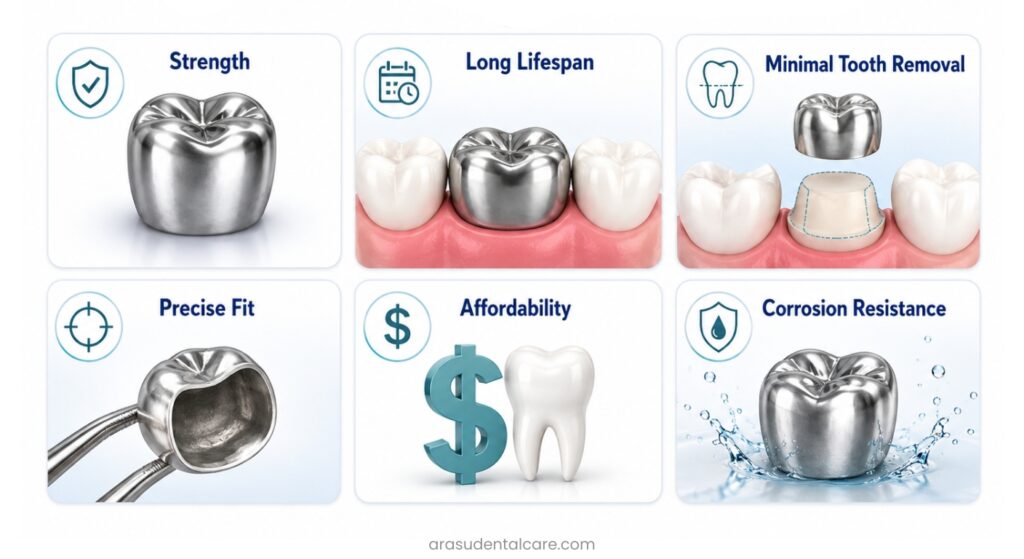
Excellent strength and durability: Metal crowns can withstand strong chewing and biting forces. They rarely chip or crack, even after years of use.
Long lifespan: With proper care, metal crowns can last 15 to 30 years or more. According to the American Dental Association, they are among the longest-lasting crown types available.
Minimal tooth reduction: Less natural tooth structure needs to be removed compared to ceramic crowns. This helps preserve more of your healthy tooth.
Gentle on opposing teeth: Metal crowns, especially gold-based ones, do not wear down the teeth that bite against them as harshly as some ceramic materials may.
Precise fit and sealing: Metal crowns are known for their accurate marginal fit, which reduces the risk of bacteria entering between the crown and the tooth.
Cost-effective option: Compared to zirconia or all-ceramic crowns, metal crowns are usually more affordable while still offering long-term reliability.
Resistant to corrosion: High-quality dental metal alloys are designed to resist corrosion inside the mouth, helping the crown stay stable for many years.
Types of Metal Crowns
Different metal materials are used depending on the case. Your dentist will guide you based on your tooth condition, budget, and oral health.
Gold alloy crowns: These contain gold mixed with other metals like copper and palladium. They are highly biocompatible and gentle on surrounding tissues.
Base metal alloy crowns: Made from non-noble metals such as nickel or chromium. They are strong, durable, and more budget-friendly.
Cobalt-chromium crowns: Known for their high strength and resistance to wear. These are often used for back teeth and long-span bridges.
Stainless steel crowns: Mostly used as temporary crowns for adults and as permanent crowns for children’s primary teeth.
For More, Read Our Latest Blog: Types of metal dental Crowns in Dentistry
The Metal Crown Procedure: Step-by-Step
Getting a metal crown usually takes two dental visits. Here’s what generally happens during each stage.
First Visit: Tooth Preparation
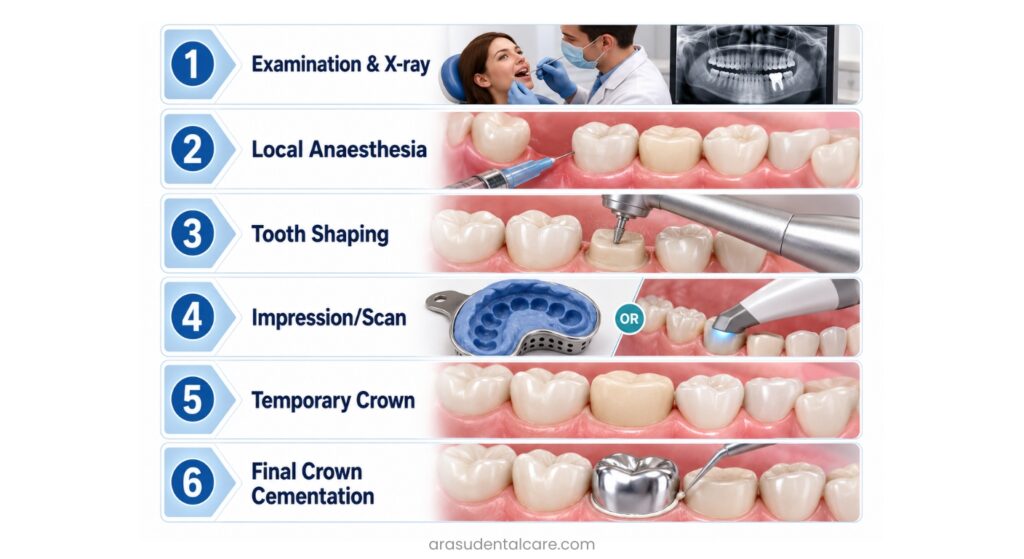
Examination and X-ray: Your dentist will examine the tooth and may take an X-ray to check the roots and surrounding bone. This helps determine if a crown is suitable.
Local anaesthesia: The area around the tooth is numbed for comfort. You should not feel pain during the procedure.
Tooth shaping: A small amount of enamel is removed to create space for the crown. Metal crowns need less reduction than ceramic ones.
Impression or digital scan: An impression of your tooth is taken using putty material or a digital scanner. This is sent to a dental lab to fabricate the crown.
Temporary crown placement: A temporary crown is placed to protect your prepared tooth until the permanent one is ready.
Second Visit: Crown Placement
Removing the temporary crown: The temporary crown is gently removed once your permanent metal crown arrives from the lab.
Checking the fit: Your dentist will check the fit, bite, and comfort of the new crown. Minor adjustments may be done if needed.
Cementing the crown: Once the fit feels right, the crown is bonded to your tooth with strong dental cement.
The entire process usually takes around two to three weeks, depending on the lab workflow.
Cost of a Metal Crown in India
The cost of a metal crown depends on several factors such as the type of metal, clinic location, and the complexity of the case.
Standard metal alloy crown: Generally ranges between ₹3,000 to ₹6,000 per tooth. This is the most affordable option for back teeth.
Cobalt-chromium crown: May cost around ₹4,000 to ₹8,000. It offers a balance between strength and affordability.
Gold alloy crown: Prices vary widely based on the gold content but typically start from ₹15,000 and can go higher. The fluctuating gold market also affects the price.
Stainless steel crowns for children: Usually cost between ₹1,500 to ₹3,500 per tooth.
The final cost may also depend on additional procedures like root canal treatment, X-rays, or build-up fillings. Your dentist will explain the full breakdown during consultation.
Limitations of Metal Crowns
While metal crowns offer many benefits, they may not be suitable for every situation.
Metallic appearance: They do not blend with natural teeth, so they are usually avoided on front teeth.
Possible metal sensitivity: A small number of patients may experience allergic reactions to certain base metals like nickel.
Temperature sensitivity: Metal can conduct heat and cold, which may cause mild sensitivity in the early weeks.
A proper dental consultation can help identify whether a metal crown is the right choice for your specific case.
How to Care for Your Metal Crown
Good oral hygiene helps your crown last longer and keeps the surrounding gums healthy.
Brush twice daily: Use a soft-bristled toothbrush and fluoride toothpaste to clean all surfaces of your teeth and crown.
Floss carefully: Clean around the crown gently to prevent plaque from building up at the gum line.
Avoid very hard foods: Although metal crowns are strong, chewing on ice or hard candy can stress the surrounding tooth.
Wear a night guard if needed: If you grind your teeth, a custom night guard can protect both your crown and natural teeth.
Visit your dentist regularly: Routine check-ups every six months help detect early issues and keep your restoration in good condition. The National Institute of Dental and Craniofacial Research also recommends regular dental visits for long-term oral health.
When to See a Dentist
You should consult your dentist if you notice any of the following with your crown.
Loose or shifting crown: A crown that feels unstable may need re-cementing or replacement.
Pain or sensitivity: Persistent discomfort while chewing could indicate an underlying issue.
Gum irritation around the crown: Swelling or bleeding gums near the crowned tooth need professional attention.
Bad taste or odour: This may suggest bacteria collecting under a loose crown.
Early dental care can prevent small issues from becoming bigger problems.
Conclusion
A metal crown remains one of the most reliable solutions for restoring damaged back teeth. It offers strength, longevity, and value that few other materials can match.
The right crown for you depends on your tooth condition, bite, budget, and aesthetic needs. A proper dental examination can help your dentist recommend the best option.
If you are considering a metal crown or want to understand which crown suits your tooth best, the team at Arasu Dental Care, Coimbatore.
Frequently Asked Questions
1. How long does a metal crown last?
With proper care, a metal crown can last between 15 and 30 years. Some gold crowns have been known to last even longer.
2. Are metal crowns safe?
Yes, the metals used in dental crowns are tested for safety and biocompatibility. Allergic reactions are rare but possible with certain base metals.
3. Does getting a metal crown hurt?
The procedure is done under local anaesthesia, so you should not feel pain. Mild sensitivity after the procedure is normal and usually fades within a few days.
4. Can a metal crown be placed on a front tooth?
It is possible, but most patients prefer tooth-coloured options like zirconia or ceramic for front teeth due to aesthetics.
5. Is a metal crown better than zirconia?
Both have strengths. Metal crowns are stronger and more affordable, while zirconia offers a natural look. The right choice depends on the tooth location and your preferences.
6. Can a metal crown cause cavities?
The crown itself cannot decay, but the natural tooth underneath can if oral hygiene is poor. Regular brushing and dental visits help prevent this.
7. Will my metal crown need replacement?
Most crowns last many years, but wear, gum recession, or damage may eventually require replacement.
8. How soon can I eat after a metal crown is placed?
You can usually eat within an hour, but it is best to avoid very hard or sticky foods for the first day.