Cosmetic Gum Contouring Procedure and Cost
A balanced smile depends not only on your teeth but also on how your gums frame them. If your gums appear uneven, cover too much of your teeth, or make your smile look “gummy,” gum contouring can be a simple cosmetic solution.
Gum contouring is a safe and modern dental procedure that reshapes the gum line to create a more even and pleasing smile. It is usually done for cosmetic reasons, but in some cases, it also supports better gum health.
This guide explains what gum contouring involves, the cost factors, recovery steps, and when it may be the right choice for you.
What Is Gum Contouring?
Gum contouring, also known as gum reshaping or gingival sculpting, is a cosmetic dental treatment that removes or reshapes excess gum tissue around the teeth.
In some cases, when gums have receded, the procedure may involve adding tissue back to restore a healthy gum line. The goal is to create a smile that looks balanced, symmetrical, and natural.
According to the American Academy of Periodontology, reshaping the gum line is often part of a broader cosmetic or periodontal treatment plan.
Who May Benefit From Gum Contouring?
Not everyone needs this procedure, but it can help in specific situations where the gum line affects the look or feel of your smile.
Gummy smile: This is when too much gum tissue shows while smiling, making teeth appear short or boxy. Gum contouring can expose more of the tooth surface for a balanced look.
Uneven gum line: Some people have gums that sit higher on one tooth and lower on another. Reshaping can bring symmetry to the smile.
Gum overgrowth after braces or medication: Certain medications and orthodontic treatment can cause gum tissue to grow over the teeth. Contouring helps restore the natural shape.
Preparation for veneers or crowns: Cosmetic treatments often work best when the gum line is even. Contouring can be done before veneers or crowns for a more refined result.
How Is Gum Contouring Done?
The procedure is usually performed by a periodontist or a cosmetic dentist in coimbatore in a single visit. It is minimally invasive and often completed within one to two hours.
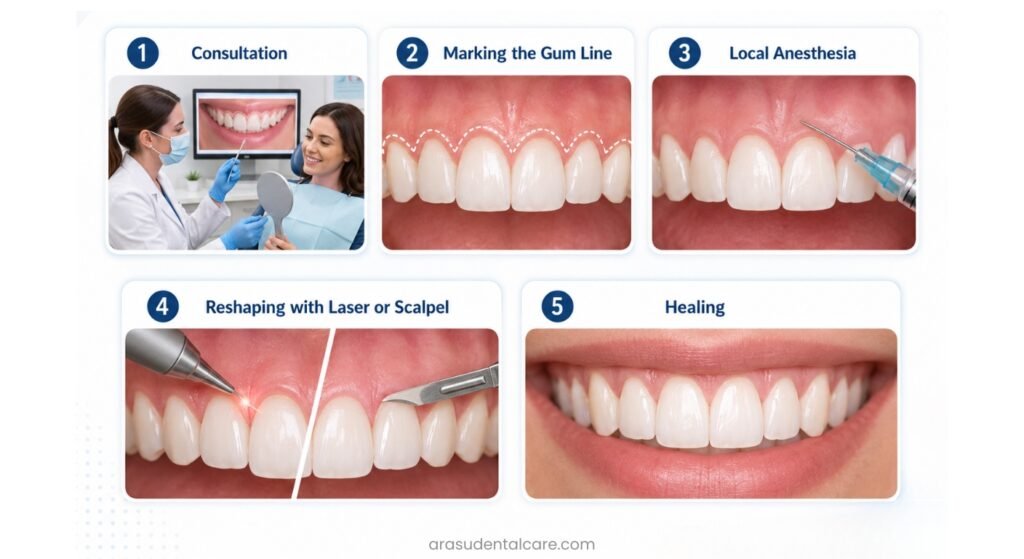
Step 1: Consultation and Smile Assessment
Your dentist will examine your gums, teeth, and bite. Photographs or digital smile design tools may be used to plan the new gum line.
This step also includes checking for cavities or gum disease, which must be treated before any cosmetic work begins.
Step 2: Marking the New Gum Line
A fine dental marker is used to outline the area where tissue will be reshaped. This gives you a clear preview of the expected result.
Your dentist will also assess the bone level under your gums to plan a stable, long-lasting outcome.
Step 3: Local Anesthesia
A local anesthetic is applied to numb the gums. The procedure is comfortable, and most patients feel only mild pressure during treatment.
For nervous patients, sedation options may also be discussed in advance.
Step 4: Reshaping the Gums
The dentist uses either a soft-tissue laser or a fine surgical instrument to gently remove or reshape the excess gum tissue. Lasers are often preferred because they reduce bleeding and support faster healing.
In some cases, a small amount of bone near the tooth may also be adjusted to prevent the gum from growing back.
Step 5: Finishing and Healing
Once the new gum line is shaped, the area is cleaned and, if needed, sutured. You can usually return home the same day with simple aftercare instructions.
Benefits of Gum Contouring
Gum contouring offers both cosmetic and practical benefits when done by a qualified dental team.
Improved smile balance: Reshaping creates harmony between your teeth, gums, and lips. This can make your smile look more proportional and youthful.
Better confidence: Many patients feel self-conscious about a gummy smile. A well-shaped gum line often improves how comfortable they feel while smiling or speaking.
Easier oral hygiene: Removing excess or uneven gum tissue can reduce small areas where plaque hides. This may lower the risk of gum problems over time.
Long-lasting results: In most cases, the results of gum contouring are permanent, especially when proper aftercare is followed.
Are There Any Risks?
Gum contouring is considered a safe procedure, but like any treatment, it carries small risks. Most can be avoided with a skilled dental team and good aftercare.
Mild soreness or swelling: Some tenderness is normal for a few days. Over-the-counter pain relief is usually enough to manage it.
Gum regrowth: In rare cases, gum tissue may grow back partially. This is more likely when underlying bone is not adjusted during the procedure.
Infection: Although uncommon, infection can occur if aftercare instructions are not followed. Your dentist may prescribe an antibacterial rinse to support healing.
The Cleveland Clinic notes that complications from gum contouring are rare when performed by an experienced provider.
Recovery After Gum Contouring
Recovery is usually quick, and most people return to their daily routine within a day or two. Complete healing of the gum tissue may take one to two weeks.
Eat soft foods: Stick to soft and cool foods like yogurt, eggs, pasta, smoothies, and soups for the first few days. Avoid spicy, crunchy, or seeded foods until healing is complete.
Maintain gentle oral hygiene: Brush carefully around the treated area and use an alcohol-free mouthwash if recommended. Good hygiene helps prevent infection.
Rest and avoid strain: Avoid heavy exercise for a few days. Increased blood flow can cause more swelling or mild bleeding.
Follow your dentist’s instructions: Take medications as advised and attend any follow-up visits. Your dentist will check healing and confirm if any further steps are needed.
Cost of Gum Contouring in India
The cost of gum contouring depends on several factors, including the number of teeth involved, the technology used, and the experience of the dental team.
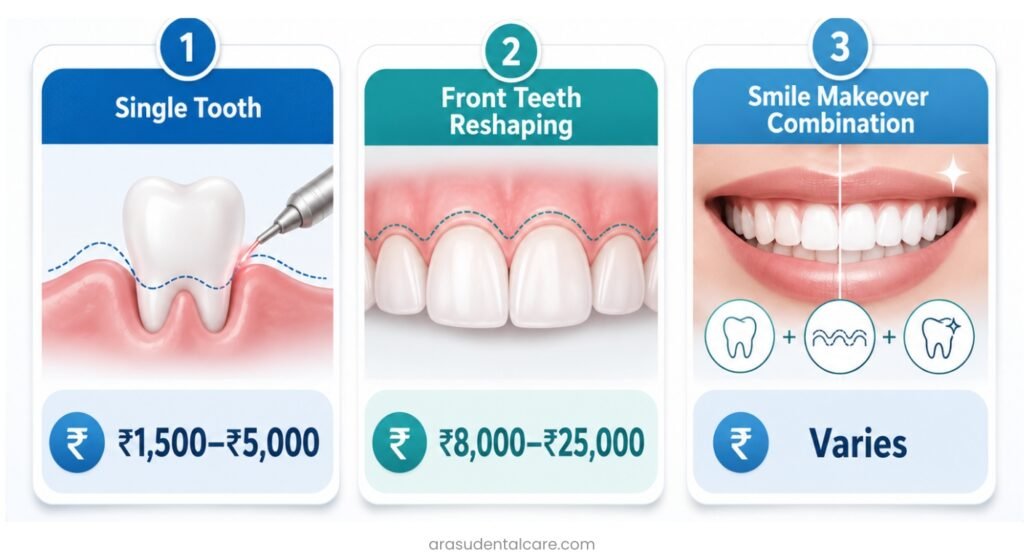
Single tooth contouring: For minor reshaping on one tooth, the cost may range from ₹1,500 to ₹5,000 in most Indian cities.
Full smile contouring: For reshaping across the upper or lower front teeth, the cost may range from ₹8,000 to ₹25,000 depending on complexity.
Laser gum contouring: Laser-based procedures are often slightly higher in cost but provide a more comfortable experience and faster healing.
Combined cosmetic treatments: If gum contouring is part of a smile makeover with veneers or crowns, the total cost will depend on the full treatment plan.
Insurance usually does not cover gum contouring when it is purely cosmetic. However, if it is part of periodontal treatment, partial coverage may apply.
When to See a Dentist
If you feel self-conscious about your gum line or smile, a dental consultation can help you understand your options clearly.
Gummy smile concerns: If you feel that your teeth look too short or your gums show too much, gum contouring may help improve balance.
Uneven gum line: If your gums sit at different heights across your teeth, reshaping can create symmetry.
Before cosmetic treatments: If you are planning veneers, crowns, or a smile makeover, gum contouring may be recommended as a first step.
A dental examination is the best way to know whether gum contouring is the right option for your specific case.
Conclusion
Gum contouring is a safe and effective way to improve the appearance of your smile when uneven gums or a gummy smile affect your confidence. With modern tools like dental lasers, the procedure has become more comfortable, precise, and predictable.
The right treatment depends on your gum health, smile goals, and overall dental condition. A proper consultation can help you understand whether gum contouring suits you and what results you can realistically expect.
If you are in Coimbatore and considering gum contouring or a smile makeover, the team at Arasu Dental Care can guide you through a complete dental evaluation and personalized treatment plan. Book a consultation today to take the first step toward a more confident smile.
Frequently Asked Questions
1. Is gum contouring painful?
The procedure is done under local anesthesia, so you should not feel pain during treatment. Mild soreness for a few days is common and easily managed.
2. How long does gum contouring take?
Most procedures take between one and two hours, depending on the number of teeth involved.
3. Is gum contouring permanent?
In most cases, results are long-lasting. Rarely, gum tissue may regrow, especially if bone underneath is not adjusted.
4. Can gum contouring be done with a laser?
Yes, laser gum contouring is a modern option that offers less bleeding, reduced discomfort, and faster healing.
5. Will gum contouring change the shape of my teeth?
The procedure only reshapes the gums. If you want to change the shape, size, or color of your teeth, additional cosmetic treatments may be needed.
6. How long does it take to heal?
Most people heal within one to two weeks. Soft tissues settle fully over the following weeks.
7. Does insurance cover gum contouring?
Cosmetic gum contouring is usually not covered. If it is part of periodontal treatment, partial coverage may apply depending on your plan.
8. Can gum contouring be combined with veneers?
Yes, many patients combine the two for a complete smile makeover. Reshaping the gum line first often improves the final appearance of veneers.