A surgical extraction is a dental procedure used to remove a tooth that cannot be taken out with a simple pull. It is often needed when a tooth is broken below the gum line, impacted, or has complex roots.
If your dentist has recommended this treatment, it is natural to feel a little nervous. The good news is that modern surgical extraction is a safe, well-planned, and comfortable procedure when performed by an experienced dental team.
This guide will walk you through every step, from preparation to healing. You will also learn when surgical extraction is needed, what to expect, and how to recover smoothly.
What Is a Surgical Tooth Extraction?
A surgical tooth extraction is the removal of a tooth that is not easily accessible inside the mouth. Unlike a simple extraction, this procedure requires a small incision in the gum to reach the tooth.
In some cases, a small portion of bone may be removed, or the tooth may be divided into sections for easier and safer removal. This approach helps protect the surrounding bone, gums, and nearby teeth.
According to StatPearls (NIH), surgical extractions are commonly performed for impacted, fractured, or deeply decayed teeth that cannot be removed using standard forceps alone.
When Is a Surgical Extraction Needed?
Not every tooth removal requires surgery. Your dentist will recommend a surgical approach only when a simpletooth extraction is not possible or safe.
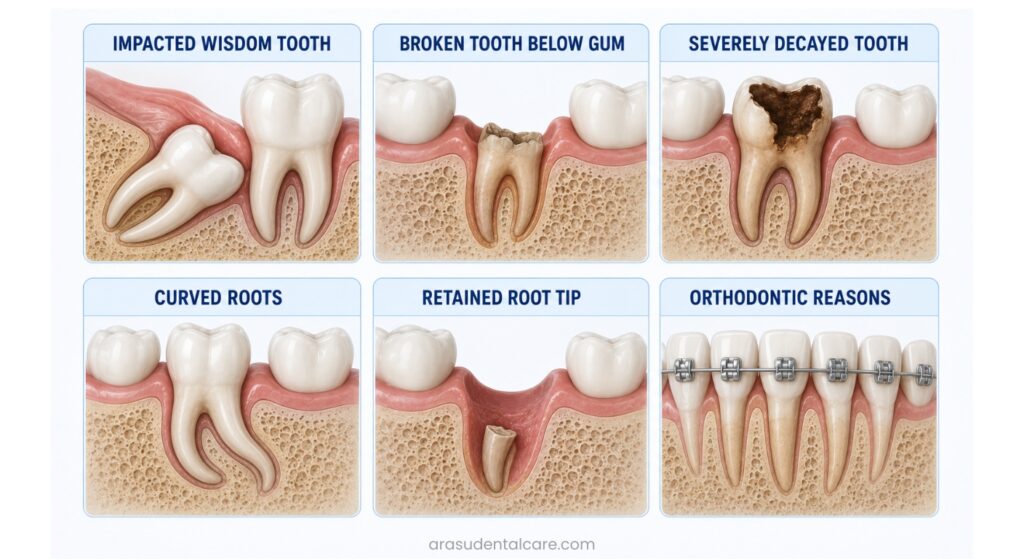
Here are the most common reasons a surgical extraction may be needed.
Impacted wisdom teeth: Wisdom teeth often fail to erupt fully due to lack of space. They may stay trapped under the gum or bone and require surgical removal.
Tooth broken below the gum line: When a tooth fractures at or below the gum, there is no visible portion to grip with forceps. A small surgical approach helps remove the remaining root safely.
Severely decayed teeth: Teeth weakened by deep decay can break during a normal extraction. A surgical method allows the dentist to remove the tooth in controlled sections.
Teeth with curved or long roots: Some teeth have unusual root shapes that make simple extraction difficult. Surgery helps prevent root fracture and damage to nearby structures.
Retained root tips: When a root tip is left behind after a previous extraction, surgical removal may be needed to prevent infection or discomfort.
Orthodontic or prosthetic reasons: In certain cases, teeth need to be removed surgically to support braces, dentures, or implants.
Discover the key signs and situations like When does a surgical extraction of tooth becomes necessary?
How to Prepare for a Surgical Tooth Extraction
Good preparation makes the procedure smoother and recovery easier. Your dentist will guide you through every step before the appointment.
Share your medical history: Inform your dentist about any medical conditions, allergies, or medications you take. This helps plan a safe procedure for you.
Dental X-rays or 3D scans: Imaging helps your dentist see the tooth’s position, root shape, and nearby nerves. This is essential for planning a precise and safe extraction.
Discuss anesthesia options: Most surgical extractions are done under local anesthesia. For anxious patients or complex cases, sedation may be offered for added comfort.
Eat a light meal beforehand: Unless told otherwise, have a light meal before your appointment. This helps maintain energy and reduces post-procedure weakness.
Arrange transportation if sedated: If you choose sedation, you will need a family member or friend to drive you home safely after the procedure.
Step-by-Step Procedure of Surgical Tooth Extraction
Understanding the steps can help reduce anxiety and prepare you mentally. Here is what typically happens during a surgical extraction.
Step 1: Numbing the Area
Your dentist will first apply a topical gel followed by a local anesthetic injection. This ensures the tooth, gum, and surrounding bone are completely numb.
You may feel pressure during the procedure, but you should not feel sharp pain. If you do, your dentist can give additional anesthesia immediately.
Step 2: Creating a Small Gum Flap
A small incision is made in the gum to expose the tooth and bone. The gum is gently lifted to give the dentist clear access to the area.
This step is done with care to protect healthy tissue and support smooth healing later.
Step 3: Removing Bone if Needed
If bone is covering the tooth, a small amount may be removed using a specialised dental handpiece. Only the necessary bone is taken out to preserve the jaw structure.
This step is especially common for impacted wisdom teeth or deeply positioned roots.
Step 4: Sectioning the Tooth
For teeth with multiple or curved roots, the tooth may be divided into smaller pieces. Sectioning makes removal easier and reduces stress on the surrounding bone.
This is a routine step and helps protect nearby teeth and nerves.
Step 5: Removing the Tooth
Once the tooth is fully accessible, the dentist gently loosens it using elevators and removes it with forceps. The process is controlled, steady, and designed to minimise trauma.
You may feel some pressure, but the area remains numb throughout.
Step 6: Cleaning the Socket
After removal, the socket is cleaned to remove any debris or infected tissue. In some cases, a bone graft may be placed to support future implant treatment or preserve the jaw shape.
Step 7: Stitching the Gum
The gum is repositioned and closed with stitches. Most stitches used today are dissolvable and do not require removal.
A piece of gauze is then placed over the area to help a blood clot form, which is essential for healing.
What to Expect After a Surgical Extraction
Recovery is usually smooth when post-operative instructions are followed properly. Here is what most patients experience in the first few days.
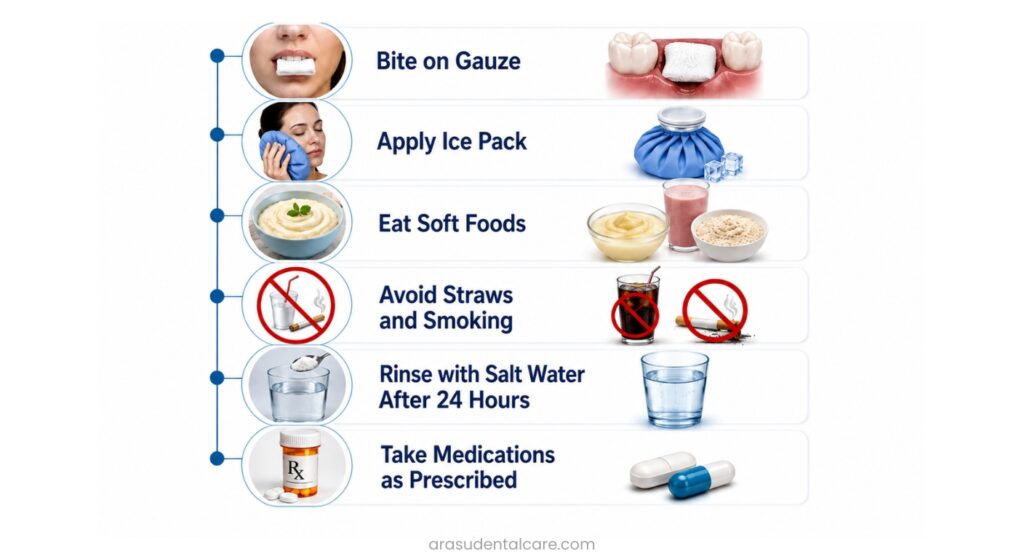
Mild bleeding: Light oozing for a few hours is normal. Biting gently on gauze helps control it.
Swelling and bruising: Swelling often peaks around day 2 or 3 and gradually reduces. Applying an ice pack helps minimise it.
Mild to moderate discomfort: Pain is usually well-managed with prescribed or over-the-counter medications. Most patients feel much better within 3 to 5 days.
Restricted mouth opening: The jaw may feel stiff for a few days, especially after lower wisdom tooth surgery. Gentle movement helps it return to normal.
Soft food diet: Stick to soft, lukewarm foods like soup, rice, yogurt, and mashed vegetables for the first few days.
According to the Cleveland Clinic, most patients return to routine activities within 48 to 72 hours, although complete bone healing may take a few weeks.
Aftercare Tips for Faster Healing
Proper aftercare plays a big role in comfortable recovery. Following these simple steps can prevent complications.
Do not rinse for 24 hours: Rinsing too early can dislodge the blood clot and delay healing.
Avoid using straws: Suction can disturb the clot and cause a painful condition called dry socket.
Skip smoking and alcohol: Both slow healing and increase the risk of infection. Avoid them for at least 72 hours.
Maintain gentle oral hygiene: Brush your other teeth normally but avoid the surgical area for the first day. After 24 hours, rinse gently with warm salt water.
Take medications as advised: Finish the full course of any antibiotics or pain relievers prescribed by your dentist.
Rest well: Avoid heavy exercise or lifting for 48 hours, as raised blood pressure can increase bleeding.
Possible Risks and Complications
Like any surgical procedure, tooth extraction carries a small risk of complications. Most are rare and easily managed when reported early.
Dry socket: This occurs when the blood clot is lost too soon. It causes throbbing pain a few days after surgery and is treated with a medicated dressing.
Infection: Signs include persistent pain, swelling, fever, or pus. Antibiotics and gentle cleaning help resolve it.
Temporary numbness: In rare lower wisdom tooth cases, nearby nerves may get bruised, causing tingling in the lip or tongue. This usually resolves within weeks.
Sinus communication: For upper back teeth close to the sinus, a small opening may form. Most heal on their own with proper care.
Your dentist will discuss any specific risks based on your case during the consultation.
Conclusion
A surgical tooth extraction may sound intimidating, but with proper planning and skilled care, it is a smooth and well-tolerated procedure. Modern techniques, gentle handling, and clear aftercare guidance help most patients recover comfortably and return to normal life quickly.
The most important step is choosing a dental team that listens, explains clearly, and puts your comfort first. Early action also prevents small dental issues from turning into bigger problems.
If you are considering surgical tooth extraction or want to know if they are right for you, please check Arasu dental care.
Frequently Asked Questions (FAQs)
1. Is surgical tooth extraction painful?
The procedure itself is not painful because the area is fully numbed. You may feel pressure during the surgery, but actual pain is uncommon. Mild discomfort after the procedure is normal and can be managed with medication.
2. How long does a surgical extraction take?
Most surgical extractions take between 30 and 60 minutes. The time depends on the tooth’s position, root shape, and complexity of the case.
3. How long does it take to heal?
Soft tissue healing usually takes 1 to 2 weeks. Complete bone healing may take a few months, especially for larger teeth like molars.
4. Can I go to work the next day?
Many patients return to light work within 1 to 2 days. However, if your job involves heavy physical activity, a couple of extra days of rest is recommended.
5. What can I eat after surgical extraction?
Stick to soft, lukewarm foods for the first 2 to 3 days. Examples include yogurt, mashed potatoes, soft rice, soup, and smoothies (without straws).
6. When should I contact my dentist?
Contact your dentist if you notice heavy bleeding, severe pain after 3 days, fever, or pus. These may be early signs of infection or dry socket and need prompt care.
7. Will I need a replacement for the extracted tooth?
For most back teeth, replacement is recommended to maintain chewing function and prevent shifting of nearby teeth. Options include dental implants, bridges, or partial dentures.
8. Is surgical extraction safe for older adults?
Yes, with proper medical evaluation, surgical extractions are safe at any age. Your dentist may coordinate with your physician if you have medical conditions or take blood thinners.