A simple tooth extraction is one of the most common dental procedures done to remove a tooth that is fully visible above the gum line. It is usually a quick, comfortable procedure performed under local anaesthesia by a general dentist.
Many patients feel anxious before getting a tooth removed. Knowing what happens during the procedure can help reduce that fear and make the experience much easier.
This guide explains every step of a simple tooth extraction, from preparation to recovery, so you can feel informed and confident.
What Is a Simple Tooth Extraction?
A simple tooth extraction is the removal of a tooth that is fully visible in the mouth and can be reached easily with dental instruments. It does not require any cutting of the gums or bone.
This type of extraction is different from a surgical extraction, which is used for impacted or broken teeth. Most adult tooth removals fall under the simple extraction category when the tooth is intact and accessible.
When Is a Simple Tooth Extraction Needed?
A dentist may recommend a simple extraction only when saving the natural tooth is no longer possible. The decision is always based on a proper dental examination and X-ray review.
Common reasons include the following:
- Severe tooth decay: When decay reaches deep into the tooth and a filling or root canal cannot save it, removal becomes the safer option. Leaving such a tooth untreated may lead to infection.
- Advanced gum disease: Periodontal disease can damage the bone that supports the tooth. Once the support is lost, the tooth becomes loose and may need to be removed.
- Loose or mobile teeth: Teeth that are mobile due to bone loss or trauma often cannot be saved through other treatments. Extraction helps prevent further discomfort and infection.
- Orthodontic treatment: In some cases, a tooth is removed to create space for braces or aligners. This helps the remaining teeth move into the correct position.
- Failed previous treatments: If a tooth has had multiple fillings or root canal attempts without success, extraction may be the final option to relieve pain.
According to the Cleveland Clinic, dentists always try to save natural teeth first and only recommend extraction when other options are not enough.
How to Prepare for a Simple Tooth Extraction
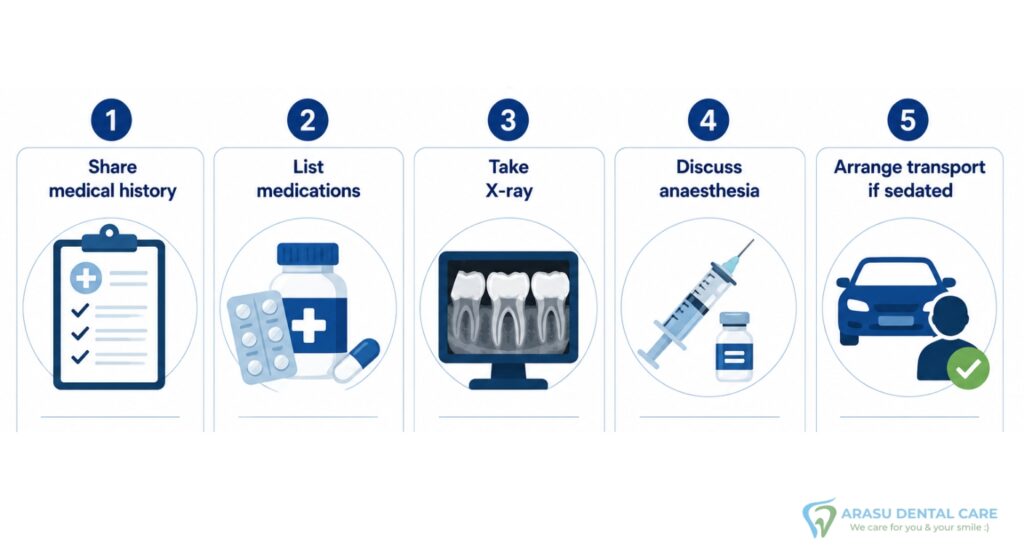
Preparation begins with a proper consultation. Your dentist will review your medical history, current medications, and take a dental X-ray to study the tooth and surrounding bone.
Share details about any health conditions such as diabetes, heart problems, or bleeding disorders. Also mention if you are taking blood thinners, as they may need to be adjusted before the procedure.
A study published in StatPearls confirms that proper pre-operative assessment helps reduce risks and improves healing outcomes.
What Happens During a Simple Tooth Extraction: Step-by-Step
Understanding the steps of the procedure helps reduce anxiety. Here is what typically happens during a simple tooth extraction.
Step 1: Numbing the Area with Local Anaesthesia
The dentist begins by applying a numbing gel to the gum near the affected tooth. A local anaesthetic injection is then given to fully numb the tooth, gum, and surrounding tissue.
You may feel a small pinch during the injection, but the area becomes numb within a few minutes. You will not feel pain during the extraction, only mild pressure.
Step 2: Loosening the Tooth with an Elevator
Once the area is numb, the dentist uses a small instrument called a dental elevator. This tool gently rocks the tooth back and forth to loosen it from the surrounding ligaments and bone.
This step is important because it widens the socket slightly and makes the tooth easier to remove. Patients usually feel pressure but no sharp pain during this stage.
Step 3: Removing the Tooth with Forceps
After the tooth is loose enough, the dentist uses dental forceps to grip the tooth and remove it from the socket. The motion is controlled and steady to avoid breaking the tooth.
The entire removal usually takes only a few minutes once the tooth is properly loosened. You may hear some sounds, but the procedure remains comfortable.
Step 4: Cleaning the Socket
Once the tooth is out, the dentist carefully cleans the empty socket. Any small debris or infected tissue is gently removed to support proper healing.
In some cases, the dentist may place a small bone graft inside the socket. This is often done if a dental implant is planned later, as it helps preserve the jawbone.
Step 5: Placing Gauze and Forming a Blood Clot
A folded sterile gauze is placed over the socket, and you will be asked to bite down gently for about 30 to 45 minutes. This pressure helps stop the bleeding and allows a blood clot to form.
The blood clot is essential for healing. It protects the bone and nerves underneath and prevents a painful condition called dry socket.
Step 6: Stitches (If Needed)
Most simple extractions do not require stitches. However, if the gum tissue needs support, the dentist may place a few dissolvable sutures.
These stitches usually fall out on their own within a week or two, so a separate appointment to remove them is not always needed.
A typical simple tooth extraction takes about 20 to 40 minutes from start to finish.
Read our latest blog-Non surgical tooth extraction : Techniques used
What to Expect After the Procedure
Recovery after a simple extraction is usually smooth when aftercare instructions are followed. Most patients return to their normal activities within a day or two.
- Mild bleeding: Some light bleeding or oozing is normal for the first few hours. Biting on a clean gauze pad helps control it.
- Swelling and discomfort: Slight swelling around the cheek is common during the first 24 to 48 hours. An ice pack applied gently to the outer cheek can help reduce it.
- Mild soreness: You may feel mild pain once the anaesthesia wears off. Over-the-counter pain relievers, as advised by your dentist, are usually enough to manage it.
- Healing time: The gum tissue heals within one to two weeks, while the underlying bone takes a few months to fully recover.
Aftercare Tips for Faster Healing
Good aftercare can make a big difference in how quickly and comfortably you heal.
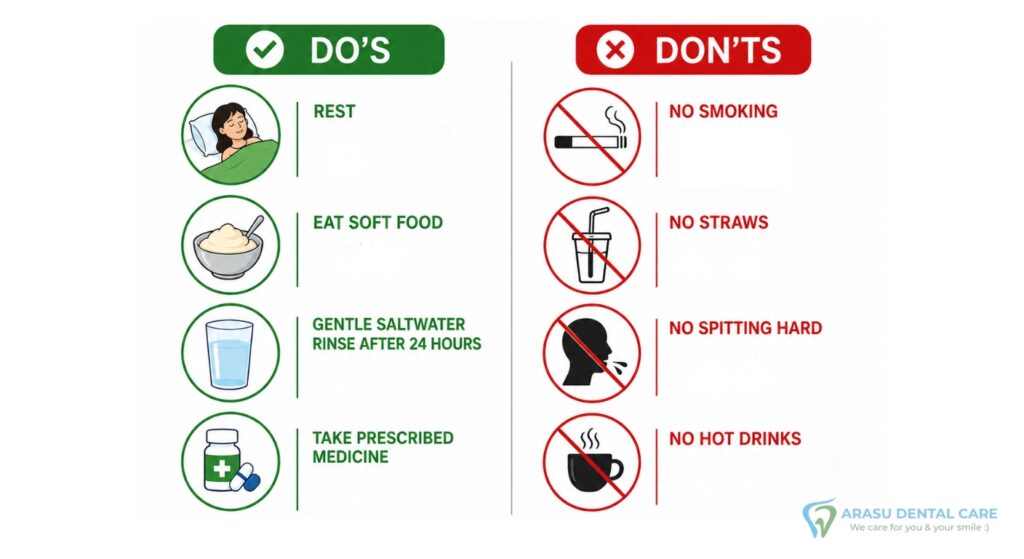
- Eat soft foods: Stick to soft items like yogurt, mashed potatoes, soup, and smoothies for the first few days. Avoid chewing on the extraction side.
- Avoid straws and smoking: Sucking through a straw or smoking can dislodge the blood clot and cause dry socket. Both should be avoided for at least 72 hours.
- Keep the area clean: After 24 hours, rinse gently with warm saltwater two to three times a day. Brush other teeth normally but avoid the extraction site.
- Rest and avoid heavy activity: Avoid strenuous exercise or heavy lifting for the first two days. Increased blood pressure can cause bleeding to restart.
The American Dental Association recommends following your dentist’s specific instructions for the best healing results.
When to Contact Your Dentist
Most patients heal without any issues, but it helps to know the warning signs.
Call your dentist if you experience the following:
- Severe or worsening pain: Pain that increases after the third day, instead of improving, may be a sign of dry socket or infection.
- Heavy bleeding: Bleeding that does not stop after several hours of gauze pressure should be reviewed by your dentist.
- Fever or swelling: A fever above 100.4°F or increasing facial swelling may indicate infection that needs prompt attention.
- Pus or bad taste: Drainage or a constant bad taste from the extraction site is not normal and should be checked.
Conclusion
A simple tooth extraction near me is a routine, safe, and comfortable procedure when performed by an experienced dentist. Knowing each step, from numbing to healing, can help ease anxiety and prepare you for a smoother experience.
Following proper aftercare instructions plays a major role in faster recovery and avoiding complications. Most patients are back to their normal routine within a couple of days.
If you are experiencing tooth pain or have been advised to get a tooth removed, a proper dental consultation can help you understand the right next step. To know which treatment suits your condition, book a consultation with the dental team at Arasu Dental Care, Coimbatore, for personalized and comfortable care.
Frequently Asked Questions
1. Is a simple tooth extraction painful?
The procedure itself is not painful because of local anaesthesia. You may feel pressure but not sharp pain. Mild soreness afterwards is normal and manageable with prescribed medication.
2. How long does a simple tooth extraction take?
Most simple extractions take between 20 and 40 minutes. The actual removal of the tooth often takes only a few minutes once the area is numb.
3. How long does it take to heal?
The gum usually heals within one to two weeks. Complete bone healing inside the socket may take a few months, especially for larger teeth.
4. Can I eat after a tooth extraction?
Yes, but stick to soft foods for the first 24 to 48 hours. Avoid hot, spicy, or crunchy foods, and chew on the opposite side of your mouth.
5. When can I return to work or school?
Most people return to normal activities within 24 to 48 hours. If your job involves heavy physical work, you may need an extra day or two of rest.
6. Do I need to replace the extracted tooth?
If the extracted tooth is in a visible or chewing area, replacement options like dental implants or bridges may be recommended. Your dentist can guide you based on your needs.
7. What is dry socket and how can I avoid it?
Dry socket happens when the blood clot is dislodged too early, exposing the bone. You can prevent it by avoiding smoking, straws, and vigorous rinsing for the first few days.