A surgical extraction of tooth becomes necessary when a tooth cannot be safely removed using simple forceps. This usually happens when the tooth is broken below the gum line, deeply impacted, or surrounded by complex bone structure.
Many patients feel anxious when they hear the word “surgical.” However, modern dental techniques have made this procedure safe, predictable, and comfortable.
In this guide, we explain when surgical extraction is needed, what to expect, and how proper aftercare supports smooth healing.
What is a Surgical Tooth Extraction?
A surgical tooth extraction is a procedure used to remove a tooth that cannot be lifted out easily with standard instruments. It often involves a small gum incision and, in some cases, careful removal of a small portion of bone.
Unlike a simple tooth extraction, this method is used when the tooth is hidden, broken, or anchored in a difficult position. Dentists choose this approach to protect surrounding bone, nerves, and adjacent teeth.
According to a StatPearls clinical review on tooth extraction, surgical removal is preferred whenever a tooth presents structural or anatomical challenges that increase the risk of complications during a routine extraction.
Simple Extraction vs Surgical Extraction: Key Differences
Understanding the difference helps reduce confusion before treatment.
Simple extraction: Used for visible, fully erupted teeth that can be loosened and removed with forceps.This is a quick, routine procedure done under local anaesthesia.
Surgical extraction: Used for teeth that are broken, impacted, or hidden beneath the gum. It requires a small incision, careful bone management, and stitches in most cases.
Your dentist decides the right approach only after a clinical examination and dental X-ray.
When Does a Surgical Extraction of Tooth Become Necessary?
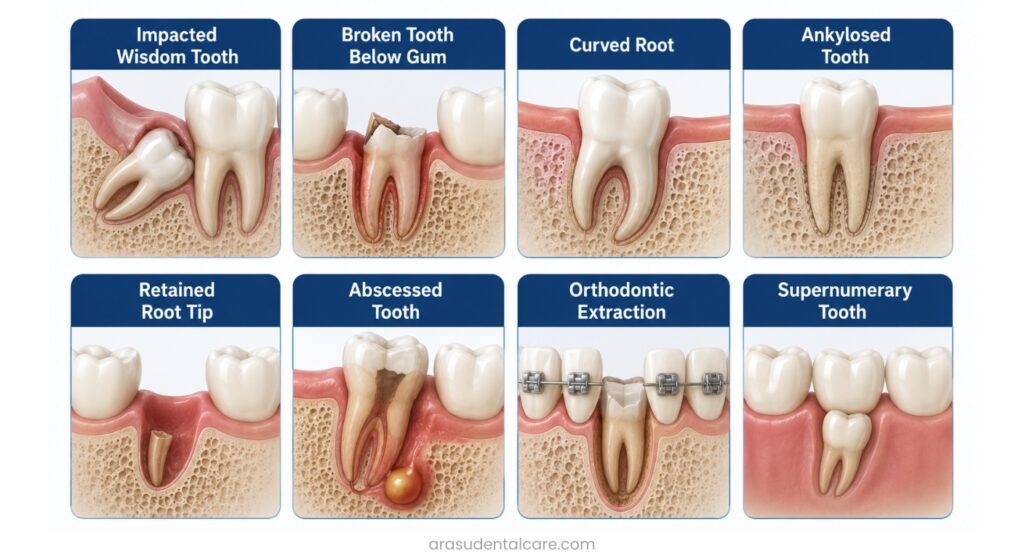
Not every tooth needs surgery. However, certain situations clearly call for a surgical approach to protect your oral health.
1. Impacted Wisdom Teeth
Partially erupted wisdom teeth: These teeth get stuck under gum or bone and cannot fully come out. They often cause pain, swelling, and repeated infection around the gum.
Fully impacted wisdom teeth: These remain trapped inside the jawbone and may push neighbouring teeth. Surgical removal is usually the safest way to prevent long-term damage.
2. Tooth Broken at or Below the Gum Line
Severely decayed teeth: When decay destroys most of the crown, there is little tooth left for forceps to grip. A surgical method becomes necessary to remove the remaining structure safely.
Trauma or fracture: Accidents can break a tooth deep below the gum. In such cases, the dentist may need to gently uncover the area before removal.
3. Teeth With Long, Curved, or Fragile Roots
Dilacerated or curved roots: Some roots curve sharply or wrap around bone, making simple extraction unsafe. A surgical approach helps avoid root fracture or bone damage.
Hypercementosis or thickened roots: Thick, bulb-shaped root tips cannot pass through the socket easily. Controlled surgical removal protects surrounding tissue.
4. Ankylosed Teeth (Fused to Bone)
Tooth fused to jawbone: In this condition, the tooth and bone grow together, leaving no normal ligament space. Sectioning the tooth surgically allows safe removal without large bone loss.
5. Retained Root Tips
Broken root fragments: Old extractions or fractures may leave small root pieces in the jaw. These can cause infection or cysts and often need surgical retrieval.
6. Severe Infection or Abscess Not Responding to Treatment
Failed root canal cases: When infection persists despite endodontic treatment, removal may be the safest option. Surgical extraction allows complete cleaning of the infected area.
Advanced periodontal disease: Teeth with severe bone loss may become loose and infected. Careful surgical removal helps preserve remaining bone for future restorations.
7. Orthodontic and Pre-Prosthetic Reasons
Crowding cases: Some orthodontic plans require removal of impacted or poorly positioned teeth. Surgical extraction supports smoother tooth alignment.
Before dentures or implants: Hidden roots or unfavourable teeth may need removal before placing prosthetics. This creates a healthy foundation for long-lasting results.
8. Supernumerary or Extra Teeth
Extra teeth blocking eruption: Additional teeth can prevent permanent teeth from erupting properly. Surgical removal helps the natural tooth come into position.
Symptoms That May Indicate the Need for Surgical Extraction
Recognising early warning signs helps you seek timely care.
Severe or constant tooth pain: Pain that lingers for days and worsens while chewing or sleeping. This may signal deep decay, infection, or an impacted tooth.
Swelling around the jaw or cheek: Visible swelling often points to infection spreading from a damaged tooth. Prompt evaluation is essential.
Difficulty opening the mouth: A stuck wisdom tooth or infection can restrict jaw movement. This is a common sign of pericoronitis.
Bleeding or pus around a tooth: These symptoms suggest active infection that needs professional care. Do not ignore recurring discharge.
Bad breath or persistent bad taste: Trapped food or infection around a hidden tooth can cause this. A dental check helps identify the source.
Pressure or shifting of nearby teeth: Impacted teeth may push against neighbours, causing crowding or discomfort. X-rays confirm the cause.
What to Expect During a Surgical Tooth Extraction
Knowing the steps in advance helps reduce anxiety.
Step 1: Examination and X-ray
Your dentist evaluates the tooth, surrounding bone, and nearby nerves. A panoramic or CBCT scan may be advised for complex cases.
Step 2: Local Anaesthesia
The area is fully numbed before the procedure begins. You may feel slight pressure, but no sharp pain.
Step 3: Gum Incision and Tooth Access
A small flap of gum is gently lifted to expose the tooth. If needed, a tiny amount of bone is removed.
Step 4: Sectioning the Tooth (If Required)
Multi-rooted teeth may be divided into smaller parts. This makes removal smoother and protects surrounding bone.
Step 5: Cleaning and Stitching
The socket is cleaned thoroughly to prevent infection. Dissolvable stitches are usually placed to support healing.
The procedure typically takes 30 to 60 minutes, depending on complexity.
Recovery and Aftercare Tips
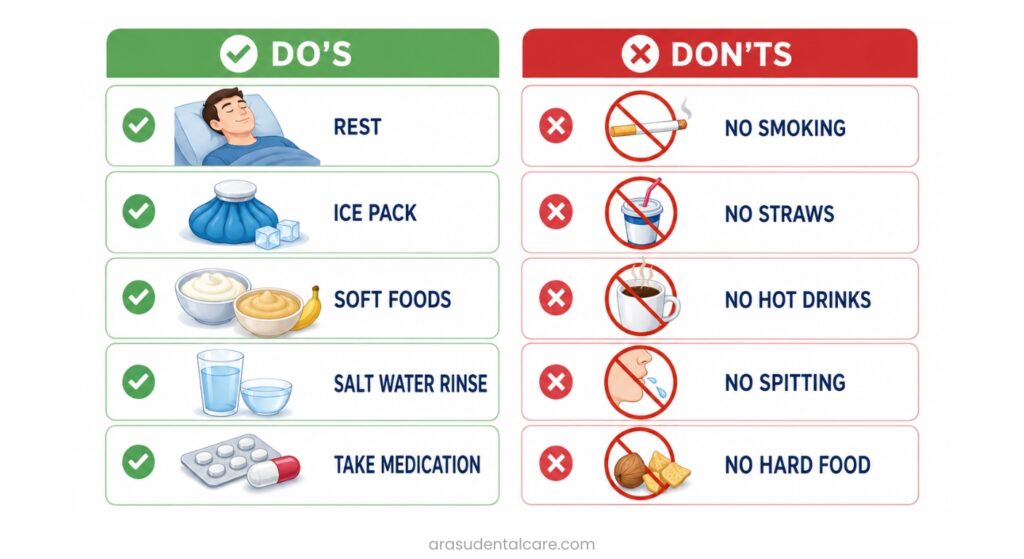
Good aftercare plays a major role in comfortable healing.
Bite gently on gauze: This helps form a stable blood clot in the socket. Replace the gauze if bleeding continues mildly for the first hour.
Apply a cold compress: Use an ice pack on the cheek for 15–20 minutes at a time. This reduces swelling during the first 24 hours.
Eat soft foods: Stick to yoghurt, khichdi, mashed potatoes, soups, and smoothies. Avoid hot, spicy, or crunchy foods for a few days.
Avoid straws and smoking: Suction can dislodge the blood clot and lead to a painful dry socket. Smoking also delays healing significantly.
Maintain gentle oral hygiene: Brush carefully and rinse with warm salt water after 24 hours. Keeping the area clean prevents infection.
Take medications as prescribed: Follow your dentist’s advice on painkillers and antibiotics. Do not skip doses or stop early.
For detailed post-surgical care, the American Dental Association’s oral surgery resource offers helpful guidance.
Possible Complications (And How They Are Managed)
Modern dental care minimises risks, but being informed is important.
Dry socket: This occurs when the blood clot dislodges, exposing the bone. Your dentist can place a soothing dressing to relieve pain.
Mild infection: Signs include increasing swelling, fever, or pus. Antibiotics and proper cleaning resolve most cases.
Temporary numbness: Rarely, nerves near lower wisdom teeth may be bruised. Sensation usually returns within a few weeks.
Sinus communication: For some upper molars, a small opening to the sinus may form. Most heal naturally with proper care.
A study published in the Journal of Oral and Maxillofacial Research shows that complications are rare when surgery is planned carefully and aftercare is followed correctly.
When to Contact Your Dentist After Surgery
Bleeding that does not stop: Mild oozing is normal, but heavy bleeding after a few hours needs review. Severe pain after day three: Pain that worsens instead of improving may signal a dry socket. Fever or facial swelling increasing: These can indicate infection that needs immediate care. Difficulty swallowing or breathing: This is rare but requires urgent emergency attention.
Final Thoughts
A surgical tooth extraction, while it sounds intimidating, is a well-established procedure that is performed safely every day in dental clinics. When a tooth is impacted, broken below the gum line, or simply cannot be removed any other way, surgical extraction is often the most responsible and protective option for your long-term oral health. The key is having it assessed and treated by an experienced team who can plan the procedure carefully and support your recovery from start to finish.
If you have been experiencing jaw pain, swelling, or a tooth that has not fully erupted, do not delay getting it evaluated. Early intervention almost always means a simpler procedure and a smoother recovery.
At Arasu Dental Care in Coimbatore, our team is experienced in handling both routine and complex extractions with precision and care. We will assess your case thoroughly, explain what is needed, and make sure you feel comfortable at every stage. Book a consultation with us today and let us help you resolve the problem safely and effectively.
Frequently Asked Questions
1. Is surgical tooth extraction painful?
The procedure itself is not painful because the area is fully numbed. You may feel mild soreness for a few days afterwards, which is easily managed with prescribed medication.
2. How long does a surgical extraction take?
Most cases take 30 to 60 minutes. Complex impactions or multiple teeth may take a little longer.
3. How long is the recovery period?
Most people feel comfortable within 3 to 7 days. Complete bone healing inside the socket may take a few weeks.
4. Can I go back to work the same day?
For desk jobs, many patients return the next day. If your work involves heavy physical activity, rest for 2 to 3 days is recommended.
5. Will I need stitches?
Most surgical extractions require a few stitches, usually dissolvable. They typically fall out on their own within 7 to 10 days.
6. Can I eat normally after the surgery?
Not immediately. For the first two to three days, stick to soft foods like yoghurt, soups, khichdi, and mashed potatoes. Avoid hot, spicy, hard, or crunchy foods that could irritate or damage the healing socket.
7. Will I need a replacement for the extracted tooth?
In most cases, yes. Leaving a gap after extraction can cause neighbouring teeth to shift over time, affect your bite, and lead to bone loss in the jaw.
8. What is dry socket and how can I avoid it?
Dry socket occurs when the blood clot that forms in the extraction socket is dislodged before the area has healed. It can cause sharp pain and a bad taste in the mouth.