When a tooth is badly damaged, decayed, or weakened, your dentist may suggest a ceramic crown to restore it. Ceramic crowns are tooth-shaped caps made from natural-looking dental ceramic, designed to protect your tooth and bring back its normal shape and function.
If your dentist has recommended this treatment, it is natural to wonder what actually happens during the procedure. This guide walks you through every step of getting a permanent ceramic crown in simple, easy-to-understand language.
What Is a Ceramic Crown?
A ceramic crown is a custom-made cap that fits over a prepared tooth. It is made entirely from dental ceramic materials such as zirconia, lithium disilicate (E.max), or porcelain, with no metal inside.
Because ceramic closely matches the colour and translucency of natural teeth, these crowns are a popular choice for both front and back teeth. They are also a good option for patients who prefer a metal-free restoration.
According to the American Dental Association, crowns are commonly used to protect weak teeth, restore broken ones, and cover root canal-treated teeth.
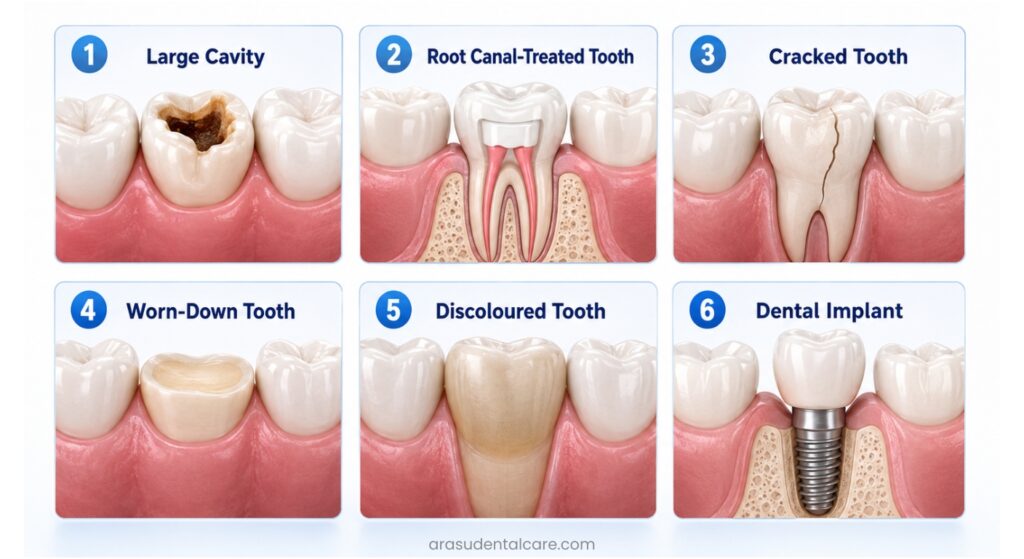
When Is a Ceramic Crown Needed?
Not every damaged tooth requires a crown. Your dentist will examine your tooth carefully and decide based on its condition.
Severely decayed tooth: When a cavity is too large for a normal filling, a crown gives the tooth proper support. It also prevents further breakdown of the remaining tooth structure.
After a root canal treatment: A root canal-treated tooth becomes more brittle over time. A ceramic crown protects it from cracking and helps it function like a natural tooth.
Cracked or fractured tooth: A crown holds the tooth together and prevents the crack from spreading. This is often the only way to save a tooth with a deep fracture.
Worn-down teeth from grinding: Patients with bruxism often have flattened or shortened teeth. Crowns restore proper height and bite alignment.
Cosmetic concerns: Severely stained, misshapen, or chipped teeth can be covered with a ceramic crown for a natural, even appearance.
Covering a dental implant: A ceramic crown is often placed over an implant to replace a missing tooth with a lifelike result.
How a Permanent Ceramic Crown Procedure Works
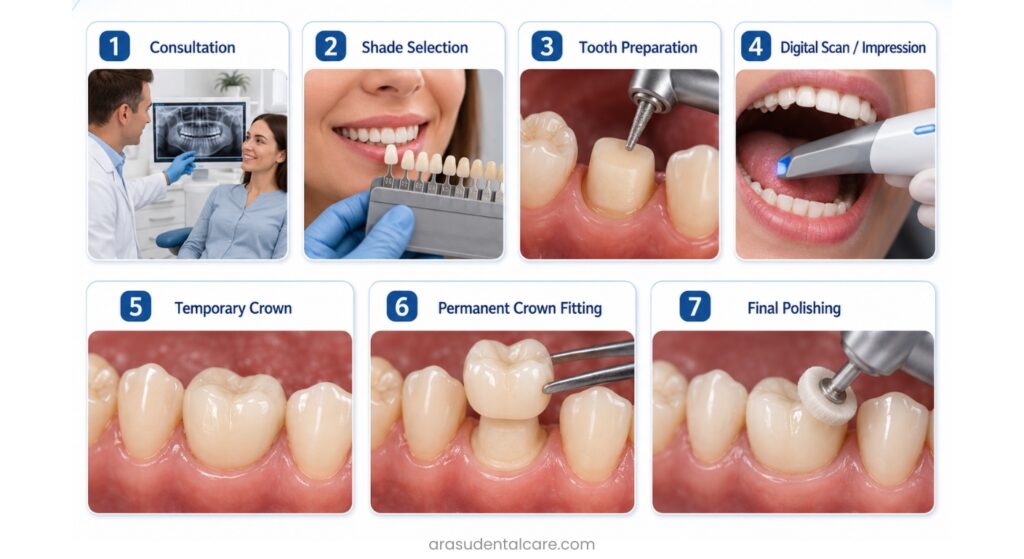
Getting a ceramic crown usually takes two dental visits, spaced about one to two weeks apart. With modern CAD/CAM technology, some clinics can also complete the entire process in a single visit.
Here is what happens at each stage.
Step 1: Consultation and Dental Examination
Your dentist begins with a detailed check-up and dental X-rays. This helps assess the extent of damage, the health of the tooth pulp, and the condition of the surrounding bone.
If the tooth has deep decay or infection, a root canal may be recommended before the crown is placed. The dentist will also discuss material options that suit your tooth and budget.
Step 2: Shade Selection
Before any preparation, the dentist matches the crown shade to your natural teeth. This step ensures the final crown blends in smoothly with the rest of your smile.
For front teeth, extra care is taken to match translucency and surface texture. This is especially important when only one tooth is being restored.
Step 3: Tooth Preparation
The dentist gently numbs the area with local anaesthesia so you stay comfortable. A small amount of enamel is then reshaped from the outer surface of the tooth to make space for the crown.
The amount removed depends on the type of ceramic material chosen. Modern materials like zirconia and lithium disilicate often need less reduction than older crowns.
Step 4: Taking the Impression or Digital Scan
Once the tooth is shaped, the dentist takes an impression of your teeth. This can be done using a soft putty material or a digital intraoral scanner.
The impression is sent to a dental laboratory, where skilled technicians design and craft your custom ceramic crown. The fit, shape, and shade are carefully matched to your bite.
Step 5: Temporary Crown Placement
While your permanent crown is being made, a temporary crown is placed over the prepared tooth. This protects the tooth from sensitivity and keeps your bite stable.
The temporary crown is usually made of acrylic and is held in place with mild cement. It is normal to chew carefully and avoid sticky foods during this time.
Step 6: Fitting the Permanent Ceramic Crown
At the second appointment, the temporary crown is removed and the new ceramic crown is tried on. Your dentist checks the fit, bite alignment, and colour match before bonding it.
Small adjustments may be made for comfort. Once everything looks right, the crown is permanently cemented using strong dental adhesive.
Step 7: Final Bite Check and Polishing
After bonding, the dentist checks your bite once more to ensure the crown does not feel high or uneven. The surface is then polished for a smooth, natural finish.
You can usually return to normal eating within a few hours, once the anaesthesia wears off completely.
What to Expect After the Procedure
Most patients feel comfortable soon after the crown is placed. Some mild sensitivity to hot or cold may occur during the first few days, which usually settles on its own.
Mild gum tenderness: The gum around the crown may feel slightly sore for a day or two. Gentle brushing and warm salt water rinses can help.
Temporary bite awareness: You may feel the crown’s presence at first. Within a week, your mouth usually adjusts and the crown feels natural.
Possible cold sensitivity: Some patients notice sensitivity to cold drinks. This typically improves within two to four weeks.
If you feel sharp pain, persistent discomfort, or a high bite that does not settle, contact your dentist for a quick adjustment.
How Long Do Ceramic Crowns Last?
With proper care, a ceramic crown can last between 10 and 15 years, and often longer. Research published in the Journal of the American Dental Association shows that high-quality ceramic crowns, especially zirconia, offer excellent long-term durability.
Lifespan depends on factors such as oral hygiene, biting habits, and regular dental check-ups. Patients who grind their teeth at night may benefit from a custom night guard to protect the crown.
Caring for Your Ceramic Crown
A ceramic crown is strong, but it still needs daily care like a natural tooth.
Brush twice daily: Use a soft-bristled toothbrush and fluoride toothpaste. Pay special attention to the gum line around the crown.
Floss every day: Gentle flossing prevents plaque build-up around the crown edge. This helps protect the underlying tooth from decay.
Avoid very hard foods: Chewing ice, hard nuts, or candies can chip the ceramic. Be mindful when biting into firm foods.
Wear a night guard if needed: If you grind or clench your teeth, a night guard can prevent micro-cracks. Ask your dentist for a custom-fit option.
Visit your dentist regularly: Routine check-ups every six months allow your dentist to monitor the crown and your overall oral health.
For more on oral hygiene, the World Health Organization emphasises that daily brushing and regular dental visits are key to long-term dental success.
Are Ceramic Crowns Right for Everyone?
Ceramic crowns work well for most patients, but the right choice always depends on individual factors. Your dentist may suggest a different material if you have very strong biting forces on back teeth or specific clinical needs.
A proper dental procedure steps examination is the only way to know which type of crown suits your tooth best. Your dentist will guide you based on the location of the tooth, your bite, and your aesthetic goals.
Final Thoughts
A ceramic crown is one of the most reliable ways to restore a damaged tooth while keeping a natural look. The procedure is well-planned, comfortable, and designed to give you a long-lasting result that supports both your smile and your oral health.
If you have a weak, broken, or decayed tooth, a proper dental examination can help you understand whether a ceramic crown is the right choice for you. If you are in Coimbatore and looking for trusted guidance on ceramic crowns, the team at Arasu Dental Care is here to help you take the next step with confidence.
Book a consultation today to explore your treatment options and find the solution best suited to your dental needs.
Frequently Asked Questions
1. Is the ceramic crown procedure painful?
The procedure itself is not painful because local anaesthesia is used during tooth preparation. Mild sensitivity may occur for a few days after, but it usually settles on its own.
2. How many visits are needed for a ceramic crown?
Most patients need two visits, spaced about one to two weeks apart. With same-day CAD/CAM technology, the entire process can sometimes be completed in a single visit.
3. How long does a ceramic crown last?
A well-maintained ceramic crown can last 10 to 15 years or more. Good oral hygiene and regular dental check-ups play a big role in its lifespan.
4. Can I eat normally after getting a ceramic crown?
Yes, you can eat normally once the anaesthesia wears off and the bite feels comfortable. It is best to avoid very hard or sticky foods for the first 24 hours.
5. Will the crown look like my natural teeth?
Yes, ceramic crowns are designed to match the shade, shape, and translucency of natural teeth. Most people cannot tell the difference between a ceramic crown and a real tooth.
6. Can a ceramic crown break or come off?
Although ceramic crowns are strong, they can chip or loosen if exposed to heavy force or trauma. If this happens, contact your dentist promptly for repair or recementing.
7. Do ceramic crowns cause sensitivity?
Some mild sensitivity to hot or cold is normal in the first few weeks. If sensitivity continues for longer, your dentist can check for any bite or fit issues.
8. Is a root canal always needed before a ceramic crown?
Not always. A root canal is only needed if the tooth pulp is infected or badly damaged. Your dentist will decide based on a clinical and X-ray examination.