A root canal is meant to save a tooth, and most of the time, it works very well for many years. But in some cases, a treated tooth may start to hurt again or develop a new infection. When this happens, root canal re-treatment is often the best way to save your natural tooth.
Re-treatment simply means cleaning the tooth again, removing the old filling material, treating any missed or new infection, and sealing it properly. It is a safe and well-established procedure that helps you avoid extraction.
In this guide, we explain why root canal re-treatment is necessary, what signs to watch for, and what to expect during the procedure.
What Is Root Canal Re-Treatment?
Root canal re-treatment is a second root canal procedure done on a tooth that was treated earlier but did not heal as expected. The dentist reopens the tooth, removes the old filling material, cleans the canals again, and refills them.
This treatment is usually done when a previously root canal-treated tooth becomes painful or shows signs of new infection. The goal is to save the natural tooth instead of removing it.
According to the American Association of Endodontists, saving a natural tooth through re-treatment is often the most preferred long-term option compared to extraction and replacement.
Why Root Canal Re-Treatment Becomes Necessary
A root canal can fail for many reasons. Some are linked to the original treatment, while others are due to new problems that develop later. Understanding the cause helps your dentist plan the right approach.
Common Reasons a First Root Canal May Fail
- Missed or hidden canals: Some teeth have very small or extra canals that may not be detected during the first treatment. These hidden areas can hold bacteria and cause infection later.
- Curved or narrow canals: Highly curved or narrow canals are difficult to clean fully. If bacteria remain in these areas, infection can return after some time.
- Delayed crown placement: When a permanent crown or filling is not placed soon after the root canal, the tooth can get contaminated. Saliva and bacteria may enter the cleaned canal.
- Leaking filling or crown: Over the years, a filling or crown may crack, loosen, or wear out. This allows bacteria to seep back into the tooth and cause re-infection.
- New decay around the tooth: Cavities forming around an old root canal-treated tooth can reach the inner canal again. This brings new bacteria into the previously sealed area.
- Tooth fracture or crack: A small crack in the tooth may not be visible at first. Over time, it can let bacteria reach the root and trigger fresh infection.
Signs You May Need Root Canal Re-Treatment
Many patients are unsure whether their discomfort is normal or a sign of a deeper problem. Some signs are clear, while others appear slowly.
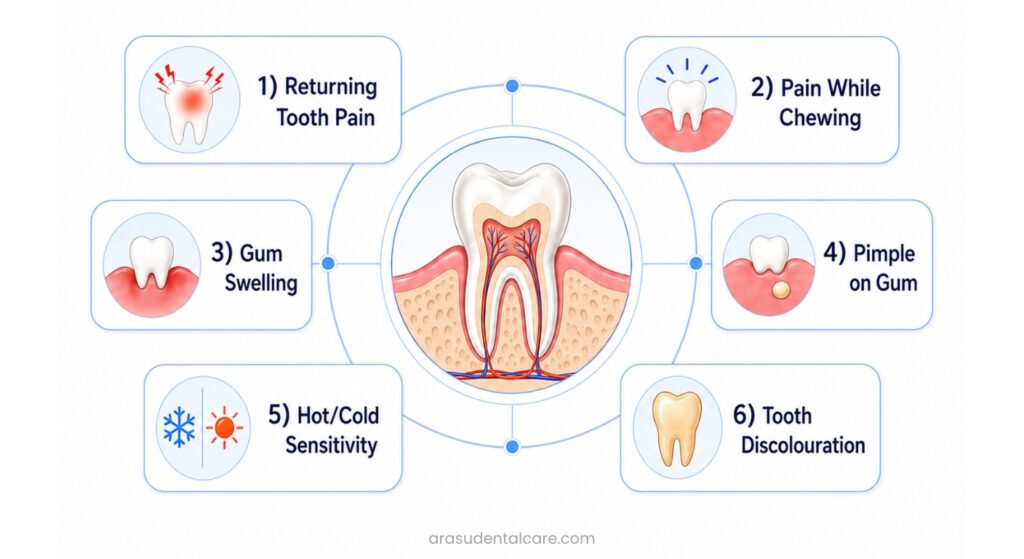
- Returning or constant tooth pain: A dull or sharp pain in a tooth that already had a root canal is one of the most common signs. It may come and go or stay for several days.
- Pain while biting or chewing: If pressure on the treated tooth causes pain, the area around the root may be inflamed. This often points to a possible re-infection.
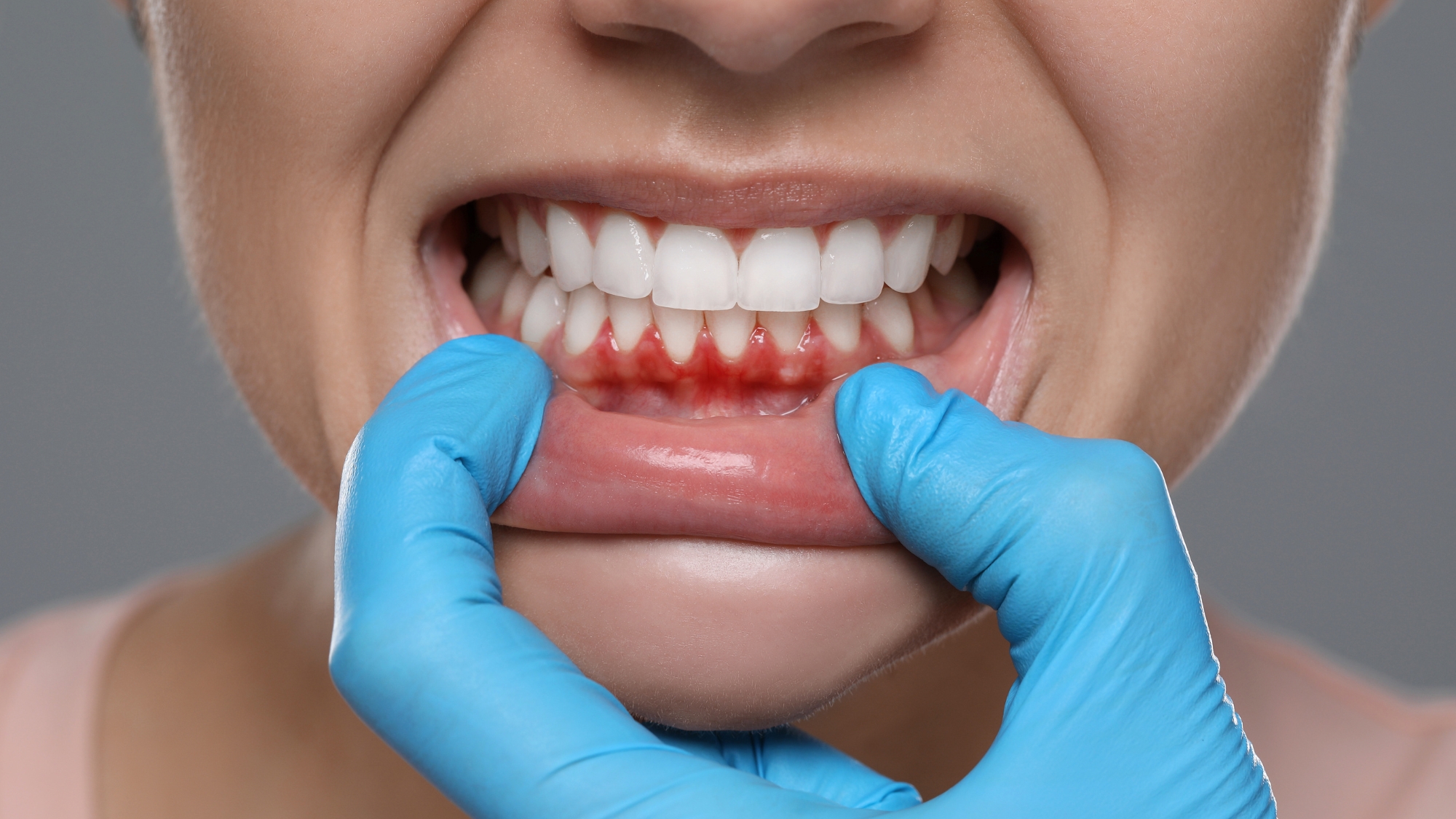
- Swelling near the tooth or gum: Swelling on the gum, cheek, or face near the treated tooth can mean infection has spread. It should not be ignored.
- A small pimple or bump on the gum: This bump, called a sinus tract, may release pus. It is usually a sign of an underlying infection in the root.
- Sensitivity to hot or cold: Lingering sensitivity in a tooth that had a root canal is unusual. It may suggest that the nerve area is irritated again.
- Tooth discolouration: A tooth that turns darker over time can indicate problems inside the root. This often happens with long-standing infection.
How Does Root Canal Re-Treatment Work?
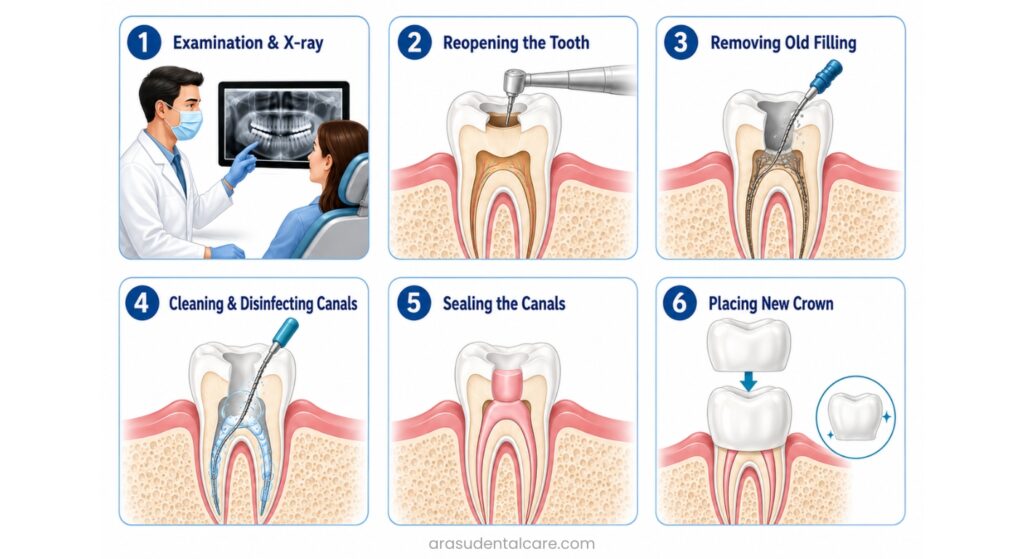
Re-treatment follows a careful, step-by-step process. Modern tools like dental microscopes and improved cleaning systems make the procedure more accurate today than in the past.
Step 1: Examination and Diagnosis
The dentist starts with a clinical check and X-rays. In many cases, a 3D scan called CBCT may be advised to spot hidden canals, cracks, or infection.
This step helps confirm whether re-treatment is the right option for your tooth.
Step 2: Reopening the Tooth
The existing crown or filling is carefully removed. If there is a post inside the tooth, that is also taken out gently to reach the root canals.
Step 3: Removing the Old Filling Material
The previous root canal filling, usually gutta-percha, is removed using fine instruments. This gives the dentist access to the inside of the canals.
Step 4: Cleaning and Disinfecting the Canals
The canals are cleaned again, shaped, and disinfected. The dentist also looks for any missed canals or unusual anatomy that may have caused the original failure.
Step 5: Sealing the Tooth
Once the canals are fully cleaned, they are filled with new sealing material. A temporary filling is placed until the final restoration is done.
Step 6: Placing the Final Crown or Filling
A new crown or permanent restoration is placed to protect the tooth. This step is important for long-term success and helps the tooth function normally again.
Is Root Canal Re-Treatment Painful?
Most patients are surprised to find that re-treatment feels similar to a regular root canal. Local anaesthesia is used so you do not feel pain during the procedure.
Mild soreness or tenderness can be felt for a few days after the treatment. This usually settles with prescribed medication and proper care.
Re-Treatment vs Tooth Extraction: Which Is Better?
Many patients ask whether it is better to extract the tooth and place an implant instead. In most cases, saving the natural tooth is the preferred choice.
- Natural teeth feel more comfortable: Your own tooth fits naturally with your bite, gums, and jaw. No artificial replacement matches this fully.
- Re-treatment may cost less in the long term: An extraction often leads to an implant, bridge, or denture. These options can be more expensive and time-consuming.
- Less impact on neighbouring teeth: Re-treatment does not involve nearby healthy teeth. Some replacement options may need support from surrounding teeth.
A study published on the National Library of Medicine (NIH) reports that non-surgical root canal retreatment has high success rates and should be considered the first treatment option in most failed root canal cases.
That said, the right choice depends on your specific tooth condition. A thorough dental examination is needed to decide what suits you best.
How to Care for Your Tooth After Re-Treatment
Good aftercare improves healing and supports long-term success. The first few days are important.
- Avoid chewing on the treated side: Until the permanent crown is placed, the tooth is more sensitive. Chewing soft foods on the other side helps protect it.
- Maintain gentle oral hygiene: Brush twice a day and floss carefully around the treated tooth. Clean teeth heal better.
- Take medication as advised: Painkillers or antibiotics, if prescribed, should be taken on time. This helps reduce swelling and prevents infection.
- Attend follow-up visits: Follow-up checks help your dentist confirm healing and decide when to place the final crown.
For trusted oral care guidance, you can also refer to resources from Cleveland Clinic.
When to See a Dentist
If you have any pain, swelling, or discomfort in a tooth that already had a root canal, it is best not to wait. Early evaluation gives the tooth a better chance of being saved.
A dental checkup near me can help identify the exact cause and guide you toward the right treatment option.
Conclusion
A failed root canal does not always mean losing your tooth. Root canal re-treatment offers a second chance to save your natural tooth and bring back comfort. With careful diagnosis and modern techniques, the success rate today is higher than ever.
If you are noticing pain, swelling, or discomfort in a previously treated tooth, do not delay. A timely consultation can make a big difference in saving your tooth.
If you are in Coimbatore and looking for expert guidance on root canal re-treatment, the team at Arasu Dental Care can help you understand your options and take the right next step. Book a consultation today for a calm, clear, and personalised assessment.
Frequently Asked Questions (FAQs)
1. How long does root canal re-treatment take?
Most cases are completed in one or two visits, with each visit lasting about 60 to 90 minutes. Complex cases may need extra time.
2. Is root canal re-treatment safe?
Yes, it is a routine and well-studied procedure. With modern tools, success rates are high when done by an experienced dentist.
3. How long will the tooth last after re-treatment?
A re-treated tooth can last many years, often a lifetime, with good oral care and a proper crown to protect it.
4. Can I avoid re-treatment by taking antibiotics?
No. Antibiotics may reduce swelling temporarily but cannot remove the source of infection inside the tooth. Re-treatment is needed to fully clean the canals.
5. Will I need a new crown after re-treatment?
In most cases, yes. A new crown protects the tooth and helps it function like a natural tooth again.
6. Why did my first root canal fail?
Failure can happen due to missed canals, a delayed crown, new decay, a cracked tooth, or a leaking restoration. Your dentist can find the exact reason during examination.
7. Is re-treatment more painful than the first root canal?
Not usually. With proper anaesthesia, the experience is similar. Mild soreness for a few days is normal.
8. What if re-treatment is not possible?
In some cases, your dentist may suggest minor endodontic treatment surgery (apicoectomy) or extraction with replacement. The right choice depends on the tooth’s condition.