If your dentist has suggested an apicoectomy, you may be wondering what it really means and why it is needed. An apicoectomy is a small surgical procedure that helps save a tooth when a regular root canal has not fully cleared the infection.
It sounds more complex than it actually is. With modern techniques, the treatment is precise, comfortable, and highly successful in protecting your natural tooth.
This guide will walk you through everything you need to know — what an apicoectomy is, when it is needed, how it is done, and what to expect during recovery.
What Is an Apicoectomy?
An apicoectomy is a minor surgical procedure where the tip of a tooth’s root, called the apex, is removed along with any infected tissue around it. The remaining root end is then sealed with a small filling to prevent further infection.
This treatment is also called root-end surgery or apical surgery. It is usually done by an endodontist, a dental specialist trained in root canal and root-related treatments.
Unlike a root canal that works through the crown of the tooth, an apicoectomy reaches the infection from the side of the gum near the root. This allows the dentist to clean areas that a regular root canal cannot reach.
When Is an Apicoectomy Needed?
An apicoectomy is not the first treatment option. It is usually considered only when other root canal treatments have not worked or are not possible.
Your dentist may recommend this surgery in the following situations:
Persistent infection after a root canal: Sometimes, infection can stay near the root tip even after a successful root canal. An apicoectomy helps remove this hidden infection completely.
Blocked or curved root canals: If the canal is too narrow, curved, or calcified, regular instruments cannot reach the tip. Surgery becomes the safer way to clean the area.
Existing crown or post in the tooth: When a tooth already has a crown or post, removing them for a retreatment may damage the tooth. An apicoectomy avoids that risk.
Small fractures or hidden canals: Tiny cracks or extra canals at the root tip may not show up on regular X-rays. Surgery allows the endodontist to find and treat them directly.
Cysts or abscesses near the root tip: A persistent cyst or pus pocket around the root often needs surgical removal to allow proper healing.
Signs You Might Need an Apicoectomy
Most people do not realize they need this treatment until symptoms appear. Common signs include:
Ongoing pain after a root canal: Pain that does not settle weeks after a root canal may suggest infection at the root tip. This usually needs further evaluation.
Swelling or tenderness in the gum: Swelling near a previously treated tooth often indicates trapped infection. It may come and go before becoming constant.
A small bump or pimple on the gum: This is called a sinus tract and shows that pus is draining from an infected root. It is a clear sign that something deeper is wrong.
Discomfort while chewing: Pressure pain may mean the infection has reached the bone around the root tip. Early treatment can prevent bone loss.
Bad taste or odor near the tooth: This often points to a slow-draining infection that needs prompt attention.
How the Apicoectomy Procedure Works
Many patients feel anxious before any surgery, but an apicoectomy is a calm and well-planned procedure. Most people are surprised at how quick and comfortable it actually is.
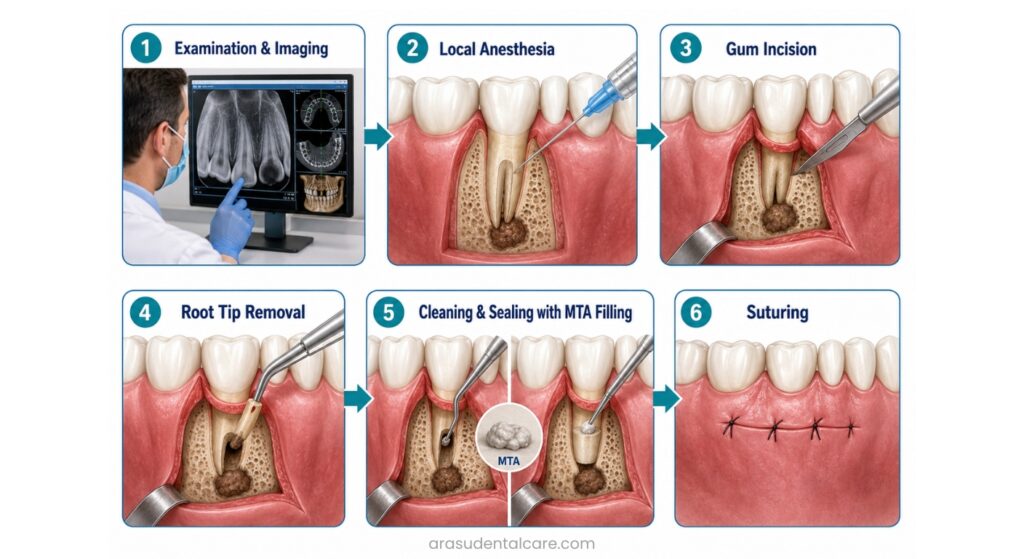
Here is a step-by-step look at what happens:
Step 1 – Examination and imaging: Your endodontist will study your tooth using digital X-rays or a 3D CBCT scan. This helps locate the infection and plan the surgery accurately.
Step 2 – Local anesthesia: The area around the tooth is numbed completely so you do not feel pain during the procedure. You stay awake but relaxed throughout.
Step 3 – Small incision in the gum: A tiny opening is made in the gum near the affected root. This gives clear access to the root tip and infected tissue.
Step 4 – Removing the root tip and infection: About 2–3 millimeters of the root end is removed along with any inflamed tissue. According to research published by the American Association of Endodontists, this length removes most accessory canals where bacteria can hide.
Step 5 – Cleaning and sealing the root end: The end of the root is cleaned and sealed using a biocompatible material such as MTA (Mineral Trioxide Aggregate). This material supports natural bone healing and prevents reinfection.
Step 6 – Suturing the gum: The gum is gently stitched back. The bone around the root tip slowly heals over the next few months.
The entire procedure usually takes 30 to 90 minutes, depending on the tooth’s location.
Learn More what happens during an apicoectomy procedure, recovery expectations, and its benefits for long-term oral health.
Benefits of an Apicoectomy
Choosing an apicoectomy over an extraction has several long-term advantages.
Saves your natural tooth: Keeping your own tooth is always better than replacing it. Natural teeth feel and function better than implants or bridges.
Prevents the spread of infection: By removing the infected root tip, the surgery stops bacteria from reaching the jawbone or nearby teeth.
Protects surrounding bone: Treating the infection early helps preserve the bone around the tooth. This keeps your jaw structure strong and stable.
Long-lasting results: A meta-analysis in the Journal of Endodontics reported success rates of 85–95% with modern microsurgical techniques. Many treated teeth function well for decades.
Less invasive than tooth replacement: Compared to extraction followed by an implant or bridge, an apicoectomy is a simpler, single-visit surgery with quicker overall recovery.
Recovery After an Apicoectomy
Recovery is usually smooth and faster than most people expect. Mild swelling or tenderness may appear during the first two days, but it settles quickly.
Manage discomfort with care: Over-the-counter pain relievers like ibuprofen are usually enough. Most patients return to work within a day or two.
Apply a cold compress: Using a cold pack on the cheek for short intervals helps reduce swelling. Keeping your head slightly elevated while resting also helps.
Eat soft foods: Stick to soft and lukewarm foods for the first few days. Avoid hard, crunchy, or very hot items near the surgical area.
Maintain gentle oral hygiene: Brush carefully and avoid the surgical site for a few days. A warm saltwater rinse after 24 hours can soothe the gums.
Avoid smoking and strenuous activity: Both can slow healing. Rest well during the first 48 hours for the best recovery.
Stitches usually dissolve or are removed within a week. Full bone healing around the root may take a few months, monitored through follow-up X-rays.

Risks and Possible Complications
An apicoectomy is generally safe, especially when performed by an experienced endodontist. Still, like any surgery, small risks exist.
Minor bleeding or swelling:This is normal in the first day or two and usually settles on its own.
Temporary nerve sensitivity:For lower teeth close to nerves, mild numbness can occur briefly. Permanent nerve issues are rare.
Infection at the surgical site:Following post-surgery care and antibiotics (if prescribed) reduces this risk significantly.
Sinus involvement for upper teeth:Upper back teeth are close to the sinus area. Modern imaging helps the dentist plan the surgery to avoid this.
Discussing your medical history and any concerns with your endodontist before surgery helps prevent complications.
Apicoectomy vs Tooth Extraction: Which Is Better?
When a root canal fails, the choice usually comes down to either an apicoectomy or removing the tooth. Saving the natural tooth is almost always the better option when possible.
Apicoectomy:Preserves your natural tooth, maintains your bite, and avoids the cost of replacement procedures.
Extraction:Requires a follow-up implant, bridge, or denture, which involves more time, healing, and cost.
If your endodontist confirms that the tooth structure is still strong, an apicoectomy is usually the smarter long-term choice.
Final Thoughts
An apicoectomy is a reliable and modern way to save a tooth when a root canal alone is not enough. It is a small surgery with a big benefit — keeping your natural tooth healthy and functional for years to come.
If you have ongoing pain, swelling, or discomfort around a previously treated tooth, do not ignore it. A timely consultation can help identify the cause and prevent further damage.
If you are in Coimbatore and looking for expert advice on root canal or apicoectomy treatment, the team at Arasu Dental Care can guide you with a clear diagnosis and a comfortable treatment plan. Book a consultation today to take the next step toward a healthier smile.
Frequently Asked Questions
1. Is an apicoectomy painful?
The procedure itself is not painful because of local anesthesia. Mild soreness afterward usually settles within a few days with simple pain relievers.
2. How long does an apicoectomy take?
Most procedures take between 30 and 90 minutes, depending on the tooth’s position and the complexity of the root.
3. How successful is the procedure?
Modern apicoectomies have success rates between 85% and 95%, especially when done with microsurgical techniques.
4. How long does recovery take?
Most people return to normal activities within 1–2 days. Complete bone healing around the root may take a few months.
5. Will I need antibiotics after the surgery?
Antibiotics are not always needed. Your dentist will prescribe them only if there is an active infection or specific medical reason.
6. Can the same tooth be treated again if needed?
In most cases, an apicoectomy provides a long-lasting result. If issues return, your endodontist will suggest the best next step based on your case.
7. Is an apicoectomy better than extraction?
Whenever possible, saving your natural tooth is preferred. Extraction is considered only if the tooth cannot be saved.
8. How much does an apicoectomy cost?
Cost varies based on the tooth’s location, complexity, and clinic. Your dentist can give a clear estimate after evaluation.