If your dentist has recommended an apicoectomy, you may be wondering what it means and why a normal root canal isn’t enough. An apicoectomy, also known as root end surgery, is a small surgical procedure that helps save a tooth when a root canal alone has not fully resolved the infection.
It is a routine dental procedure with high success rates. The goal is simple — remove the infected tip of the root, seal it properly, and preserve your natural tooth.
This guide explains everything you need to know about root end surgery in clear, simple language. From symptoms and procedure steps to recovery and cost, we have covered it all.
What Is an Apicoectomy (Root End Surgery)?
An apicoectomy is a minor surgical treatment that removes the very tip of a tooth’s root, called the apex, along with any infected tissue around it. It is sometimes called apical surgery or root-end resection.
This treatment is usually performed by an endodontist, a dental specialist who handles root canal-related care. It is recommended when standard root canal therapy has not been able to clear the infection completely.
According to the American Association of Endodontists, an apicoectomy is the most common type of endodontic surgery and is often the last step before considering tooth extraction.
How Is It Different From a Root Canal?
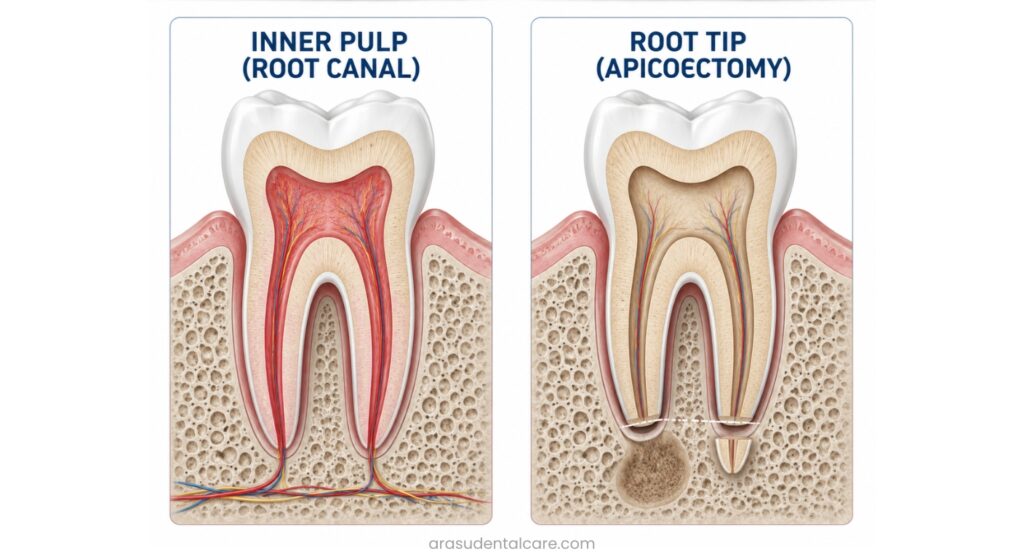
A root canal cleans the infected pulp from inside the tooth. An apicoectomy, on the other hand, focuses on the root tip and the bone surrounding it.
In simple terms, a root canal works from the top of the tooth, while root end surgery works from the side of the gum near the root. Both procedures aim to save the natural tooth, but each addresses a different area of infection.
When Is an Apicoectomy Needed?
Your dentist may suggest root end surgery when other treatments are unable to fix a persistent infection. The procedure is usually considered after a root canal or root canal retreatment has not worked.
Here are the most common reasons an apicoectomy may be recommended:
- Persistent infection after a root canal:The infection at the root tip continues even after standard treatment. This often shows up as ongoing pain or swelling near the tooth.
- Blocked or curved root canals:Some roots are too narrow or curved for regular instruments to clean fully. Surgery allows direct access to the root tip.
- Calcified canals:Calcium deposits can block the canal, making cleaning impossible through normal methods. Root end surgery becomes a practical option in such cases.
- Existing crown or post in the tooth:If a tooth already has a crown or post, removing it for retreatment may damage the restoration. An apicoectomy avoids disturbing existing dental work.
- Fractured root tip or small cracks:Tiny fractures near the root can trap bacteria. Surgery helps remove the affected area and seal the tooth properly.
- Cysts or bone changes around the root:Sometimes inflammation forms a small cyst near the root tip. The surgery helps remove this and supports natural bone healing.
Common Symptoms That May Lead to Root End Surgery
Most patients who need an apicoectomy notice certain warning signs before treatment is suggested.
- Lingering tooth pain after a root canal:Pain that does not settle even weeks after a root canal may point to leftover infection. This is one of the clearest signs that further treatment is needed.
- Swelling or tenderness near the gum:A small bump or swelling above the treated tooth may indicate infection at the root tip. It can come and go but usually does not heal on its own.
- Pain while biting or chewing:Pressure-related pain often shows that the area around the root is still inflamed. This discomfort tends to increase over time if untreated.
- A small pimple-like spot on the gum:This is called a sinus tract and often releases pus from a hidden infection. It is a sign that the body is trying to drain the infection naturally.
- Dull ache or sensitivity that returns:Sometimes the pain feels mild but keeps coming back. This is often the first hint that something deeper needs attention.
How an Apicoectomy Is Performed
The procedure is straightforward and usually completed in one visit. It typically takes between 30 and 90 minutes, depending on the tooth’s location and root structure.
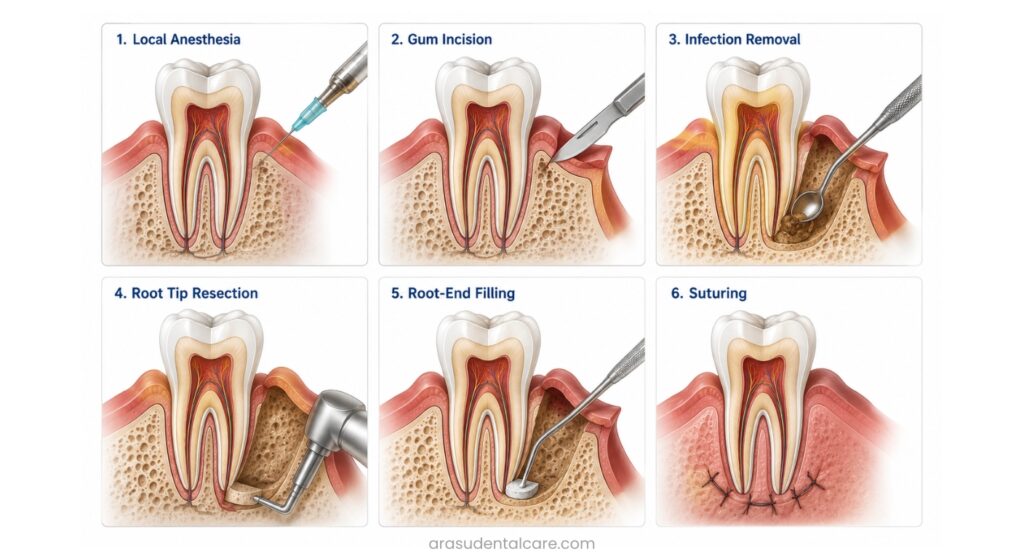
Here is what to expect step by step:
- Step 1 – Local anesthesia:The area around the affected tooth is numbed completely. You should not feel pain during the procedure.
- Step 2 – Small gum incision:The endodontist makes a tiny opening in the gum near the root. This allows direct access to the root tip and surrounding bone.
- Step 3 – Removal of infected tissue:Any inflamed or infected tissue around the root is gently cleaned out. This removes the source of ongoing infection.
- Step 4 – Resection of the root tip:About 2 to 3 millimeters of the root end is removed. This eliminates hidden bacteria that often cause repeat infections.
- Step 5 – Root-end filling:A small biocompatible filling, often MTA (Mineral Trioxide Aggregate), is placed to seal the canal. MTA is widely used because it supports healing and creates a strong seal.
- Step 6 – Stitching the gum:The gum tissue is repositioned and closed with fine sutures. Most stitches dissolve or are removed within a week.
Modern microsurgical techniques, including dental microscopes and ultrasonic instruments, have made apicoectomies more precise and predictable than ever before.
Is the Procedure Painful?
Most patients are surprised at how comfortable the procedure is. Local anesthesia keeps the area fully numb, so you should not feel pain during surgery.
After the anesthesia wears off, mild soreness or swelling is normal for a day or two. Studies published on PubMed have shown that post-operative pain is usually mild and manageable with over-the-counter medication.
Recovery After Root End Surgery
Recovery is usually quick, and most patients return to normal activities within a day or two. Following simple aftercare instructions helps the gum and bone heal properly.
- Mild swelling is normal:Some swelling near the treated area is expected for the first 24 to 48 hours. Cold compresses can help reduce it.
- Pain management:Over-the-counter pain relievers like ibuprofen are usually enough. Your dentist may also prescribe antibiotics if needed.
- Eat soft foods:Stick to soft foods like soups, yogurt, and smoothies for a few days. Avoid chewing on the treated side until healing improves.
- Gentle oral hygiene:Brush carefully, avoiding the surgical site for the first few days. Warm salt water rinses after 24 hours support healing.
- Avoid smoking and strenuous activity:Both can slow down healing and increase swelling. Rest helps the tissue recover faster.
- Stitch removal:Sutures are usually removed within a week unless they are dissolvable.
Complete bone healing around the root takes a few months, and your dentist will monitor it through follow-up X-rays.
Success Rate of Apicoectomy
Apicoectomy has a strong track record. A 2020 study published on PubMed reported a success rate of around 91.4% after one year, with long-term studies showing favorable results even after 5 to 10 years.
The success of the surgery depends on the dentist’s skill, the materials used, and how well aftercare is followed. Modern microsurgical techniques have significantly improved outcomes compared to older methods.
Risks and Possible Complications
Like any dental surgery, root end surgery carries some minor risks. However, complications are rare when performed by an experienced endodontist.
- Mild infection:Sometimes infection can develop after surgery. Antibiotics and proper hygiene usually resolve it.
- Slight nerve sensitivity:In rare cases, especially in lower back teeth, nearby nerves may feel temporarily sensitive. This usually settles on its own.
- Incomplete healing:A small number of cases may not heal as expected and may require retreatment or extraction.
Your dentist will discuss these possibilities clearly so you can make an informed decision.
Cost of Apicoectomy in India
The cost of an apicoectomy can vary based on the tooth’s location, complexity, and the materials used. Front teeth are usually less expensive to treat than molars, which have multiple roots.
In India, the cost of root end surgery typically ranges between ₹6,000 and ₹18,000 per tooth. Clinics using advanced microsurgical equipment and biocompatible materials like MTA may charge slightly more.
The right cost depends on your specific case, and a proper dental examination is needed to give an accurate estimate. Investing in a quality apicoectomy is often more cost-effective than tooth extraction followed by an implant or bridge.
When to See a Dentist
If you have ongoing pain, swelling, or a small bump on your gum after a root canal, it is worth getting a dental checkup near me. Early diagnosis often makes treatment simpler and more successful.
A dental examination, along with X-rays, helps identify whether root end surgery is the right step for you.
Final thoughts
An apicoectomy is a well-established, highly successful procedure that gives your tooth a second chance when a root canal alone hasn’t been enough. With modern microsurgical techniques and materials like MTA, the treatment is more precise, comfortable, and predictable than ever before. That said, every case is unique, and only a thorough dental examination can confirm whether root-end surgery is the right option for you.
If you are experiencing persistent pain, swelling, or infection after a root canal, don’t ignore the symptoms. Seeking timely professional care can help preserve your natural tooth and prevent further complications. At Arasu Dental Care, our experienced dental team is committed to providing advanced endodontic treatments tailored to your individual needs. Schedule a consultation today to explore your treatment options and take the next step toward restoring your oral health and comfort.
Frequently Asked Questions (FAQs)
1. How long does an apicoectomy take?
The procedure usually takes 30 to 90 minutes, depending on the tooth and root complexity.
2. Is apicoectomy better than tooth extraction?
In most cases, yes. Saving your natural tooth helps maintain your bite, jawbone, and overall oral health. Extraction is usually a last option.
3. How long does it take to heal after root end surgery?
Soft tissue heals within 1 to 2 weeks. Complete bone healing around the root may take a few months.
4. Can the same tooth get infected again after an apicoectomy?
Reinfection is rare but possible. Good oral hygiene and regular check-ups help prevent it.
5. Will I need a crown after the procedure?
Not usually. If your tooth already has a crown, it stays in place since the surgery is done from the gum side.
6. Is apicoectomy safe for older adults?
Yes, it is generally safe for healthy adults of any age. Your dentist will review your medical history before recommending it.
7. How soon can I return to work after the surgery?
Most patients return to normal activities the next day.