A composite filling is a tooth-colored dental restoration used to repair cavities, chips, and minor tooth damage. Many patients ask if this treatment is right for them, especially when they want a natural-looking result without visible metal.
This guide explains who needs a composite filling, why dentists recommend it, and what you can expect during the process. The information here is meant to help you understand your options before your dental visit.
If you have been told you need a filling, or you are simply exploring tooth-colored options, this article will give you clear and honest answers.
What Is a Composite Filling?
A composite filling is a tooth-colored material made from a mix of plastic resin and fine glass particles. It bonds directly to the natural tooth and blends with the surrounding enamel.
Unlike traditional silver fillings, composite fillings are designed to look like a real tooth. This makes them a popular choice for both front and back teeth.
The material is placed in soft layers and hardened using a special curing light. Once set, it restores the strength, shape, and function of the damaged tooth.
Who Needs a Composite Filling?
Not every dental problem needs the same treatment. A dentist may recommend a composite filling when the damage is small to moderate and the tooth structure can still be saved.
Below are the most common situations where a composite filling is the right choice.
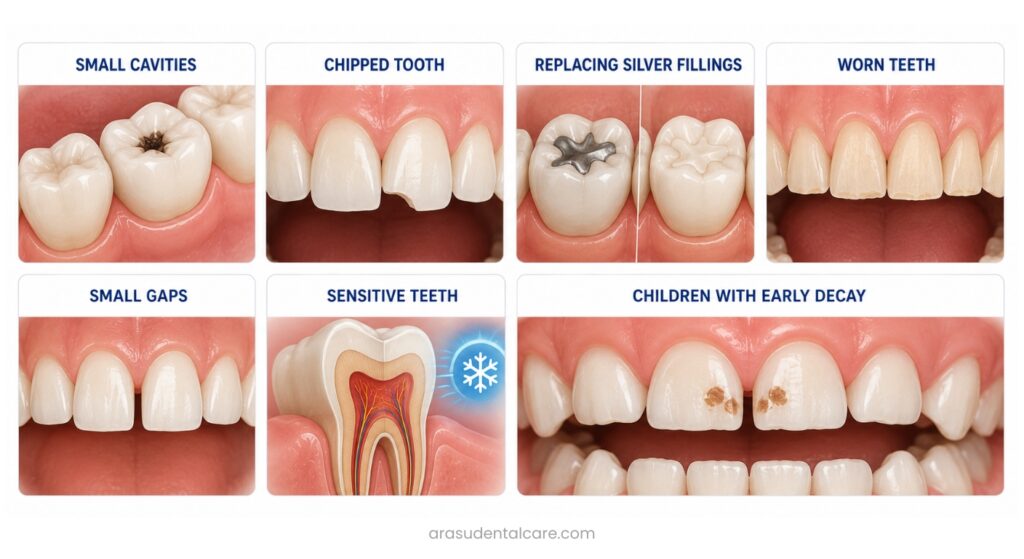
People With Small to Medium Cavities:
Composite fillings work well for cavities that have not reached deep into the tooth. The dentist removes the decay and fills the space with the bonding material to stop further damage.
This is one of the most common reasons patients receive a tooth colored filling.
Patients With Chipped or Slightly Broken Teeth:
A small chip from biting something hard or from minor trauma can often be repaired with composite. The material is shaped to match the tooth and helps restore its natural appearance.
This is a quick and conservative way to fix minor breakage without a crown.
Adults Who Want to Replace Old Silver Fillings:
Many adults choose to replace older amalgam fillings with composite for cosmetic reasons. Tooth-colored fillings give a more natural look, especially when smiling or talking.
According to the U.S. Food and Drug Administration, composite is one of the recommended alternatives to amalgam restorations.
People With Worn or Eroded Teeth:
Acid erosion, grinding, or aggressive brushing can wear down enamel over time. Composite can rebuild these worn areas and protect the tooth from further damage.
This is helpful for patients with mild tooth surface loss.
Patients With Small Gaps Between Teeth:
Composite bonding can close minor spaces between front teeth without braces or veneers. The dentist carefully shapes the material to create a natural, even smile.
This is a simple cosmetic option for those who prefer a non-invasive approach.
People With Sensitive or Slightly Cracked Teeth:
Small cracks can expose the inner layer of the tooth and cause sensitivity. A composite filling can seal these areas and reduce discomfort from hot or cold foods.
A proper dental examination is needed to confirm whether the crack is suitable for filling.
Children and Teenagers With Early Decay:
Younger patients often benefit from composite fillings because the material is gentler on tooth structure. Less drilling is required compared to traditional fillings.
This makes the treatment more comfortable for kids and parents alike.
Signs You May Need a Composite Filling
Sometimes the need for a filling is not obvious. Early signs can be subtle, which is why regular dental checkups matter.
Mild Tooth Pain or Sensitivity:
Discomfort when eating sweet, hot, or cold foods may be an early sign of decay. The pain often comes and goes in the early stages.
If sensitivity continues, a dental examination can help find the cause.
Visible Holes or Dark Spots on Teeth:
A small pit, crack, or dark area on the tooth surface may indicate decay. These changes are easier to treat when caught early.
Rough or Chipped Edges:
You may feel a rough spot with your tongue when a small piece of enamel breaks. Composite can smooth and restore the area.
Food Getting Stuck Repeatedly:
If food keeps getting trapped in the same spot, there may be a small cavity or gap forming. A dentist can check the area and recommend a filling if needed.
Sensitivity After Biting Down:
Mild pain when chewing can point to a cracked or weakened tooth. Early treatment helps prevent the crack from spreading.
How a Composite Filling Procedure Works
The process is straightforward and usually completed in a single visit. Most patients feel comfortable throughout the appointment.
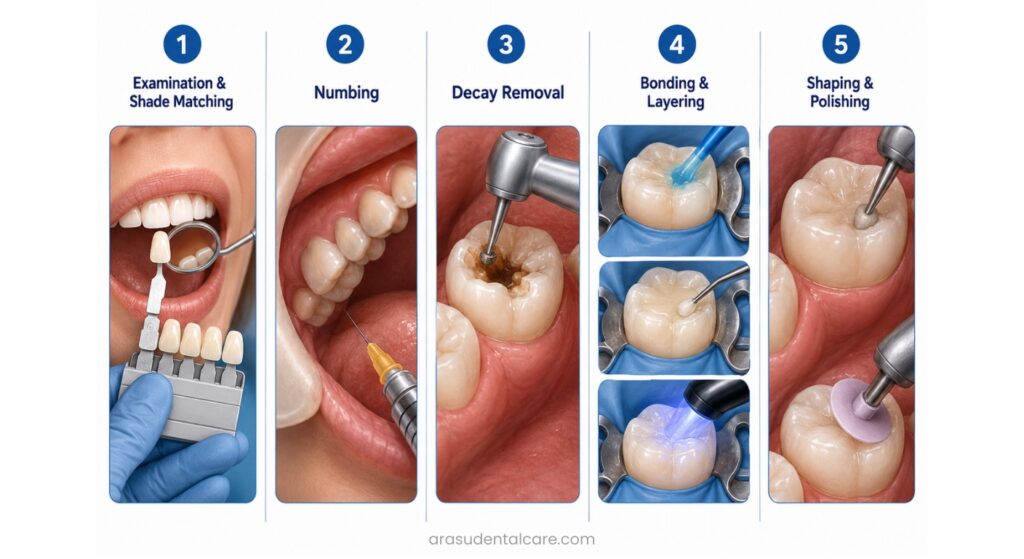
Step 1 – Examination and Shade Matching:
The dentist checks the tooth and selects a composite shade that matches your natural color. This is done before drying the tooth, since teeth can lighten when dry.
Step 2 – Numbing the Area:
A local anesthetic is given to keep you comfortable. For very small fillings, numbing may not be needed.
Step 3 – Removing Decay:
The decayed or damaged part of the tooth is gently cleaned out. Only the affected area is removed, which helps preserve healthy tooth structure.
Step 4 – Bonding and Layering:
A bonding agent is applied, followed by the composite material in thin layers. Each layer is hardened with a curing light.
Step 5 – Shaping and Polishing:
The dentist shapes the filling to match your bite and polishes it for a smooth finish. Your bite is checked to ensure comfort.
The entire visit usually takes 20 to 60 minutes depending on the size and number of fillings.
Benefits of Choosing a Composite Filling
Composite fillings offer several advantages that make them a preferred choice for many patients today.
Natural Tooth-Like Appearance:
The material blends with your enamel, making the filling nearly invisible. This is especially helpful for front teeth or visible areas.
Conservative Tooth Preparation:
Less healthy tooth structure needs to be removed compared to amalgam fillings. This helps preserve the strength of the natural tooth.
Strong Bond to the Tooth:
Composite chemically bonds to the tooth, which adds support and reduces the chance of cracks. Studies published by the National Library of Medicine show modern composites can last several years with proper care.
Mercury-Free Material:
Composite contains no mercury, which appeals to patients who prefer metal-free dental options.
Repairable if Damaged:
Small chips or wear can often be fixed by adding more composite, instead of replacing the entire filling.
When a Composite Filling May Not Be the Right Choice
While composite is versatile, it is not suitable for every situation. Your dentist may suggest other options in certain cases.
Very Large Cavities:
Big cavities may need a crown or inlay for better strength and longevity.
Deep Decay Reaching the Nerve:
If decay has spread to the inner pulp, root canal treatment may be required before any filling.
Heavy Grinding or Clenching Habits:
Patients with strong bruxism may wear down composite faster. A nightguard or stronger restoration may be recommended.
The right treatment depends on your dental condition, and only a proper examination can confirm what suits you best.
Aftercare Tips for Composite Fillings
Taking good care of your filling helps it last longer and keeps your tooth healthy.
Maintain Daily Oral Hygiene:
Brush twice a day and floss gently around the filled tooth. Good hygiene prevents new decay from forming nearby.
Limit Staining Foods and Drinks:
Coffee, tea, red wine, and tobacco can slowly stain composite over time. Rinsing with water after these can help reduce staining.
Avoid Biting Hard Objects:
Ice, pens, and hard candy can chip composite fillings. Be gentle with the filled tooth, especially in the first few days.
Visit Your Dentist Regularly:
Routine checkups allow your dentist to monitor the filling and catch any issues early. Most fillings last several years with proper care.
For more guidance on long-term oral care, the American Dental Association offers trusted resources for patients.
Final Thoughts
Composite fillings are a reliable, natural-looking solution for many common dental concerns. They work well for cavities, chips, worn teeth, small gaps, and replacing older silver fillings.
The right treatment, however, always depends on your individual dental condition. A proper examination helps identify the exact cause of the issue and the most suitable option for you.
If you are unsure whether a composite filling is right for you, or if you have noticed sensitivity, a chipped tooth, or early signs of decay, a dental consultation can help you take the next step with confidence.
Book a consultation with the team at Arasu Dental Care in Coimbatore for a clear, friendly assessment and personalized guidance on your tooth-colored filling options.
Frequently Asked Questions (FAQs)
1. How long does a composite filling last?
With good care, composite fillings can last around 7 to 10 years or more. Lifespan depends on the size of the filling, your bite, and oral hygiene habits.
2. Are composite fillings painful?
The procedure is usually comfortable because of local anesthesia. Mild sensitivity may follow for a few days but typically settles on its own.
3. Can I eat right after a composite filling?
Yes, composite hardens immediately under the curing light. However, it is best to wait until the numbness wears off to avoid biting your cheek or tongue.
4. Are composite fillings safe for children?
Yes, composite is considered safe and is often preferred for children because less drilling is needed. A pediatric dentist can guide you based on the child’s specific needs.
5. Can a composite filling be whitened later?
No, composite material does not respond to teeth whitening. If you plan to whiten your teeth, it is better to do so before placing front fillings.
6. How do I know if I need a filling or a crown?
Small to moderate damage is usually treated with a filling. Larger damage, deep cracks, or weakened teeth often need a crown for proper support.
7. Will my filling look obvious?
A well-placed composite filling blends with your tooth and is usually not noticeable. Shade matching is done carefully to ensure a natural look.