A composite filling is one of the most common dental treatments used today to repair teeth affected by decay, small fractures, or chipping. It restores both the function and natural appearance of your tooth using a tooth-colored resin material.
Many patients feel unsure about how the procedure works or whether it causes any side effects. This guide explains the entire process clearly, so you can feel informed and confident before your dental visit.
At Arasu Dental Care, we believe patients deserve simple, honest information before any treatment. Let’s walk through how a composite filling is done, what to expect, and how to care for it afterwards.
What Is a Composite Resin Filling?
A composite resin filling is a tooth-colored material made from a mixture of plastic resin and fine glass particles. It is used to fill cavities, repair minor chips, and restore worn-down teeth.
Unlike traditional silver fillings, composite blends naturally with your tooth shade. This makes it a preferred choice for both front and back teeth where appearance matters.
According to the Cleveland Clinic, composite fillings are part of a broader group of restorative treatments designed to preserve natural tooth structure while preventing further damage.
When Is a Composite Filling Recommended?
Your dentist may suggest a composite filling in several situations. The decision depends on the size, location, and condition of the affected tooth.
- Small to medium cavities: Composite works well for early to moderate tooth decay. It bonds directly to the tooth, helping seal the area and prevent further damage.
- Chipped or cracked teeth: Minor fractures can be repaired without removing much natural tooth. The resin restores the shape and strength of the tooth.
- Worn-down teeth: Teeth weakened by grinding or acid erosion can be rebuilt using composite material. This protects the inner tooth from further wear.
- Replacing old amalgam fillings: Many patients choose composite when replacing older silver fillings for a more natural look. It also helps preserve more healthy tooth structure.
- Closing small gaps between teeth: Composite can be shaped to close minor spaces in the smile line. This is a quick, conservative cosmetic option.
How Is a Composite Filling Performed? Step-by-Step Procedure
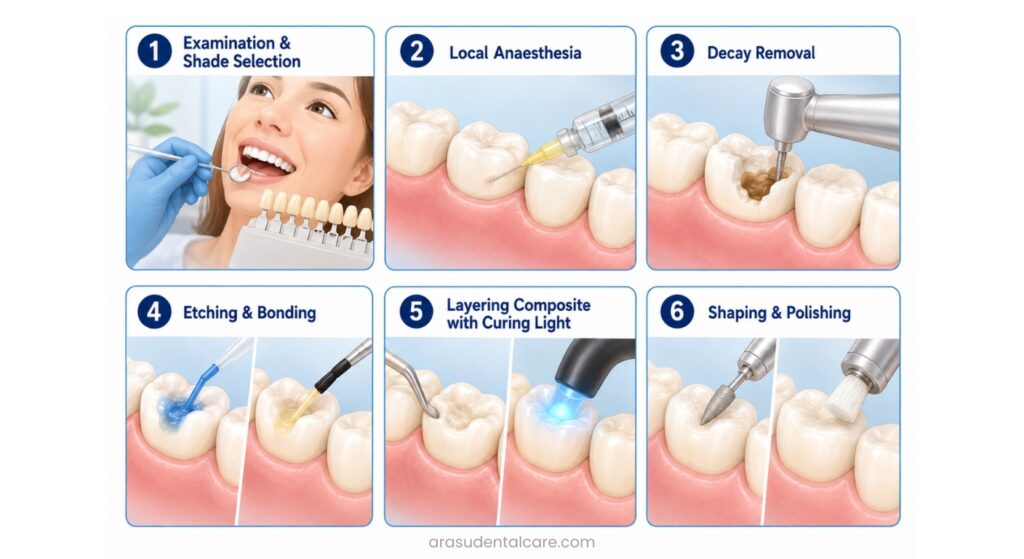
The composite filling process is straightforward and usually completed in a single visit. Here is what typically happens at the dental chair.
Step 1: Examination and Shade Selection
Your dentist will examine the tooth and may take an X-ray to check the depth of decay. The shade of composite is selected before the tooth dries out, ensuring a natural colour match.
This early step is important because dehydrated teeth can appear lighter and lead to a mismatched filling.
Step 2: Local Anaesthesia
A small amount of local anaesthetic is given to numb the tooth and surrounding gum. For very shallow cavities, anaesthesia may not be needed at all.
This step helps keep the procedure comfortable and pain-free.
Step 3: Decay Removal and Cavity Preparation
The dentist gently removes the decayed part of the tooth using a small drill or hand instrument. The area is then cleaned and shaped to hold the filling securely.
Only the damaged portion is removed, which is one of the key advantages of composite fillings.
Step 4: Etching and Bonding
A mild acid gel is applied to the prepared tooth for a few seconds, then rinsed off. A thin bonding agent is then applied, which helps the composite stick firmly to the tooth surface.
This step is essential for a strong and long-lasting bond.
Step 5: Layering the Composite Material
The composite is added in small layers. Each layer is hardened using a special blue curing light before the next one is placed.
This layering technique gives the filling its strength and natural look.
Step 6: Shaping, Polishing, and Bite Check
Once the layers are set, the dentist trims and shapes the filling to match your natural tooth contour. Finally, the bite is checked and the surface polished to a smooth finish.
A well-polished composite feels just like your natural tooth.
Possible Side Effects of Composite Fillings
Most patients recover smoothly, but a few mild side effects can occur. Knowing what to expect helps you feel reassured.
- Temporary tooth sensitivity: It is common to feel mild sensitivity to hot, cold, or sweet foods for a few days. This usually settles on its own within one to two weeks.
- Mild gum soreness: The gum near the treated tooth may feel slightly tender after the procedure. Gentle brushing and warm salt water rinses can help.
- Bite discomfort: If the filling feels slightly high when biting, your dentist can easily adjust it in a short follow-up visit. This small correction usually solves the problem completely.
- Allergic reaction (rare): A very small number of patients may have sensitivity to materials in the resin. Inform your dentist if you have known allergies before treatment.
- Discolouration over time: Composite fillings may stain slightly with regular intake of tea, coffee, red wine, or tobacco. Good oral care helps maintain the colour for longer.
- Post-operative pain that lingers: If sharp pain continues for more than two weeks, the filling may need a small adjustment. In rare cases, deeper decay may require additional treatment.
According to a study referenced by the National Library of Medicine, composite fillings generally show high patient satisfaction with minimal long-term complications when placed correctly.
Advantages of Composite Resin Fillings
Composite fillings offer several benefits that make them a popular choice for modern dentistry.
- Natural appearance: The tooth-coloured material blends seamlessly with your existing teeth. This is especially helpful for visible front teeth.
- Tooth-preserving approach: Less drilling is needed compared to amalgam fillings. More of your healthy tooth structure is preserved.
- Strong bonding: The composite chemically bonds to the tooth, adding support and reducing the risk of fracture.
- Versatile use: It can repair cavities, chips, gaps, and worn edges. The same material works well for cosmetic and restorative needs.
- Quick procedure: Most composite fillings are completed in one appointment. There is usually no waiting period before eating.
- Mercury-free option: Composite contains no metal or mercury, making it a preferred choice for patients seeking metal-free dentistry.
Possible Disadvantages to Be Aware Of
While composite fillings have many benefits, it is fair to know their limitations as well.
- Shorter lifespan than amalgam: A composite filling may last around 7 to 10 years with proper care. amalgam fillings can last slightly longer in some cases.
- Sensitive to moisture during placement: The tooth must be kept completely dry while placing the filling. This requires careful technique from the dentist.
- Slightly higher cost: Composite fillings often cost more than silver fillings due to the materials and time involved.
- Possible staining: Coffee, tea, and tobacco may slowly darken the filling over time. Regular dental cleaning helps reduce this.
Recovery and Aftercare for Composite Fillings
Recovery is usually quick, and most patients return to normal routines the same day. Following simple aftercare tips can help your filling last longer.
- Wait until numbness wears off before eating: This prevents accidental biting of your cheek or tongue. Soft foods are a good choice for the first meal.
- Avoid very hot or cold foods initially: Mild temperature sensitivity is normal for a few days. Lukewarm foods feel more comfortable during this time.
- Be gentle with hard or sticky foods: Items like ice, hard candy, or chewy sweets can stress the new filling. Try to chew on the opposite side for the first day.
- Maintain good oral hygiene: Brush twice daily with a soft-bristle brush and floss gently around the filling. This prevents new decay around the edges.
- Limit staining drinks: Reducing tea, coffee, and red wine helps keep the composite shade looking fresh. Rinse with water after consuming them.
- Attend regular dental check-ups: Routine visits help your dentist spot small issues early. This greatly extends the life of your filling.

How Long Does a Composite Filling Last?
With proper care, a composite filling can last between 7 and 10 years, sometimes longer. The lifespan depends on factors like the size of the filling, location in the mouth, and your oral hygiene habits.
Back teeth fillings may wear faster because they handle more chewing pressure. Front teeth fillings often last longer due to less force.
Habits such as teeth grinding, nail biting, or chewing ice can shorten the life of any filling. Regular dental visits allow your dentist to detect early wear and repair it before bigger issues develop.
When to See a Dentist After a Composite Filling
Some sensitivity is normal, but certain signs need professional attention.
- Pain that lasts beyond two weeks: Lingering discomfort may indicate the filling needs adjustment or the nerve needs further evaluation.
- Sharp pain when biting: This usually means the filling is sitting slightly high and needs a small reshaping.
- A rough or chipped filling edge: A damaged surface can trap food and bacteria. Early repair prevents bigger problems.
- Visible discolouration or gap: If the filling looks darker or pulls away from the tooth, decay may be forming underneath.
A dental examination can help identify the exact cause and guide the right next step.
Final Thoughts
A composite resin filling is a straightforward, effective treatment that restores your tooth while keeping it looking completely natural. The procedure is quick, comfortable, and completed in a single visit in most cases. Like any dental restoration, how long it lasts depends largely on the care you give it — good oral hygiene and regular check-ups go a long way.
At Arasu Dental Care in Coimbatore, we take a gentle, patient-first approach to every procedure — including composite fillings. Our team will assess your tooth carefully and recommend the most suitable restoration for your needs. Book a consultation with us today and let us help you restore your smile with care and precision.
Frequently Asked Questions
1. Is a composite filling painful?
The procedure itself is not painful because local anaesthesia is used when needed. Mild sensitivity may occur for a few days afterwards, which usually settles on its own.
2. Can I eat immediately after a composite filling?
Yes, composite fillings harden instantly under the curing light. However, it is best to wait until the numbness wears off to avoid biting your cheek or tongue.
3. How long does a composite filling last?
On average, composite fillings last 7 to 10 years. Good oral hygiene, regular check-ups, and avoiding hard foods can extend their lifespan.
4. Are composite fillings safe?
Yes, composite fillings are considered safe and are widely used. They contain no mercury and are approved by major dental organizations such as the American Dental Association.
5. Will my composite filling change colour over time?
Yes, composite fillings can gradually stain over time due to coffee, tea, red wine, and smoking. Regular polishing at Arasu Dental Care can help maintain their natural appearance.
6. How is a composite resin filling performed?
The dentist removes the decay, prepares the tooth, and applies the composite resin in layers, hardening each layer with a curing light. It is then shaped and polished to match your natural tooth perfectly.
7. How long does a composite resin filling procedure take?
The procedure typically takes between 30 to 60 minutes per tooth and is usually completed in a single visit. The exact time depends on the size and location of the cavity.
8. Can composite resin fillings be used on back teeth?
Yes, modern composite resin materials are strong enough to withstand chewing forces on back teeth. However, very large cavities may require alternative restorations like crowns for better durability.