A glass ionomer filling is a tooth-coloured dental material that bonds directly to the tooth and slowly releases fluoride to help protect against further decay.
It is often recommended for small cavities, areas near the gumline, and children’s teeth. Many patients choose it because it needs less tooth removal and offers an extra layer of cavity protection.
If your dentist has suggested this option, this guide will help you understand what to expect — from the procedure to the cost — in simple, clear language.
What Is a Glass Ionomer Filling?
A glass ionomer filling, also called GIC (Glass Ionomer Cement), is a dental restorative material made from a mix of silicate glass powder and an organic acid. When mixed, the two form a paste that hardens inside the cavity and bonds chemically with the tooth.
What makes it unique is its ability to release small amounts of fluoride over time. This helps strengthen the surrounding tooth and reduces the chance of future decay in that area.
According to the World Health Organization, glass ionomer cement is included in the List of Essential Medicines, which reflects its value in basic dental care worldwide.
Types of Glass Ionomer Fillings
There are a few variations of GIC, and your dentist may choose one based on the size, location, and condition of the tooth.
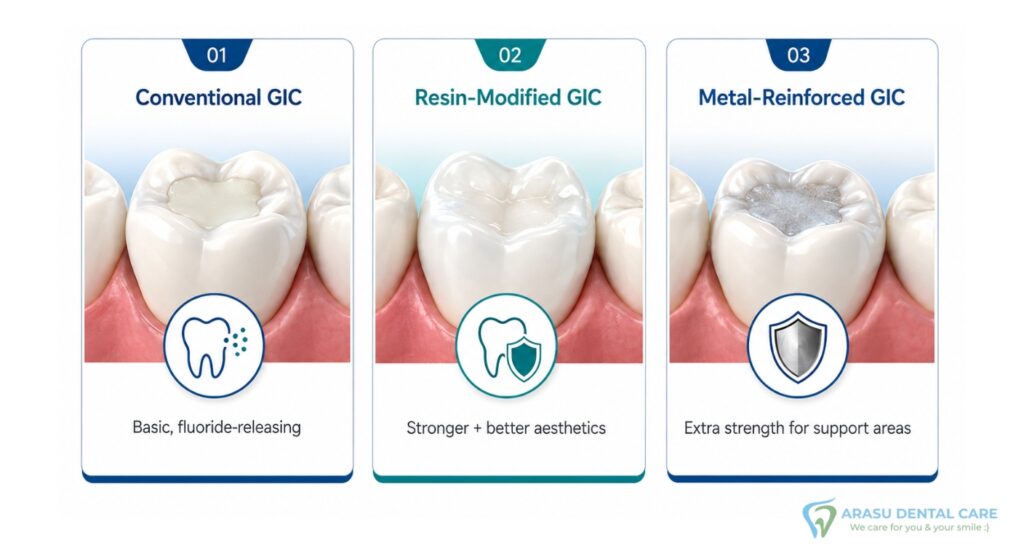
Conventional Glass Ionomer:This is the traditional form that sets through a chemical reaction. It is often used for small cavities, baby teeth, and non-biting areas of the mouth.
Resin-Modified Glass Ionomer (RMGIC):This version combines GIC with a small amount of resin to improve strength and appearance. It is commonly used for cavities that need a slightly stronger and more aesthetic result.
Metal-Reinforced Glass Ionomer (Cermet):This type contains added metal particles for extra strength. It is mostly used in areas that need more support, such as the base of a larger restoration.
When Is a Glass Ionomer Filling Recommended?
Not every cavity needs the same type of filling. Glass ionomer is usually preferred in specific situations where its properties offer the most benefit.
Small to medium cavities:GIC works well for cavities that are not very deep and do not face heavy chewing pressure. It seals the area effectively and supports tooth structure.
Cavities near the gumline:The area where the tooth meets the gum is hard to keep dry. Glass ionomer bonds well even with slight moisture, making it a reliable option here.
Children’s teeth (milk teeth):Baby teeth do not need to last forever, but they do need protection from further decay. GIC is gentle, easy to place, and releases fluoride — which is helpful for cavity-prone children.
Patients with high decay risk:For people who get cavities often or have dry mouth, the steady fluoride release from GIC adds extra protection over time.
Temporary or interim fillings:Sometimes a tooth needs a protective filling while waiting for a crown or another restoration. GIC works well as a short-term solution.
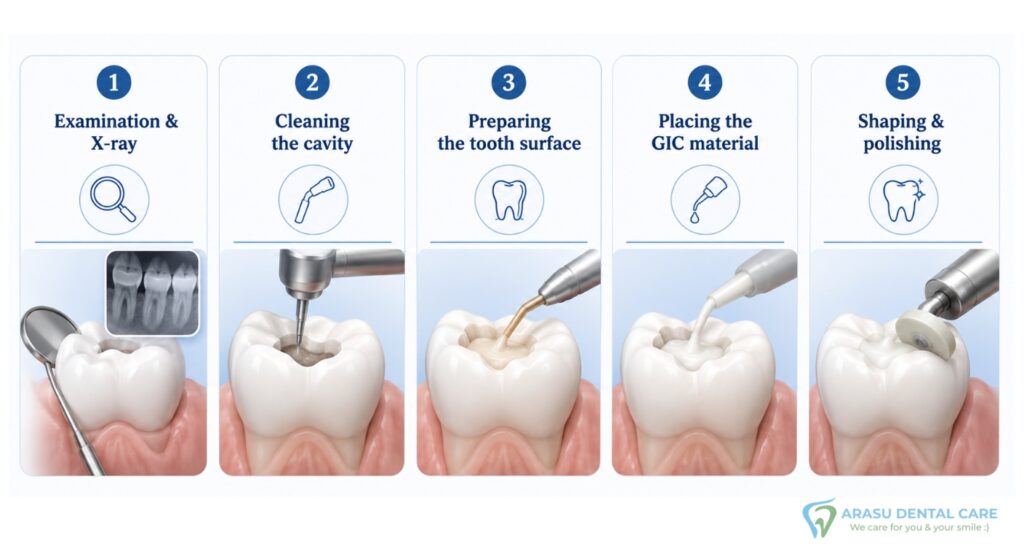
How Is a Glass Ionomer Filling Done? (Step-by-Step Procedure)
The procedure is usually simple, comfortable, and completed in a single visit. Most patients are surprised at how straightforward it feels.
Step 1 — Examination and diagnosis:The dentist examines the tooth and may take an X-ray to check the depth of the decay. This helps decide if GIC is the right material for your case.
Step 2 — Cleaning the cavity:The decayed portion of the tooth is gently removed using small dental instruments. Local anaesthesia may or may not be needed depending on the depth.
Step 3 — Preparing the tooth surface:The cavity is cleaned and lightly conditioned. This helps the glass ionomer bond properly to the tooth structure.
Step 4 — Mixing and placing the material:The glass ionomer powder and liquid are mixed into a paste and placed into the cavity. The dentist shapes it carefully to match the tooth’s natural form.
Step 5 — Setting and finishing:The filling sets within a few minutes. A protective coating is applied, and the surface is smoothed and polished for comfort.
The whole appointment usually takes around 30 to 45 minutes for a single filling.
Advantages of Glass Ionomer Fillings
Glass ionomer fillings are popular because they offer benefits that other materials may not.
Fluoride release:GIC slowly releases fluoride into the surrounding tooth. This helps prevent new cavities from forming around the filling.
Chemical bond with the tooth:It bonds directly to enamel and dentine. This means less drilling and a tighter seal between the filling and the tooth.
Minimal tooth removal:Because of its bonding ability, the dentist can preserve more of your natural tooth structure during the procedure.
Tooth-coloured appearance:GIC blends reasonably well with the natural tooth colour, making it less noticeable than silver fillings.
Biocompatible and well-tolerated:The material is gentle on the gums and surrounding tissues, with very low risk of allergic reactions.
Limitations of Glass Ionomer Cement Fillings
Like any dental material, glass ionomer is not perfect for every situation. Knowing its limits helps you make a confident decision.
Lower strength than composites:GIC is not as strong as composite filling resin or ceramic fillings. It may wear down faster in areas with heavy biting pressure.
Shorter lifespan in load-bearing teeth:In back teeth that handle a lot of chewing, GIC fillings may last around 3 to 5 years before needing replacement.
Slightly less aesthetic than composite:The colour match is good but not as precise as modern composite fillings, especially for front teeth.
For permanent restorations on biting surfaces, your dentist may recommend a composite or ceramic dental filling instead, depending on your specific case.
Glass Ionomer Filling Cost in India
The cost of a glass ionomer filling in India usually ranges between ₹500 and ₹2,000 per tooth.
The exact price depends on several factors:
Size and location of the cavity:Larger or harder-to-reach cavities may take more time and material, which can affect the cost.
Type of GIC used:Conventional GIC is generally more affordable, while resin-modified versions may cost slightly more due to better strength and appearance.
Clinic and dentist experience:Costs may vary between clinics based on equipment, technology, and the dentist’s expertise.
City and area:Prices in larger cities like Coimbatore may differ slightly from smaller towns, but the difference is usually small.
A proper consultation is the best way to get an accurate quote for your specific case.
How Long Does a Glass Ionomer Filling Last?
The lifespan depends on where the filling is placed and how well it is cared for.
In load-bearing back teeth: Around 3 to 5 years on average.
In non-biting areas (like the gumline): Often 5 years or more.
In baby teeth: Usually lasts until the tooth naturally falls out.
Good oral hygiene, regular dental check-ups, and avoiding very hard foods can help extend the life of your filling.
Caring for Your Glass Ionomer Filling
A few simple habits can help your filling last longer and keep your tooth healthy.
Brush twice daily with fluoride toothpaste:This supports the fluoride-releasing action of the filling and protects the surrounding enamel.
Floss gently every day:Cleaning between teeth prevents decay from forming at the edges of the filling.
Avoid biting hard foods on the filled tooth:Things like ice, hard candies, or nuts can put extra stress on the material.
Visit your dentist near me every 6 months:Regular check-ups allow your dentist to spot wear or small issues early, before they become bigger problems.
According to research published in the National Library of Medicine, proper oral hygiene plays a major role in the long-term success of any dental filling.
Glass Ionomer vs Composite Filling: A Quick Comparison
| Feature | Glass Ionomer Filling | Composite Resin Filling |
| Fluoride release | Yes, continuous | No |
| Strength | Moderate | High |
| Aesthetics | Good | Excellent |
| Best for | Children, gumline, small cavities | Most adult cavities |
| Lifespan (load areas) | 3–5 years | 5–10+ years |
| Tooth removal needed | Minimal | Slightly more |
The right choice depends on your specific tooth, your dental health, and your dentist’s recommendation after examination.
Final Thoughts
A glass ionomer filling is a gentle, practical option that does more than just fill a cavity — it actively helps protect the surrounding tooth through continuous fluoride release. While it may not be the strongest material for every situation, it is often the right choice for children’s teeth, cavities near the gumline, and patients who are prone to decay. As with any dental treatment, the best material for your tooth can only be decided after a proper clinical assessment.
If you have a cavity that needs attention, or you are unsure which filling option suits your tooth best, getting it checked early is always the smarter move.
At Arasu Dental Care in Coimbatore, our team will evaluate your tooth carefully and explain your options in plain language before any treatment begins — so you can choose with confidence. Book a consultation with us today and let us help you find the filling that is right for your tooth, your age, and your lifestyle.
Frequently Asked Questions
1. Is a glass ionomer filling painful?
The procedure is generally comfortable. Local anaesthesia may be used if the cavity is deep, but many small fillings can be done without it.
2. How soon can I eat after a glass ionomer filling?
It is best to avoid hard or chewy foods for the rest of the day. The filling continues to harden over the next 24 hours, so soft foods are recommended initially.
3. Can glass ionomer fillings be used on front teeth?
Yes, especially for small cavities or near the gumline. However, for highly visible areas, composite fillings may offer a better colour match.
4. Are glass ionomer fillings safe for children?
Yes. They are one of the most commonly used materials for baby teeth because they are gentle, easy to place, and release fluoride.
5. Will a glass ionomer filling match my tooth colour exactly?
The colour match is reasonably close but not as precise as composite resin. For most areas, the difference is barely noticeable.
6. Can a glass ionomer filling be replaced with another material later?
Yes. If a stronger or more aesthetic filling is needed in the future, your dentist can safely remove the GIC and place a different material.
7. Does dental insurance cover glass ionomer fillings?
Coverage depends on your specific insurance plan. Most basic dental plans include common filling materials, but it is best to confirm with your provider.
8. How do I know if my glass ionomer filling needs to be replaced?
Signs include sensitivity, rough edges, visible wear, or discomfort while chewing. A dental check-up can confirm whether replacement is needed.