A metal crown is one of the oldest and most reliable tooth restorations used in dentistry today. If your dentist has suggested a metal crown for a damaged or root canal-treated tooth, you may have many questions about how it works, how long it lasts, and whether it is the right choice for you.
This complete guide will help you understand metal crowns in simple language. We will explain what they are, when they are used, their pros and cons, and how they compare with newer options like zirconia.
The goal is to help you make an informed decision with confidence, without confusion or fear.
What Is a Metal Crown in Dentistry?
A metal crown is a tooth-shaped cap made fully of metal or metal alloys. It is placed over a damaged tooth to restore its strength, shape, and chewing function.
Unlike tooth-coloured crowns, a metal crown does not match the natural shade of your teeth. Because of this, dentists most often place metal crowns on back teeth such as molars, where strength matters more than appearance.
Metal crowns have been used in dentistry for decades. According to the American Dental Association, crowns help protect weak teeth, restore broken teeth, and support teeth after root canal treatment.
When Is a Metal Crown Recommended?
A dental crown is not needed for every tooth problem. Your dentist will examine your tooth and suggest a crown only when it is the right solution.
A metal crown may be advised in the following situations:
Severely decayed back teeth: When a molar has large decay that cannot be restored with a filling, a metal crown can protect the remaining tooth structure.
After root canal treatment: A root canal-treated tooth becomes weak and brittle. A metal crown helps prevent it from cracking under chewing pressure.
Cracked or worn-down molars: Teeth that are cracked or heavily worn from grinding often need the strength of a metal crown to function safely.
Patients with heavy bite force: People who clench or grind their teeth may benefit from metal crowns because they resist fracture better than ceramic options.
As bridge support: A metal crown can serve as a strong anchor for a dental bridge, especially in the back of the mouth.
Types of Metal Crowns Used in Dentistry
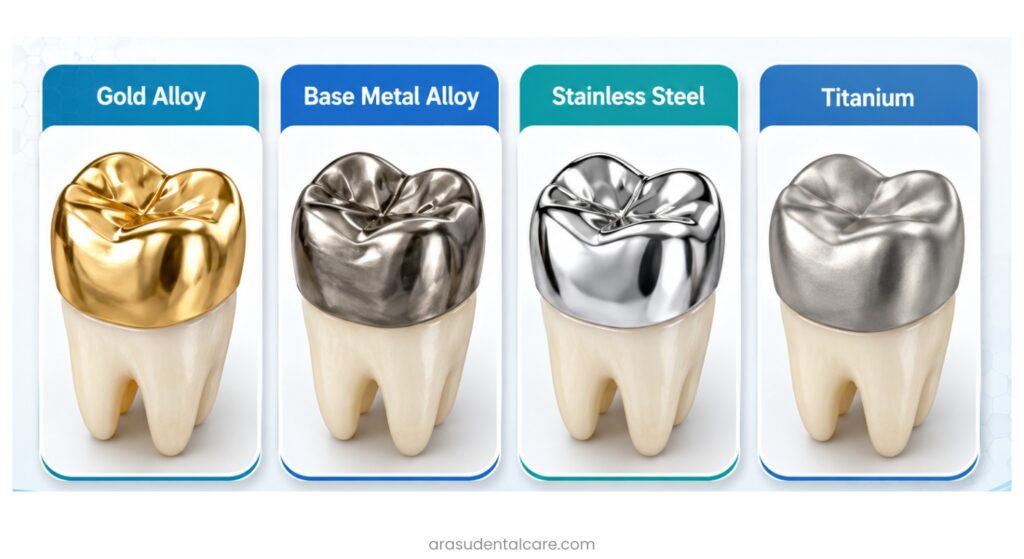
Not all metal crowns are made from the same material. Your dentist will choose the type based on your bite, budget, and dental needs.
1. Gold Alloy Crowns
Gold crowns are made from a mix of gold, copper, and other metals. They are highly biocompatible and gentle on the teeth they bite against.
Gold crowns rarely break and can last 20 to 30 years with proper care. However, they are more expensive due to the cost of the metal.
2. Base Metal Alloy Crowns
These crowns are made from non-noble metals like nickel, chromium, or cobalt. They are very strong, resistant to corrosion, and need minimal tooth removal.
They are a popular and affordable option for patients who want long-lasting back-tooth restorations.
3. Stainless Steel Crowns
Stainless steel crowns are mostly used as temporary crowns for adults. In children, they are often placed on baby molars to protect them until the permanent tooth comes in.
They are quick to fit, durable, and cost-effective for short-term use.
4. Titanium Crowns
Titanium is lightweight, strong, and highly biocompatible. It is also a good choice for patients with metal allergies because it rarely causes reactions.
Benefits of a Metal Crown
Metal crowns continue to be trusted in dentistry for several practical reasons.
Exceptional strength and durability: Metal crowns can withstand strong biting and chewing forces without chipping or cracking. This makes them ideal for molars that handle the most pressure.
Long lifespan: With good oral hygiene, a metal crown can last 15 to 30 years or even longer. They have one of the longest track records among all crown types.
Minimal tooth reduction: Compared to ceramic crowns, metal crowns need less natural tooth structure to be removed. This helps preserve more of your healthy tooth.
Gentle on opposing teeth: Metals like gold cause very little wear on the teeth they bite against, unlike some harder ceramic materials.
Cost-effective: Base metal crowns are usually more affordable than zirconia or all-ceramic crowns, making them a budget-friendly option for back teeth.
Learn about the advantages of metal crown.
Drawbacks of a Metal Crown
While metal crowns have many advantages, they also have some limitations you should know.
Not natural-looking: The metallic colour stands out clearly against natural teeth. This is why metal crowns are usually avoided for front teeth.
Possible metal sensitivity: A small number of patients may react to certain metals, especially nickel-based alloys. Your dentist can suggest titanium or gold if you have known allergies.
Temperature sensitivity: Metal conducts heat and cold more than ceramic. Some patients may feel mild sensitivity in the first few weeks after placement.
Cosmetic limitations: If you smile widely and your back teeth show, a metal crown may be visible at the edges.
Metal Crown vs Zirconia vs PFM: A Quick Comparison
Patients often ask how a metal crown compares with other modern options. Here is a simple comparison to help you understand the differences.
| Feature | Metal Crown | PFM Crown | Zirconia Crown |
| Strength | Excellent | Good | Excellent |
| Appearance | Metallic | Tooth-coloured | Most natural |
| Tooth Removal | Minimal | Moderate | Moderate |
| Lifespan | 15–30 years | 10–15 years | 10–20 years |
| Best Use | Back molars | Front & back | Front & back |
| Cost | Most affordable | Moderate | Higher |
If aesthetics matter, zirconia or PFM may suit better. If strength and longevity for a hidden molar are the priority, a metal crown is often the smarter choice.
How a Metal Crown Is Placed
The procedure for a metal crown usually takes two dental visits. The process is comfortable and done under local anaesthesia.
Step 1 – Examination and tooth preparation: Your dentist will examine the tooth, take X-rays if needed, and gently shape the tooth to make space for the crown.
Step 2 – Impression or digital scan: A mould or digital scan of your tooth is taken. This is sent to the dental lab where your custom crown is made.
Step 3 – Temporary crown: A temporary crown is placed to protect the tooth while your permanent crown is being prepared.
Step 4 – Final crown placement: Once ready, the dentist checks the fit, bite, and comfort of the new crown and bonds it securely with dental cement.
Most patients return to normal activities the same day. Mild sensitivity may last a few days but usually settles on its own.
How Long Does a Metal Crown Last?
A well-placed metal crown can last anywhere between 15 and 30 years, sometimes longer. Studies published in the Journal of the American Dental Association show that crown longevity depends on oral hygiene, bite habits, and regular dental checkup near me.
The lifespan may vary depending on:
Oral hygiene routine: Daily brushing, flossing, and regular cleanings help prevent decay around the crown edges.
Bite habits: Grinding or clenching may reduce the lifespan. A nightguard can help protect both the crown and your natural teeth.
Health of the underlying tooth: A healthier tooth with strong roots supports the crown better and longer.
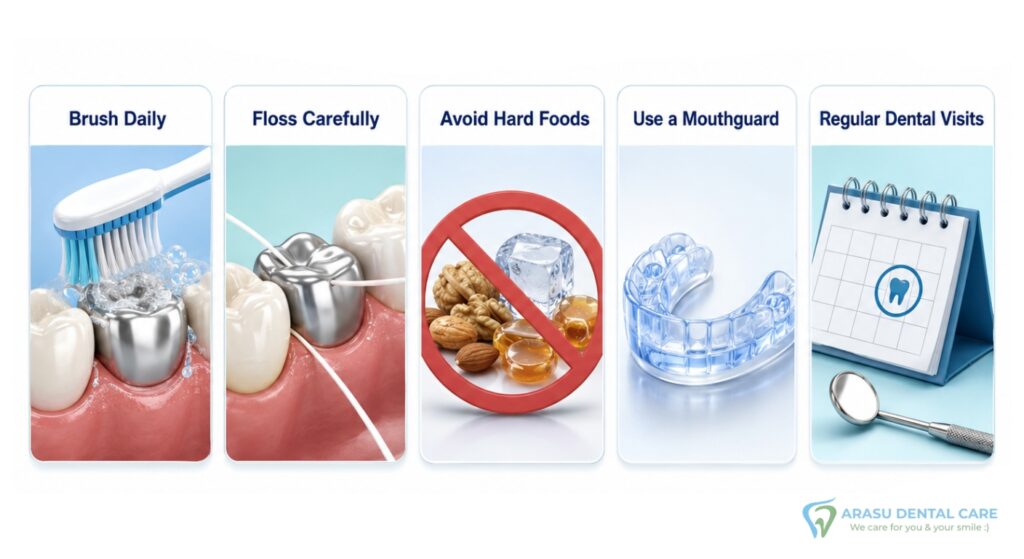
How to Care for a Metal Crown
Caring for a metal crown is simple and similar to caring for natural teeth.
Brush twice daily: Use a soft-bristled toothbrush with fluoride toothpaste to keep both your crown and gums healthy.
Floss every day: Pay extra attention around the crown edges to remove plaque that can cause decay underneath.
Avoid very hard foods: Skip chewing ice, hard candies, or popcorn kernels that may damage the crown over time.
Use a mouthguard if you grind: If you clench or grind your teeth at night, ask your dentist about a custom nightguard.
Regular dental visits: A check-up every six months helps catch small issues early and keeps your crown in good shape.
When to See a Dentist About Your Crown
Even though metal crowns are very durable, certain signs need quick attention. A dental examination can help identify the exact cause.
The crown feels loose: A loose crown may allow bacteria to enter and cause decay underneath.
Pain or sensitivity that does not go away: Long-lasting pain may indicate decay or an issue with the underlying tooth.
Bad taste or odour near the crown: This may be a sign of bacterial buildup or a hidden cavity.
Visible damage: Any chip, crack, or sharp edge should be checked by your dentist.
Final Thoughts
A metal crown remains one of the most dependable restorations in dentistry — and for good reason. Its exceptional strength, long lifespan, and cost-effectiveness make it a practical choice for back teeth that need reliable, lasting protection. While it may not be the most aesthetic option, it continues to outperform many alternatives when durability and function are the priority. As always, the right crown material for your tooth can only be decided after a proper clinical examination.
If you have a damaged molar, a root canal-treated tooth, or an old crown that needs replacing, do not put off getting it checked. Timely treatment protects what remains of your natural tooth and prevents more complex problems down the line.
At Arasu Dental Care in Coimbatore, we help you weigh your crown options honestly — taking into account your tooth condition, bite habits, and budget — so you can choose with clarity and confidence. Book a consultation with us today and let us help you find the right restoration for your smile.
Frequently Asked Questions (FAQs)
1. Is a metal crown safe for long-term use?
Yes. Metal crowns have been used safely for many decades and are known for their durability and biocompatibility. Most patients tolerate them very well.
2. Will a metal crown look obvious when I smile?
Metal crowns are usually placed on back molars, so they are rarely visible during normal smiling or talking. For front teeth, tooth-coloured options are preferred.
3. Does getting a metal crown hurt?
The procedure is done under local anaesthesia, so it is not painful. Some mild sensitivity may follow for a few days, which is normal.
4. Can a metal crown cause an allergic reaction?
Allergic reactions are rare. If you have a known metal allergy, your dentist may recommend gold or titanium crowns, which are highly biocompatible.
5. How much does a metal crown cost?
The cost depends on the type of metal and the clinic. Base metal crowns are usually the most affordable, while gold crowns cost more due to the material.
6. Can a tooth under a metal crown still decay?
Yes. The crown itself cannot decay, but the natural tooth underneath can if oral hygiene is poor. Regular brushing and flossing are essential.
7. Is a metal crown better than zirconia?
It depends on the location and purpose. Metal crowns are stronger for back teeth, while zirconia is preferred for visible teeth due to its natural look.
8. How soon can I eat after getting a metal crown?
You can usually eat within a few hours, once the anaesthesia wears off. Avoid very hard or sticky foods for the first 24 hours.