A routine tooth extraction is a simple dental procedure where a dentist gently removes a tooth that cannot be saved or is causing problems. It is one of the most common treatments performed in dental clinics worldwide.
Many patients feel nervous when they hear the words “tooth extraction.” However, modern dentistry has made this procedure safe, quick, and comfortable. Understanding the cost, benefits, and process can help you feel more prepared and confident about your treatment.
This guide explains everything you need to know about routine tooth extraction, from why it may be needed to how to care for your mouth afterward.
What Is a Routine Tooth Extraction?
A routine tooth extraction is the removal of a tooth that is fully visible above the gum line. The dentist uses special instruments to gently loosen and remove the tooth from its socket.
This type of extraction is also called a “simple tooth extraction.” It is different from a surgical extraction, which is needed when a tooth is broken below the gum line or impacted, like some wisdom teeth.
Most routine extractions are completed in 20 to 40 minutes under local anaesthesia. You stay awake during the procedure, but the area is fully numb, so you should not feel pain.
When Is a Routine Tooth Extraction Needed?
Dentists always try to save your natural tooth first. However, in some situations, removing the tooth becomes the safest and healthiest option.
Severe tooth decay:
When a cavity reaches deep into the tooth and damages most of its structure, fillings or crowns may not work. Extraction prevents the infection from spreading further.
Advanced gum disease:
Long-term gum disease can weaken the bone and tissues that hold a tooth in place. If a tooth becomes very loose, removing it may be the best way to protect surrounding teeth.
Broken or fractured teeth:
Some teeth crack badly due to injury or biting hard food. If the fracture goes below the gum line and cannot be repaired, extraction may be needed.
Crowding before orthodontic treatment:
Some patients have too many teeth in a small jaw. An orthodontist may recommend removing one or two teeth to create space for proper alignment with braces or aligners.
Stubborn baby teeth:
Sometimes a baby tooth does not fall out on its own and blocks the permanent tooth from coming in. A simple extraction allows the new tooth to erupt properly.
Infection that cannot be treated:
If a root canal cannot save a badly infected tooth, extraction helps stop the infection from affecting your overall health.
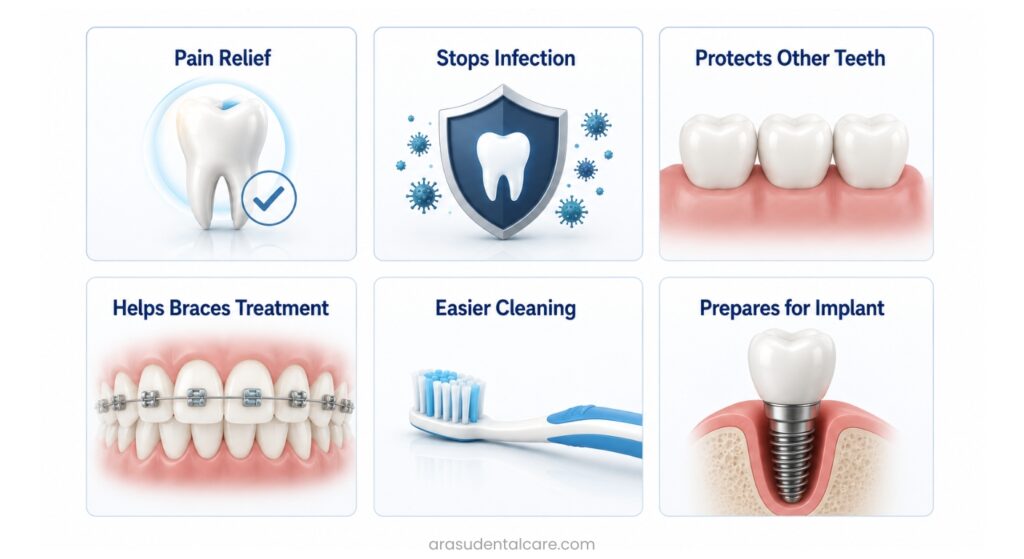
Benefits of Routine Tooth Extraction
While saving a natural tooth is always the goal, an extraction offers real health benefits when a tooth can no longer be repaired.
Relief from pain:
A damaged or infected tooth often causes constant pain. Removing the tooth gives quick and lasting relief, sometimes within a day.
Stops the spread of infection:
Bacteria from a decayed tooth can spread to nearby teeth, gums, and even the jawbone. Extraction removes the source of infection and protects your overall oral health.
Protects surrounding teeth:
A severely damaged tooth can affect neighbouring teeth over time. Removing it helps maintain the health of the rest of your smile.
Supports orthodontic treatment:
For patients with crowding, a planned extraction creates space for straighter teeth and a better bite.
Improves oral hygiene:
A broken or decayed tooth is hard to clean. Once it is removed, brushing and flossing become easier, which lowers the risk of future dental problems.
Prepares the mouth for replacement options:
After healing, the empty space can be replaced with a dental implant, bridge, or denture. According to the American Dental Association, timely tooth replacement helps maintain bite function and jaw health.
Infographic Prompt 1:
How Much Does a Routine Tooth Extraction Cost?
The cost of a routine tooth extraction can vary based on several factors. In India, prices are generally affordable compared to many other countries, but the final amount depends on your specific case.
Type of tooth being removed:
Front teeth with single roots are usually easier and less expensive to remove. Molars with multiple roots may cost slightly more.
Condition of the tooth:
A tooth that is loose or fully visible costs less to remove than one that is partly broken or decayed.
Clinic location and dentist’s experience:
Clinics in larger cities or those run by specialists may charge more due to advanced equipment and expertise.
Additional services needed:
Some patients may need X-rays, sedation, antibiotics, or a bone graft after extraction. These add to the total cost.
Average cost range in India:
A routine tooth extraction in Coimbatore and most Indian cities usually ranges between ₹500 and ₹3,000 per tooth. Surgical or complex tooth extractions may cost more.
The exact cost can only be confirmed after a dental examination. Your dentist will explain all charges clearly before starting treatment, so there are no surprises.
What to Expect During the Procedure
Knowing what happens during your appointment can help reduce anxiety. The process is usually simple and quick.
Step 1 – Examination and X-ray:
The dentist examines the tooth and may take an X-ray to check the root and surrounding bone. This helps plan a safe extraction.
Step 2 – Local anaesthesia:
A small injection numbs the tooth and the gum around it. You may feel a slight pinch, but the area becomes numb in a few minutes.
Step 3 – Loosening the tooth:
Using a special instrument called an elevator, the dentist gently loosens the tooth from its socket.
Step 4 – Removing the tooth:
Once loose, the tooth is removed with dental forceps. You may feel pressure, but no sharp pain.
Step 5 – Cleaning and gauze placement:
The socket is cleaned, and a gauze pad is placed over the area to control bleeding and help a clot form.
The whole process is usually finished in less than an hour. Many patients are surprised at how smooth and painless it feels.
Recovery and Aftercare Tips
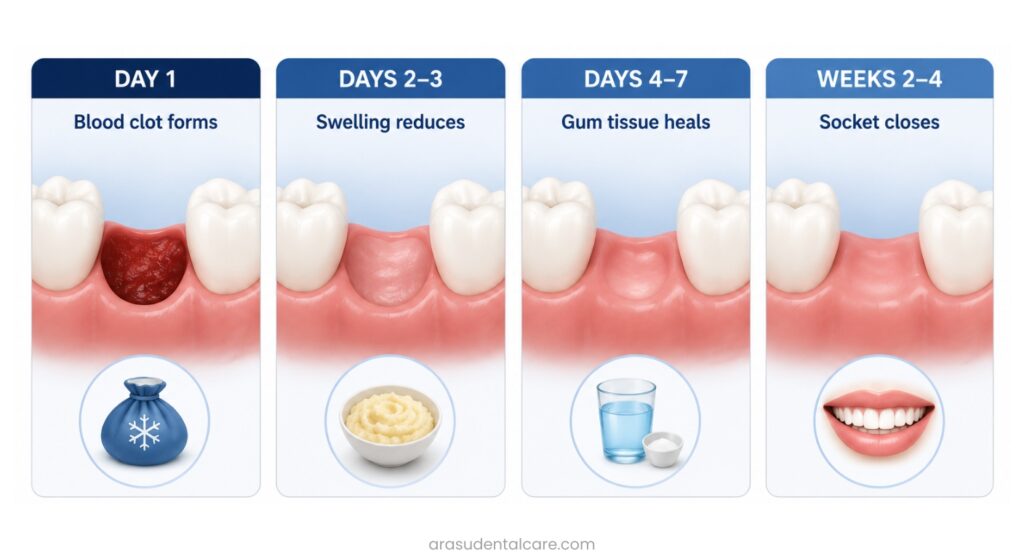
Good aftercare helps you heal faster and prevents complications like dry socket. Most patients feel back to normal within a few days.
First 24 hours:
Bite gently on the gauze for 30 to 45 minutes to stop bleeding. Avoid spitting, rinsing, or using a straw, as these can dislodge the blood clot.
Manage swelling:
Apply a cold pack to your cheek for 15 to 20 minutes at a time. This reduces swelling and gives comfort.
Take medications as prescribed:
Your dentist may give pain relievers or antibiotics. Take them as directed, even if you feel better.
Eat soft, cool foods:
Stick to foods like curd, khichdi, mashed potatoes, soup, and smoothies for the first two to three days. Avoid hot, spicy, or crunchy foods.
Keep the area clean:
After 24 hours, gently rinse with warm salt water two to three times a day. Continue brushing your other teeth normally, but avoid the extraction site for a few days.
Avoid smoking and alcohol:
According to research published by the National Library of Medicine, smoking after extraction increases the risk of dry socket and slows healing. Avoid it for at least 72 hours, and longer if possible.
Rest well:
Avoid heavy exercise or lifting for two to three days. Your body needs energy to heal.
Most people feel comfortable enough to return to work or school within one to two days. Full healing of the gum and bone may take a few weeks.
When to Contact Your Dentist
While most extractions heal smoothly, it is important to know the warning signs that need attention.
Heavy bleeding after 24 hours:
Some oozing is normal, but continuous bleeding should be checked.
Severe pain that gets worse after day three:
This may be a sign of dry socket, which needs simple in-office treatment.
Fever or pus discharge:
These can indicate infection and should not be ignored.
Numbness lasting more than a day:
Long-lasting numbness in the lip or chin should be reported to your dentist.
If you notice any of these signs, contact your dental team early. Quick care prevents bigger problems later.
Conclusion
A routine tooth extraction, when necessary, is one of the simplest and most effective ways to protect your oral health and put an end to ongoing pain or infection. With modern anaesthesia and gentle techniques, the procedure is far more comfortable than most patients expect — and recovery is usually quick when aftercare instructions are followed. The cost is also quite reasonable, especially when weighed against the long-term benefits of removing a tooth that can no longer be saved.
If you have a tooth that has been causing persistent pain, swelling, or discomfort, do not put off getting it assessed. Early action almost always leads to a simpler, more straightforward treatment.
At Arasu Dental Care in Coimbatore, we make sure every patient feels informed, comfortable, and at ease before, during, and after an extraction. Our team will walk you through your options, explain the costs clearly, and support your recovery every step of the way. Book a consultation with us today and let us help you move towards a healthier, pain-free smile.
Frequently Asked Questions (FAQs)
1. Is a routine tooth extraction painful?
No, the area is fully numbed with local anaesthesia, so you should not feel pain during the procedure. Mild soreness afterward is normal and can be managed with prescribed medication.
2. How long does a routine tooth extraction take?
Most simple extractions take between 20 and 40 minutes. The actual removal of the tooth often takes only a few minutes once the area is numb.
3. How long does it take to heal after a tooth extraction?
The gum usually closes within one to two weeks, while complete bone healing may take a few months. Most people return to normal daily activities in one to two days.
4. Can I eat after a tooth extraction?
Yes, but only soft and cool foods for the first two to three days. Avoid chewing on the extraction side until the area feels comfortable.
5. What is dry socket and how can I avoid it?
Dry socket happens when the blood clot is lost too early, exposing the bone. You can prevent it by avoiding smoking, straws, vigorous rinsing, and spitting for the first 72 hours.
6. Will I need to replace the extracted tooth?
If the extracted tooth is in a visible or chewing area, replacement is usually recommended. Options include dental implants, bridges, or partial dentures, depending on your case.
7. Is routine tooth extraction safe for older adults?
Yes, when planned carefully. Your dentist will review your medical history and medications before the procedure to ensure your safety.
8. How much does a routine tooth extraction cost in Coimbatore?
The cost generally ranges from ₹500 to ₹3,000 per tooth, depending on the tooth type and any extra services needed. A consultation gives you the exact estimate.