A complex tooth extraction is a surgical procedure used to remove a tooth that cannot be taken out through a simple pulling method. This usually applies to impacted, broken, or deeply rooted teeth that need careful surgical access.
Many patients feel anxious when they hear the word “surgical,” but modern dentistry has made this tooth extraction much safer and more comfortable than before. With the right diagnosis and an experienced dental team, the procedure is predictable and well-tolerated.
This blog explains what a complex tooth extraction means, when it is needed, how the procedure is done, the cost involved, and what you can expect during recovery.
What Is a Complex Tooth Extraction?
A complex tooth extraction, also called a surgical tooth extraction, is needed when a tooth is not easily accessible or cannot be removed using regular dental forceps. It often involves a small incision in the gum and, in some cases, removal of a small portion of bone.
Unlike a simple extraction, where the tooth is fully visible and loosened with basic instruments, a complex extraction requires more planning. Dentists usually take an X-ray or 3D scan to study the tooth’s position before starting.
According to the StatPearls clinical reference on tooth extraction, surgical extractions are considered when a tooth is impacted, broken at the gum line, or has unusually shaped roots.
When Is a Complex Tooth Extraction Needed?
Not every tooth requires surgical removal. Your dentist may recommend a complex extraction only when a simple extraction is not possible or safe.
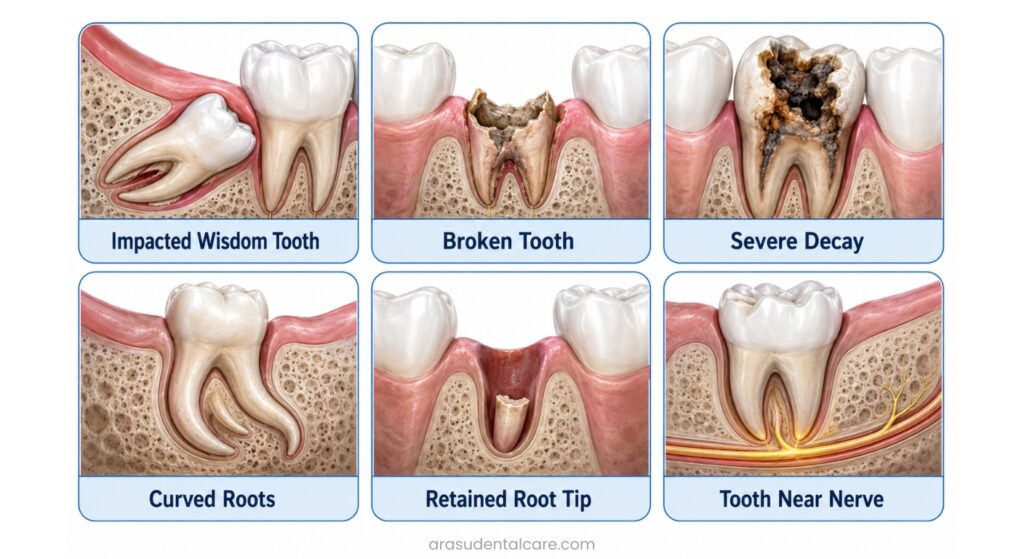
Impacted wisdom teeth: These are teeth stuck under the gum or bone and unable to erupt fully. They often grow at an angle and can affect nearby teeth.
Broken or fractured teeth: When a tooth breaks at the gum line, there is not enough structure to grip with forceps. Surgical access becomes necessary to remove the remaining root.
Severely decayed teeth: Deep decay can weaken a tooth so much that it crumbles during a regular extraction. A surgical approach helps remove it in sections safely.
Teeth with curved or long roots: Some teeth have roots that curve or spread widely. These need careful sectioning to avoid damage to the surrounding bone.
Teeth close to nerves or sinuses: Lower molars near the inferior alveolar nerve and upper molars near the maxillary sinus need a planned surgical approach to reduce risk.
Retained roots from previous extractions: Sometimes a small root tip is left behind from an earlier extraction. If it causes infection or pain, it may need surgical removal.
Signs That You May Need a Surgical Tooth Extraction
Some symptoms can indicate that a tooth may need more than a simple removal. A dental examination is the only way to confirm the right treatment.
Severe or constant tooth pain: Pain that continues for a long time and does not ease with medication. It may become worse while chewing, sleeping, or touching the affected area.
Swelling around the gums or jaw: Persistent swelling can be a sign of infection or an impacted tooth pressing on surrounding tissue. This often needs urgent dental attention.
Difficulty opening the mouth: Limited jaw movement may suggest an infected wisdom tooth or inflammation in the surrounding muscles.
Bad taste or odor in the mouth: A foul taste near a specific tooth may point to infection or food trapped under a partially erupted tooth.
Visible damage or breakage: A tooth broken below the gum line usually cannot be restored and may need surgical removal.
Repeated gum infections: Recurring swelling or pus around the same tooth often means the tooth itself is the source of infection.
Read our latest blog- Advanced Tooth extraction: types and techniques
How a Complex Tooth Extraction Is Done
Understanding the steps can help reduce anxiety. The procedure is performed under local anesthesia, so you should not feel pain during the treatment.
Step 1: Examination and X-ray
The dentist studies the tooth’s position, root shape, and nearby structures. A panoramic X-ray or CBCT scan is often used for impacted teeth.
This helps the dental team plan the safest approach and identify any risks beforehand.
Step 2: Local Anesthesia
The area around the tooth is numbed with a local anesthetic injection. You will feel pressure during the procedure but not sharp pain.
For very anxious patients, sedation options may also be discussed during consultation.
Step 3: Gum Incision and Bone Access
A small cut is made in the gum to expose the tooth. If the tooth is covered by bone, a small portion may be gently removed using a surgical handpiece.
This step is done carefully with cooling saline to protect the bone tissue.
Step 4: Sectioning the Tooth
In many complex cases, the tooth is divided into smaller pieces. This makes removal easier and reduces pressure on the surrounding bone.
Sectioning is especially common for impacted wisdom teeth and molars with curved roots.
Step 5: Cleaning and Suturing
After the tooth is removed, the socket is cleaned to remove any debris or infection. The dentist may place dissolvable stitches to help the gum heal properly.
A gauze pack is then placed to control bleeding and support clot formation.
The full procedure usually takes between 30 and 60 minutes, depending on tooth position and complexity.
Cost of Complex Tooth Extraction in India
The cost of a complex tooth extraction can vary based on several factors. It is helpful to understand what affects the price before your consultation.
Type of tooth being removed: Wisdom teeth and molars usually cost more than front teeth due to their position and root structure.
Level of impaction: A fully impacted tooth inside the bone needs more time and skill than a partially erupted one. This affects the overall cost.
Imaging required: Some cases need a 3D CBCT scan in addition to a regular X-ray. This adds to the diagnostic cost.
Use of sedation: If you choose sedation for comfort, the price will be higher than treatment under local anesthesia alone.
Clinic location and expertise: Costs may differ between cities and depend on the experience of the oral surgeon performing the procedure.
Typical Cost Range in India
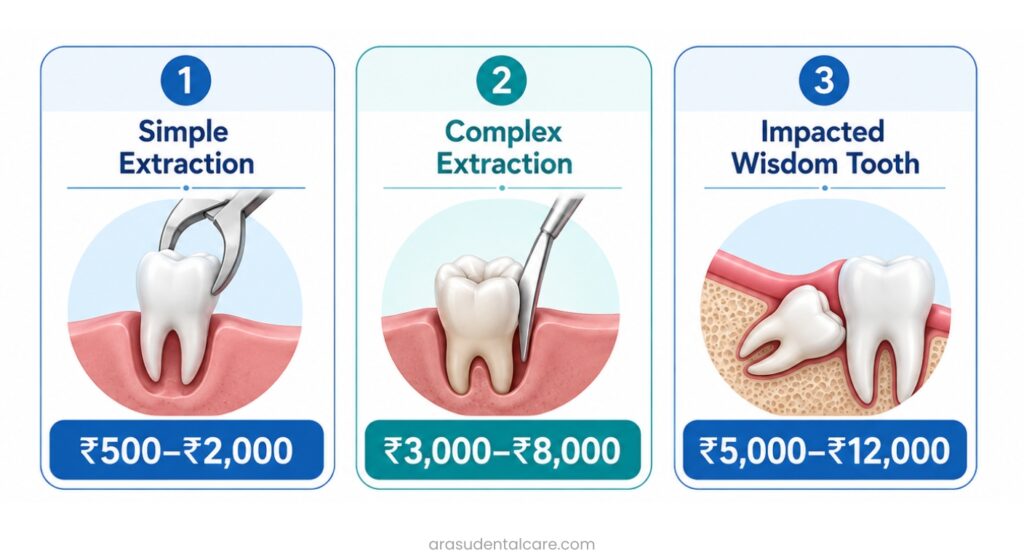
In most cities, including Coimbatore, the cost of a complex tooth extraction usually falls between ₹3,000 and ₹8,000 per tooth. Impacted wisdom tooth removal may range from ₹5,000 to ₹12,000, depending on difficulty.
These are general estimates. Your dentist can give you an accurate quote after a clinical examination.
What to Expect After a Complex Tooth Extraction
Recovery after a surgical extraction takes a little longer than a simple one, but most people feel much better within a few days.
First 24 hours: Some bleeding, swelling, and mild discomfort are normal. Bite gently on gauze to control bleeding and avoid rinsing your mouth.
Day 2 to Day 3: Swelling usually peaks during this time. Cold compresses on the cheek and prescribed pain relief help manage discomfort.
Day 4 to Day 7: Swelling reduces and chewing becomes easier. You can slowly return to soft normal foods.
Week 2 onward: The gum surface heals, though full bone healing inside the socket may take several weeks.
Aftercare Tips for Smooth Healing
Eat soft, cool foods: Yogurt, mashed potatoes, soups, and smoothies are gentle on the healing site. Avoid hot, spicy, or crunchy foods for a few days.
Avoid straws and smoking: Both create suction that can dislodge the blood clot and cause a painful condition called dry socket.
Keep the area clean: After 24 hours, gently rinse with warm salt water two to three times a day. Brush other teeth normally but avoid the surgical site.
Take prescribed medication: Complete the full course of antibiotics if given, and use pain relievers as directed by your dentist.
Rest for the first 48 hours: Avoid heavy lifting, intense exercise, or anything that raises your blood pressure suddenly.
The American Dental Association suggests ibuprofen and paracetamol combinations as effective pain management after dental extractions.
Possible Risks and How They Are Managed
Like any surgical procedure, complex tooth extraction has some risks. These are uncommon and usually manageable with proper care.
Dry socket: This happens when the protective blood clot is lost too early. It causes throbbing pain a few days after extraction and is treated with a medicated dressing.
Infection: Signs include increasing swelling, fever, or pus discharge. Antibiotics and a follow-up visit usually resolve this.
Nerve sensitivity: Lower wisdom tooth removal carries a small risk of temporary numbness in the lip or tongue. Most cases recover within weeks.
Sinus communication: For upper back teeth, a small opening into the sinus may occur. Most heal on their own with proper care.
Your dentist will discuss these risks during the consent process based on your specific case.
When to See a Dentist
You should book a dental consultation if you notice ongoing tooth pain, a broken tooth, swelling around a wisdom tooth removal that feels loose. Early evaluation often prevents the need for more complex treatment later.
Even if a tooth does not hurt, your dentist may still recommend extraction if there is hidden infection, cyst formation, or risk to nearby teeth. Regular dental checkups help catch these issues early.
Frequently Asked Questions
1. Is a complex tooth extraction painful?
You should not feel pain during the procedure because the area is fully numbed with local anesthesia. Some pressure is normal. Mild discomfort after the procedure can usually be managed with prescribed medication.
2. How long does a complex tooth extraction take?
Most procedures take between 30 and 60 minutes. The exact time depends on the tooth’s position, root shape, and whether bone removal or sectioning is needed.
3. How long is the recovery period?
Most people feel comfortable within 3 to 5 days. Full gum healing takes about 2 weeks, while complete bone healing inside the socket may take several weeks.
4. Can I go to work the next day?
Many people return to work within 1 to 2 days if their job is not physically demanding. For jobs involving heavy lifting, your dentist may suggest a longer rest period.
5. Will I need a tooth replacement after extraction?
It depends on the tooth removed. Wisdom teeth usually do not need replacement. For other teeth, options like dental implants or bridges may be discussed during
6. How is a complex extraction different from a simple extraction?
A simple extraction is used for teeth that are fully visible above the gum and can be removed with forceps in a short visit. A complex extraction is needed when the tooth is impacted, broken below the gum line, or has curved roots that make standard removal unsafe.
7. How long does a complex tooth extraction procedure take?
Most complex extractions are completed within 30 to 60 minutes, depending on the position of the tooth, the number of roots, and whether the tooth needs to be sectioned before removal.
8. Is it normal to have swelling after a complex extraction?
Yes, some swelling is expected, particularly in the first two to three days after surgery.