A small cavity or a chipped front tooth can affect both your smile and your confidence. In modern dentistry, a composite filling, often called a white filling, is one of the most common ways to restore a damaged tooth without changing how it looks.
This guide explains what composite fillings are, how they work, what they cost, and what you can expect during and after the procedure. The aim is to help you feel informed and comfortable before your next dental visit.
What Is a Composite Filling?
A composite filling is a tooth-colored material used to repair teeth affected by decay, fracture, or wear. It is made of a blend of plastic resin and fine glass particles, which gives it strength along with a natural appearance.
Unlike older silver fillings, composite blends with the natural shade of your tooth. This makes it a popular choice for both front and back teeth, especially when appearance matters.
According to the American Dental Association, composite resin is now one of the most widely used restorative materials in everyday dental practice.
Why Dentists Recommend White Fillings Today
Dentists often suggest composite fillings because they preserve more of the natural tooth and bond directly to the tooth structure. This adds support and reduces the risk of further damage.
They are also versatile. The same material can be used to fix cavities, repair small chips, close minor gaps, and reshape worn edges of front teeth.
Common Reasons You May Need a Composite Filling
Tooth damage can happen quietly over time. Many patients only notice it during a routine check-up or when sensitivity begins.
- Tooth decay or cavities: When bacteria break down the enamel, a small hole forms in the tooth. A filling helps stop the decay from spreading deeper.
- Chipped or fractured teeth: A minor chip from biting hard food or an accidental knock can be repaired easily with composite material. This restores both shape and function.
- Worn-down teeth: Grinding habits or acidic foods can wear the biting surfaces. Composite can rebuild the lost structure and protect the tooth.
- Small gaps between teeth: In some cases, composite is used to close minor spaces without the need for braces or veneers.
- Replacing old silver fillings: Some patients choose to replace old amalgam fillings with tooth-coloured ones for a more natural look.
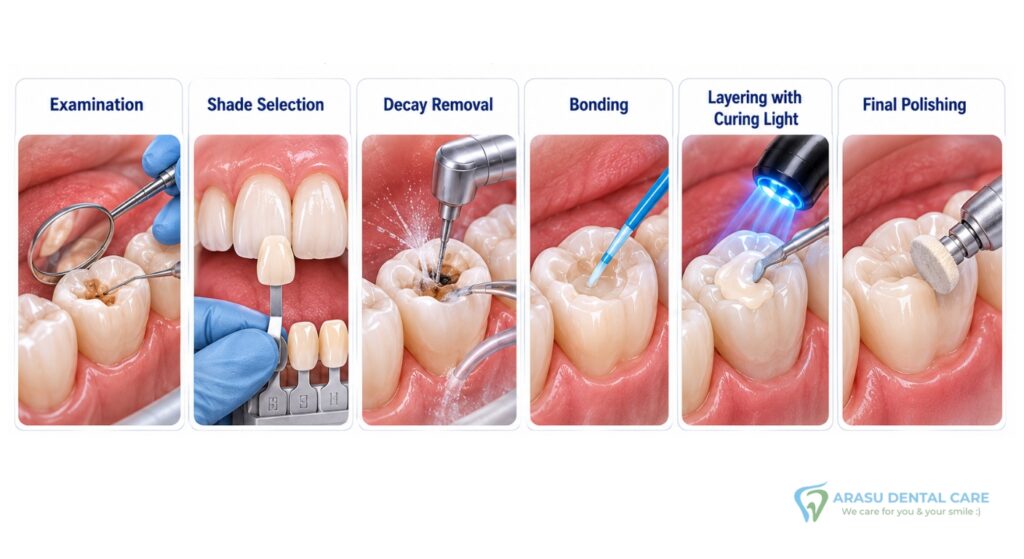
How a Composite Filling Is Done
The procedure is usually completed in a single visit and is comfortable for most patients. Local anaesthesia is used when needed, especially for deeper cavities.
Step 1 – Examination and shade selection:The dentist examines the tooth and selects a composite shade that matches your natural tooth colour. This is done early to ensure an accurate match.
Step 2 – Cleaning the decayed area:The damaged or decayed portion of the tooth is gently removed using small dental instruments. The area is then cleaned and dried.
Step 3 – Preparing the tooth surface:A mild etching gel and a bonding agent are applied. This helps the composite stick firmly to the tooth.
Step 4 – Layering the composite:The composite material is placed in thin layers. Each layer is hardened using a special blue curing light, which sets the material in seconds.
Step 5 – Shaping and polishing:The dentist shapes the filling to match the natural contour of your tooth and polishes it for a smooth, glossy finish.
Step 6 – Bite check:Finally, your bite is checked to make sure the filling feels comfortable when you chew.
Benefits of Composite Fillings
Composite fillings offer more than just appearance. They support long-term tooth health when placed and maintained well.
- Natural appearance: The shade is matched to your tooth, making the filling almost invisible. This is especially helpful for front teeth.
- Bonds directly to the tooth: The material chemically bonds with the tooth, which strengthens the remaining structure and reduces the chance of further cracks.
- Less tooth removal: Because composite bonds in place, the dentist can keep more of your healthy tooth compared to older filling techniques.
- Single-visit treatment: Most composite fillings are completed in one appointment, usually within 30 to 60 minutes.
- Mercury-free material: Composite contains no mercury, which is preferred by patients who want a metal-free option.
- Easy to repair: If a small portion chips later, your dentist can often add new composite without replacing the entire filling.
A 2014 Cochrane review found that tooth-coloured composite restorations perform well for permanent teeth when good oral hygiene is maintained.
Possible Limitations to Consider
Every dental material has its limits, and being aware of them helps you care for your filling better.
- Shorter lifespan than some alternatives: Composite fillings typically last 7 to 10 years, depending on size, location, and oral habits.
- Mild sensitivity after the procedure: Some patients feel slight sensitivity to hot or cold for a few days. This usually settles on its own.
- Staining over time: Frequent tea, coffee, or tobacco use can cause gradual discolouration of the filling surface.
- Not always ideal for very large cavities: In cases of extensive decay, your dentist may recommend an inlay, onlay, or crown for better strength.
Composite Filling Cost in India
The cost of a composite filling in India usually ranges between ₹500 and ₹3,000 per tooth. The exact price depends on several factors.
- Size and location of the cavity: A small front-tooth chip costs less than a deep filling on a back molar.
- Material quality and brand: Premium nano-hybrid composites used for aesthetic work may cost slightly more than standard ones.
- Clinic location and expertise: Multispecialty clinics with advanced equipment and experienced dentists may charge more, but often provide longer-lasting results.
- Number of surfaces involved: Fillings that cover multiple surfaces of a tooth take more time and material.
For accurate pricing, a clinical examination is always the best step, since each case is different.
Aftercare Tips for Long-Lasting Fillings
A composite filling can serve you well for many years when cared for properly. Simple daily habits make a big difference.
- Brush twice a day with a soft brush: Gentle brushing keeps the filling and surrounding tooth clean without causing wear.
- Floss daily: Flossing prevents plaque from building up at the edges of the filling, where new decay often begins.
- Limit staining drinks: Reducing tea, coffee, and cola helps the filling keep its natural shade longer.
- Avoid biting very hard foods: Ice cubes, hard candy, and nut shells can chip both natural teeth and fillings.
- Visit your dentist every six months: Routine check-ups help detect early wear or small gaps before they become bigger problems.

How Long Do Composite Fillings Last?
With good oral hygiene and regular dental visits, most composite fillings last between 7 and 10 years. Some can last even longer, especially smaller fillings in front teeth.
Factors such as grinding habits, diet, and the size of the original cavity also influence how long a filling stays in good condition. Your dentist can monitor this during routine check-ups.
For more general information on dental restorations, the Cleveland Clinic offers a helpful overview of how fillings support long-term oral health.
When to See a Dentist
Some signs suggest that a tooth may need a filling or that an existing one needs attention.
- Sensitivity to hot, cold, or sweet foods: This may indicate early decay or a small crack.
- A visible hole, dark spot, or rough edge: These are common signs of a cavity forming.
- Pain when biting down: Discomfort while chewing can mean the tooth structure is weakening.
- A chipped or broken filling: Even small breaks should be checked, since bacteria can enter underneath.
A dental examination can help identify the exact cause and the right treatment for your situation.
Final Thoughts
A composite filling is a simple, safe, and natural-looking way to restore a damaged tooth. It blends well with your smile, supports the tooth structure, and can last many years with proper care.
If you notice tooth sensitivity, a small chip, or a dark spot on your tooth, it is best not to wait. Early treatment usually means a smaller filling and a quicker recovery.
If you are in Coimbatore and would like personalised guidance, the team at Arasu Dental Care can examine your teeth and help you choose the right option. Book a consultation today to understand which type of filling suits your dental needs best.
Frequently Asked Questions
1. Is a composite filling painful?
The procedure itself is not painful. Local anaesthesia is used when needed, and most patients feel only mild pressure or vibration during the filling.
2. How long does a composite filling take?
A single filling usually takes 30 to 60 minutes, depending on the size and location of the cavity.
3. Can I eat right after a composite filling?
Yes, composite hardens immediately under the curing light. However, it is best to wait until the numbness wears off to avoid biting your cheek or tongue.
4. Will the filling match my natural tooth colour?
Yes. Composite material comes in many shades, and your dentist selects the one that blends closely with your natural tooth.
5. Can composite fillings be used on back teeth?
Yes. Modern composite materials are strong enough for chewing surfaces, although very large cavities may need a crown or onlay instead.
6. How long do composite fillings last?
On average, they last 7 to 10 years. Lifespan depends on oral hygiene, diet, and chewing habits.
7. Are composite fillings safe?
Yes. They are widely used and contain no mercury. Most patients tolerate them very well.
8. Can old silver fillings be replaced with composite ones?
Yes, this is a common request. Your dentist can assess whether replacement is suitable for your tooth.