A tooth that had a root canal years ago can sometimes start hurting again. When this happens, root canal re treatment is often the next step to save your natural tooth.
Re treatment is a second root canal performed on a tooth that did not heal fully or has developed a new infection. It is more common than most people think, and modern dental techniques make it predictable and comfortable.
In many cases, your natural tooth is still worth saving. Re treatment offers that second chance before extraction is considered.
What Is Root Canal Re Treatment?
Root canal re treatment is a dental procedure that reopens a previously treated tooth to remove leftover infection or filling material. The tooth is then cleaned, disinfected, reshaped, and sealed again.
The goal is the same as the original root canal — to remove infection from inside the tooth and protect the surrounding bone. The difference is that re treatment also addresses what was missed or what changed after the first procedure.
According to the American Association of Endodontists, retreated teeth can function well for many years, often for a lifetime, when properly restored afterward.
Why Would a Root Canal Need to Be Redone?
A root canal may fail months or even years after the first treatment. The reasons are usually biological or structural, not a fault of the patient.
Missed or hidden canals: Some teeth have very narrow or curved canals that were not detected during the first treatment. Bacteria can stay hidden in these areas and cause reinfection later.
Delayed crown placement: When a permanent crown is not placed soon after the root canal, saliva and bacteria can seep into the tooth. This contamination is one of the most common causes of failure.
New decay around the tooth: A new cavity near a root canal treated tooth can expose the inner filling to bacteria. Once bacteria reach the canals again, infection returns.
Cracked or loose crown or filling: A damaged restoration breaks the seal of the tooth. Even a small crack can allow harmful bacteria to enter the root system.
Tooth fracture: A crack in the tooth itself can extend into the root and reintroduce infection. The dentist will check for fractures before recommending re treatment.
Complex root anatomy: Some teeth have unusual shapes, extra canals, or curvatures that are difficult to clean fully on the first attempt.
For More, Explore Our Latest Blog Why Root canal Re -treatment is necessary?
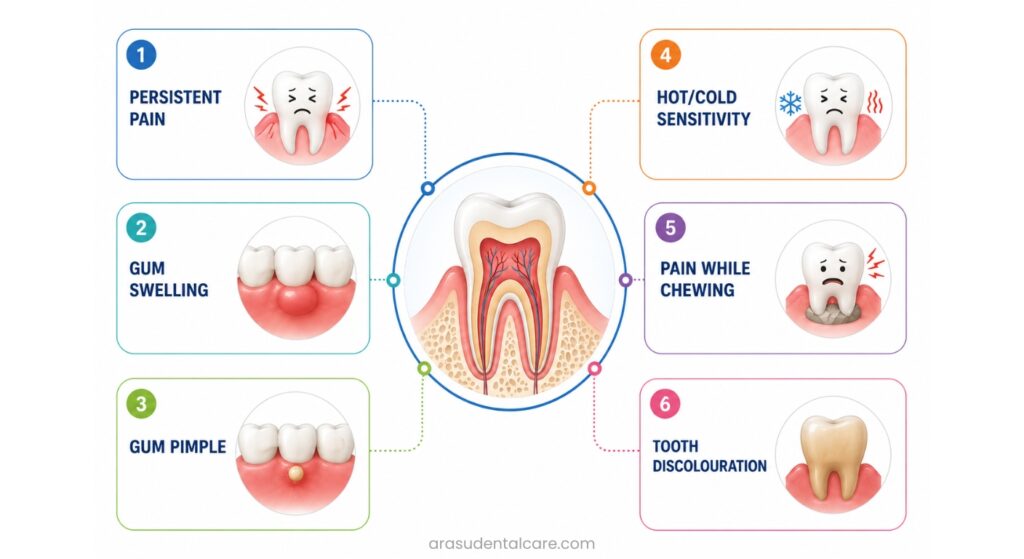
Signs You May Need Root Canal Re Treatment
The symptoms can appear slowly or come on suddenly. Many people notice them while eating or brushing.
Persistent pain in the treated tooth: A dull or sharp pain that continues even after the original root canal. The discomfort may come and go before becoming constant.
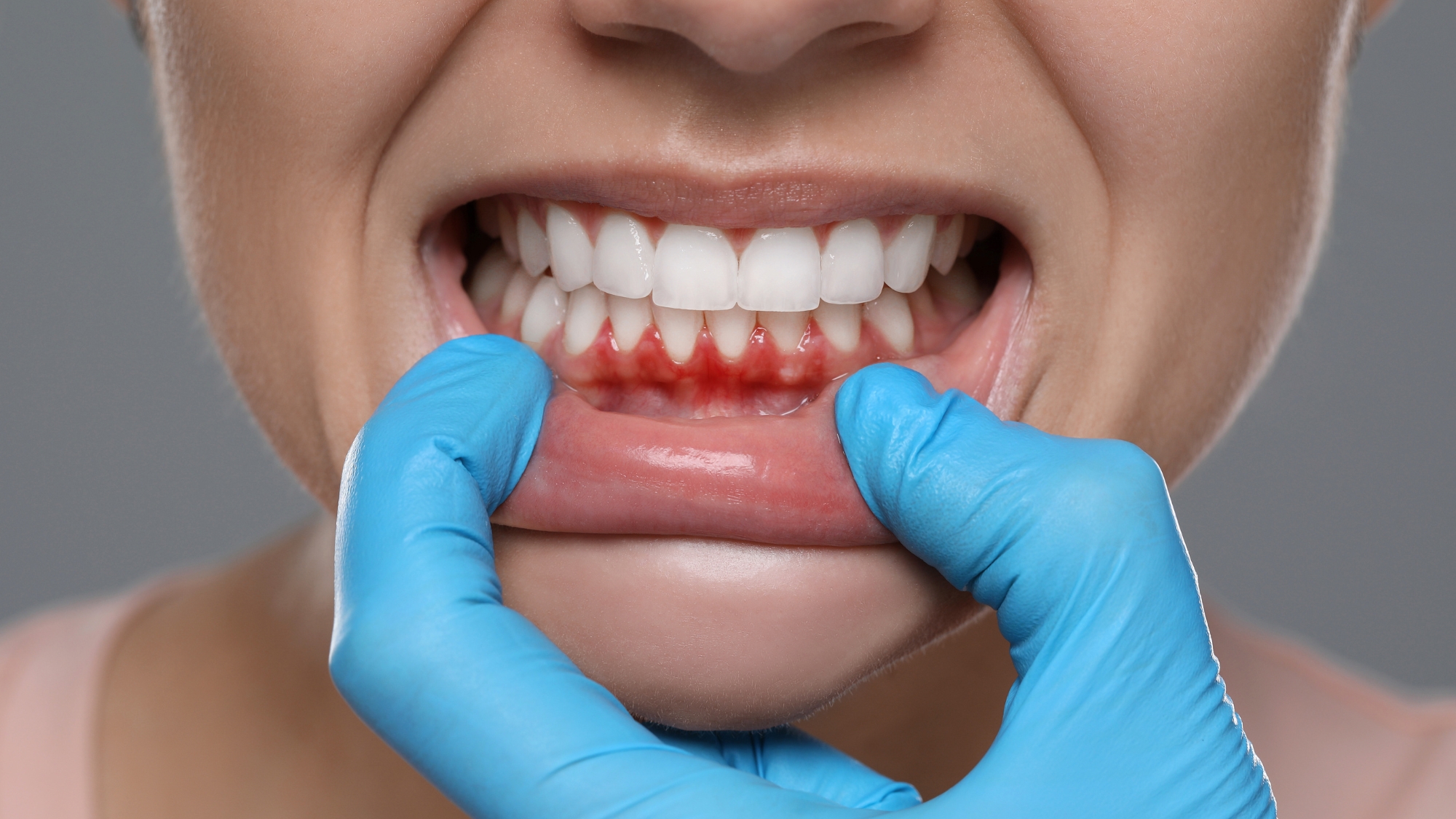
Swelling near the gum or jaw: Soft tissue swelling around the tooth often points to an active infection. The area may feel warm or tender to touch.
A small pimple or bump on the gum: This is called a sinus tract and usually drains pus from an underlying infection. It may appear and disappear on its own.
Sensitivity to hot or cold: A treated tooth should not feel cold or hot stimuli. Lingering sensitivity is a sign that something inside the tooth is not healthy.
Pain while chewing or biting: Pressure pain often indicates inflammation in the tissues around the root tip. The tooth may feel sore even with light contact.
Tooth discolouration: A darkening tooth can suggest internal changes or a failing previous treatment. This is especially common in front teeth.
If you notice any of these signs, a dental examination can help identify the exact cause.
How Root Canal Re Treatment Is Done
The procedure is similar to your first root canal but slightly more detailed. It usually takes one to two appointments depending on the complexity of the case.
Step 1: Examination and Diagnosis
The dentist takes X-rays or a CBCT scan to study the tooth and root structure. A 3D scan often reveals missed canals or hidden infections that regular X-rays may not show. Research published in PubMed Central shows that CBCT imaging can change the diagnosis and treatment plan in over 60% of retreatment cases.
Step 2: Removing the Old Restoration
The crown, filling, or post placed earlier is carefully removed. This gives the dentist proper access to the inside of the tooth.
Step 3: Cleaning and Disinfection
The previous filling material, usually gutta-percha, is removed from inside the canals. The canals are then cleaned, shaped, and disinfected using fine instruments and irrigation solutions.
Step 4: Sealing the Canals
Once the canals are clean and dry, they are filled again with a biocompatible material to seal them. A temporary filling is placed on top.
Step 5: Final Restoration
After healing, a new crown or permanent filling is placed to protect the tooth and restore full chewing function.
Benefits of Root Canal Re Treatment
Re-root canal treatment offers several real, long-term benefits when compared to extraction.
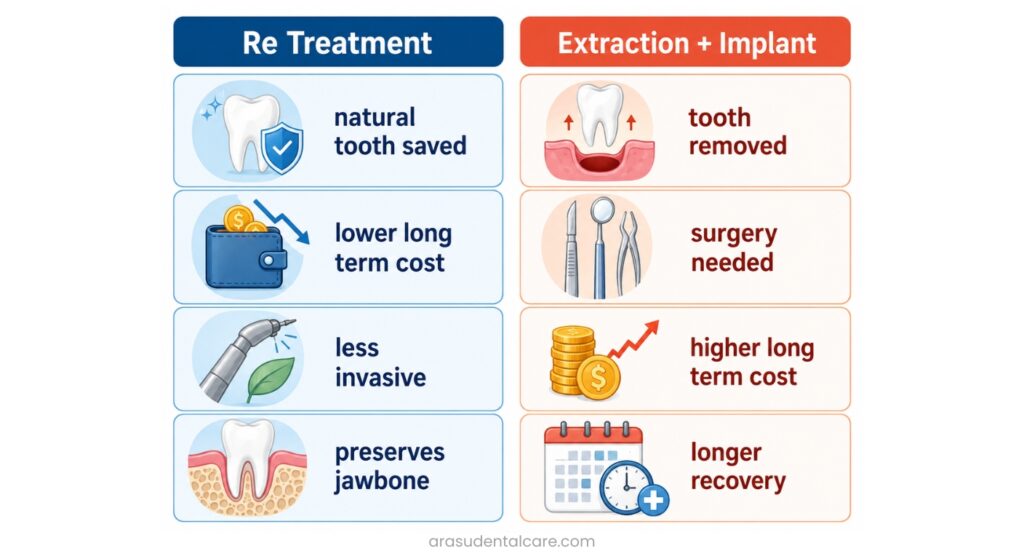
Saves your natural tooth: Keeping your own tooth is almost always better than replacing it. A natural tooth maintains better bite, chewing comfort, and jawbone health.
Prevents the spread of infection: Treating the infection at its source stops it from affecting nearby teeth or bone. Early action also reduces the risk of complications.
More cost effective long term: While re treatment has a cost, it is usually less than the combined cost of extraction, implant, and crown. It also avoids the need for ongoing implant maintenance.
Avoids more complex procedures: Replacing a tooth with an implant or bridge involves surgery and longer recovery. Re treatment is less invasive and often quicker.
Restores comfort and function: Once healed, the tooth feels normal again. You can eat, smile, and speak without discomfort.
According to Cleveland Clinic, most root canal treated teeth, including those that undergo re treatment, can last many years with proper care and good oral hygiene.
What Affects the Cost of Root Canal Re Treatment?
The cost of re treatment varies from case to case. Several factors influence the final treatment fee.
Tooth location: Front teeth usually have one canal, while molars have three or four. More canals mean more time and complexity.
Complexity of the previous treatment: If posts, crowns, or hard filling materials need to be removed, the procedure takes longer. This can affect overall cost.
Need for advanced imaging: A CBCT scan may be required for accurate diagnosis. This adds value but also adds to the cost.
Type of final restoration: A new crown, post, or filling is usually needed after re treatment. The material chosen affects the price.
Additional procedures: Some cases need extra steps like perforation repair or removal of a separated instrument. These are case specific.
In general, re treatment may cost slightly more than the original root canal because of the added time and effort. Your dentist can give you a clear estimate after examination.
Is Root Canal Re Treatment Painful?
Modern re treatment is performed under local anaesthesia, so the procedure itself is not painful. Most patients describe it as similar to getting a regular root canal or filling.
Mild soreness for a few days after the appointment is normal. Over the counter pain relievers and soft foods usually help during recovery.
If pain continues or becomes worse, contact your dentist. It may indicate that further care is needed.
When Re Treatment May Not Be the Right Option
Re treatment is not suitable for every case. Your dentist will examine the tooth carefully before recommending it.
Severe tooth fracture: If the tooth has a deep crack extending into the root, it may not be saveable.
Very weak remaining tooth structure: When too little natural tooth is left, the tooth may not support a new restoration.
Advanced gum disease: Poor periodontal support can affect the long term outlook of any treatment.
In such cases, your dentist may suggest alternatives like apicoectomy (a small surgical procedure) or extraction followed by an implant.
When to See a Dentist
If your previously treated tooth is causing pain, swelling, or sensitivity, do not wait. Early evaluation gives the best chance of saving the tooth.
A dental examination, along with appropriate imaging, can help identify whether re treatment, surgery, or another option is right for you.
Conclusion
A failing root canal does not always mean losing your tooth. Root canal re treatment is a safe, predictable way to give your natural tooth a second chance.
With modern techniques, careful diagnosis, and good aftercare, most re treated teeth heal well and continue to serve you for years. The earlier the issue is addressed, the better the long term outcome.
If you are noticing pain, swelling, or discomfort in a previously treated tooth, a dental clinic consultation can help identify the exact cause. To understand which treatment option suits your case best, book a consultation with the experienced team at Arasu Dental Care.
Frequently Asked Questions
1. How long does root canal re treatment take?
Most cases take one to two appointments of about 60 to 90 minutes each. Complex cases with multiple canals may need additional time.
2. Is re treatment as successful as the first root canal?
Yes, re treatment has a high success rate, generally between 75% and 90%, depending on the case. Modern tools like dental microscopes have improved outcomes significantly.
3. Will I need a new crown after re treatment?
In most cases, yes. The old crown is usually removed during the procedure, and a new crown is placed afterward to protect the tooth.
4. How long does a re treated tooth last?
With a proper crown and good oral hygiene, a re treated tooth can last many years, often a lifetime.
5. Can I avoid re treatment by taking antibiotics?
No. Antibiotics may reduce symptoms temporarily, but they cannot remove infection from inside the tooth. Only re treatment or extraction can resolve the cause.
6. Is re treatment better than getting an implant?
Whenever possible, saving your natural tooth is preferred. Implants are excellent replacements, but a healthy natural tooth still functions and feels better.
7. How soon can I eat after re treatment?
You can eat once the numbness wears off, but stick to soft foods for a day or two. Avoid chewing on the treated side until your final restoration is placed.
8. Does dental insurance cover root canal retreatment?
Many dental insurance plans cover part of the cost. However, some policies have limits on repeat procedures, so it is best to check with your provider.