A palatal expander is a small dental device that gently widens the upper jaw to create more space for teeth and improve the bite. Many parents in Coimbatore hear about this treatment when their child visits an orthodontist for the first time, and it is natural to have questions about how it works.
This guide explains, in simple steps, what really happens during a palatal expander treatment, what your child may feel, and what to expect at each stage.
What Is a Palatal Expander?
A palatal expander is a custom-made orthodontic appliance that fits across the roof of the mouth. It slowly widens the upper jaw by applying gentle pressure on both sides of the palate.
In children, the two halves of the upper jaw are not yet fused. This makes it easier to guide jaw growth and create extra space without surgery.
According to the American Association of Orthodontists, early evaluation around age 7 helps identify jaw problems that benefit most from expansion.
Why Is a Palatal Expander Needed?
Not every child needs an expander. It is usually recommended when the upper jaw is too narrow for the teeth or bite to develop properly.
Common reasons include:
- Crossbite – when upper teeth sit inside the lower teeth
- Crowded teeth – when there is not enough space for permanent teeth
- Impacted teeth – when teeth get blocked while erupting
- Narrow smile or arch – which may affect breathing or chewing
- Mild breathing issues linked to a narrow nasal floor
Your orthodontist will confirm the need only after a proper examination, X-rays, and bite study.
Step-by-Step: What Happens During Palatal Expander Treatment
Understanding the process step by step makes the treatment feel less overwhelming. Here is what a typical journey looks like.
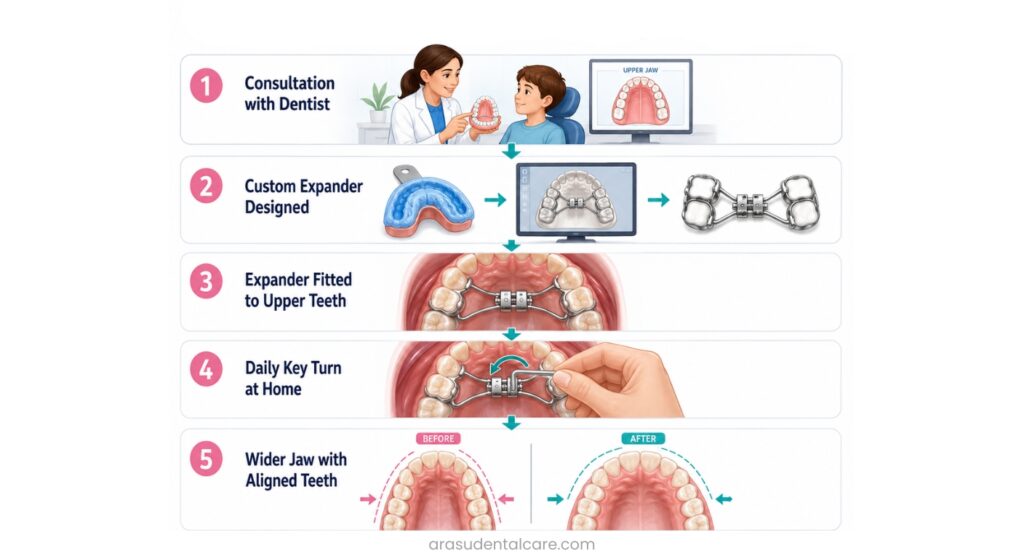
Step 1: Consultation and Diagnosis
The first visit involves a detailed dental examination. The orthodontist checks the bite, jaw width, and how the upper and lower teeth meet.
X-rays, photos, and digital scans or impressions are usually taken. These records help plan the exact amount of expansion needed.
Step 2: Designing the Expander
The expander is custom-made in a dental lab to fit your child’s mouth. It is usually made of stainless steel with a small screw in the center.
Different designs exist — fixed, removable, rapid, and implant-supported. The right choice depends on age, bone maturity, and the type of problem.
Step 3: Fitting the Expander
On the placement day, the orthodontist cleans the back teeth and places small bands around them. The expander is then attached to these bands using dental cement.
The whole process is painless and usually takes 20 to 40 minutes. There are no injections or drilling involved.
Step 4: Activation With the Key
A small key is given to the parent. This key is inserted into the screw in the middle of the expander and turned as instructed.
Each turn applies a tiny amount of pressure on the two halves of the palate. This is what slowly moves the jawbones apart.
Step 5: Daily Turning Schedule
Parents are usually asked to turn the expander once or twice a day. The schedule depends on the type of expander.
- Rapid expander: Often 1 turn per day
- Slow expander: Around 1 turn every 2–3 days
Each turn opens the screw by a fraction of a millimeter. Most children adjust within a few days.
Step 6: The Active Expansion Phase
This phase usually lasts between 2 to 6 weeks. During this time, you may notice a small space forming between the front teeth.
This gap is a good sign. It shows that the jaw is expanding as planned, and the space usually closes naturally afterwards.
Step 7: The Retention Phase
Once the desired width is reached, the turning stops. But the expander stays in the mouth for another 3 to 6 months.
This holding period is very important. It allows new bone to fill the gap in the palate and stabilize the result.
Step 8: Removal and Next Steps
After the bone settles, the orthodontist removes the expander gently. The teeth and palate are cleaned, and the next phase of treatment is planned.
In many cases, braces or aligners follow to finish straightening the teeth.
Explore our blog space maintainers for kids – get to know about the procedure and benefits of space maintainers.
What Does It Feel Like to Wear an Expander?
Most children describe a feeling of pressure rather than pain, especially right after each turn. This pressure usually fades within a few minutes.
Some temporary effects in the first few days may include:
| What You May Notice | How Long It Lasts |
| Mild pressure behind the nose or eyes | A few minutes after each turn |
| Extra saliva | 2–4 days |
| Slight lisp while speaking | 3–7 days |
| Difficulty eating tough foods | First week |
| Small gap between front teeth | Closes naturally later |
A study published in the American Journal of Orthodontics and Dentofacial Orthopedics reports that most speech and comfort issues resolve within one to two weeks as the tongue adapts.
How to Care for a Palatal Expander
Good care helps the treatment go smoothly and keeps the mouth healthy.
Cleaning Tips
- Brush twice daily, paying attention to the area around the expander
- Use a water flosser to flush out trapped food
- Rinse with water after meals
- Clean under and around the screw gently
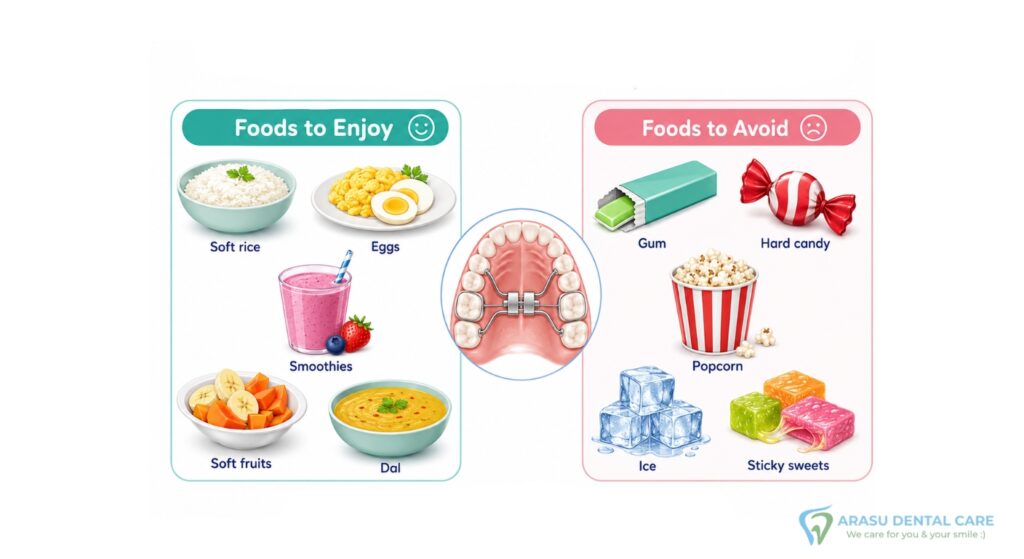
Foods to Avoid
- Sticky foods like chewing gum, toffee, or caramel
- Hard foods like ice cubes, hard candy, or whole nuts
- Crunchy snacks that may bend the wires
Soft foods such as soups, idli, dosa, curd rice, and well-cooked vegetables work well in the first few days.
How Long Does Palatal Expander Treatment Take?
The total duration depends on age and the amount of expansion needed.
| Age Group | Active Expansion | Retention Phase | Total Time |
| Children (7–10 yrs) | 2–4 weeks | 3–4 months | 4–5 months |
| Teens (11–15 yrs) | 4–6 weeks | 4–6 months | 5–7 months |
| Adults | Often needs surgical support | 6–12 months | Up to 1 year |
Every case is unique, so your orthodontist will share a personalized timeline after examination.
Benefits of a Palatal Expander
When used at the right age, a palatal expander offers several long-term benefits:
- Creates space for crowded permanent teeth
- Corrects crossbites early
- May reduce the need for tooth extractions later
- Can improve nasal airflow in some children
- Helps achieve a balanced, healthy smile
- Often shortens future braces treatment time
When to Call Your Orthodontist
While the treatment is generally smooth, contact your dentist if you notice:
- Severe or constant pain
- The expander feels loose
- Difficulty turning the key
- Sores that do not heal in a few days
- Trouble swallowing or breathing
These signs need a quick check-up to keep treatment on track.
Final Thoughts
A palatal expander is a safe and effective way to guide jaw development and create a healthier bite. When started at the right age, it can prevent more complex dental issues later in life.
Every child’s jaw is different, so the right plan depends on a proper orthodontic evaluation. Comfort, safety, and gradual progress are always the priority.
Consult an Orthodontist in Coimbatore
If you are wondering whether your child needs a palatal expander, the best step is a detailed evaluation with an experienced orthodontist. At Arasu Dental Care, our team takes time to explain every option clearly and helps you choose what suits your child’s needs.
Book a consultation today to understand your child’s jaw development and the right time to begin treatment.
Frequently Asked Questions
1. Is a palatal expander painful?
Most children feel only mild pressure, not pain. Any discomfort after a turn usually settles within a few minutes, and over-the-counter pain relief can help if needed.
2. At what age is a palatal expander most effective?
It works best between ages 7 and 14, when the upper jaw is still growing. Treatment is still possible in teens and adults, but it may take longer or need surgical support.
3. Will my child’s speech change?
A short lisp is common in the first week. As the tongue adjusts to the device, speech usually returns to normal without any special therapy.
4. Why is there a gap between the front teeth during treatment?
A small space between the front teeth is a healthy sign that the jaw is widening. This gap usually closes on its own or with braces later.
5. Can adults use a palatal expander?
Yes, but adult bones are fully fused, so treatment may need a small surgical procedure called SARPE for predictable results. Your orthodontist can guide you based on your jaw structure.
6. How often should the expander be turned?
This depends on the type of expander prescribed. Most rapid expanders need one turn a day, while slow expanders may need turning every few days.
7. Will my child need braces after the expander?
In many cases, yes. The expander creates space, and braces or aligners then guide the teeth into their final positions.
8. Can the expander come loose?
It can happen occasionally if sticky or hard foods are eaten. If you feel any movement, contact your orthodontist to refit it before continuing turns.