Growth guidance & bite correction by an MDS orthodontist & TMJ specialist
A crossbite is one of the bite problems we correct most often at Arasu Dental Care — and one of the few that genuinely should not be left alone, especially in a growing child. Correcting it does more than straighten the smile: you get a bite where the upper and lower teeth meet the way they are designed to, which protects your teeth from uneven wear, takes strain off the jaw joint, and — in children — lets the jaw grow symmetrically instead of shifting to one side.
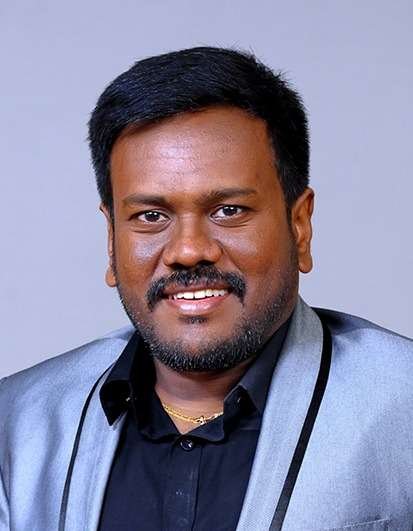
Treatment is right for you if some of your upper teeth bite inside your lower teeth — at the front, at the back, on one side, or on both. It is corrected here by our orthodontic team, led by Dr. P.S. Sree Cumar, MDS (Orthodontics), Fellow of the World Federation of Orthodontists (USA), whose named areas of expertise — growth-guidance appliances and TMJ disorders — sit exactly where crossbite treatment lives.
Open all seven days, 10:00 AM – 8:30 PM · R.S. Puram +91 88380 22157 · Saibaba Colony +91 74491 88777
Medically reviewed by Dr. P.S. Sree Cumar, MDS (Orthodontics & Dentofacial Orthopedics, FWFO) · Last reviewed July 2026
Not sure whether what you're seeing is a crossbite? A consultation at either branch will tell you in one visit — RS Puram: +91 88380 22157 · Saibaba Colony: +91 74491 88777.
Know your problem
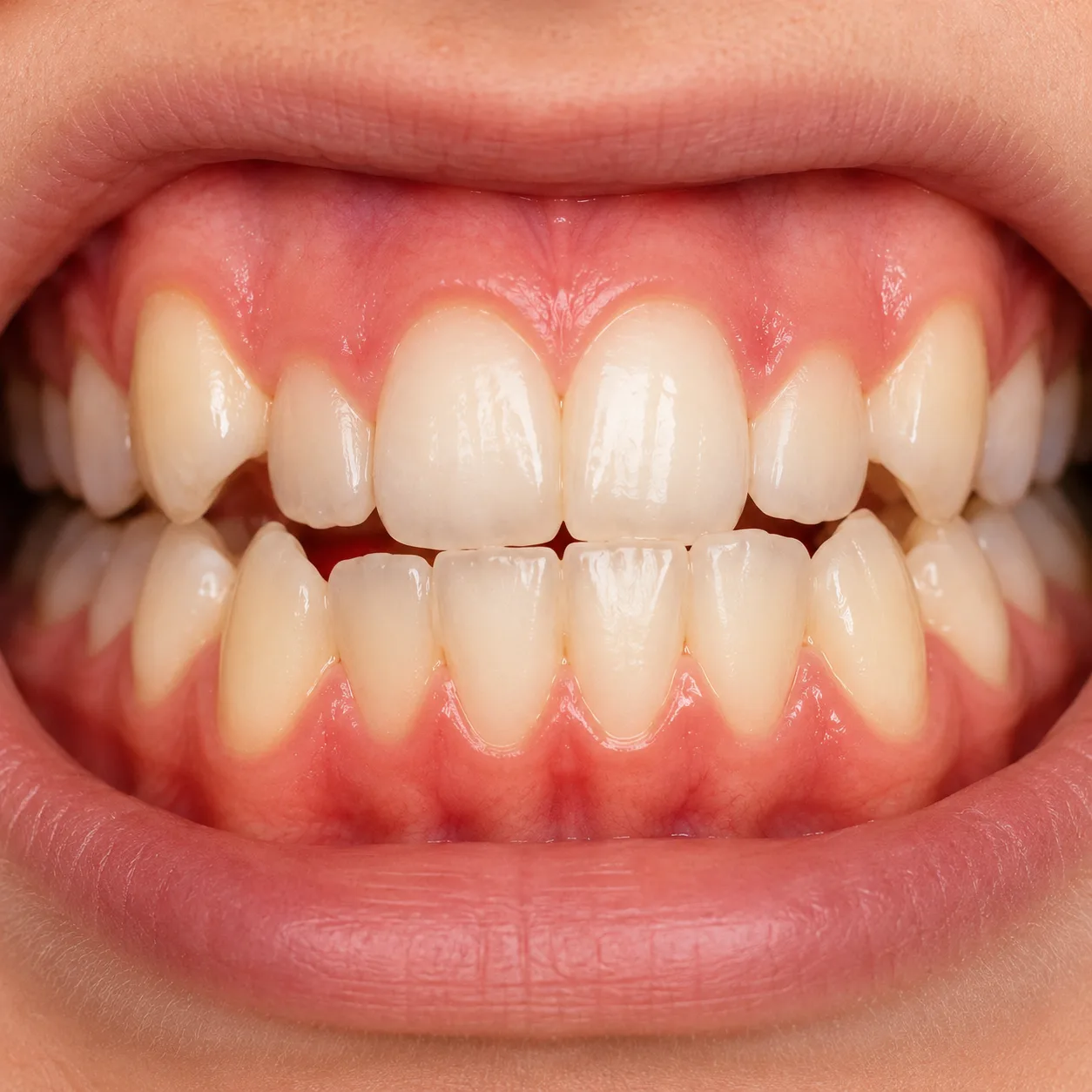
In a healthy bite, every upper tooth closes slightly outside its lower partner. In a crossbite, that relationship flips for one or more teeth. Which teeth flip decides what you notice — and what we treat:
| Type | What you'll typically notice | Most common in |
|---|---|---|
| Anterior crossbite | One or more upper front teeth sit behind the lower front teeth when you bite. Often mistaken for an underbite, but only some teeth are affected | Children and teens; also adults who never had it treated |
| Posterior crossbite | Back teeth on one or both sides bite inside the lower teeth; chewing feels off-balance; the jaw may slide sideways to close comfortably | The most common pattern — usually linked to a narrow upper jaw |
| Unilateral crossbite | Crossbite on one side only; the chin or smile can look slightly off-centre because the jaw shifts to that side to close | More common than both-sides crossbite in Indian orthodontic studies |
Crossbites are not rare. Research across child populations puts posterior crossbite at around 9% and anterior crossbite at around 8% of children, and studies of Indian orthodontic patients consistently find the posterior, one-sided pattern to be the most common presentation. If you have noticed your child's lower jaw sliding to one side as they bite, or their chin sitting slightly off-centre, that is the sign we most want you to act on — it is discussed further down this page.
A crossbite can involve just the teeth (a tooth erupted at the wrong angle) or the jaw itself (an upper jaw that is genuinely too narrow, or a jaw-size mismatch). The distinction matters because it decides the treatment — and it is exactly what we assess with records and analysis at your first visit, not by eye.
Crossbites are among the most common childhood bite problems. Research across child populations puts posterior crossbite at around 9% and anterior crossbite at around 8% of children — and Indian orthodontic studies find the one-sided posterior pattern the most common presentation. General research figures; individual cases vary.
Why timing matters
This is the honest reason we ask families not to wait on a crossbite, when many other cosmetic concerns can safely wait:
Treatment routes
There is no single crossbite treatment — there is the right treatment for the type, the age, and the cause. This is what the assessment decides, and why our orthodontists take records rather than quote a fix at a glance:
Palatal expansion & growth-guidance appliances · check by around age 7
While the upper jaw is still growing, a narrow palate — the usual cause of a posterior crossbite — can be widened with a palatal expander, and a developing anterior crossbite can often be corrected with simple appliances that reposition the erupting teeth. Growth-guidance and myofunctional appliances are one of Dr. Sree Cumar's named areas of specialisation, and this is the age window where they do their finest work: treated early, a crossbite that would have needed years of adult treatment — or surgery — can be resolved while the jaw is still cooperative. This is one of the main reasons we recommend an orthodontic check by around age 7. You can read how expansion works in our palatal expander guide, and see our braces for children page for early treatment more broadly.
Braces or clear aligners · typically 12–24 months
Once growth is complete, dental crossbites are corrected by moving the affected teeth across the bite into their correct position — with braces or clear aligners. Braces remain the most versatile tool, particularly for posterior crossbites where teeth need controlled bodily movement, and often use crossbite elastics between the arches to pull the bite across. Aligners handle many anterior and milder crossbites well — and are the discreet option working adults usually prefer — but they have honest limits, which we set out below. Treatment typically runs 12–24 months depending on severity, the same range as most comprehensive orthodontic treatment.
A minority of adult cases · planned jointly with our maxillofacial surgeon
When the crossbite comes from a genuine jaw-size mismatch in an adult — most often a truly narrow upper jaw or an asymmetric lower jaw — moving teeth alone cannot fully close the gap. Those cases are planned jointly between our orthodontists and our oral and maxillofacial surgeon, and are covered on our jaw and face correction page. Most crossbites do not need this — but telling you which category you are in, before treatment starts, is precisely what the records visit is for.
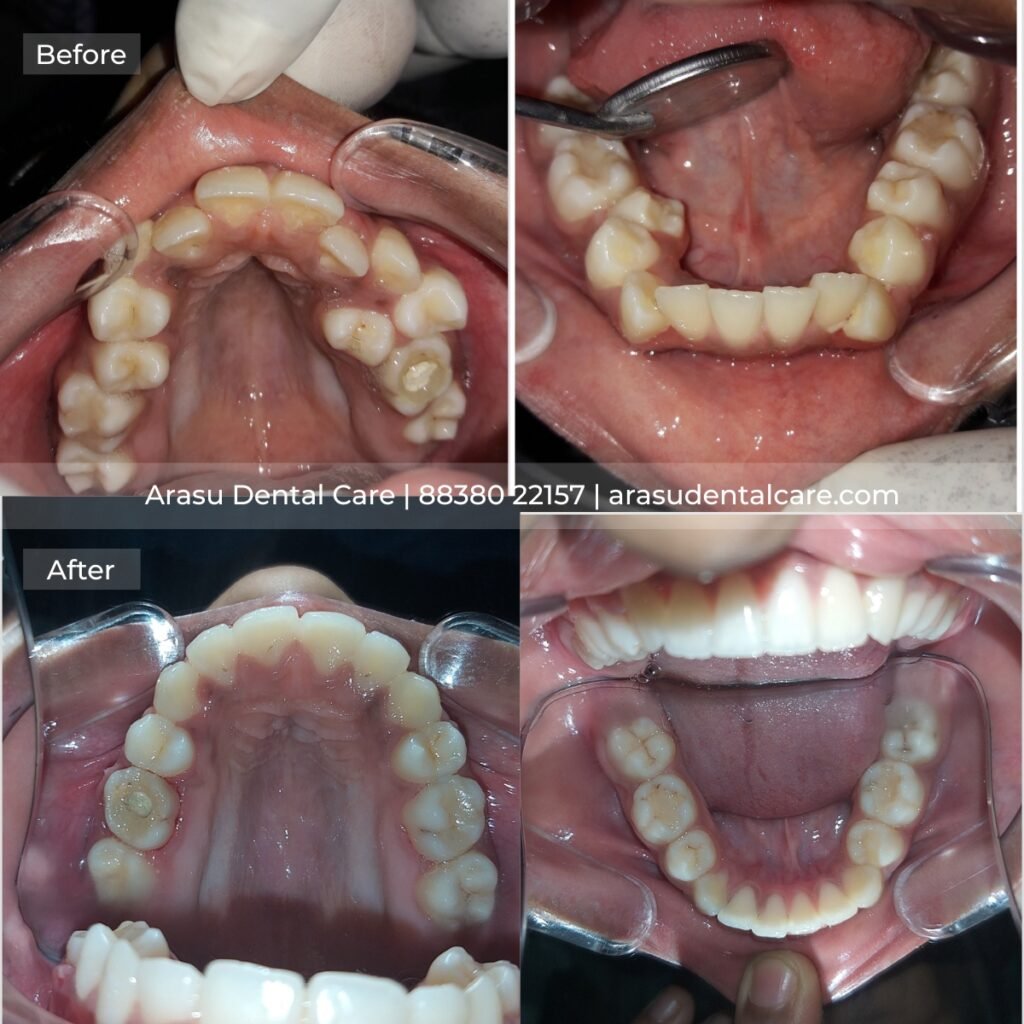
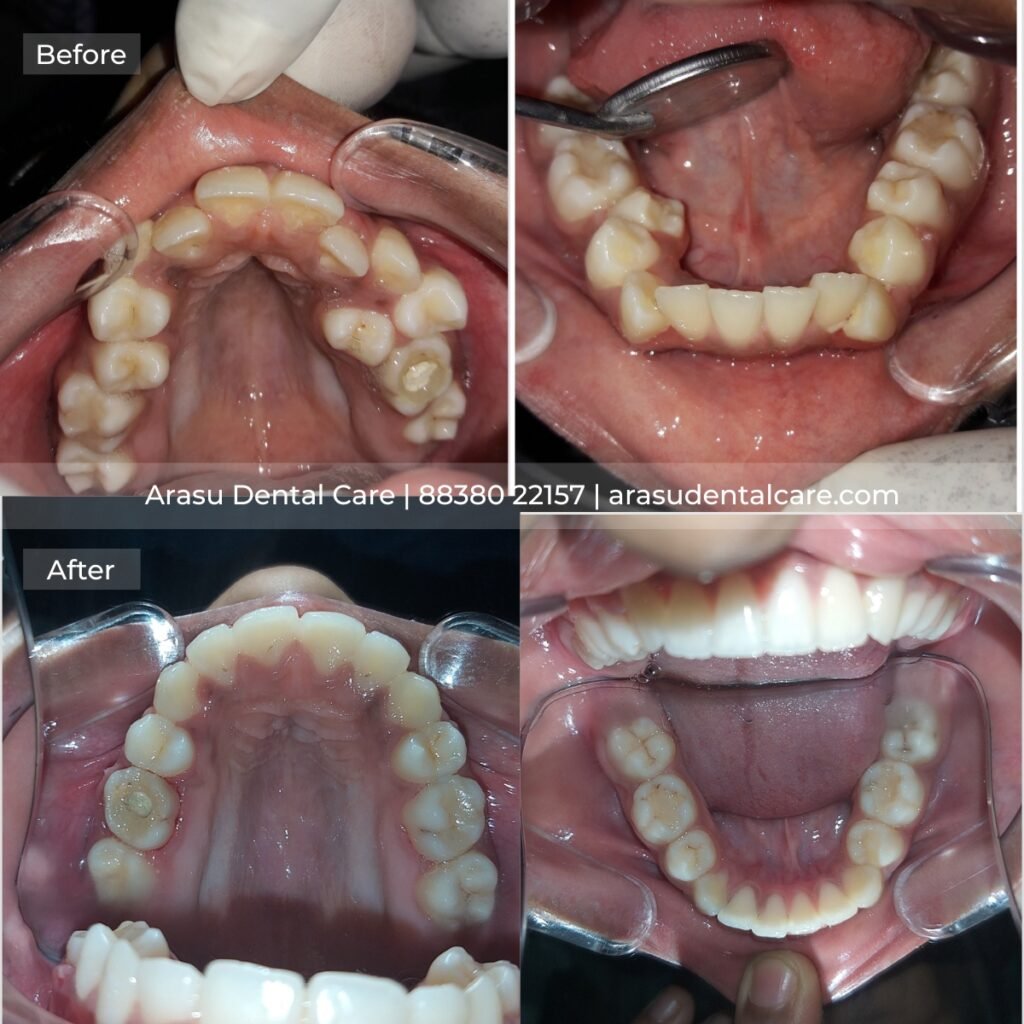
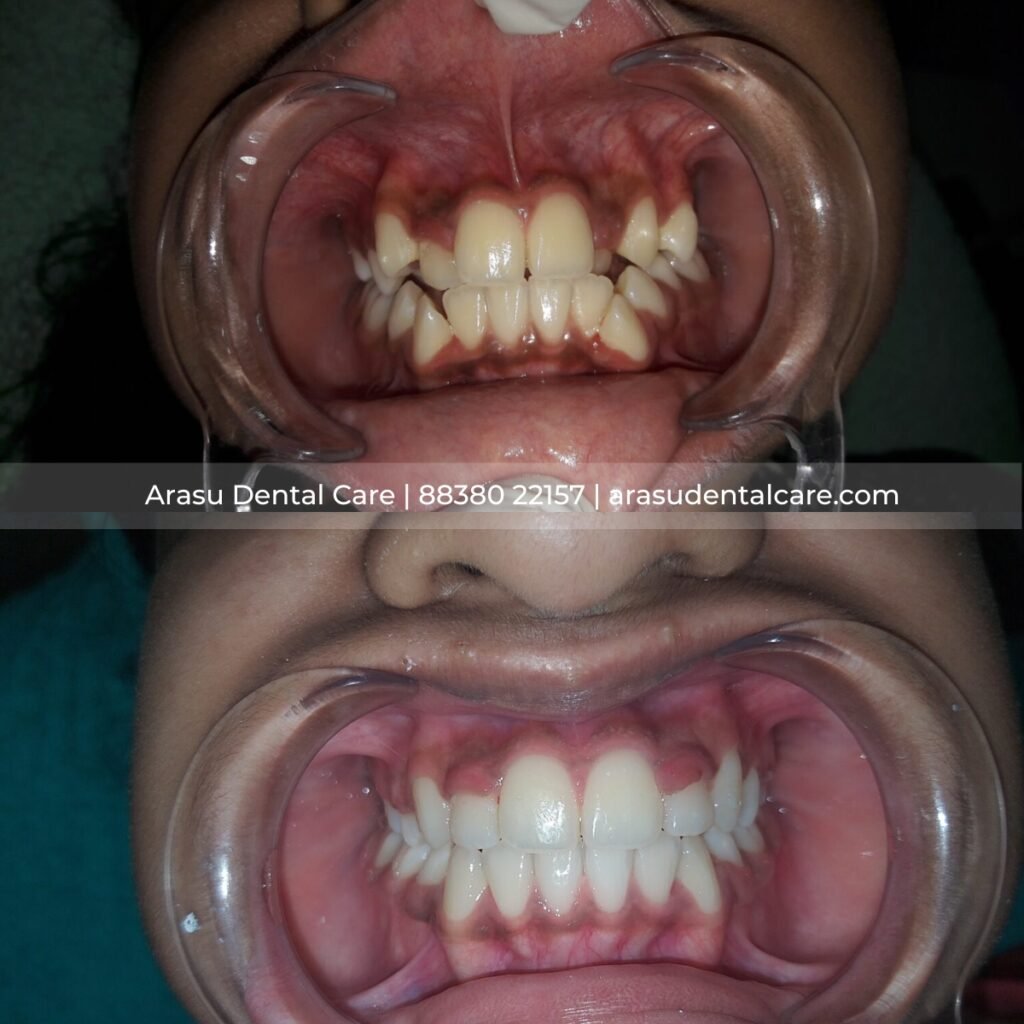
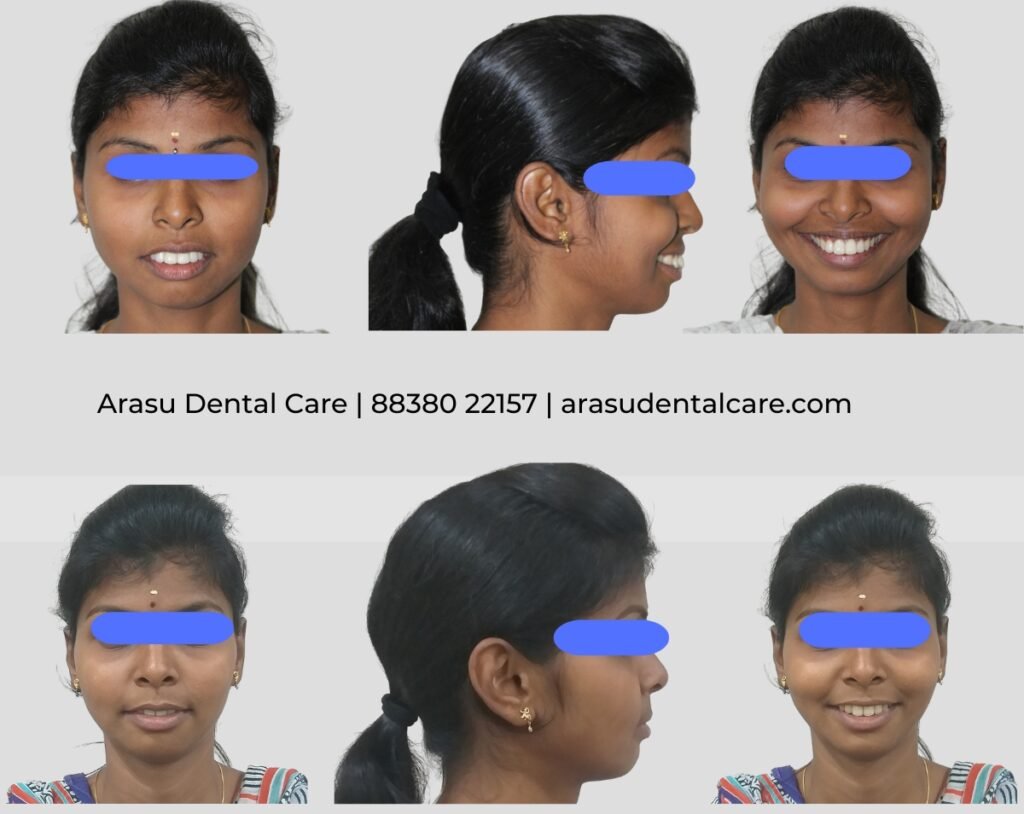
Real Arasu cases


Founder · Orthodontics & Dentofacial Orthopedics · Fellow, World Federation of Orthodontists (USA)
Named Dentist of the Year – South Region at the 2023 Economic Times Healthcare Awards, and Senior Lecturer at RVS Dental College. His two named specialisations — growth-guidance appliances and TMJ disorders — cover both ends of crossbite care: catching it early in children, and untangling the jaw-joint strain it causes in adults. View profile
Before you commit
Transparent pricing
Because a crossbite is corrected with orthodontic treatment, the cost is the cost of the appliance that fits your case. These are our current ranges at Arasu Dental Care — your exact figure depends on severity and appliance choice, and is confirmed in writing after your assessment:
| Treatment | Our fee range | Typically suits |
|---|---|---|
| Metal braces | ₹30,000 – ₹50,000 | All crossbite types; the workhorse option |
| Ceramic braces | ₹35,000 – ₹70,000 | Same mechanics, less visible |
| Self-ligating braces | ₹50,000 – ₹80,000 | Comfort-focused fixed option |
| Lingual braces | ₹70,000 – ₹1,00,000 | Fixed treatment hidden behind the teeth |
| Clear aligners — mild case | ₹50,000 – ₹70,000 | Mild anterior crossbites |
| Clear aligners — complex case | ₹1,50,000 – ₹3,00,000 | Multi-tooth or combined corrections |
| Invisalign | From ₹80,000 | Brand-specific aligner option |
| Consultation | ₹300 – ₹500 | Assessment and treatment plan |
Childhood interceptive treatment (palatal expanders and growth-guidance appliances) is quoted case-by-case after assessment, since appliance type and treatment length vary widely by age and growth stage.
Prices are subject to individual consultation. We accept cash, UPI, cards and EMI options, and we will tell you the full figure — including retainers — before treatment begins, not partway through. For a full breakdown by appliance, see our braces cost and clear aligners cost pages.
Want a fixed number for your case? Book an assessment and leave with a written plan and price.RS Puram: +91 88380 22157 · Saibaba Colony: +91 74491 88777 — open 10 AM to 8:30 PM, all seven days.
Book a consultationWhy Arasu
Crossbite correction is diagnosis-led orthodontics — the treatment only goes right if the type and cause are read correctly first. Our orthodontic care is led by Dr. P.S. Sree Cumar, MDS (Orthodontics and Dentofacial Orthopedics), Fellow of the World Federation of Orthodontists (USA) and Senior Lecturer at RVS Dental College, recognised as Dentist of the Year – South Region at the Economic Times Healthcare Awards 2023.
His two named specialisations — growth-guidance appliances and TMJ disorders — cover both ends of crossbite care: catching it early in children, and untangling the jaw-joint strain it causes in adults.
If your crossbite has already caused gum recession, worn teeth or joint pain, the periodontal and restorative care happens here too, in one coordinated plan — no cross-town referrals.
Both branches are open all seven days, which matters over a 12–24 month treatment: adjustment visits fit around school and work instead of the other way round. R.S. Puram (+91 88380 22157) · Saibaba Colony (+91 74491 88777).
Book your crossbite assessment
One visit tells you what type of crossbite you have, what caused it, and exactly what correcting it will involve and cost — assessed by an orthodontic team that treats this every week. WhatsApp +91 96007 56297.
FAQs
Sometimes. In children, many crossbites are corrected with expanders or simple growth-guidance appliances rather than full braces. In adults, mild anterior crossbites can often be treated with clear aligners. Posterior and more complex crossbites usually still do better with braces — the assessment tells us which group you're in.
Earlier than most other orthodontic problems. A crossbite with a jaw shift is one of the few conditions orthodontists actively intercept in young children, because expansion works with growth. We recommend a check by around age 7 — but if that window has passed, crossbites are corrected successfully at any age; adult treatment just takes different tools.
No — a crossbite is a structural bite relationship and does not self-correct. A one-sided crossbite with a jaw shift is worth treating promptly, because the shift can influence how the jaw grows.
Simple childhood expansion cases can complete their active phase in months. Comprehensive treatment with braces or aligners typically runs 12–24 months depending on severity. You'll get a case-specific estimate, not a generic one, at your consultation.
You can expect the same pressure and initial soreness as any orthodontic treatment — a few adjustment days of tenderness, managed with soft food and simple pain relief if needed. The procedures themselves are comfortable, and expansion in children is gentler than most parents expect.
It can contribute. A bite that forces the jaw sideways to close loads the joint unevenly, and we see that pattern in a share of our TMJ cases. Correcting the crossbite removes that mechanical strain — one of the reasons crossbite treatment is about function, not just appearance.
An underbite is the whole lower front segment biting ahead of the upper — a front-to-back jaw relationship. An anterior crossbite involves only some upper front teeth sitting behind their lower partners. They can look similar in the mirror, which is why we diagnose from records, not photos. If your whole lower jaw sits forward, our underbite page covers that condition.
Individual results vary based on the type and severity of the crossbite, age, and appliance wear. Consult with our dentists for a personalized assessment. Statistics reflect published dental research, not a promise of individual outcomes.
Arasu Dental Care — open all 7 days, 10:00 AM – 8:30 PM
Whether it's a child's jaw sliding to one side, chewing that feels off-balance, or front teeth biting behind the lower — the first step is one visit with our orthodontic team. You'll leave knowing the type, the cause, and exactly what correcting it will involve and cost. WhatsApp +91 96007 56297 · arasudentalcare@gmail.com.
More From Arasu