If your dentist has suggested an amalgam filling, you may be wondering how the procedure works and whether it is the right choice for your tooth. An amalgam filling is one of the most trusted ways to restore a tooth that has been damaged by decay, especially in the back teeth where chewing pressure is high.
This guide explains the full process in simple language, so you know exactly what to expect during your visit. We will also cover safety, benefits, alternatives, and aftercare based on current dental guidelines.
What Is an Amalgam Filling?
An amalgam filling is a strong, silver-colored material used to fill cavities caused by tooth decay. It is made by mixing liquid mercury with a powdered alloy of silver, tin, and copper.
Once mixed, this material becomes soft enough to shape inside the prepared tooth. Within minutes, it hardens into a durable surface that can withstand years of biting and chewing.
According to the U.S. Food and Drug Administration (FDA), dental amalgam has been used safely for more than 150 years and remains one of the most studied filling materials in dentistry.
When Is an Amalgam Filling Recommended?
Not every cavity needs an amalgam filling. Your dentist will examine your tooth and decide based on the size, location, and condition of the decay.
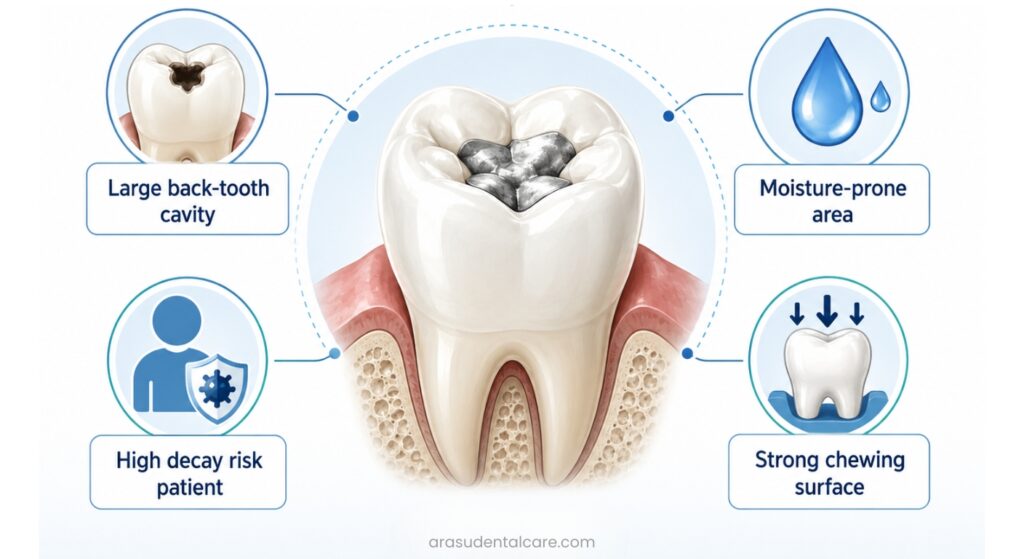
Large cavities in back teeth:Amalgam works well for molars and premolars where chewing pressure is high. Its strength helps the restoration last longer in these high-stress areas.
Areas difficult to keep dry:Some cavities below the gumline are hard to isolate from saliva. Amalgam tolerates moisture better than tooth-colored materials during placement.
Patients with high decay risk:For people who develop cavities frequently, amalgam offers a strong, long-lasting seal that resists wear over time.
Budget-conscious treatment:Amalgam is usually the most affordable filling option, making it useful when cost is a concern.
How Is Dental Restoration Done With Amalgam Filling? Step-by-Step
The amalgam filling procedure is straightforward and usually completed in a single visit. Here is what happens at each stage.
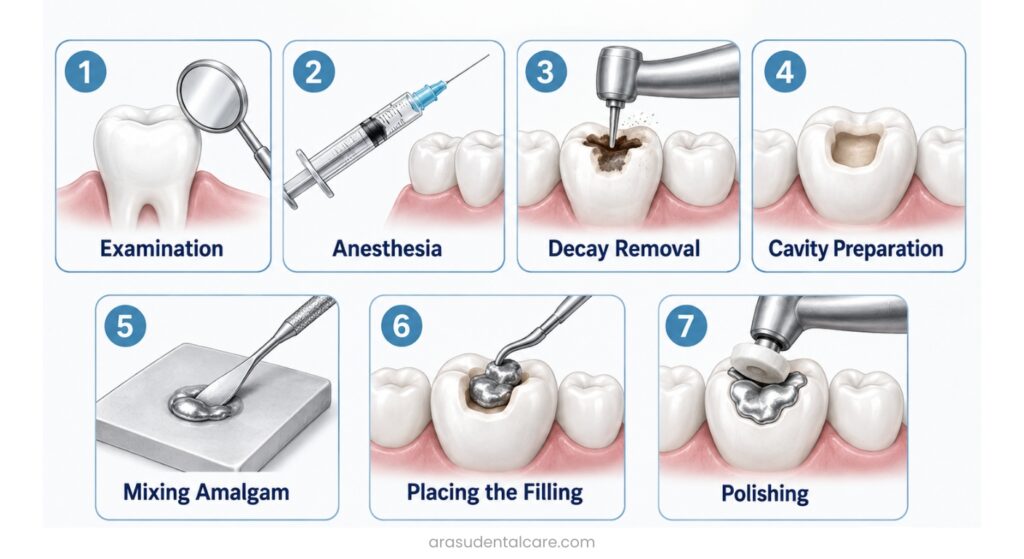
Step 1: Examination and Diagnosis
Your dentist first checks the affected tooth using a dental mirror and may take an X-ray. This helps confirm how deep the decay is and whether a filling is the right choice.
If decay has reached the nerve, a different treatment such as a root canal may be needed instead. A proper diagnosis ensures the correct treatment for your tooth.
Step 2: Numbing the Tooth
To keep you comfortable, the dentist applies a local anesthetic around the tooth. You may feel a small pinch, but the area becomes numb within a few minutes.
You will stay awake during the procedure, but you should not feel pain. Let your dentist know if you ever feel any discomfort.
Step 3: Removing the Decay
Using a small dental drill, the dentist carefully removes the decayed portion of the tooth. Only the damaged tissue is removed, while the healthy tooth is preserved as much as possible.
This step creates a clean cavity that is ready to hold the filling material. The shape is also designed to give the amalgam strong support inside the tooth.
Step 4: Preparing the Cavity
Once the decay is cleared, the dentist shapes the cavity for proper retention of the filling. In some cases, a thin liner or base may be placed to protect the inner layers of the tooth.
This step also helps reduce sensitivity after the filling is placed. The tooth is then cleaned and dried before the next stage.
Step 5: Mixing the Amalgam
The amalgam is prepared in a sealed capsule using a special mixing machine called an amalgamator. This combines the liquid mercury with the alloy powder safely.
Modern dental clinics use precapsulated amalgam to reduce mercury exposure and ensure a consistent mix every time. The result is a soft, putty-like material ready for placement.
Step 6: Placing and Shaping the Filling
The dentist packs the soft amalgam firmly into the prepared cavity in small layers. Each layer is pressed to remove air pockets and ensure a strong, uniform fill.
The material is then carved to match the natural shape of your tooth. Your bite is checked carefully so the filling feels comfortable when you close your mouth.
Step 7: Final Polishing
After the amalgam begins to harden, the surface is smoothed and polished. A polished surface feels natural to your tongue and is easier to clean.
Polishing may be done in the same visit or at a follow-up appointment, depending on the type of amalgam used.
What to Expect After the Procedure
Recovery from an amalgam filling is usually simple, but your tooth needs a little care during the first 24 hours.
Avoid chewing on the filled tooth:Although amalgam hardens quickly, it reaches full strength in about 24 hours. Try to chew on the opposite side during this period.
Mild sensitivity is normal:You may feel slight sensitivity to cold, hot, or pressure for a few days. This usually fades on its own as the tooth settles.
Numbness will wear off:The anesthetic effect lasts a few hours. Be careful not to bite your cheek or tongue while the area is still numb.
Maintain good oral hygiene:Brush gently twice daily and floss around the filled tooth. Good hygiene helps the filling last longer and prevents new decay.
If you notice sharp pain, a high bite, or persistent discomfort beyond a week, contact your dentist for a quick check.
Are Amalgam Fillings Safe?
This is a common question, and it is fair to ask. Amalgam contains mercury, which has raised concerns over the years.
However, leading health authorities including the American Dental Association (ADA) and the FDA confirm that amalgam fillings are safe for most adults and children above the age of six. The mercury becomes chemically bound within the alloy and is not freely released into the body in harmful amounts.
That said, some groups may be advised to consider alternatives, such as pregnant women, nursing mothers, young children, and people with known mercury allergies. Your dentist can guide you based on your individual health.
How Long Do Amalgam Fillings Last?
Amalgam fillings are known for their durability. With proper care, they can last 10 to 15 years or even longer in many cases.
Their longevity depends on factors such as the size of the filling, your bite, oral hygiene, and whether you grind your teeth at night. Regular dental check-ups help your dentist spot wear early and act before problems develop.
Amalgam vs Other Filling Options
Today, dentists offer several types of fillings. Here is a quick comparison to help you understand your choices.
Amalgam fillings:Strong, long-lasting, and affordable. Best for back teeth but visible due to silver color.
Tooth colored- fillings: Match the natural shade of your tooth. Ideal for front teeth and visible areas, though slightly less wear-resistant in heavy chewing zones.
Glass ionomer fillings:Release fluoride, which can help protect the tooth. Often used for children or non-load-bearing areas.
Ceramic or gold restorations:Highly durable and esthetic, but more expensive and usually require more than one visit.
The right choice depends on the tooth location, your budget, and your esthetic preferences. A dental consultation can help identify the option best suited to your case.
Caring for Your Amalgam Filling
A filled tooth still needs the same care as a natural tooth. A few simple habits can help your restoration last longer.
Brush twice daily:Use a soft-bristled brush and fluoride toothpaste. Gentle, circular strokes clean without damaging the filling edges.
Floss every day:Flossing removes food and plaque between teeth. This prevents decay from forming around the filling.
Avoid hard or sticky foods:Biting hard candies, ice, or very sticky foods can crack or dislodge any filling. Be mindful of what you chew.
Visit your dentist regularly:Routine check-ups every six months help detect early signs of wear, leakage, or new decay around old fillings.
When to See a Dentist
Even a well-placed amalgam filling can develop issues over time. Watch for these signs and consult your dentist if you notice them.
Sharp or lingering pain:Ongoing pain in the filled tooth may indicate decay underneath or a cracked filling. Early treatment can prevent bigger problems.
Rough or uneven feeling:If the filling feels high or rough, your bite may need a small adjustment. This is a quick fix in most cases.
Visible darkening or chip:A change in the appearance of the filling could mean wear or damage. A dental exam can confirm whether replacement is needed.
Sensitivity that does not fade:Mild sensitivity in the first week is normal, but lasting sensitivity should be checked by your dentist.
Final Thoughts
Dental restoration with an amalgam filling is a well-proven procedure that reliably restores a damaged tooth and helps it function normally for many years. When placed correctly and cared for well, it offers strength and durability that few other materials can match — particularly for back teeth under heavy chewing pressure. That said, the best filling material for your tooth is always decided after a proper examination, taking into account the size of the cavity, its location, and your individual needs.
If you have a decayed tooth, an old filling that no longer feels right, or any discomfort while chewing, it is worth getting it looked at sooner rather than later.
At Arasu Dental Care in Coimbatore, we take the time to assess your tooth thoroughly and walk you through your options before any treatment begins. Whether amalgam is the right choice or something else suits you better, we will help you decide with clarity and confidence. Book a consultation with us today and let us help restore your tooth the right way.
Frequently Asked Questions
1. Does getting an amalgam filling hurt?
The procedure itself is not painful because your dentist uses local anesthesia to numb the area. You may feel mild pressure or vibration, but no sharp pain.
2. How long does the procedure take?
Most amalgam fillings are completed in 30 to 60 minutes, depending on the size and location of the cavity. Larger cavities may take a little longer.
3. Can I eat after getting an amalgam filling?
It is best to wait at least one hour or until the numbness wears off. Avoid chewing on the filled tooth for the first 24 hours to allow the material to fully harden.
4. Will my amalgam filling be visible when I smile?
Amalgam has a silver-grey color, so it may be visible on back teeth when you laugh widely. For front teeth, tooth colored fillings are usually preferred.
5. Can amalgam fillings be replaced with tooth-colored ones?
Yes, but replacement is recommended only if the existing filling is worn, broken, or has decay underneath. Removing healthy fillings unnecessarily can weaken the tooth.
6. Is mercury in amalgam dangerous?
The mercury in amalgam is bound within the alloy and considered safe for most patients. However, your dentist can suggest alternatives if you have specific health concerns or allergies.
7. Are amalgam fillings suitable for children?
Amalgam may be used in children above six years of age in certain situations. For younger children or primary teeth, dentists often prefer alternative materials.