If your dentist has mentioned an amalgam filling, you may wonder what it is and whether it is the right choice for your tooth. A silver filling, also known as a dental amalgam filling, is one of the oldest and most trusted ways to repair a tooth damaged by decay.
It has been used safely in dentistry for more than 150 years. This guide explains how it works, when it is recommended, what the procedure feels like, the cost in India, and how it compares with modern tooth-coloured options.
The aim is simple — to help you make a calm and informed decision about your dental care.
What Is an Amalgam Filling?
An amalgam filling is a dental restoration made by mixing liquid mercury with a powdered alloy of silver, tin, and copper. The mixture forms a soft putty that hardens inside the cavity within minutes.
Once set, the filling becomes strong enough to handle years of biting and chewing pressure. Because of its silver-grey appearance, it is often called a “silver filling,” though it is actually a blend of several metals.
According to the U.S. Food and Drug Administration, dental amalgam is approximately 50% mercury by weight, which binds the other metals together to form a stable, long-lasting material.
Why Dentists Still Use Silver Fillings
Even with modern alternatives available, amalgam continues to be used in specific cases where strength and durability matter most.
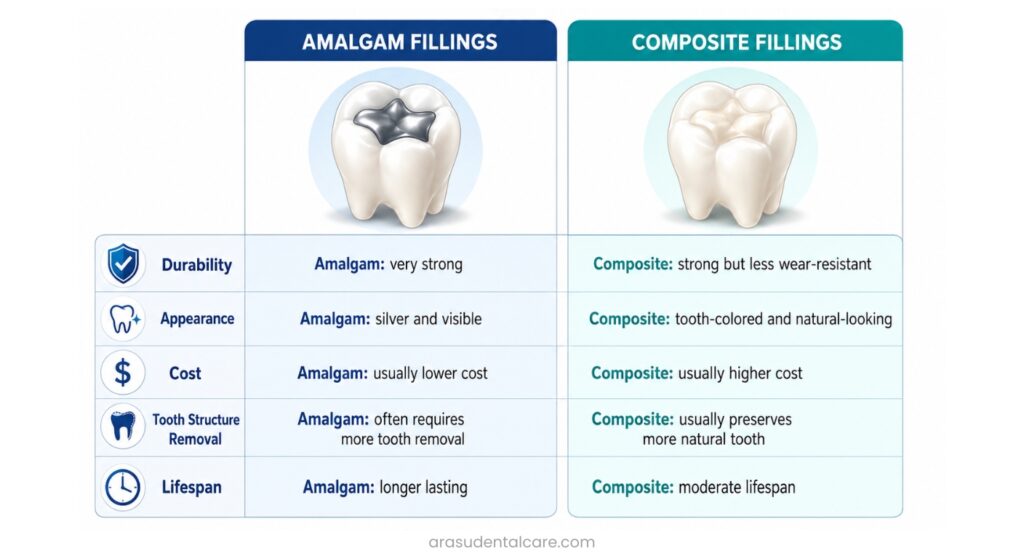
Excellent durability: Silver fillings can last 10 to 15 years or more.They handle heavy chewing forces well, which is why they are often placed in molars.
Moisture tolerance: Amalgam can be placed even when the area is slightly moist.This is helpful for back teeth where keeping the tooth fully dry is difficult.
Affordable option: It is one of the most cost-effective filling materials.This makes it useful for patients who need multiple fillings or larger restorations.
Reliable for large cavities: When decay is deep or wide, amalgam provides solid support.It seals the tooth firmly and reduces the chance of further breakdown.
When Is an Amalgam Filling Recommended?
Not every cavity needs a silver filling. Your dentist will examine your tooth carefully before suggesting the right material.
Large cavities in back teeth: Molars carry most of the chewing load. Amalgam can withstand this pressure better than many tooth-coloured materials.
Patients with high cavity risk: Those who develop cavities frequently may benefit from a stronger filling.The durability of amalgam helps reduce the chance of repeated treatment.
Difficult-to-isolate areas: Some cavities sit close to the gumline where saliva control is hard.Amalgam works well in these situations because it is less sensitive to moisture.
Budget-conscious treatment: When cost is a concern, amalgam offers a long-lasting solution at a lower price.It remains a practical choice for many patients in India.
The Amalgam Filling Procedure: Step by Step
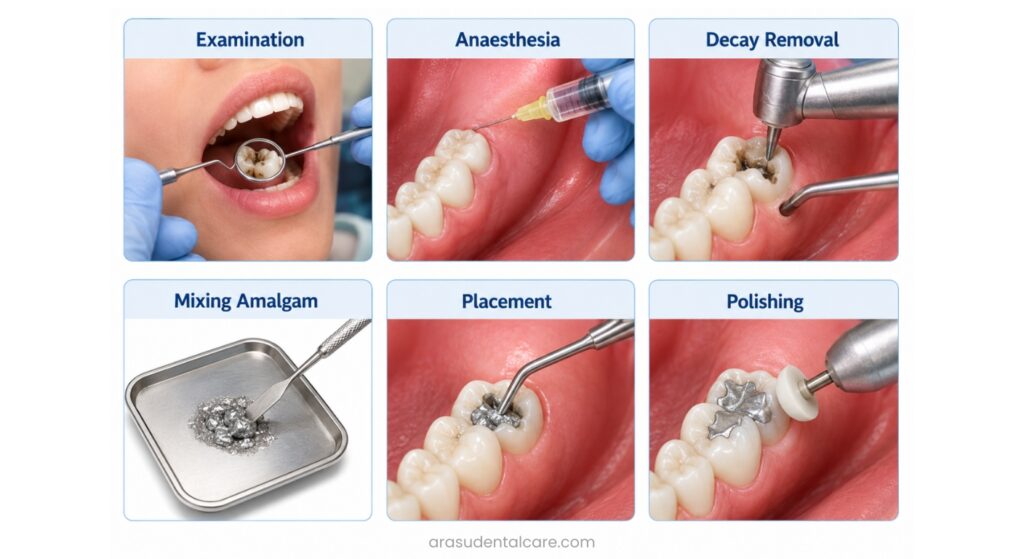
Understanding the procedure can help reduce any nervousness you may feel before your appointment. Most amalgam fillings are completed in a single visit lasting 30 to 60 minutes.
Step 1: Examination and X-ray
Your dentist will first examine the tooth and may take a small X-ray.This helps confirm the depth of decay and check the surrounding bone.
Step 2: Local Anaesthesia
A numbing injection is given near the affected tooth.This keeps the area comfortable throughout the procedure.
Step 3: Removing the Decay
Using a small dental drill, the dentist gently removes the decayed portion.The cavity is then shaped to hold the filling securely.
Step 4: Preparing the Amalgam
The pre-measured capsule of alloy and mercury is mixed in a special machine called an amalgamator.This creates a soft, workable material ready for placement.
Step 5: Placing and Shaping
The amalgam is packed firmly into the cavity in small layers.Your dentist then shapes it to match your natural tooth contour.
Step 6: Bite Check and Polishing
Once the filling begins to harden, your bite is checked and adjusted.The surface is smoothed so it feels comfortable when you chew.
To learn more about detailed procedure, read our latest blog Silver filling procedure.
What to Expect After the Procedure
Recovery from a silver filling is usually simple, but a few precautions help the filling settle well.
Avoid chewing for 24 hours: Amalgam takes up to a day to fully harden.Try to chew on the opposite side until then.
Mild sensitivity is normal: You may feel slight sensitivity to hot or cold for a few days.This usually fades on its own without treatment.
Watch for unusual symptoms: If pain continues for more than a week or the filling feels rough, contact your dentist. A small adjustment can often solve the issue quickly.
Cost of Amalgam Filling in India
The price of a silver filling depends on the size of the cavity, the clinic location, and the dentist’s expertise.
Average cost range: ₹500 to ₹1,500 per tooth in most Indian cities.Larger or multi-surface fillings may cost slightly more.
Compared to composite fillings: Tooth-coloured composite fillings usually cost ₹1,000 to ₹3,000 per tooth. Amalgam remains the more economical option for back teeth.
Long-term value: Because amalgam lasts longer than many alternatives, it often offers good value over time.However, the right choice depends on your specific dental condition.
In Coimbatore, the cost may vary slightly depending on the clinic and the complexity of the case. A consultation helps give you a clear estimate based on your tooth.
Is Amalgam Filling Safe?
This is one of the most common concerns patients raise, mainly because amalgam contains mercury.
Major health authorities including the American Dental Association and the FDA consider dental amalgam safe for most adults and children above six years of age. The mercury inside the filling is bound tightly with other metals, so the amount released is extremely low.
However, the FDA recommends that certain groups consider alternatives:
Pregnant or breastfeeding women: As a precaution, placing or removing amalgam is usually avoided during this period.Your dentist may suggest tooth-coloured options instead.
Children under six: Their developing systems may be more sensitive. Composite or glass ionomer fillings are often preferred for younger children.
People with mercury allergy or kidney concerns: Alternative materials are recommended in these cases.Always share your full medical history with your dentist.
For most healthy adults, amalgam fillings remain a safe and reliable option.
Alternatives to Amalgam Fillings
Modern dentistry offers several tooth-coloured choices for patients who prefer a more natural look.
Composite resin fillings: Made of tooth-coloured plastic and glass particles. They blend with your natural tooth and are ideal for visible areas.
Glass ionomer fillings: Release small amounts of fluoride to help protect the tooth.Often used for children and non-biting surfaces.
Ceramic or porcelain inlays: Highly aesthetic and very durable.A good choice for larger restorations where appearance matters.
Gold fillings: Extremely long-lasting but more expensive.Less common today due to cost and visibility.
Your dentist will help you compare these based on your tooth location, budget, and personal preference.
Should You Replace Old Silver Fillings?
If your existing amalgam filling is intact and there is no decay underneath, the FDA does not recommend removing it. Unnecessary removal can weaken the tooth and briefly increase mercury exposure during the procedure.
Replacement may be needed only if:
The filling is cracked or broken: A damaged filling can let bacteria enter the tooth.This may lead to new decay or sensitivity.
Decay has formed beneath it: Sometimes new cavities develop around old fillings.A dental examination can confirm this.
You experience persistent discomfort: Ongoing pain may indicate that the filling no longer fits properly.Your dentist can decide whether replacement is necessary.
How to Make Your Filling Last Longer
A well-cared-for filling can serve you for many years. Simple daily habits make a real difference.
Brush twice a day: Use a soft-bristled brush and fluoride toothpaste.This helps prevent new decay around the filling.
Floss daily: Cleaning between teeth removes plaque the brush cannot reach.It protects the edges of the filling where decay often starts.
Avoid biting hard objects: Ice, pens, or hard candies can crack any filling.Be gentle with your restored tooth.
Visit your dentist regularly: Routine checkups help spot small issues early. This protects both your filling and your overall oral health.
Final Thoughts
Amalgam fillings have stood the test of time for good reason — they are durable, reliable, and cost-effective, particularly for back teeth that handle heavy chewing pressure. While newer tooth-coloured options are available, silver fillings remain a practical and safe choice for many patients when placed correctly and maintained well. The right filling material for your tooth depends on several factors that only a proper clinical examination can determine.
If you have a cavity that needs attention, or an old filling that no longer feels right, it is best to have it checked before the problem grows larger.
At Arasu Dental Care in Coimbatore, we help you weigh your options honestly — whether that means an amalgam filling, a tooth-coloured composite, or something else entirely. Our team will examine your tooth and recommend what suits your dental needs and budget best. Book a consultation with us today and take the first step towards a healthier, stronger smile.
Frequently Asked Questions
1. How long does an amalgam filling last?
A well-placed silver filling typically lasts 10 to 15 years, and sometimes longer with good oral hygiene. Its lifespan depends on the size of the cavity, your bite force, and how well you care for your teeth.
2. Is the mercury in amalgam fillings dangerous?
For most healthy adults and children above six, the mercury released from amalgam is extremely low and considered safe by major health authorities. People who are pregnant, breastfeeding, or have specific medical conditions may choose alternatives after discussing with their dentist.
3. Will an amalgam filling hurt during the procedure?
The procedure is done under local anaesthesia, so you should not feel pain. Some mild pressure or vibration is normal, and any sensitivity afterwards usually settles within a few days.
4. Can amalgam fillings be used on front teeth?
They can, but it is rarely done. Because of their silver-grey colour, amalgam fillings are usually placed on back teeth where they are less visible. Tooth-coloured composite is preferred for front teeth.
5. How much does a silver filling cost in India?
The cost generally ranges from ₹500 to ₹1,500 per tooth, depending on the size of the cavity and the clinic. Larger fillings or those involving multiple surfaces may cost slightly more.
6. Should I remove my old amalgam fillings for cosmetic reasons?
Removing intact amalgam fillings is not recommended unless they are damaged or there is decay beneath them. If appearance is your main concern, your dentist can discuss safe replacement options with you.
7. Is amalgam still used in modern dentistry?
Yes, amalgam is still used worldwide, especially for large cavities in back teeth where strength matters most. However, its use has declined as tooth-coloured materials have improved.
8. What happens if I am allergic to amalgam filling?
If you are allergic to amalgam fillings, your dentist will recommend a suitable mercury-free alternative that is safe and compatible with your body.