A non surgical tooth extraction is a simple procedure used to remove a tooth that is fully visible above the gum line, without the need for cutting or stitches. It is one of the most common dental treatments and is often quicker, gentler, and easier to recover from than a surgical extraction.
If your dentist has suggested removing a tooth, it is normal to feel a little anxious. The good news is that modern techniques have made the process more comfortable and predictable than ever before.
In this guide, we will walk you through what non surgical tooth extraction means, the techniques used, when it is recommended, and how to recover well.
What Is a Non Surgical Tooth Extraction?
A non surgical tooth extraction, also called a simple tooth extraction, is the removal of a tooth that is clearly visible in the mouth. The dentist uses special instruments to gently loosen and lift the tooth out of its socket.
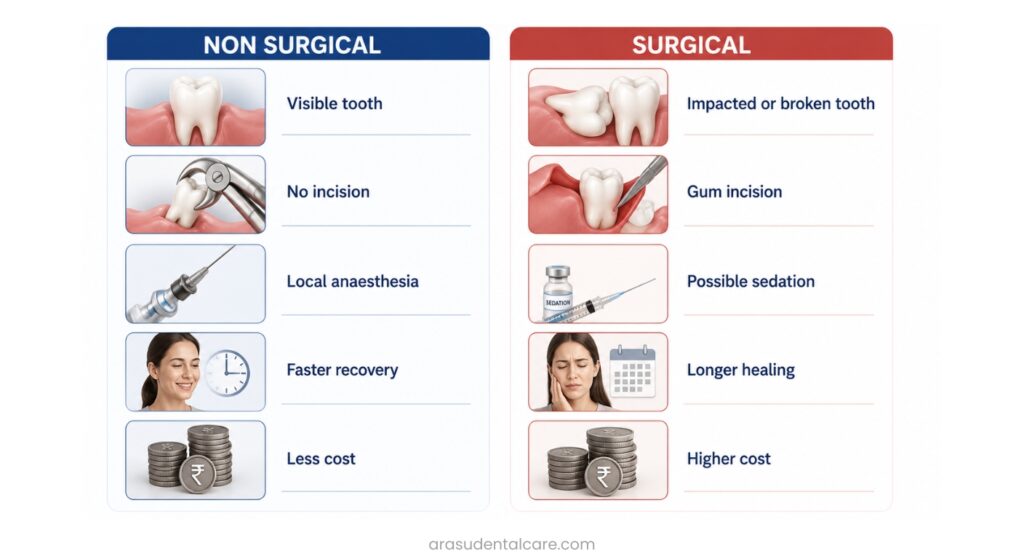
Unlike surgical extractions, this method does not involve cutting the gum, removing bone, or sectioning the tooth. It is usually completed in a single short visit under local anaesthesia.
This approach is preferred whenever the tooth structure and roots allow safe removal without surgery, as it offers faster healing and less discomfort.
When Is a Non Surgical Extraction Recommended?
Not every tooth needs surgery to be removed. Dentists usually choose the simple extraction method when the tooth is accessible and the roots are not deeply curved or fused to the bone.
Common situations where this technique is used include:
Severe tooth decay: When a cavity has destroyed too much of the tooth structure and cannot be saved with a filling, crown, or root canal. Removing the tooth helps prevent further infection and pain.
Loose teeth from gum disease: Advanced periodontal disease can weaken the bone and ligaments holding a tooth. In such cases, a gentle simple extraction is often enough.
Stubborn baby teeth: Sometimes a milk tooth does not fall out on time and blocks the permanent tooth. A quick extraction helps the adult tooth grow in the right position.
Orthodontic treatment needs: Braces or aligners may require extra space in the mouth. Removing one or two healthy teeth can help with proper alignment.
Broken or fractured teeth above the gum line: If enough of the tooth is visible and the roots are not complex, it can be lifted out without surgery.
Techniques Used in Non Surgical Tooth Extraction
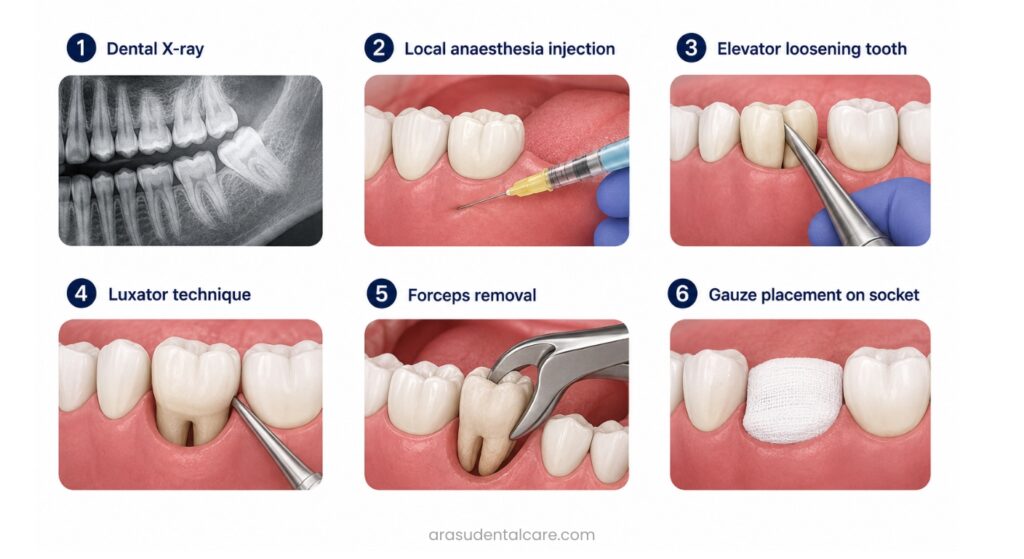
Modern dentistry follows a careful, step-by-step approach to make extractions as smooth as possible. Below are the main techniques dentists use during a non surgical extraction.
1. Pre-Extraction Assessment and Digital X-rays
Before any tooth is removed, the dentist studies the tooth, root shape, and surrounding bone. Digital X-rays or 3D imaging help plan the procedure safely.
This step also confirms whether a non surgical method is suitable or if a surgical approach is needed instead. According to the American Dental Association, proper imaging is a key part of safe tooth removal.
2. Local Anaesthesia
The dentist numbs the area around the tooth using a local anaesthetic injection. This blocks pain signals so you only feel pressure, not discomfort, during the procedure.
For patients with dental anxiety, mild sedation options may also be discussed. The goal is to keep you calm and comfortable throughout.
3. Loosening the Tooth With an Elevator
A dental elevator is a small, lever-like instrument used to gently widen the socket and break the tiny ligaments holding the tooth in place.
The dentist applies controlled pressure around the tooth, slowly loosening it before lifting. This step makes the actual removal much easier and reduces stress on the surrounding bone.
4. Luxator Technique
A luxator is a thinner, sharper instrument that slides between the tooth and the bone. It is used when the dentist wants to preserve the bone for future treatments like dental implants.
This technique is especially helpful for front teeth or any case where bone preservation matters.
5. Forceps Extraction
Once the tooth is loose enough, the dentist uses dental forceps to grip and gently rock it back and forth. This movement expands the socket and finally lifts the tooth out in one piece.
You may feel firm pressure during this stage, but no sharp pain. The whole step usually takes only a few minutes.
6. Atraumatic Extraction Technique
This is a modern, gentle method designed to protect the gum and bone as much as possible. The dentist uses specialized periotomes and fine instruments to ease the tooth out with minimal trauma.
Atraumatic extractions are often preferred when an implant or bridge is planned in the same area. Studies in the National Library of Medicine show that this approach helps maintain bone volume after extraction.
7. Socket Cleaning and Bleeding Control
After the tooth is out, the dentist cleans the socket to remove any infected tissue or debris. Sterile gauze is then placed over the area, and you will be asked to bite down gently.
This pressure helps form a healthy blood clot, which is essential for proper healing.
What to Expect During the Procedure
A non surgical extraction usually takes 15 to 45 minutes, depending on the tooth’s location and condition. Most patients are surprised by how quick and manageable it feels.
Here is a simple timeline of what happens:
Before the procedure: The dentist reviews your medical history, takes X-rays, and explains every step. You can ask any questions to feel fully prepared.
During the procedure: You will feel pressure but not pain. The dentist works gently and steadily, keeping you informed throughout.
After the procedure: You will rest for a few minutes while the bleeding settles. Aftercare instructions are then explained clearly before you go home.
Recovery and Aftercare Tips
Healing after a simple extraction is usually quick. Most people return to normal activities within 1 to 3 days. Following aftercare instructions carefully helps avoid complications.
Bite on the gauze gently: Apply steady pressure for 30 to 45 minutes to help the blood clot form. This clot is essential for proper healing.
Use a cold compress: Place an ice pack on your cheek for 10 to 15 minutes at a time during the first few hours. It helps reduce swelling and discomfort.
Stick to soft foods: Eat items like soup, yogurt, mashed potatoes, and smoothies for the first 1 to 2 days. Avoid crunchy or spicy foods that can irritate the area.
Avoid straws and smoking: Suction can dislodge the clot and cause a painful condition called dry socket. Try to avoid both for at least 48 to 72 hours.
Rinse gently with salt water: From the next day, rinse with warm salt water 2 to 3 times a day to keep the area clean. Avoid forceful swishing.
Take prescribed medication: Use any painkillers or antibiotics exactly as advised by your dentist. Do not skip doses.
Rest well: Avoid heavy exercise, lifting, or bending for the first 24 hours. Keeping your head slightly elevated while sleeping also helps.
Benefits of Non Surgical Tooth Extraction
Choosing a simple extraction, when suitable, offers several real advantages for patients:
Less invasive: No cutting, no stitches, and minimal disturbance to the surrounding tissues. This means a gentler experience overall.
Faster recovery: Most patients heal within a few days and return to normal routines quickly. Discomfort is usually mild and short-lived.
Lower cost: Simple extractions are generally more affordable than surgical ones. They also require fewer follow-up visits.
Reduced risk of complications: Because the procedure is straightforward, the chances of infection or prolonged healing are lower.
Comfortable experience: With modern anaesthesia and gentle techniques, most patients feel only pressure, not pain.
When You Should See a Dentist
Some dental issues should not be ignored, even if they seem minor. Early evaluation often allows for simpler treatment options like non surgical extraction.
You should book a dental visit if you notice:
Constant or severe tooth pain: Pain that does not go away with home care may indicate deep decay or infection. Early treatment can prevent the situation from getting worse.
A loose adult tooth: This may be a sign of advanced gum disease treatment or trauma. A dental check-up can help decide the right next step.
A broken or fractured tooth: Even painless cracks can lead to infection later. A dentist can assess whether the tooth can be saved or needs removal.
Swelling around a tooth or gum: Swelling often points to an underlying infection. Quick action can prevent the spread of bacteria.
Stubborn baby teeth in children: If a milk tooth does not fall out on time, it may block the adult tooth. A dental visit helps guide proper development.
For trusted information on when extractions are needed, the Mayo Clinic offers helpful patient resources.
Final Thoughts
A non surgical tooth extraction is one of the most straightforward procedures in modern dentistry — and with the right technique and aftercare, most patients recover quickly and comfortably. Whether the extraction is needed due to decay, gum disease, or orthodontic reasons, acting on your dentist’s advice without delay makes the process simpler and the outcome better. Every case is different, and only a proper clinical examination can confirm whether a simple extraction is the right approach for your tooth.
If you are experiencing tooth pain, a loose tooth, or have been told a tooth needs to come out, there is no benefit in waiting.
At Arasu Dental Care in Coimbatore, our team handles extractions with a gentle, patient-first approach — using modern techniques that minimise discomfort and support faster healing. Whether you need a simple extraction or guidance on what comes next, we are here to help you through every step. Book a consultation with us today and let us take care of your tooth safely and comfortably.
Frequently Asked Questions
1. Is a non surgical tooth extraction painful?
No, the procedure itself is not painful. Local anaesthesia numbs the area completely, so you only feel pressure during the extraction. Mild soreness afterwards is normal and can be managed with prescribed medicine.
2. How long does a simple extraction take?
Most non surgical extractions take between 15 and 45 minutes. The exact time depends on the tooth’s position, root shape, and overall condition.
3. How long does it take to heal after a non surgical extraction?
The gum usually heals within 1 to 2 weeks, while the underlying bone takes a few months to fully recover. Most patients return to normal activities within 2 to 3 days.
4. Can I eat after a tooth extraction?
Yes, but stick to soft, lukewarm foods for the first 24 to 48 hours. Avoid hot, spicy, or hard foods until the area starts healing.
5. What is the difference between a simple and surgical extraction?
A simple extraction removes a fully visible tooth without cutting the gum. A surgical extraction is needed for impacted, broken, or deeply rooted teeth and may involve incisions and stitches.
6. Will I need a replacement after the tooth is removed?
It depends on which tooth is extracted. Back teeth used for chewing are usually replaced with implants, bridges, or dentures to maintain function and prevent shifting.
7. Are there risks with non surgical extractions?
Non-surgical tooth extractions are generally safe and commonly performed, but like any dental procedure, they can have some risks and temporary side effects. These may include mild pain, swelling, bleeding, or discomfort for a few days after the extraction.