Hearing that you may need a tooth extraction can feel worrying for most people. The good news is that modern dentistry has made tooth extraction far more comfortable, precise, and predictable than before.
A tooth extraction is the careful removal of a tooth from its socket in the jawbone. While dentists always try to save your natural tooth first, sometimes removal becomes the safest and healthiest option for your mouth.
This guide explains the advanced types and techniques of tooth extraction in simple language. You will also learn what to expect, how recovery works, and when to consult a dentist.
What Is a Tooth Extraction?
A tooth extraction is a dental procedure where a tooth is removed from the jawbone and gum socket. It is usually done by a general dentist or an oral surgeon depending on the case.
Modern extractions are done under local anaesthesia, which means the area is fully numb during the procedure. According to the Cleveland Clinic, most simple extractions take only 30 to 60 minutes.
Why a Tooth May Need to Be Removed
Dentists recommend extraction only when other treatments cannot save the tooth. Each case is different, and the decision depends on a careful clinical and radiographic examination.
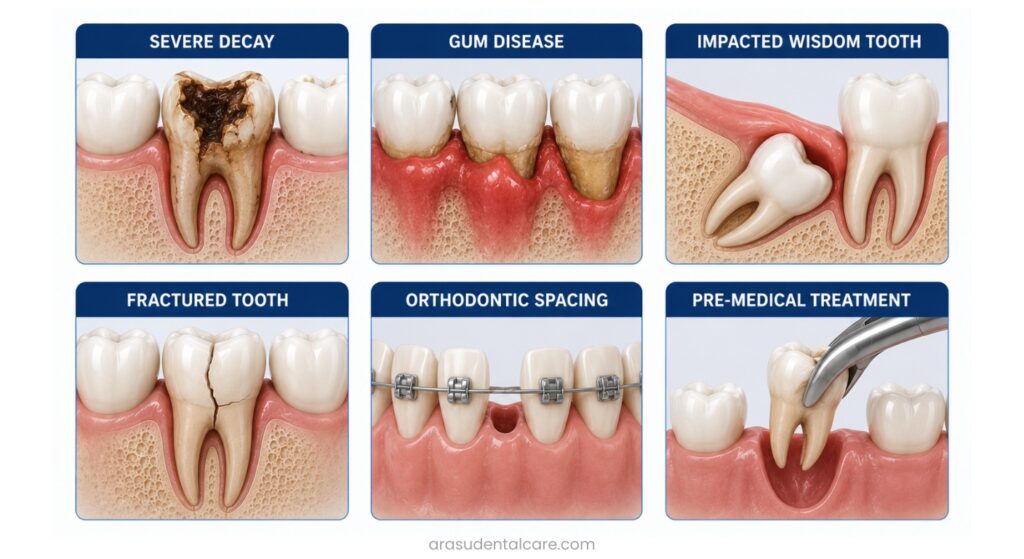
Severe tooth decay: When a cavity has reached deep into the tooth and root, restoring it with a filling or crown may no longer be possible. In such cases, removal helps prevent the infection from spreading further.
Advanced gum disease: Long-term gum disease can destroy the bone that supports your teeth. Once the tooth becomes loose beyond repair, extraction is often the safest option.
Impacted wisdom teeth: Wisdom teeth that cannot erupt properly may cause pain, swelling, or infection. Removing them helps protect the neighbouring teeth and gum tissue.
Broken or fractured teeth: A tooth fractured below the gum line may not be restorable. Extraction prevents future infection and discomfort.
Orthodontic reasons: Sometimes healthy teeth are removed to create space during braces or aligner treatment. This helps achieve a balanced bite and a straight smile.
Infection risk before medical treatment: Patients undergoing chemotherapy, radiation, or organ transplants may need certain teeth removed to avoid serious infections later.
Types of Tooth Extraction
Tooth extractions are mainly divided into two categories. The type chosen depends on the position, condition, and accessibility of the tooth.
1. Simple Extraction
A simple tooth extraction is performed on a tooth that is fully visible in the mouth. It is the most common type done by general dentists.
How it works: The dentist uses an instrument called an elevator to gently loosen the tooth, followed by forceps to remove it from the socket.
When it is used: Simple extractions are ideal for teeth damaged by decay, mild infection, or mobility caused by gum disease.
2. Surgical Extraction
A surgical tooth extraction is needed when a tooth is broken below the gum line, impacted, or has complex roots. This is usually performed by an oral surgeon.
How it works: A small incision is made in the gum to access the tooth. In some cases, a small portion of bone may be removed, or the tooth may be divided into sections for easier removal.
When it is used: Surgical extractions are common for impacted wisdom teeth, broken roots, or teeth with curved or fused roots.
Advanced Tooth Extraction Techniques in Modern Dentistry
Today, dentistry focuses on minimising trauma, preserving bone, and improving healing. Several advanced techniques have changed how extractions are performed.
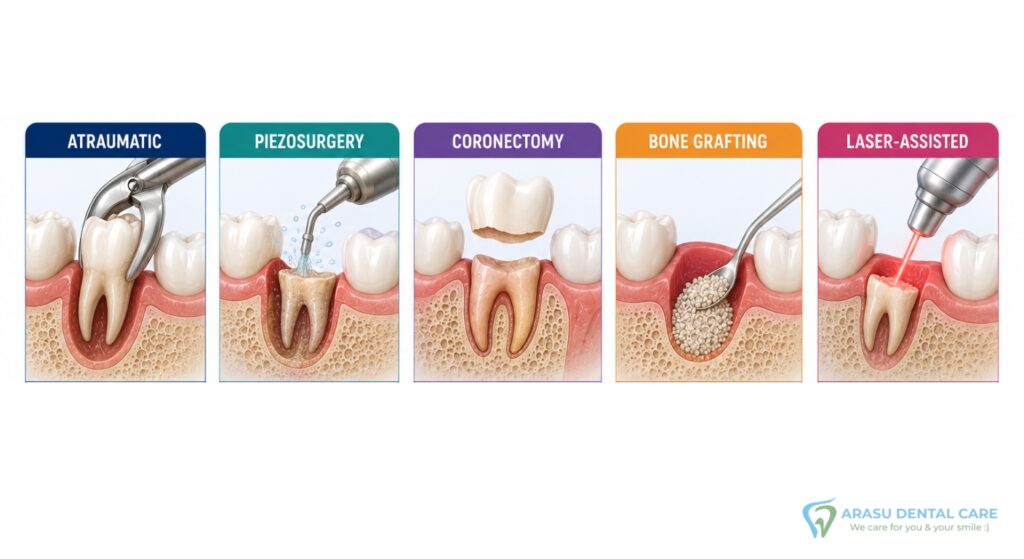
Atraumatic Extraction
Atraumatic extraction is a gentle technique designed to remove a tooth with minimal damage to the surrounding bone and gums.
Why it matters: Preserving the bone is especially important if you plan to get a dental implant later. This method uses fine instruments called periotomes and luxators instead of heavy forceps.
Piezosurgery (Ultrasonic Extraction)
Piezosurgery uses ultrasonic vibrations to cut bone precisely without damaging soft tissues.
Key benefits: It reduces bleeding, swelling, and post-operative discomfort. This technique is often used for complex surgical extractions and impacted teeth.
Coronectomy
A coronectomy is a special technique used for lower wisdom teeth that sit very close to the inferior alveolar nerve.
How it works: Only the crown of the tooth is removed, leaving the roots intact. This protects the nerve and reduces the risk of permanent numbness in the lip or chin.
Surgical Extraction with Bone Grafting
When a tooth is removed, the surrounding bone can shrink over time. To prevent this, dentists may place a bone graft inside the empty socket.
Why it helps: This is known as socket preservation and supports future implant placement. Research published by the American Dental Association shows that socket preservation improves long-term outcomes for tooth replacement.
Laser-Assisted Extraction
Some clinics now use dental lasers to support the extraction process.
The advantage: Lasers can reduce bleeding, sterilise the area, and promote faster healing of the gum tissue. However, the actual tooth removal still requires standard instruments.
What to Expect During a Tooth Extraction
Knowing what happens during the procedure can help reduce anxiety. The process is usually smooth and well-managed.
Step 1 – Examination and X-ray: Your dentist examines the tooth and takes a digital X-ray to study the root shape and surrounding structures. This helps plan the safest approach.
Step 2 – Local anaesthesia: A numbing injection is given near the tooth. You may feel pressure during the procedure, but you should not feel pain.
Step 3 – Tooth removal: Depending on the case, the dentist performs either a simple or surgical extraction using the most suitable technique.
Step 4 – Socket cleaning and closure: The socket is cleaned, and stitches may be placed if needed. A gauze pad is given to help form a blood clot.
Recovery After Tooth Extraction
Healing usually begins within the first 24 hours, and most people return to normal activities within a few days. Following aftercare instructions carefully is the key to smooth recovery.
Bite gently on gauze: This helps stop bleeding and supports clot formation. Replace the gauze as advised by your dentist.
Apply a cold compress: Place an ice pack on your cheek for 15 to 20 minutes at a time. This helps reduce swelling during the first day.
Eat soft foods: Stick to foods like curd, mashed rice, soup, and smoothies for the first few days. Avoid hot, spicy, or crunchy foods.
Avoid straws and smoking: The suction can dislodge the blood clot and cause a painful condition called dry socket. Smoking also slows healing significantly.
Maintain gentle oral hygiene: Do not rinse vigorously for the first 24 hours. After that, use warm salt water rinses to keep the area clean.
Take prescribed medication: Complete the full course of antibiotics or pain relievers as directed by your dentist.
When to Contact Your Dentist
Some discomfort and swelling are normal after extraction. However, certain symptoms need professional attention.
Severe pain after 3 days: Pain that becomes worse instead of improving may indicate dry socket or infection.
Heavy bleeding: Light oozing is normal for the first day, but continuous bleeding should be reviewed.
Fever or pus: These signs may suggest an infection that needs treatment.
Numbness lasting beyond a few hours: Persistent numbness should be evaluated to rule out nerve involvement.
Replacing a Missing Tooth After Extraction
Once the socket heals, replacing the missing tooth is important for long-term oral health. Missing teeth can lead to shifting, bite problems, and bone loss over time.
Dental implants: These are the most natural and long-lasting replacement option. They preserve the jawbone and function like a real tooth.
Dental bridges: A fixed option that uses neighbouring teeth for support. It is a good choice when implants are not preferred.
Partial dentures: Removable replacements that work well for multiple missing teeth in the same area.
Your dentist can guide you on the most suitable option based on your oral health, bone level, and personal preference.
Final Thoughts
Tooth extraction has come a long way with advanced techniques that focus on comfort, precision, and faster healing. Whether it is a simple removal or a complex surgical case, modern dentistry ensures the process is safe and well-managed.
The right treatment always depends on your individual condition, and a proper dental examination is the best way to understand your options. If you are experiencing tooth pain, swelling, or have been advised an extraction, do not delay seeking guidance.
If you are in Coimbatore and looking for expert advice on tooth extraction or replacement options, the team at Arasu Dental Care is here to help you
Frequently Asked Questions
1. Is tooth extraction painful?
Modern extractions are done under local anaesthesia, so you should not feel pain during the procedure. Mild soreness afterwards is normal and manageable with medication.
2. How long does it take to recover from a tooth extraction?
Most people feel better within 3 to 5 days. Complete healing of the socket may take a few weeks, while bone remodelling continues for several months.
3. Can I go to work the next day after a tooth extraction?
Many people return to light work within 24 to 48 hours. For surgical extractions, a day or two of additional rest is often helpful.
4. What is dry socket and how can I prevent it?
Dry socket happens when the blood clot in the extraction site is dislodged. Avoiding straws, smoking, and vigorous rinsing for the first few days helps prevent it.
5. Do I need to replace an extracted tooth immediately?
Replacement timing depends on the location and type of tooth. Your dentist may recommend waiting a few months for the bone to heal before placing an implant.
6. Are wisdom teeth always removed?
Not always. Wisdom teeth are removed only if they cause pain, infection, crowding, or other problems. A dental examination helps decide the right approach.
7. Will tooth extraction affect my face shape?
A single extraction usually does not change your face shape. However, multiple missing teeth over time can lead to bone loss, which is why timely replacement is important.
8. Is tooth extraction safe for older adults?
Yes, with proper planning. Your dentist will review your medical history and medications to ensure a safe and comfortable procedure.