If your dentist has recently mentioned a glass ionomer filling, you may be wondering what it actually does and whether it is meant to last. The simple answer is yes — glass ionomer fillings are a good choice for temporary and protective use in many dental situations.
They are widely used to seal cavities, protect sensitive areas, and support teeth that need short-term care before a permanent restoration.
This guide explains how glass ionomer fillings work, when they are recommended, and what to expect during the procedure. The goal is to help you understand the material clearly, so you can make an informed choice with your dentist.
What Is a Glass Ionomer Filling?
A glass ionomer filling is a tooth-coloured dental filling material made from a mix of silicate glass powder and a special acid. When combined, the two form a paste that bonds chemically to the tooth and slowly hardens in place.
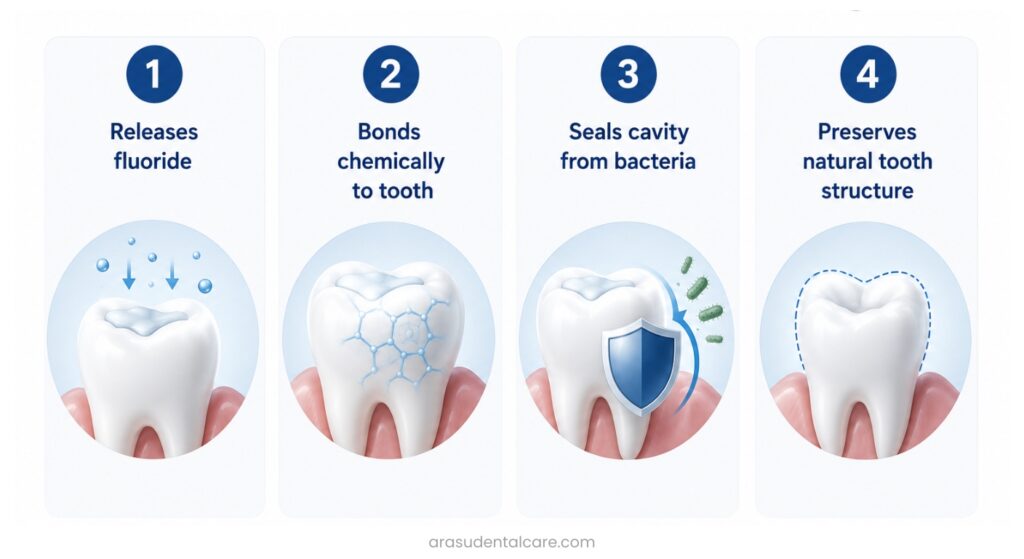
What makes this material unique is its ability to release fluoride over time. This continuous fluoride release helps protect the tooth from further decay, which is one of the main reasons dentists choose it for protective care.
According to the World Health Organization, glass ionomer cement is included in its List of Essential Medicines, showing its trusted role in modern dental care.
Are Glass Ionomer Fillings Used as Temporary Fillings?
Yes. Glass ionomer is one of the most commonly used materials when a tooth needs a short-term or protective filling. Dentists often choose it when a tooth is being prepared for a longer treatment plan.
It seals the tooth quickly, prevents bacteria from entering, and gives the tooth a stable surface until the next stage of treatment.
Common temporary uses include:
- Before a root canal procedure: A glass ionomer filling can seal the tooth between root canal visits. It keeps the inner tooth clean and protected until the final restoration is placed.
- Before a crown placement: When a tooth is being prepared for a crown, a temporary glass ionomer filling can support the tooth. It keeps the structure stable while the final crown is being made.
- For deep cavities under observation: If a cavity is close to the nerve, a dentist may use glass ionomer to protect the area. This allows the tooth to settle before deciding the next step.
- In children with primary teeth: Baby teeth do not need a filling that lasts decades. Glass ionomer offers strong short-term protection while releasing fluoride to support the developing tooth.
Read our latest blog, Advantages of Glass Ionomer Filling for a complete patients guidance
How Glass Ionomer Fillings Provide Protection
Beyond temporary use, glass ionomer fillings also offer real protective benefits. Their unique properties make them helpful in preventing further damage to a vulnerable tooth.
This is why many dentists use them in patients who are at higher risk of decay or who have weakened enamel.
Key protective benefits include:
- Continuous fluoride release: The filling slowly releases fluoride into the surrounding tooth structure. This helps strengthen enamel and lowers the chance of new decay forming around the filling.
- Strong chemical bond to the tooth: Glass ionomer bonds directly to enamel and dentin without needing extra adhesives. This tight seal helps block bacteria from entering the tooth.
- Gentle on the tooth structure: Very little drilling is needed before placement. This preserves more of the natural tooth, which is helpful for sensitive or fragile areas.
- Good for areas near the gumline: Cavities near the gum can be hard to keep dry during treatment. Glass ionomer still bonds well in slightly moist areas, making it a reliable option here.
When Do Dentists Recommend Glass Ionomer Fillings?
A glass ionomer filling is not the right choice for every cavity, but it works well in specific situations. Your dentist will decide based on the location of the tooth, the size of the cavity, and your overall oral health.
The right treatment depends on your individual case, and a dental examination is needed to confirm the best option.
Common situations where it is recommended:
- Small cavities in non-biting areas: Glass ionomer works well for small cavities on the sides of teeth or near the gumline. These areas do not face heavy chewing pressure.
- Cavities in baby teeth: Children benefit from the fluoride release and easy placement of glass ionomer. It also requires less time in the chair, which is helpful for young patients.
- Root surface cavities: When gums recede, the exposed root can develop decay. Glass ionomer is often used here because it bonds well to the root surface.
- Patients with high decay risk: People who frequently develop cavities can benefit from the continuous fluoride release. It adds an extra layer of protection over time.
- Temporary restorations: When a tooth needs a short-term filling before further treatment, glass ionomer is a reliable option.
When Glass Ionomer May Not Be the Best Choice
While glass ionomer is helpful in many cases, it is not ideal for every tooth. Knowing its limits helps set realistic expectations.
Studies published in the National Library of Medicine note that glass ionomer is generally less durable than composite filling in high-pressure areas.
Situations where another material may be better:
- Large cavities in back teeth: Molars handle strong chewing forces every day. A stronger material like composite resin or ceramic may last longer in these areas.
- Front teeth needing high aesthetics: Glass ionomer offers a good colour match, but composite resin gives a more natural finish for visible front teeth.
- Long-term restorations under heavy bite pressure: In areas with constant force, glass ionomer can wear down faster than other materials.
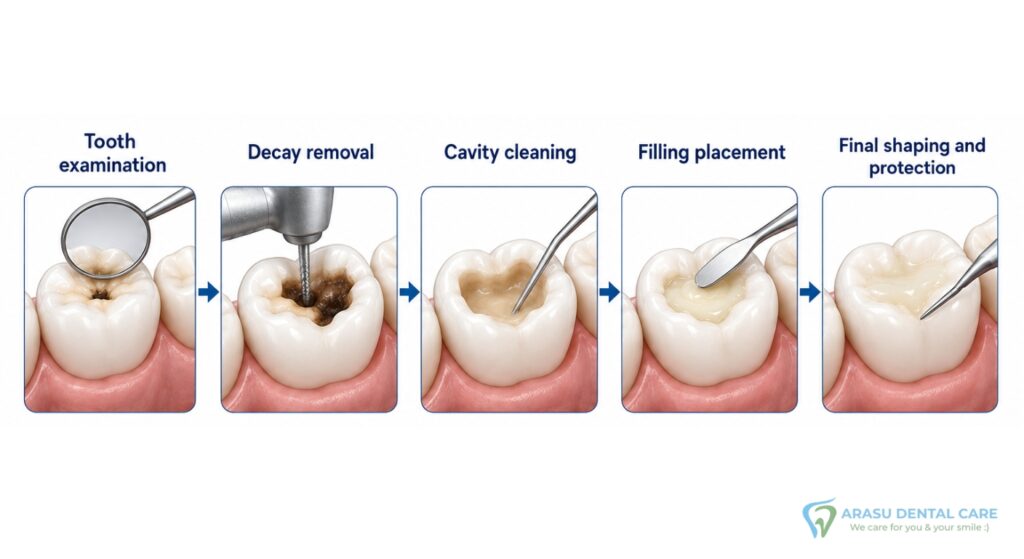
What to Expect During a Glass Ionomer Filling
The procedure is simple, comfortable, and usually completed in a single visit. Most patients are surprised at how quick and gentle it feels.
Your dentist will explain each step so you feel calm and informed throughout the process.
Step-by-step procedure:
- Examination and preparation: The dentist examines the tooth and removes the decayed area gently. Only minimal tooth structure is removed.
- Cleaning the cavity: The cavity is cleaned to make sure no bacteria remain. A mild conditioner may be used to help the material bond better.
- Placing the filling: The glass ionomer paste is mixed and placed into the cavity. It is then shaped to match the natural tooth.
- Setting and finishing: The filling sets in a few minutes, although full hardening takes about 24 hours. A protective coating may be applied on top.
- Aftercare advice: Soft foods are recommended for the rest of the day. Normal eating can usually resume the next day.
How Long Do Glass Ionomer Fillings Last?
The lifespan depends on where the filling is placed and how the tooth is used. In low-pressure areas, it can last several years, while in high-pressure areas it may need replacement sooner.
For temporary or protective use, it does its job very well during the time it is needed.
Typical lifespan estimates:
- In biting areas: Around 1 to 3 years, depending on chewing pressure.
- In non-biting areas: Often 5 years or more with good oral care.
- In baby teeth: Lasts until the tooth naturally falls out.
Recovery time and longevity may vary from person to person, so regular check-ups help monitor the filling.
Caring for Your Glass Ionomer Filling
Good oral hygiene helps the filling last longer and keeps the surrounding tooth healthy. Simple daily habits make a big difference.
Your dentist may also suggest fluoride toothpaste to support the protective effect of the filling.
Care tips:
- Brush twice daily: Use a soft brush and gentle pressure to avoid wearing the filling too quickly.
- Floss carefully: Clean around the filling daily to prevent decay from forming on the edges.
- Avoid very hard foods: Biting on ice or hard candy can crack the filling.
- Visit your dentist regularly: Routine check-ups help catch any wear early.
For more on oral care habits, the American Dental Association offers helpful patient resources.
Conclusion
Glass ionomer fillings are a trusted option for temporary and protective dental care. They seal the tooth, release fluoride, and help prevent further decay, making them especially useful for children, sensitive areas, and short-term restorations.
While they may not replace stronger materials in heavy-bite areas, they play a valuable role in protecting teeth when used in the right situations. The right choice always depends on your individual dental condition.
If you are unsure whether a glass ionomer filling is the right option for your tooth, our team at Arasu Dental Care in Coimbatore can help. Book a consultation today to get a clear diagnosis and personalised treatment guidance from our experienced dental team.
Frequently Asked Questions
1. Is a glass ionomer filling safe?
Yes, it is considered safe and biocompatible. It is well-tolerated by the gums and surrounding tissues, and the fluoride release adds extra protection.
2. Does a glass ionomer filling hurt?
The procedure is generally comfortable. Mild numbing may be used if needed, and most patients feel little to no discomfort.
3. Can I eat after getting a glass ionomer filling?
Soft foods are recommended for the first 24 hours. After that, normal eating can usually resume without trouble.
4. Is glass ionomer better than composite filling?
Both have their strengths. Glass ionomer is great for protection and fluoride release, while composite is stronger and more aesthetic for visible teeth.
5. How long does a temporary glass ionomer filling last?
It can last several months to a few years, depending on the situation. Your dentist will guide you on the right timeline.
6. Are glass ionomer fillings good for children?
Yes, they are commonly used in baby teeth. The fluoride release and easy placement make them ideal for young patients.
7. Will my glass ionomer filling match my tooth colour?
It offers a natural tooth-coloured finish, though the match may not be as precise as composite resin in highly visible areas.