If your dentist has suggested a silver filling, you may be wondering what the procedure actually involves. A silver filling, also known as an amalgam filling, is one of the oldest and most reliable ways to repair a tooth damaged by decay.
The treatment is simple, quick, and usually completed in a single dental visit. In this guide, we will explain how an amalgam filling is done step by step, so you know exactly what to expect.
This information is meant to help you feel informed and at ease before your next dental appointment.
What Is an Amalgam Filling?
An amalgam filling is a type of dental restoration made from a mix of metals. It contains silver, tin, copper, and a small amount of mercury that binds these metals together into a strong, durable material.
Because of its silver-grey colour, many patients call it a “silver filling.” Dentists have used this material for more than 150 years to restore teeth affected by cavities.
According to the U.S. Food and Drug Administration (FDA), dental amalgam is considered safe and effective for adults and children above the age of six.
When Is a Silver Filling Recommended?
Not every cavity needs an amalgam filling, but it is often the preferred choice in certain situations.
- Back teeth restorations: The molars and premolars handle most of the chewing pressure. Amalgam is strong enough to withstand this daily force without breaking.
- Large cavities: When the decay is deep or wide, amalgam offers better support than tooth-coloured materials in many cases.
- Areas hard to keep dry: Amalgam can be placed even when full moisture control is difficult, which is helpful for back teeth.
- Patients with high decay risk: For patients who get cavities often, amalgam fillings can offer long-lasting protection.
Your dentist will examine your tooth and suggest the right filling material based on your dental condition.
Step-by-Step Procedure of an Amalgam Filling
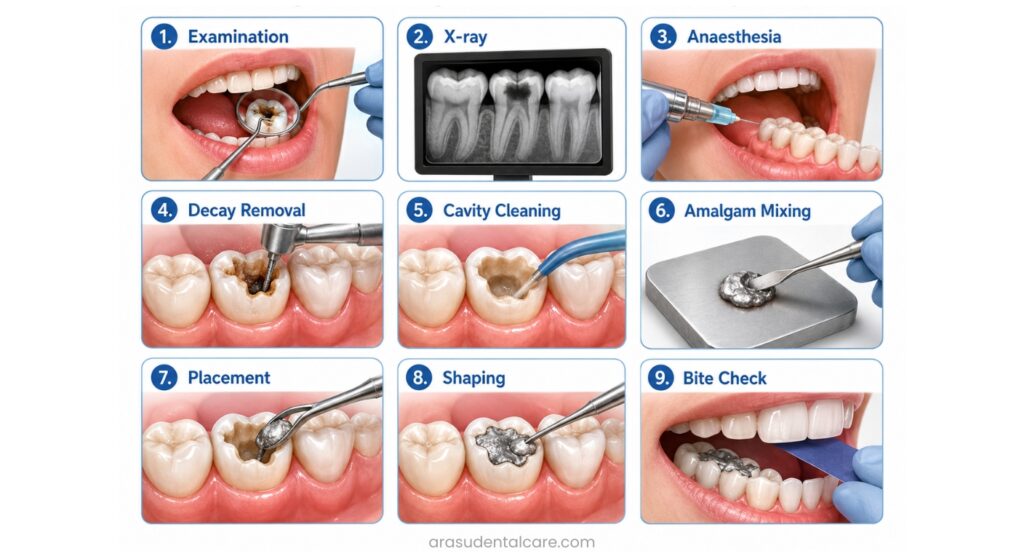
The silver filling procedure is straightforward and usually takes around 30 to 45 minutes. Here is what happens during your visit.
Step 1: Dental Examination and X-ray
Your dentist will first examine the affected tooth carefully. A dental X-ray may be taken to check the depth of the decay and the health of the surrounding bone.
This step helps the dentist plan the treatment accurately and confirm that a filling is the right option for you.
Step 2: Numbing the Area with Local Anaesthesia
To keep you comfortable, your dentist will apply a numbing gel and then give a local anaesthetic injection near the tooth.
Within a few minutes, the area becomes numb. You may feel slight pressure during the procedure, but no sharp pain.
Step 3: Removing the Tooth Decay
The dentist uses a small dental drill or hand instruments to remove the decayed portion of the tooth. This step is important to stop the decay from spreading further.
Only the damaged part is removed, while the healthy tooth structure is preserved as much as possible.
Step 4: Cleaning and Shaping the Cavity
Once the decay is removed, the cavity is cleaned thoroughly to remove any bacteria or debris. The dentist then shapes the cavity so the amalgam can be packed in firmly.
A well-shaped cavity helps the filling stay in place for many years.
Step 5: Mixing the Amalgam Material
The amalgam is prepared in a sealed capsule that contains liquid mercury and a powdered metal alloy. This capsule is placed in a special machine called an amalgamator.
The machine mixes the materials within seconds, forming a soft, putty-like material ready for placement.
Step 6: Placing the Amalgam in the Tooth
The dentist carefully packs the soft amalgam into the prepared cavity in small layers. Each layer is pressed firmly so there are no air gaps inside.
This careful packing is what gives the filling its strength and long-lasting nature.
Step 7: Shaping and Carving the Filling
While the material is still soft, the dentist shapes it to match the natural anatomy of your tooth. The grooves and curves of the chewing surface are recreated for proper bite and function.
This step makes sure your tooth feels natural when you bite or chew.
Step 8: Checking Your Bite
Your dentist will ask you to bite down gently to check how the filling feels. If any spot feels high or uneven, small adjustments are made.
A balanced bite is important to avoid discomfort or pressure on the new filling.
Step 9: Polishing the Filling
In many cases, the filling is polished during the same visit or in a follow-up appointment. Polishing gives the filling a smooth surface and helps prevent staining or plaque buildup.
The amalgam reaches its full strength within about 24 hours.
What to Expect After the Procedure
Most patients return to their normal routine soon after the filling is placed. However, a few simple care tips help the filling settle well.
- Avoid chewing for the first few hours:Wait until the numbness wears off completely before eating, so you do not bite your cheek or tongue.
- Stay away from very hard foods for 24 hours:The amalgam needs time to reach full hardness. Soft foods are a safer choice during this period.
- Mild sensitivity is normal: You may feel slight sensitivity to hot or cold for a few days. This usually settles on its own.
- Maintain good oral hygiene:Brush twice a day and floss daily to keep the filling and surrounding teeth healthy.
If discomfort continues for more than a week or your bite feels uneven, contact your dentist for a quick check.
Benefits of Amalgam Fillings
Silver fillings remain a trusted option for many patients because of their reliable performance.
- Strong and durable: Amalgam fillings can last 10 to 15 years or longer with proper care, making them ideal for back teeth.
- Cost-effective: Compared to tooth-coloured fillings, amalgam is usually more affordable, which makes it accessible to more patients.
- Less moisture-sensitive: Amalgam works well even in areas where complete dryness is difficult to maintain.
- Time-tested material: With over a century of clinical use, amalgam has a long record of safety and effectiveness, as supported by the American Dental Association.
Are Silver Fillings Safe?
This is one of the most common questions patients ask. The mercury in amalgam is bound tightly within the metal mixture, which makes the material stable inside the tooth.
Major health organizations, including the FDA and the World Health Organization, have reviewed the available evidence and consider amalgam fillings safe for most people.
However, the FDA suggests that pregnant women, nursing mothers, children under six, and people with mercury allergy may consider alternative materials. A consultation with your dentist can help you decide what suits you best.
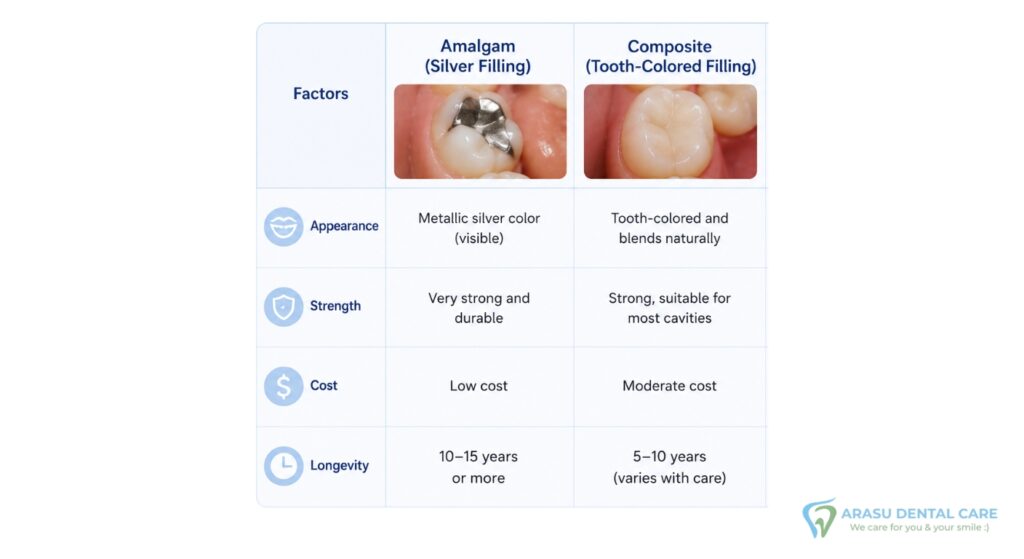
Amalgam Fillings vs Tooth-Coloured Fillings
Both options have their own strengths, and the right choice depends on your specific case.
- Appearance: Tooth-colored fillings blend with the natural tooth, while amalgam has a silver-grey shade.
- Strength: Amalgam is generally stronger and better suited for molars that handle heavy chewing.
- Cost: Amalgam is usually more affordable than composite or ceramic fillings.
- Longevity: Amalgam fillings often last longer, though modern composites have improved significantly.
Your dentist will help you choose the option that fits your dental needs, comfort, and budget.
When to See a Dentist
It is always better to treat tooth cavity treatment early before it leads to bigger problems.
- Visible holes or dark spots on teeth: These are early signs of decay that often need a filling.
- Tooth sensitivity to hot, cold, or sweet foods: This may indicate that the decay has reached the inner layers of the tooth.
- Pain while chewing: Discomfort on biting can signal a cavity or a damaged filling.
- Rough edges on a tooth: A broken or chipped tooth may need restoration to prevent further damage.
A timely dental examination can help identify the exact cause and the right treatment for your case.
Conclusion
A silver or amalgam filling is a simple, effective, and time-tested way to restore a tooth damaged by decay. The procedure is quick, comfortable, and gives long-lasting results when done by an experienced dental team.
Choosing the right filling depends on your tooth condition, the size of the cavity, and your personal preference. A proper dental examination is the best way to understand which option suits you.
If you have a cavity or are unsure which filling material is right for you, our team at Arasu Dental Care, Coimbatore can help guide you. Book a consultation today to get a clear, comfortable, and personalised treatment plan for your smile.
Frequently Asked Questions (FAQs)
1. How long does an amalgam filling take?
The procedure usually takes about 30 to 45 minutes for a single tooth. Larger cavities or multiple fillings may take a little longer.
2. Is the amalgam filling procedure painful?
The procedure is done under local anaesthesia, so you should not feel pain. Mild pressure or vibration during drilling is normal.
3. How long do silver fillings last?
With good oral hygiene and regular dental check-ups, amalgam fillings can last 10 to 15 years or even longer.
4. Can I eat right after getting a silver filling?
It is best to wait until the numbness wears off. Avoid hard or sticky foods for the first 24 hours to allow the filling to set fully.
5. Why does my tooth feel sensitive after the filling?
Mild sensitivity to temperature is common for a few days. If it lasts more than a week or feels severe, visit your dentist for a check-up.
6. Should I replace my old silver fillings?
If your old filling is intact and there is no decay underneath, replacement is usually not needed. Your dentist can guide you based on a proper examination.
7. Are amalgam fillings safe for children?
The FDA suggests considering alternative materials for children under six. For older children, your dentist will recommend the most suitable option.
8. Can amalgam fillings cause allergies?
Allergic reactions to amalgam are rare, affecting less than 1% of patients. If you have a known metal allergy, inform your dentist beforehand.