Missing one or more teeth can affect how you eat, speak, and smile. Among the many options available today, metal dental bridges remain one of the most trusted choices for replacing missing teeth. They are known for their strength, long lifespan, and reliable performance, especially in the back of the mouth where chewing pressure is high.
At Arasu Dental Care, we often guide patients through the different types of dental bridges so they can make an informed decision. This article explains what a metal dental bridge is, the types available, their benefits, and what you can expect during treatment.
What Is a Metal Dental Bridge?
A metal dental bridge is a fixed dental restoration made entirely or mostly of metal alloys. It is used to replace one or more missing teeth by anchoring artificial teeth to the natural teeth on either side of the gap.
Metal bridges are valued for their durability and resistance to fracture. They are often recommended for back teeth, where strength matters more than appearance.
According to the American Dental Association, dental bridges help restore chewing function, maintain facial structure, and prevent neighboring teeth from drifting into the empty space.
Parts of a Dental Bridge
Understanding the basic parts of a bridge can help you follow the treatment process better.
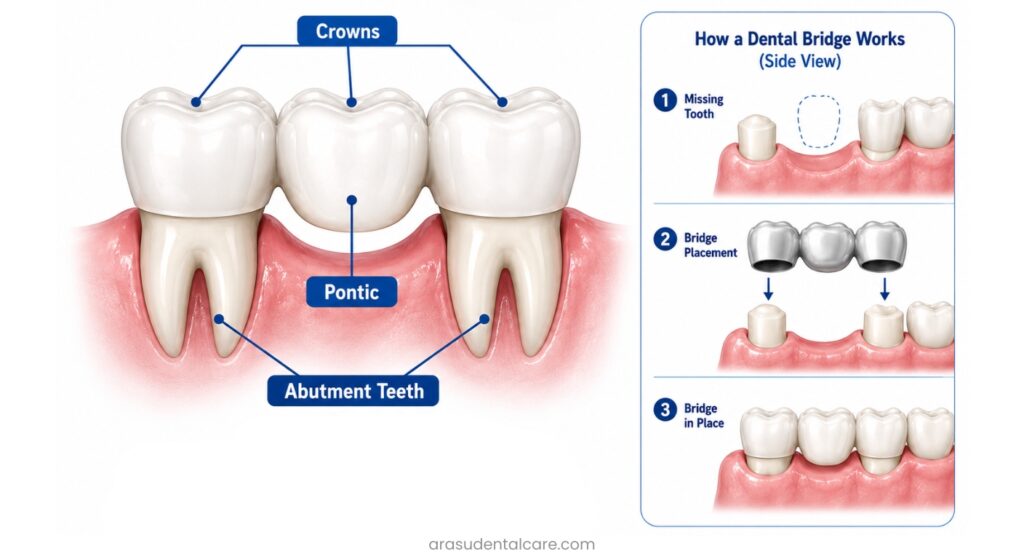
- Abutments: These are the natural teeth on either side of the gap that support the bridge. They are shaped to receive dental crowns that hold the bridge in place.
- Pontics: These are the artificial teeth that fill the gap left by the missing tooth. They are connected to the abutment crowns to form a single unit.
- Crowns: These caps cover the abutment teeth and act as the anchors for the bridge. They are cemented in place for long-term stability.
Types of Metal Dental Bridges
Different types of metal bridges are used depending on the location of the missing tooth, the condition of nearby teeth, and your overall oral health.
1. Full Metal Bridge
A full metal bridge is made entirely of metal alloys such as nickel-chromium, cobalt-chromium, or gold alloy. It is the strongest type of bridge and is mostly used for back teeth where chewing forces are high.
The main advantage is its long lifespan and resistance to wear. However, because of its metallic color, it is not preferred for front teeth.
2. Porcelain-Fused-to-Metal (PFM) Bridge
A PFM bridge has a metal base covered with a tooth-colored porcelain layer. This combination offers the strength of metal and the natural look of porcelain.
PFM bridges are one of the most commonly used dental bridges because they balance strength and appearance. They work well for both front and back teeth.
3. Gold Alloy Bridge
Gold alloy bridges are made with a mix of gold and other metals. They are gentle on opposing teeth, highly durable, and rarely cause allergic reactions.
Though gold bridges are less common today due to cost and appearance, they are still chosen by patients who prefer long-lasting, biocompatible materials.
4. Metal Cantilever Bridge
A cantilever bridge is used when only one natural tooth is available next to the gap. The artificial tooth is supported from one side only.
Because of its design, this bridge is usually placed in areas with less chewing pressure. Your dentist will check if your supporting tooth is strong enough for this option.
5. Implant-Supported Metal Bridge
This type uses dental implants instead of natural teeth for support. It is often recommended when several teeth are missing in a row.
Implant-supported bridges offer excellent stability and help preserve the jawbone over time. Treatment usually takes a few months as the implants need time to fuse with the bone.
Benefits of Metal Dental Bridges
Metal dental bridges offer many practical advantages, especially for patients who need a strong and lasting solution.
- Long Lifespan: A well-maintained metal bridge can last 10 to 15 years or even longer. This makes it a reliable choice for long-term tooth replacement.
- High Strength and Durability: Metal alloys can handle strong chewing forces without cracking. This is why they are often used for molars and back teeth.
- Restores Chewing Function: A bridge helps you bite and chew comfortably again. Many patients notice an improvement in their eating habits within a few days.
- Prevents Teeth Shifting: Missing teeth can cause nearby teeth to drift into the gap. A bridge keeps your teeth in their correct position and maintains your bite alignment.
- Supports Facial Structure: Tooth loss can change the shape of your face over time. A bridge helps maintain natural facial contours and prevents sagging.
- Faster Treatment Than Implants: Most bridges can be completed in two to three visits. This is helpful for patients who want quicker results than implant surgery allows.
- Cost-Effective Option: Compared to implants, metal bridges are often more affordable while still providing strong, lasting results.
When Is a Metal Dental Bridge Recommended?
A metal bridge may be suitable in several situations. Your dentist will examine your mouth and suggest the right option for you.
- Missing back teeth: Where strength is more important than appearance.
- Healthy supporting teeth: Natural teeth on both sides of the gap that are strong enough to hold the bridge.
- Patients with heavy bite force: People who grind or clench teeth may benefit from the durability of metal.
- Budget-conscious patients: Those looking for a reliable yet affordable replacement option.
A proper dental examination is needed to confirm whether a metal bridge is the right choice for your specific case.
The Dental Bridge Procedure: What to Expect
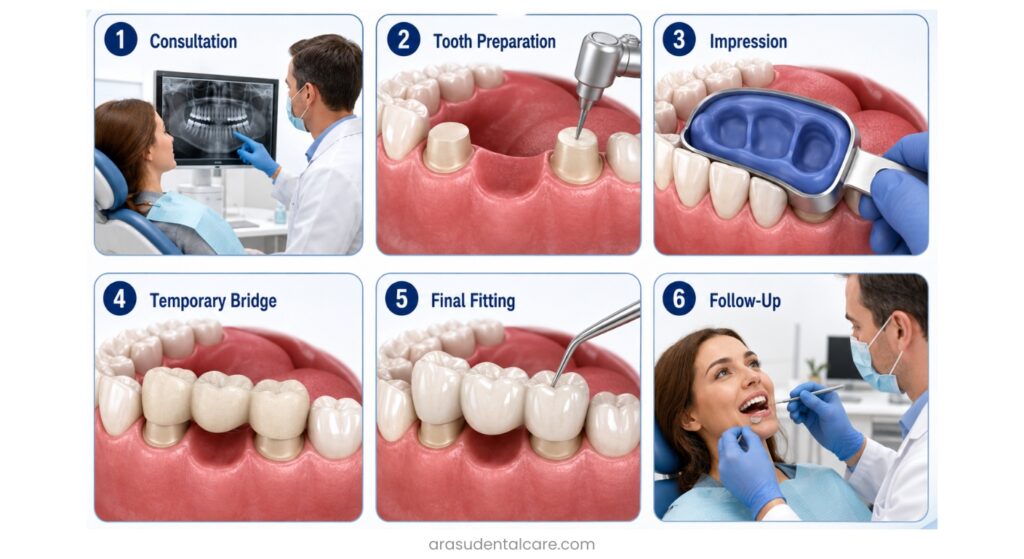
Getting a dental bridge usually involves two or three visits. Here is a simple overview of the dental procedure steps.
- Initial Consultation: Your dentist will examine your teeth and gums, take X-rays, and discuss your options. Any issues like decay or gum disease will be treated first.
- Tooth Preparation: The abutment teeth are gently reshaped to make room for the crowns. A dental impression is then taken to design the bridge.
- Temporary Bridge: A temporary bridge is placed to protect the prepared teeth while the final bridge is being made in the lab.
- Final Placement: Once ready, the permanent bridge is checked for fit and comfort. It is then cemented in place.
- Follow-Up: A short follow-up visit may be scheduled to make sure your bite feels right and the bridge is comfortable.
Caring for Your Metal Dental Bridge
Good oral hygiene helps your bridge last longer and keeps the surrounding teeth and gums healthy.
- Brush Twice Daily: Use a soft-bristled toothbrush and fluoride toothpaste to keep your bridge and natural teeth clean.
- Floss Carefully: Use floss threaders or interdental brushes to clean under the bridge. This helps remove food particles and plaque.
- Avoid Very Hard Foods: Try not to chew on ice, hard candies, or bones, as they may damage the bridge.
- Regular Dental Check-Ups: Visit your dentist every 6 months for cleaning and to check the condition of your bridge.
For more guidance on oral hygiene, you can refer to the World Health Organization’s oral health resources.
Possible Drawbacks to Consider
While metal bridges offer many benefits, it is fair to consider a few limitations.
- Appearance: Full metal bridges are not tooth-colored, so they may not suit front teeth.
- Tooth Reshaping: Healthy teeth next to the gap need to be filed down, which cannot be reversed.
- Possible Sensitivity: Some patients may feel mild sensitivity after the procedure, which usually settles in a few days.
Your dentist will explain these factors clearly during your consultation so you can decide what suits you best.
Final Thoughts
A metal dental bridge is a reliable and time-tested solution for replacing missing teeth. It offers strength, durability, and improved chewing function, making it a smart choice for many patients, especially for back teeth.
The right type of bridge depends on your oral health, the position of the missing tooth, and your personal preferences. A proper dental examination is the best way to know which option suits you.
If you are in Coimbatore and considering a dental bridge, the team at Arasu Dental Care can help you understand your options clearly and guide you toward the right treatment. Book a consultation today to take the first step toward restoring your smile with confidence.
Frequently Asked Questions (FAQs)
1. How long does a metal dental bridge last?
With proper care, a metal dental bridge can last 10 to 15 years or longer. Regular check-ups help extend its lifespan.
2. Is the procedure painful?
The procedure is done under local anesthesia, so it is not painful. Mild soreness may occur for a few days after treatment.
3. Can I eat normally with a metal bridge?
Yes, once the bridge is fitted and adjusted, you can eat most foods comfortably. It is best to avoid very hard or sticky foods at first.
4. Are metal bridges safe?
Yes, the metal alloys used in dental bridges are safe and tested for dental use. Allergic reactions are rare but should be discussed with your dentist.
5. How much does a metal dental bridge cost?
The cost varies based on the type of metal, the number of teeth being replaced, and the complexity of the case. Your dentist can give you an estimate after examination.
6. Can a metal bridge be replaced with a tooth-colored one later?
Yes, if needed, a metal bridge can be replaced with a porcelain or zirconia bridge in the future. Your dentist will guide you based on your dental condition.
7. Will a metal bridge affect my speech?
Most patients adjust quickly and speak normally within a few days. Any temporary changes usually settle as you get used to the bridge.
8. Is a metal bridge better than a dental implant?
Both options have their own benefits. Bridges are quicker and more affordable, while implants last longer and protect the jawbone. The right choice depends on your individual case.