Seen early, a loose tooth can often be saved
Loose Teeth Treatment in Coimbatore
A tooth that moves when you touch it or shifts when you bite is telling you something — and in most cases it can still be saved if you act early. At Arasu Dental Care, our first job with a loose or shaky tooth is to find out why it's moving, then treat that cause so the tooth firms back into place instead of being pulled out. Depending on what we find, that may mean a deep clean to settle the gum, splinting the tooth to steady it while it heals, or gum surgery for advanced cases. We treat mobile teeth at both our Coimbatore branches, seven days a week.
Open all seven days, 10:00 AM – 8:30 PM · R.S. Puram +91 88380 22157 · Saibaba Colony +91 74491 88777
Medically reviewed by the Arasu Dental Care clinical team · Last reviewed July 2026
Worried a tooth is coming loose? The sooner we see it, the more we can save. Call R.S. Puram on +91 88380 22157 or Saibaba Colony on +91 74491 88777 — open every day, 10:00 AM to 8:30 PM.
Four kinds of loose tooth
Is your tooth actually loose — and can it be saved?
Some movement has an obvious fix; some is a warning that the bone around the tooth is disappearing. What we can do depends on which of these is happening to you:
Which of these sounds like your tooth?
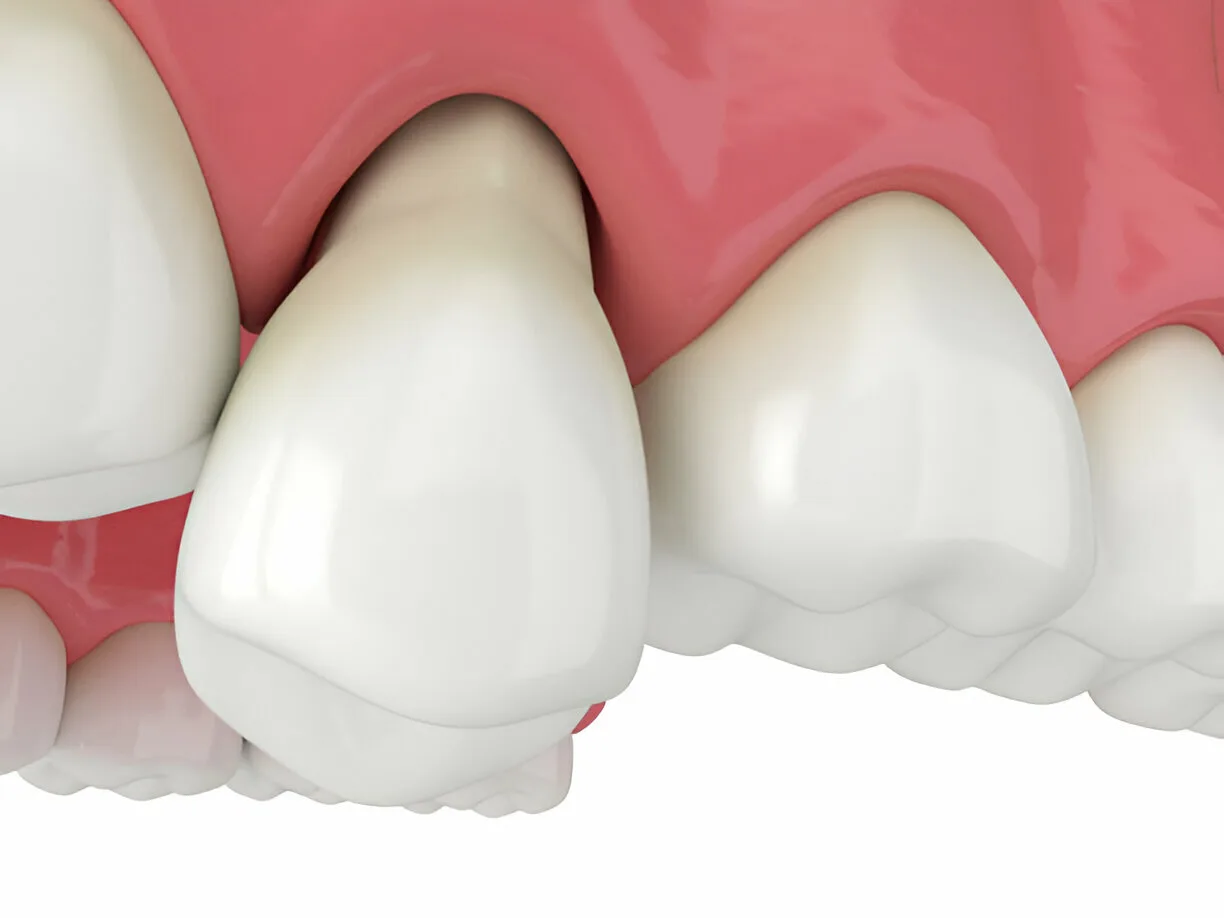
- A tooth that has slowly become wobbly in an adult mouth — this is usually gum disease loosening the tooth's foundation. Caught before too much bone is lost, these teeth often tighten again once we treat the gum. This is the most common reason adults come to us with a loose tooth, and the most treatable.
- A tooth knocked loose by a fall, blow or biting something hard — if the tooth is still in its socket, splinting it to the firm teeth beside it for a few weeks often lets the ligament heal and the tooth re-tighten.
- A tooth that feels loose and also aches, throbs or has a gum boil — this points to infection around the root, which we treat directly. Come in quickly; this is the group most at risk of losing the tooth.
- Teeth that feel loose because you clench or grind — the fix here is protecting the bite, not the gum, and the teeth usually settle once the grinding is managed.
Being honest about the limit: a tooth that is severely loose because most of its supporting bone is already gone may not be saveable — and holding on to it too long can cost you the bone we'd need for a good replacement later. Part of our job is telling you plainly which of these you're in. A wobbly baby tooth in a child is normal and almost never needs treatment; that's our children's dentistry team's area.
Timing decides the outcome
Why a loose tooth shouldn't wait
Gum disease is the leading reason adult teeth loosen and, left alone, fall out — and it is extremely common in India. By the time a tooth is visibly mobile, the disease has usually been quietly working for a while. The movement itself doesn't reverse on its own — but the bone loss driving it can be halted when we step in, which is exactly why timing decides whether the tooth stays or goes.
Around half of Indian adults have periodontal (gum) disease — pooled research across Indian studies puts it at about 51%, with the severe, bone-destroying form affecting close to one in five. General research figures; individual risk varies.
Matched to the cause, least invasive first
How we treat a loose tooth at Arasu Dental Care
There's no single "loose tooth procedure" — we match the treatment to the cause, starting with the least invasive option that will work. Most patients need one or two of these, not all of them.
Deep cleaning to settle the gum
The usual first step when gum disease is the cause
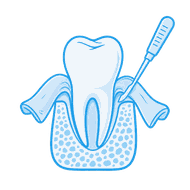
When gum disease is the cause, we start by removing the hardened plaque and tartar from under the gum line — a deep clean, also called scaling and root planing. This lets the inflamed gum tighten back against the tooth and stops the bone loss from advancing. For many early-to-moderate cases, this alone is enough to firm the tooth up. It's the same scaling and deep cleaning our team does routinely, done thoroughly and under numbing so it stays comfortable.
Splinting — steadying the tooth while it heals
Loose teeth splinting in Coimbatore — hidden from the front, no drilling
If a tooth is loose enough that biting is a problem, we can splint it — bonding a thin, tooth-coloured support across the backs of the loose tooth and its firm neighbours so they share the load. You can eat and clean normally, and it isn't visible from the front. Splinting is how we buy a shaky tooth time to re-stabilise after gum treatment or a knock. It's worth being straight about what a splint does and doesn't do — see the honest note below.
Gum (flap) surgery for advanced cases
When deep pockets put the tooth's support at risk
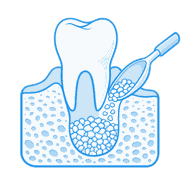
When the pockets are deep and a cleaning can't reach the tartar at the bottom, we lift the gum back gently, clean the root surfaces directly, and secure it — dental flap surgery. Reducing those deep pockets gives the tooth its best chance of holding. Where bone has been lost, grafting to rebuild support may be discussed as part of the plan.
Treating an infection, or replacing a tooth that can't be saved
Root canal for infection · replacement planned before bone is lost
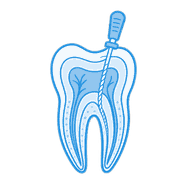
If the looseness comes from infection at the root, a root canal clears it and the tooth is then restored. And if a tooth genuinely can't be kept, we'll tell you — and move straight to planning a replacement such as a dental implant or bridge, ideally before bone is lost, so you're never just left with a gap.
Periodontist · Gum Care, Flap Surgery & Laser-Assisted Gum Work
Leads the gum care behind most loose-tooth cases — deep cleaning, splinting decisions and flap surgery — with a focus on saving teeth wherever they can be saved. View profile
Straight talk
What splinting and treatment realistically achieve
Splinting a loose tooth is genuinely useful, and we want you to understand it correctly rather than over-sell it. Research on periodontally weakened teeth is consistent: splinted mobile teeth survive well and are not at higher risk of being lost than firm teeth in patients who keep up their gum maintenance. What splinting does is stabilise and retain the tooth and make it comfortable to use. What it doesn't do on its own is regrow lost bone or reverse the gum disease — that's why a splint always goes alongside treating the cause, not instead of it.
So the realistic picture is this: gum disease can be controlled and stopped from getting worse, and a loose tooth caught in time can often be steadied and kept for years — but it depends on how much support is left and on keeping up regular maintenance cleanings afterwards. We'll give you an honest read of your particular tooth's chances rather than a promise, and results vary from person to person.
Splints holding at around 74% at three years before needing a repair, in one long-term study of periodontally weakened teeth — with splinted teeth surviving no worse than firm teeth in patients who kept up maintenance. Published research; results vary by case.
Loose teeth treatment cost
Loose teeth treatment cost in Coimbatore
Because a loose tooth is treated by whatever is causing it, the cost depends on which treatment you actually need — a deep clean sits at one end, gum surgery at the other. To give you a realistic picture, here is what the individual treatments cost at Arasu Dental Care.
| Treatment | Cost at Arasu (₹) | When it's needed |
|---|---|---|
| Consultation + assessment | ₹300 – ₹500 | First visit, to find the cause |
| X-ray (IOPA / OPG) | ₹200 – ₹600 | To check remaining bone support |
| Deep cleaning (scaling & root planing) | ₹12,000 – ₹15,000 | Gum-disease cases — the usual first step |
| Tooth splinting | Quoted after assessment | To steady a mobile tooth while it heals |
| Gum / flap surgery (per site) | Quoted after assessment | Advanced cases with deep pockets |
| Tooth extraction (if unsaveable) | ₹1,500 – ₹3,500 | Only when the tooth can't be kept |
Prices are subject to an individual consultation and depend on how many teeth are involved and the extent of gum treatment needed. We give you the full cost in writing before treatment starts, and we accept cash, UPI, cards, and EMI options.
Want to know what your loose tooth will actually cost to treat?It starts with a consultation and an X-ray so we can see the cause. Call +91 88380 22157 (R.S. Puram) or +91 74491 88777 (Saibaba Colony).
Book a consultationWhy Arasu
Why patients with loose teeth choose Arasu Dental Care
A loose tooth often needs more than one kind of dentist — the gum specialist to treat the cause, sometimes the endodontist for infection, and the implant team if it truly can't be saved. At Arasu Dental Care all of them are under one roof, so your tooth is assessed and treated by the right hands without being referred across the city.
Gum care led by a periodontist
Our gum care is led by , who handles our flap surgery and laser-assisted gum work — with a focus on saving teeth wherever they can be saved.
Honest advice on the tooth's chances
You get a clear read on whether the tooth can be kept — and if it can't, we say so plainly rather than draw it out, so the replacement can be planned before bone is lost.
A written plan and cost up front
The full treatment plan and cost in writing before we begin — you decide the pace, and what you're quoted is what you pay.
Every specialist under one roof
Periodontist, endodontist and implant team in-house at both branches, open every day 10:00 AM – 8:30 PM — you move between them without changing clinics. Meet them on our doctors page.
Book an assessment for your loose tooth
The earlier we see a mobile tooth, the more likely we are to save it
Walk in or book at either Coimbatore branch: R.S. Puram — 129, W Sambandam Road, +91 88380 22157 · Saibaba Colony — 160, NSR Road, +91 74491 88777 · Open Monday–Sunday, 10:00 AM – 8:30 PM · WhatsApp +91 96007 56297.
FAQs
Loose teeth: your questions answered
A tooth loosened by early gum disease often does firm back up once we remove the tartar under the gum and the inflammation settles — but it won't do that by itself while the cause is still there. A tooth loosened by a knock can re-tighten if we splint it in time. The one thing that rarely helps is waiting, so it's worth having it checked early.
Treat it as urgent, especially if it also aches, throbs, or there's swelling or a gum boil — that suggests infection and the tooth is at real risk. Come in as soon as you can. Even without pain, a slowly wobbling adult tooth means the supporting bone is being lost, and the sooner we act the more of the tooth's foundation we can protect. We're open all seven days.
A deep cleaning and splinting are done with the area numbed and are comfortable for most people; splinting involves no drilling of the tooth. Gum surgery is also done under local anaesthetic, with a manageable recovery afterwards. We'll talk you through what each step feels like before we start.
It's a way of steadying a loose tooth by bonding a thin support across the backs of it and the firm teeth on either side, so they share the biting force. It's tooth-coloured and hidden from the front, you can eat and clean around it, and it gives a shaky tooth time to re-stabilise. It stabilises and holds the tooth — it works alongside treating the gum, not instead of it.
In patients who keep up their maintenance cleanings, splinted teeth survive well — long-term studies show them lasting for years and holding no worse than firm teeth, with splints staying intact at around 74% at three years before any repair. How long your tooth lasts depends mainly on how much bone support it started with and on regular upkeep afterwards. Results vary from case to case.
If too much bone is gone and the tooth truly can't be kept, we'll tell you honestly rather than draw it out — because holding a hopeless tooth too long costs you the bone needed for a good replacement. We'd then plan a replacement such as a dental implant or bridge, ideally before that bone is lost.
Not necessarily, but a loose tooth from gum disease is a signal to check the rest, since the same process can be quietly affecting other teeth. When you come in, we assess your whole mouth, not just the one tooth, so we can protect the others before they start to move.
Medical disclaimer: this page is general information, not a diagnosis. Statistics reflect published dental research, not a promise of individual outcomes — results vary. Please consult our dentists for a personalised assessment.
The sooner we see it, the more we can save
One consultation tells you the cause, the treatment and the exact cost
Examination, X-ray, and a written estimate — before anything is decided. Open Monday to Sunday, 10:00 AM – 8:30 PM · WhatsApp +91 96007 56297.
R.S. Puram (main branch)
Saibaba Colony
More From Arasu