If your child has a deep cavity or constant tooth pain, your dentist may recommend a pulpectomy, often called a children’s root canal. A pulpectomy is a gentle dental procedure that removes infected pulp from a baby tooth to save it from further damage.
Many parents feel worried when they hear the words “root canal” for a child. The good news is that this treatment is safe, well-established, and helps preserve your child’s natural tooth until it falls out at the right age.
In this guide, we will explain what a pulpectomy is, when it is needed, how the procedure works, what it costs, and how you can support your child through it.
What Is a Pulpectomy?
A pulpectomy is a dental treatment that removes all the infected or damaged pulp from inside a baby tooth. The pulp is the soft inner tissue that contains nerves and blood vessels.
Once the pulp is removed, the tooth is cleaned, disinfected, and filled with a special material that the body can absorb naturally as the baby tooth falls out.
According to the American Academy of Pediatric Dentistry, pulpectomy is the recommended treatment for primary teeth with irreversible pulp infection or pulp necrosis when the tooth can still be restored.
How It Differs From an Adult Root Canal
A pulpectomy is similar to an adult root canal, but with important differences. The filling material used in baby teeth is resorbable, meaning it dissolves naturally as the permanent tooth pushes through.
In adults, the canals are sealed permanently with non-resorbable material and topped with a crown for long-term use.
Why Do Children Need a Pulpectomy?
Many parents ask why a baby tooth needs treatment when it will eventually fall out. The truth is that baby teeth play an important role in your child’s overall development.
Common Reasons for Pulpectomy in Kids
- Deep tooth decay: When a cavity reaches the pulp, the infection can spread quickly and cause severe pain. A pulpectomy stops the infection before it damages surrounding tissues.
- Dental trauma or injury: A fall or knock can crack a tooth and expose the pulp. If left untreated, bacteria can enter and cause infection inside the tooth.
- Dental abscess or swelling: When pus forms around the tooth root, the pulp is usually already infected. Removing the pulp helps clear the infection and relieve pain.
- Pulp necrosis (dead pulp): Sometimes the pulp dies due to long-standing decay or trauma. A pulpectomy is needed to clean out the dead tissue and prevent further problems.
Why Saving the Baby Tooth Matters
Baby teeth do more than chew food. They guide permanent teeth into the right position, support clear speech, and help your child feel confident while smiling.
Losing a baby tooth too early can lead to crowding, crooked permanent teeth, and chewing difficulties. A study published in the Journal of Dental Sciences confirms that preserving primary teeth through pulpectomy supports healthy oral development.
Signs Your Child May Need a Pulpectomy
Children may not always describe dental pain clearly. As a parent, watching for early signs can help you seek timely care.
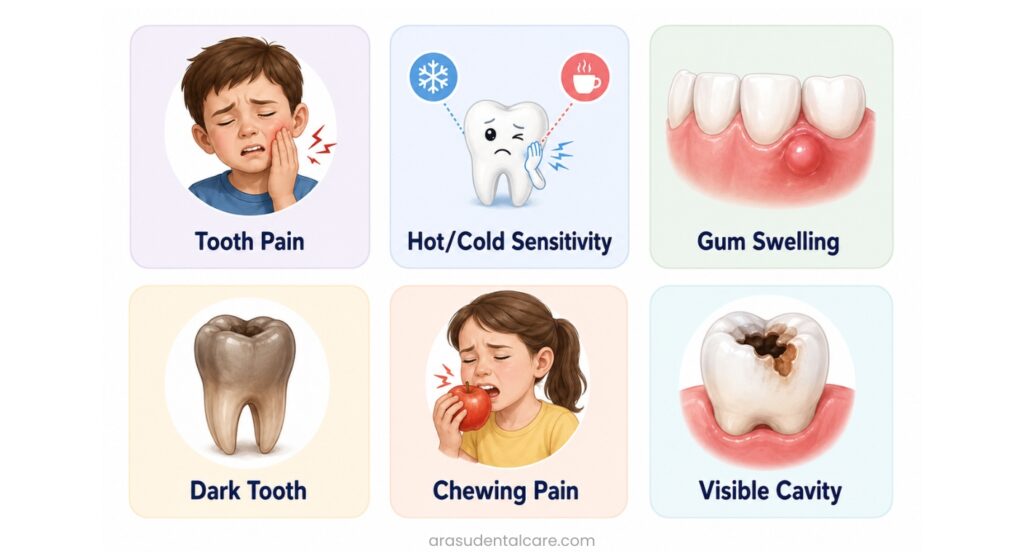
- Severe or constant tooth pain: Pain that continues for a long time and does not go away easily. It may become worse while eating, sleeping, or touching the affected tooth.
- Sensitivity to hot or cold: Your child may complain when drinking warm milk or cold water. This often shows that the pulp is inflamed or infected.
- Swelling near the tooth or gums: A bump or swelling on the gum near a tooth may indicate an abscess. This usually means infection has spread beyond the pulp.
- Discoloured tooth: A baby tooth that turns grey, brown, or dark yellow may have a damaged pulp inside. This colour change often appears after trauma or deep decay.
- Pain while chewing: Children may avoid eating on one side of the mouth. This often points to an infected or sensitive tooth that needs attention.
- Visible deep cavity: A large hole in the tooth that has reached close to the nerve. At this stage, simple fillings may not be enough.
The Pulpectomy Procedure: Step-by-Step
Understanding the steps can help reduce anxiety for both parents and children. The procedure is usually completed in one or two visits.
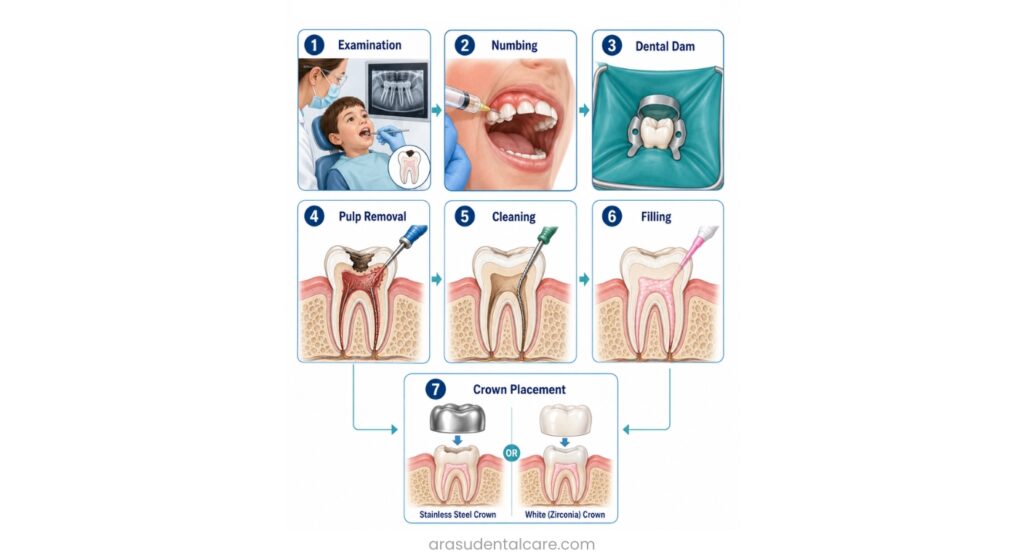
Step 1: Examination and X-ray
The dentist examines the tooth and takes a small X-ray to check the extent of infection and the shape of the root canals. This helps plan the treatment safely.
Step 2: Local Anaesthesia
A numbing gel is applied first, followed by a gentle injection to numb the area. Your child will not feel pain during the procedure.
Step 3: Isolating the Tooth
A thin rubber sheet called a dental dam is placed around the tooth. This keeps the area clean, dry, and free from saliva during treatment.
Step 4: Removing the Infected Pulp
The dentist makes a small opening in the tooth and carefully removes the infected pulp from the crown and root canals. Special small instruments are used for this step.
Step 5: Cleaning and Disinfecting
The empty canals are flushed with a safe cleaning solution. This removes bacteria and debris from inside the tooth.
Step 6: Filling the Canals
The cleaned canals are filled with a resorbable paste. This material dissolves naturally as the permanent tooth comes in.
Step 7: Sealing and Restoring
The tooth is sealed with dental cement and topped with a strong restoration. In most cases, a stainless steel crown is placed to protect the tooth from breaking.
Pulpectomy vs Pulpotomy: What’s the Difference?
Parents often confuse these two procedures. Both treat infected pulp, but they differ in how much pulp is removed.
- Pulpotomy: Only the infected pulp in the crown of the tooth is removed. The healthy pulp inside the roots stays in place.
- Pulpectomy: The entire pulp—from both the crown and the root canals—is removed. This is needed when the infection has spread deeper.
Your dentist will choose the right option based on how far the infection has reached.
Recovery and Aftercare
Most children feel better within 24 hours of the procedure. Following simple aftercare steps can support smooth healing.
- Soft food for a few days: Offer foods like khichdi, mashed potatoes, yogurt, and soup. Avoid hard, crunchy, or sticky foods that may stress the treated tooth.
- Gentle brushing: Continue brushing twice a day with a soft toothbrush. Be gentle around the treated area for the first few days.
- Pain management: Mild soreness is normal and usually settles in a day or two. Your dentist may suggest a child-safe pain reliever if needed.
- Watch for warning signs: Contact your dentist if your child has fever, swelling, or pain that does not improve. These may indicate the need for follow-up care.
Pulpectomy Cost in India
The cost of a pulpectomy can vary based on several factors. In India, the price typically ranges from ₹1,500 to ₹5,000 per tooth, with stainless steel crown placement adding ₹1,000 to ₹2,500.
Factors That Affect the Cost
- Tooth location: Front teeth often cost less than molars because molars have more canals and take longer to treat.
- Number of canals involved: More canals require more time, materials, and clinical expertise. This affects the overall fee.
- Type of restoration used: A stainless steel crown is more durable but slightly more expensive than a regular filling. Most dentists recommend crowns for back teeth.
- Need for sedation or general anaesthesia: Very young or anxious children may need sedation. This adds to the total cost but improves comfort and safety.
- Clinic location and dentist’s experience: Specialist pediatric dentists may charge slightly more, but they offer focused expertise in treating children.
The right cost can only be confirmed after a proper dental examination, as every child’s case is different.
How to Help Your Child Avoid a Pulpectomy
Prevention is always better than treatment. With a few simple habits, you can lower your child’s risk of needing a pulpectomy.
- Brush twice daily: Use a soft toothbrush and a small amount of fluoride toothpaste suitable for their age. Supervise brushing until they can do it well on their own.
- Limit sugary snacks and drinks: Frequent sugar exposure is the biggest cause of cavities in children. Choose water, milk, and fruit instead of juice or sweets.
- Schedule regular dental check-ups: Visit a pediatric dentist every six months. Early detection of cavities can often prevent the need for advanced treatment.
- Use a mouthguard during sports: This protects against trauma that could damage the pulp. A custom mouthguard from your dentist offers the best protection.
For more guidance on children’s oral health, the Indian Society of Pedodontics and Preventive Dentistry offers helpful resources for parents.
Conclusion
A pulpectomy is a safe and effective way to save your child’s severely infected tooth and protect their overall oral health. Children’s root canal treatment is no longer something to fear — with modern techniques and gentle pediatric care, the procedure is quick, comfortable, and highly successful.
At Arasu Dental Care, we are dedicated to making your child’s dental experience as smooth and positive as possible. Trust us to care for your child’s smile with the gentleness and expertise they deserve.
Frequently Asked Questions
1. Is a pulpectomy painful for my child?
No, the procedure is done under local anaesthesia, so your child will not feel pain during treatment. Mild soreness afterwards is normal and usually settles within a day or two.
2. How long does a pulpectomy take?
Most pulpectomies are completed in about 45 to 60 minutes. Some cases may need a second visit depending on the level of infection.
3. Will the treated tooth fall out naturally?
Yes. The filling material used inside the tooth is designed to dissolve as the permanent tooth comes through. The baby tooth will exfoliate at its normal time.
4. Can a pulpectomy fail?
In some cases, infection may return if not all bacteria are removed or if the crown restoration breaks down. Regular check-ups help catch any issues early.
5. Is extraction better than a pulpectomy?
Saving the baby tooth is usually the better option. Extraction can cause space loss and affect how permanent teeth come in. Extraction is only chosen when the tooth cannot be saved.
6. At what age can a child have a pulpectomy?
Pulpectomy can be performed on children as young as 2 to 3 years if needed. The dentist will assess whether the tooth is restorable and worth saving.
7. How long does a pulpectomy-treated tooth last?
A well-treated tooth can last until it naturally falls out, often several years. Proper crown placement and good oral hygiene support long-term success.