If you have recently completed braces or aligner treatment, your dentist may have recommended retainers as the next step. Retainers are custom-made dental devices that hold your teeth in their new, corrected position after orthodontic treatment.
Many patients believe that once braces come off, the work is done. In reality, teeth have a natural tendency to shift back. Wearing a retainer helps protect the results you have worked so hard to achieve.
This guide explains everything you need to know about retainers, the different types, their benefits, and how to care for them properly.
What Is a Retainer?
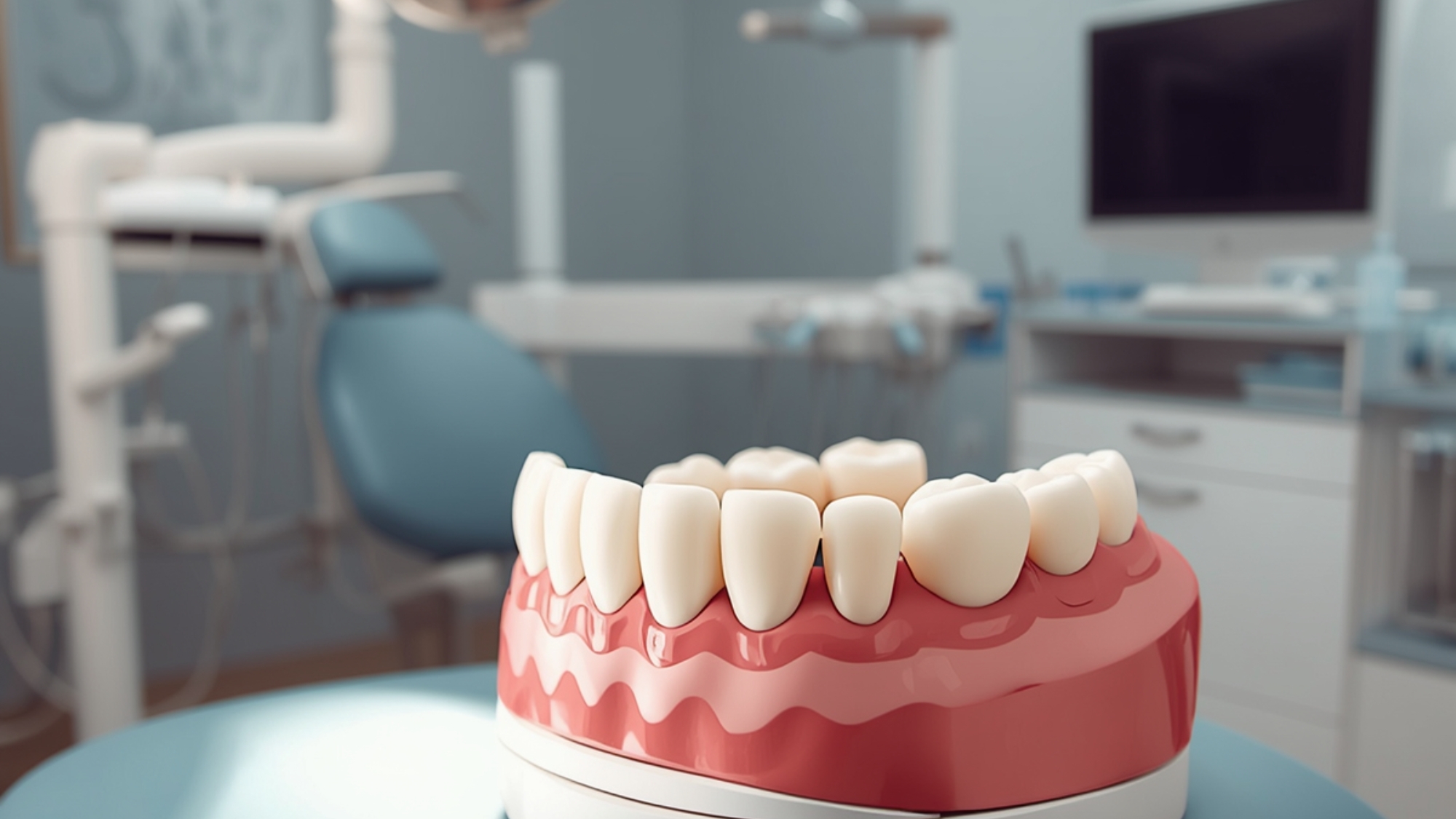
A retainer is a small, custom-fitted oral appliance designed to keep your teeth stable in their new position. It is usually given after braces or clear aligner treatment.
Retainers are made from materials such as clear plastic, acrylic, or thin metal wires. They are shaped specifically for each patient based on a digital scan or impression of the teeth.
The main role of a retainer is to support the bone and tissues around your teeth as they settle into their new alignment. According to the American Association of Orthodontists, retainers are considered the final and most important step of any orthodontic journey.
Why Are Retainers Needed After Braces or Aligners?
After orthodontic treatment, your teeth are in a new position, but the surrounding bone and gum fibers need time to adapt. Without support, the teeth can drift back toward their original alignment.
This shifting is known as orthodontic relapse, and it can happen within months if a retainer is not worn. Retainers prevent this by holding the teeth firmly in place while the supporting tissues stabilize.
Even years after treatment, teeth continue to move slightly with age. Wearing a retainer at night helps protect your smile for life.
Types of Retainers
There are mainly two categories of retainers — removable and fixed. Each type has its own advantages, and your dentist will recommend the one that best suits your case.
1. Hawley Retainers
Hawley retainers are one of the oldest and most reliable types of removable retainers. They are made of a hard acrylic base that rests on the roof of the mouth or behind the lower teeth, with a thin metal wire that wraps around the front teeth.
These retainers are durable and can last many years with proper care. They can also be adjusted slightly by your dentist if minor tooth movement is needed later.
2. Clear (Essix) Retainers
Clear retainers, also known as Essix or vacuum-formed retainers, are made of transparent plastic that fits snugly over the teeth. They look very similar to clear aligners and are almost invisible when worn.
These retainers are popular because they are comfortable, lightweight, and do not affect speech much. However, they may need replacement every few years as the plastic can wear down over time.
3. Fixed (Bonded or Permanent) Retainers
Fixed retainers are thin wires bonded to the back surface of the front teeth, usually on the lower jaw. They stay in place permanently and cannot be removed by the patient.
This type works well for patients who may forget to wear removable retainers. The wire is hidden behind the teeth, so it is not visible while smiling or talking.
4. Combination Retainers
In some cases, dentists recommend a combination — a fixed retainer for the lower teeth and a removable one for the upper teeth. This approach offers strong, long-term stability while keeping the smile aesthetic.
The choice depends on your bite, the type of correction done, and your daily lifestyle.
Benefits of Wearing Retainers
Retainers do much more than just hold teeth in place. They play a key role in long-term oral health and smile stability.
- Prevents Tooth Movement:Retainers stop the natural tendency of teeth to shift back to their original position. This protects the alignment achieved through braces or aligners.
- Supports Bite Stability:A proper bite helps in chewing, speaking, and jaw comfort. Retainers help maintain the corrected bite for years after treatment.
- Protects Your Investment: Orthodontic treatment takes time and effort. Wearing a retainer ensures that the results last and avoids the need for repeat treatment.
- Improves Oral Health: Straight teeth are easier to clean than crooked ones. By keeping teeth aligned, retainers support better brushing and flossing habits.
- May Help With Bruxism:Some clear retainers act as a soft barrier between the upper and lower teeth, which can reduce damage caused by mild teeth grinding at night.
- Supports Speech and Chewing Function:A stable bite improves how you chew and speak. This is especially helpful for patients who had significant alignment corrections.
How Long Should You Wear a Retainer?
The duration of retainer wear depends on your individual case and your orthodontist’s advice. Most patients are advised to wear it full-time during the first few months and then only at night for the long term.
A common pattern is full-time wear for 4 to 6 months, followed by nighttime wear indefinitely. Research published by the Cochrane Review shows that long-term nighttime use offers the best stability.
Skipping retainer wear, even for a few weeks, can cause noticeable shifting. If your retainer feels tight after a break, it usually means your teeth have already started to move.
How to Take Care of Your Retainer
Proper care keeps your retainer clean, comfortable, and effective. A well-maintained retainer can last for several years.
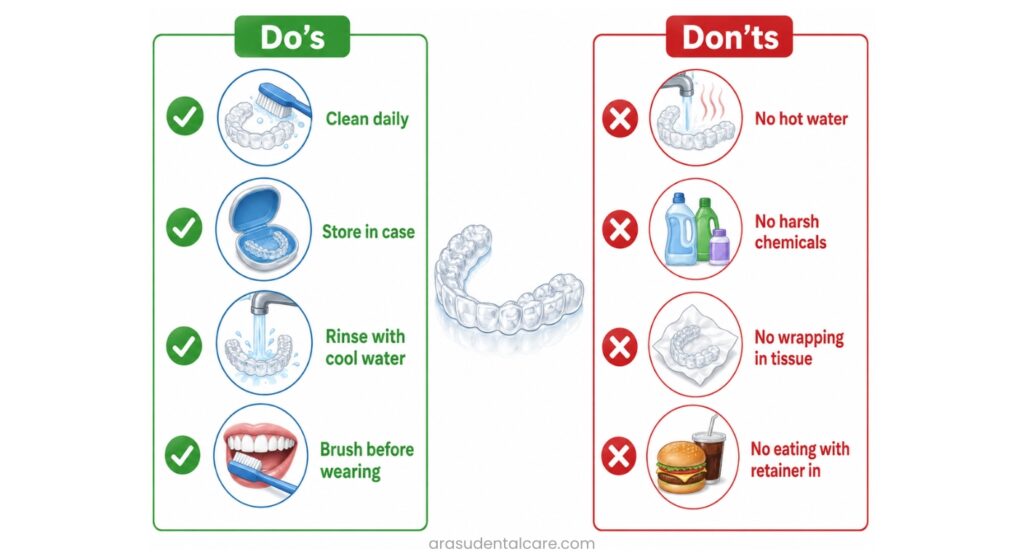
- Clean It Daily:Rinse your retainer with lukewarm water every time you remove it. Gently brush it with a soft toothbrush and mild soap to remove plaque and bacteria.
- Avoid Hot Water:Never use hot water, boiling water, or a dishwasher to clean your retainer. Heat can warp the plastic and ruin the fit.
- Store It Safely:Always keep your retainer in its case when not in use. Avoid wrapping it in tissue, as it can be thrown away by mistake.
- Brush Before Wearing:Always brush and floss your teeth before placing the retainer in your mouth. This prevents food particles from getting trapped underneath.
- Avoid Harsh Chemicals:Do not use bleach, alcohol, or abrasive toothpaste. These can damage the surface and cause discoloration.
- Visit Your Dentist Regularly:Routine check-ups help your dentist confirm that the retainer still fits well and that your teeth remain stable.
Common Issues With Retainers
Most patients adjust to retainers within a few days. However, some minor concerns may come up over time.
- Slight Discomfort Initially:You may feel mild pressure or soreness during the first few days. This usually goes away as your mouth adjusts.
- Speech Changes: A small lisp is common in the beginning, especially with Hawley retainers. Speaking slowly and reading aloud can help you adapt faster.
- Bad Smell or Taste: This usually means the retainer needs better cleaning. Daily care prevents bacteria buildup.
- Loose or Tight Fit: If your retainer suddenly feels loose or too tight, your teeth may have shifted. Visit your dentist for an evaluation rather than trying to fix it yourself.
When to See a Dentist
Some situations need professional attention to avoid bigger problems later. Contact your dental team if you notice any of the following:
- Broken or Cracked Retainer: A damaged retainer cannot hold teeth properly. Continuing to wear it may cause irritation or shifting.
- Lost Retainer:Do not wait too long to replace it. Even a few weeks without a retainer can lead to noticeable tooth movement.
- Persistent Pain or Gum Irritation: Mild soreness is normal at first, but ongoing pain may need adjustment.
- Visible Tooth Shifting: If you notice your teeth changing position, a dental check-up can help identify the cause early.
How to choose the best Invisible retainers- Here’s the complete guide of Invisible retainers.
Final Thoughts
Retainers are a small but essential part of every orthodontic journey. They protect the time, effort, and care that went into achieving your new smile.
Whether you wear a Hawley, clear, or fixed retainer, consistent use and proper care make all the difference. Think of it as a long-term partner that keeps your smile stable and healthy for years to come.
Book Your Retainer Consultation at Arasu Dental Care
If your braces or aligner treatment is nearing completion, or if you are unsure whether your current retainer still fits well, our dental team can help. At Arasu Dental Care in Coimbatore, we guide each patient through the right type of retainer based on their dental needs and lifestyle.
Book a consultation today to keep your smile aligned, healthy, and confident for the long term.
Frequently Asked Questions
1. Do retainers hurt when worn?
You may feel mild pressure or soreness during the first few days. This usually settles quickly as your mouth adjusts.
2. Can I eat with my retainer on?
Removable retainers should be taken out before eating. Fixed retainers can stay in, but you should avoid hard or sticky foods.
3. How long do retainers last?
Hawley retainers can last several years with good care. Clear retainers usually need replacement every 2 to 3 years depending on wear.
4. Will my teeth shift if I stop wearing my retainer?
Yes. Teeth can shift even years after treatment. Nighttime wear is usually advised for life to maintain results.
5. Can a retainer fix small tooth shifting?
A retainer may help with very minor shifts if caught early. Larger movements usually need orthodontic treatment again.
6. Are clear retainers better than Hawley retainers?
Both work well. Clear retainers are more discreet, while Hawley retainers are more durable and adjustable. Your dentist will recommend the best option for your case.
7. How do I clean a fixed retainer?
Brush carefully around the wire and use a floss threader or interdental brush to clean between the teeth. Regular dental cleanings are also important.
8. Can I use mouthwash to clean my retainer?
Avoid alcohol-based mouthwash, as it can damage the plastic. Mild soap and water or a retainer-cleaning tablet is safer.