Pediatric dentistry · mercury-free, child-safe fillings
At Arasu Dental Care, a tooth-coloured filling stops a cavity in your child's tooth and restores it in a single, gentle visit — with a mercury-free, child-safe material that blends in so well most children forget which tooth was treated. It's the right treatment when decay is caught before it reaches the nerve, which is exactly why we encourage parents not to wait: the earlier a cavity is filled, the smaller, quicker and more comfortable the appointment is for your child.
Cavities in children are far more common than most parents expect — India's National Oral Health Survey found around half of five-year-olds already have tooth decay. If your child is one of them, this page explains what we do about it, what it costs, and what to expect at the visit.
Open all seven days, 10:00 AM – 8:30 PM · R.S. Puram +91 88380 22157 · Saibaba Colony +91 74491 88777
Worried about a dark spot or a complaint of pain? Call our R.S. Puram branch on +91 88380 22157 or Saibaba Colony on +91 74491 88777 — we're open every day, 10:00 AM to 8:30 PM, and we'll get your child seen quickly.
How to tell
Children rarely announce a cavity — many feel nothing at all until decay is deep. At Arasu Dental Care we recommend bringing your child in if you notice any of these.
White, brown or black spots on a tooth that don't brush away — chalky white patches are often the earliest stage of decay.
Sensitivity or wincing with cold drinks, sweets or while chewing on one side.
Food catching repeatedly in the same tooth, or a visible hole or rough edge your child keeps touching with their tongue.
Complaints of toothache — by the time a milk tooth genuinely hurts, decay is often already close to the nerve, so don't wait for pain to confirm the problem.
The question we hear most
It deserves a straight answer. Milk teeth are not disposable placeholders — they do three jobs your child depends on.
Each baby tooth guides the permanent tooth developing beneath it into the correct position. When a milk tooth is lost early to decay, the neighbouring teeth drift into the gap — which is how crowding and alignment problems start, and why we sometimes need a space maintainer after an early loss.
Back milk teeth stay in the mouth until age 10–12. A decayed molar means years of chewing on one side, food avoidance, and disturbed sleep from toothache — through the years your child needs those teeth most.
A small cavity left alone reaches the nerve, turns into infection, and what could have been a fifteen-minute filling becomes pulp treatment or an extraction. Research on Indian school children consistently finds decay rates above 60% in milk teeth — and most of it goes untreated.
Filling a cavity early is the smallest, cheapest, most comfortable version of the treatment your child will ever be offered for that tooth. Everything that comes after waiting is bigger.
What we use
Not every tooth-coloured material suits every tooth, and this is where treating children differs from treating adults. Our pediatric dentist selects the material based on your child's age, the tooth involved, how long that tooth needs to last before it naturally falls out, and how much cooperation the appointment realistically allows. All of the materials we use for children are mercury-free.
A tooth-coloured resin bonded directly to the tooth and shade-matched so it disappears against the enamel. It's our usual choice for front teeth, visible surfaces, and older children and teens with permanent teeth coming through. Bonding preserves more of the natural tooth than older metal fillings ever did.
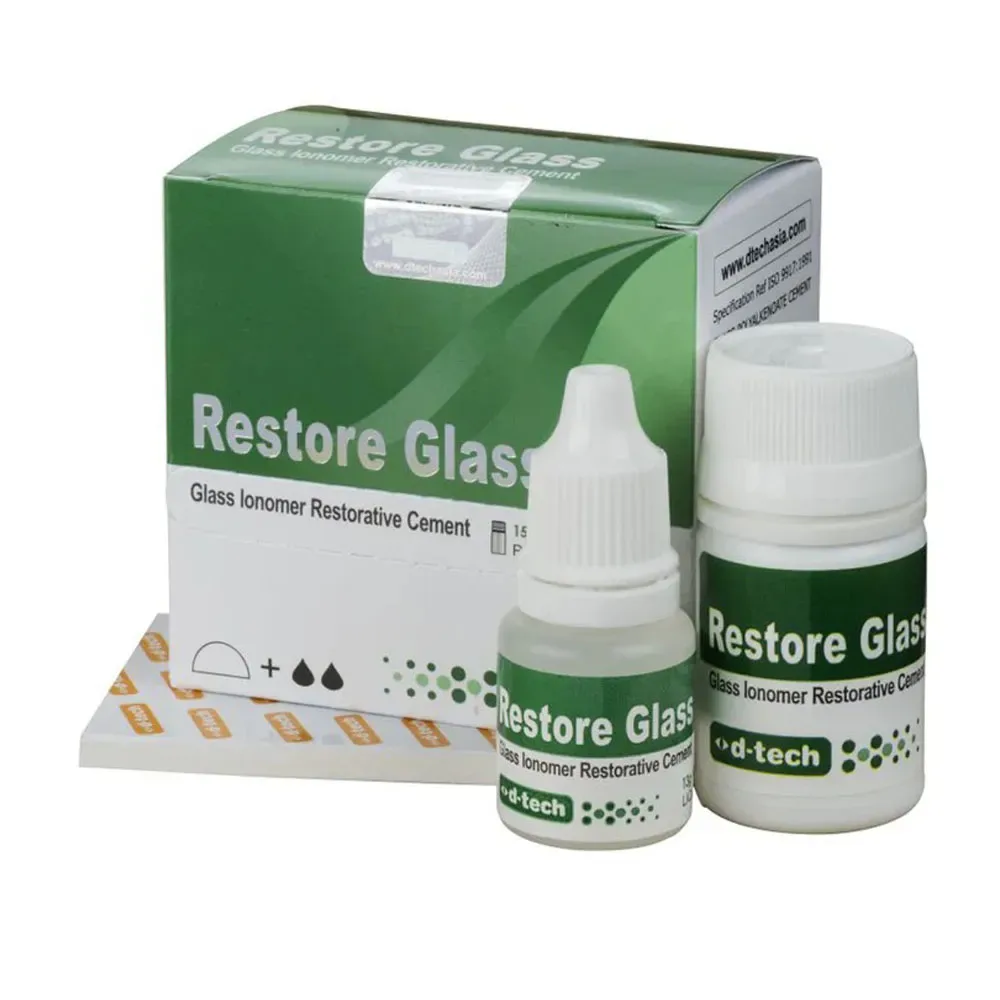
GIC bonds chemically to the tooth and slowly releases fluoride into the surrounding enamel, actively protecting against new decay around the filling. It sets fast and tolerates a slightly moist environment — which makes it the practical choice for younger children, wriggly appointments, and cavity-prone mouths where the fluoride release earns its keep.
A hybrid of composite and glass ionomer used in many pediatric cases: better wear resistance than GIC, with some fluoride release retained. Where it suits the tooth, it gives a milk-tooth molar the durability to comfortably reach its natural exfoliation date.
| Material | Best suited for | Key strength | Worth knowing |
|---|---|---|---|
| Composite resin | Front teeth, visible surfaces, teens | Closest match to natural tooth colour | Needs a dry field — suits cooperative visits |
| Glass ionomer (GIC) | Younger children, baby molars, high-decay-risk mouths | Releases fluoride, protecting against new decay | Softer than composite; ideal where the tooth will exfoliate naturally |
| Compomer | Baby molars needing extra durability | Balance of strength and fluoride release | A common pediatric middle option |
What to expect
Most children's fillings at Arasu Dental Care are completed in a single visit of about 20–30 minutes per tooth. Here's the sequence, so you can prepare your child honestly.
STEP 1
Our team uses tell-show-do — explaining each instrument in child-friendly terms and demonstrating it before it goes anywhere near the mouth. For anxious children we go slower; a calm first filling shapes how your child feels about dentistry for years.
STEP 2
A topical numbing gel goes on first so the injection itself is barely felt. For very small, early cavities, drilling can sometimes be minimal enough that little or no anaesthesia is needed — we judge this case by case.
STEP 3
We remove only the decayed portion, keeping as much healthy tooth as possible, then place and shape the chosen material and check your child's bite.
STEP 4
We'll advise waiting until the numbness wears off (usually 1–2 hours) so they don't bite a cheek. Mild sensitivity for a day or two is normal; genuine pain is not — call us if it happens.
For children who need several fillings, or who find the dental chair genuinely distressing, sedation options are available — ask us at the consultation and we'll advise what's appropriate for your child's age and health.
Straight answers
We'd rather set expectations plainly than oversell a simple procedure.
Who places your child's filling
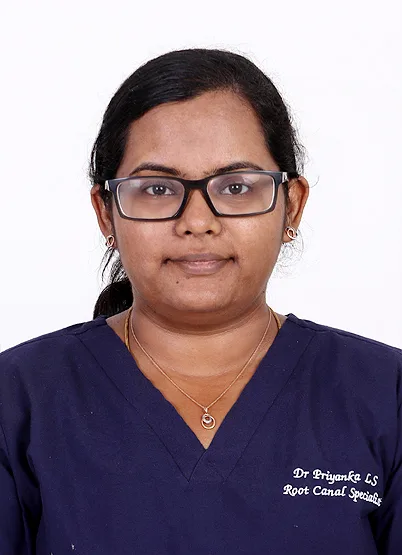
Day-to-day children's care is led by our dentist (BDS, FAD), whose training in aesthetic dentistry shows in how invisibly a child's filling blends in — with restorative expertise across the team anchored by Dr. L.S. Priyanka (MDS), for the complex cases where a cavity turns out deeper than it looked.
Cost
We publish our fee ranges because parents deserve to plan. At Arasu Dental Care, tooth-coloured fillings are charged per tooth, and the range depends mainly on the material used and the size of the cavity.
| Item | Fee range (per tooth) | Notes |
|---|---|---|
| Composite resin filling | ₹1,500 – ₹3,000 | Shade-matched; front and visible teeth |
| Glass ionomer (GIC) filling | ₹1,000 – ₹2,000 | Fluoride-releasing; common for baby molars |
| Consultation | ₹200 – ₹500 | Applied at the visit |
| Dental X-ray (if needed) | ₹300 – ₹800 | Only when decay depth needs confirming |
Want a firm number for your child?Book a consultation at either branch and leave with a written treatment plan and exact cost. R.S. Puram +91 88380 22157 · Saibaba Colony +91 74491 88777.
Get Started
Tell us a little about your child and pick a time that suits their routine. First fillings, a dark spot you've just noticed, and anxious little ones are all welcome, at whichever branch is closer.
A filling caught early is the smallest treatment there is.
Why Arasu
Your child's filling is placed by a team that treats children every day, not occasionally — and because we're a full multispecialty clinic, everything from a routine check-up to braces for children happens under one roof as your child grows.
Pediatric care led by our dentist (BDS, FAD), whose aesthetic-dentistry training shows in how invisibly a child's filling blends in.
If a filling reveals nerve involvement, restorative specialist Dr. L.S. Priyanka (MDS) is here at the same visit — not a referral away.
Every children's filling uses biocompatible, tooth-coloured composite, GIC or compomer — the standard child-appropriate materials in modern pediatric dentistry.
We only fill what genuinely needs filling — and tell you plainly when fluoride or watchful waiting is the better call than drilling.
Until 8:30 PM, so a filling fits after school or on a Sunday without your child missing class.
R.S. Puram and Saibaba Colony, so care is close to home — and your child's records move with them between clinics.
Book your child's visit at Arasu Dental Care
R.S. Puram: 129, W Sambandam Road, Coimbatore 641002 · +91 88380 22157 · Saibaba Colony: 160, NSR Road, Coimbatore 641011 · +91 74491 88777. Open 10:00 AM – 8:30 PM · WhatsApp +91 96007 56297.
Patient Reviews
My 6-year-old had a cavity in a back tooth. They explained everything to her first, numbed it so gently she didn't flinch, and it was done in one short visit. You genuinely can't see the filling.
I assumed a baby tooth wasn't worth treating. The dentist explained why it mattered without any pressure, and used a fluoride-releasing filling. Honest and clear about the cost before starting.
They found an early white spot on my daughter's tooth and said it didn't need drilling yet — fluoride and better brushing instead. Refreshing to be told less treatment, not more.
Sunday evening appointment after my son's cavity started hurting. Seen quickly, filled in one sitting, and he was eating dinner the same night. Both kids are comfortable going now.

FAQs
Yes. The composite, glass ionomer and compomer materials we use are mercury-free and biocompatible, and are the standard child-appropriate filling materials in modern pediatric dentistry.
We numb the tooth with a topical gel before any injection, so most children describe pressure rather than pain. Very small early cavities can sometimes be treated with little or no anaesthesia. Comfort is the whole design of the visit — and mild sensitivity for a day or two afterwards is normal.
Usually 20–30 minutes per tooth, completed in a single visit. Nervous or very young children may need a slightly slower pace — we never rush a child through their first filling.
In a milk tooth, the filling generally serves until the tooth naturally falls out. In permanent teeth, composites typically last 5–7 years with good brushing, and can be repaired or replaced when they wear. Longevity varies with cavity size and home care.
At Arasu Dental Care, tooth-coloured fillings range from ₹1,000 – ₹3,000 per tooth depending on the material (GIC ₹1,000–₹2,000; composite ₹1,500–₹3,000), plus a ₹200–₹500 consultation. You'll receive an exact written estimate before treatment.
We don't recommend it unless the tooth is genuinely about to exfoliate. Decay progresses faster in milk teeth than adult teeth, and an untreated cavity risks pain, infection, and early tooth loss that lets neighbouring teeth drift into the space meant for the adult tooth. Your dentist will tell you honestly if a specific tooth is close enough to falling out that treatment isn't worthwhile.
If decay has reached the nerve, a filling alone won't solve it — the tooth needs pulp therapy (pulpotomy or pulpectomy) and usually a pediatric crown afterwards. We'll show you what we see on the X-ray and explain exactly why, before anything is done.
Keep it simple and positive: tell them the dentist is going to clean a tooth and make it strong again. Avoid words like ‘drill’, ‘injection’ or ‘pain’ — our team introduces everything in child-friendly language at the visit. A normal meal beforehand and a favourite small toy are welcome.
Book your child's visit at Arasu Dental Care
A single, gentle visit — mercury-free materials, tell-show-do comfort, and prevention coaching so it's the last filling, not the first of many. Open 10 AM – 8:30 PM, all seven days · WhatsApp +91 96007 56297.