Pediatric dentistry · saving a decayed baby tooth
When decay reaches the nerve of your child's baby tooth, a pulpotomy lets us save that tooth instead of pulling it out — clearing the infection, stopping the pain, and keeping the tooth in place until it's ready to fall out on its own. At Arasu Dental Care, it's a single-visit treatment done gently under local anaesthesia, and it's the right choice when the infection is limited to the top of the tooth and the roots are still healthy.
A pulpotomy is sometimes called a partial baby-tooth root canal — it's simpler, quicker and gentler than a full root canal, and it protects the space your child's adult tooth needs to come through straight. If the tooth turns out to need more, we'll tell you honestly before starting anything.
Open all seven days, 10:00 AM – 8:30 PM · R.S. Puram +91 88380 22157 · Saibaba Colony +91 74491 88777
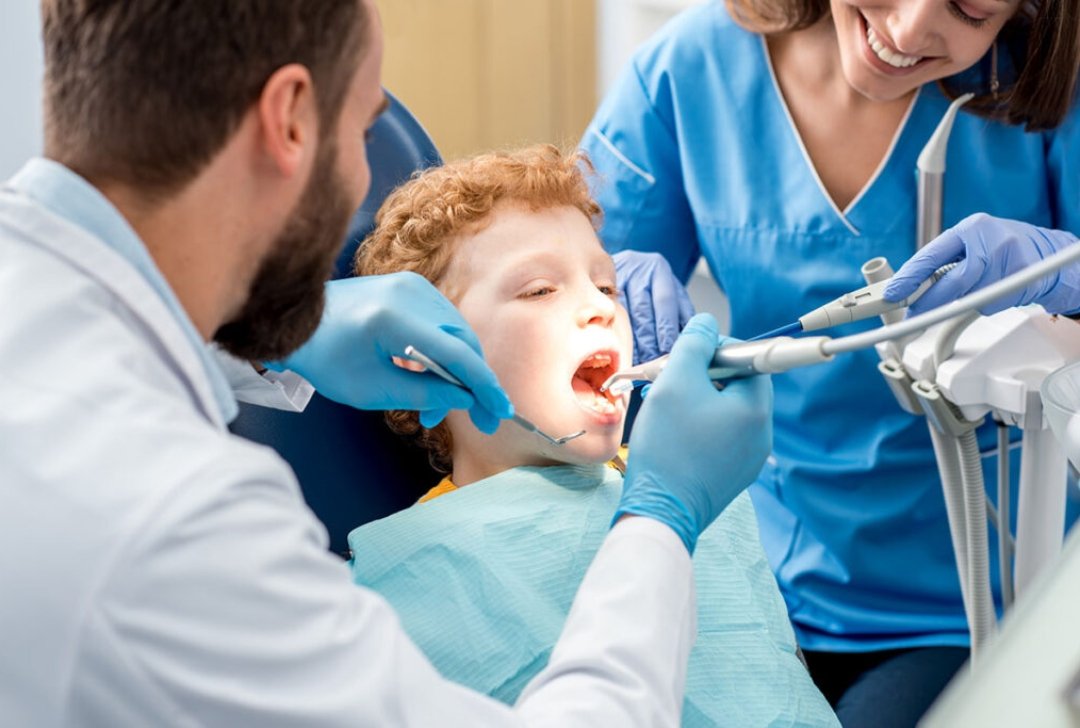
Worried about a painful or discoloured baby tooth? Bring your child in and we'll tell you honestly whether it can be saved — book at our R.S. Puram branch on +91 88380 22157 or Saibaba Colony on +91 74491 88777. We're open every day, 10:00 AM to 8:30 PM.
When it's the right call
A pulpotomy is for a baby tooth where decay has reached the pulp — the soft nerve inside the tooth — but the infection hasn't yet spread down into the roots. At that stage we can remove only the infected part in the crown of the tooth and leave the healthy root pulp alone, so the tooth stays alive and functional. Tooth decay this deep is common in young children: research on Indian children puts early-childhood tooth decay at close to one in two, and deep cavities in the back baby molars are the usual reason a pulpotomy is needed.
Your child may need a pulpotomy if you've noticed:

A toothache that keeps coming back — especially pain while chewing or at night, or pain that wakes them.

Sharp pain with hot, cold or sweet foods — a sign the decay has reached the deeper layers of the tooth.
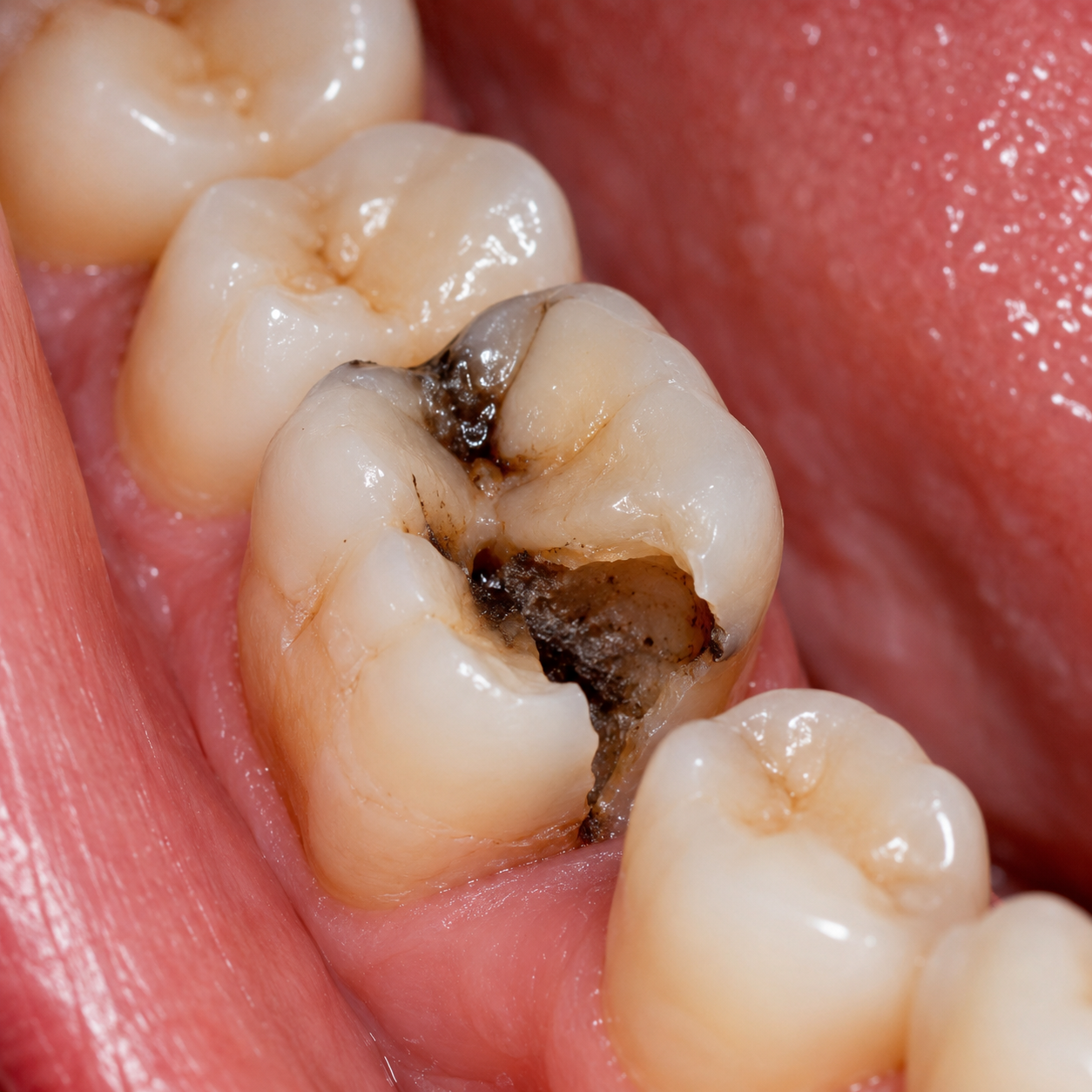
A large dark cavity or a broken back tooth — visible decay that has clearly gone deep.
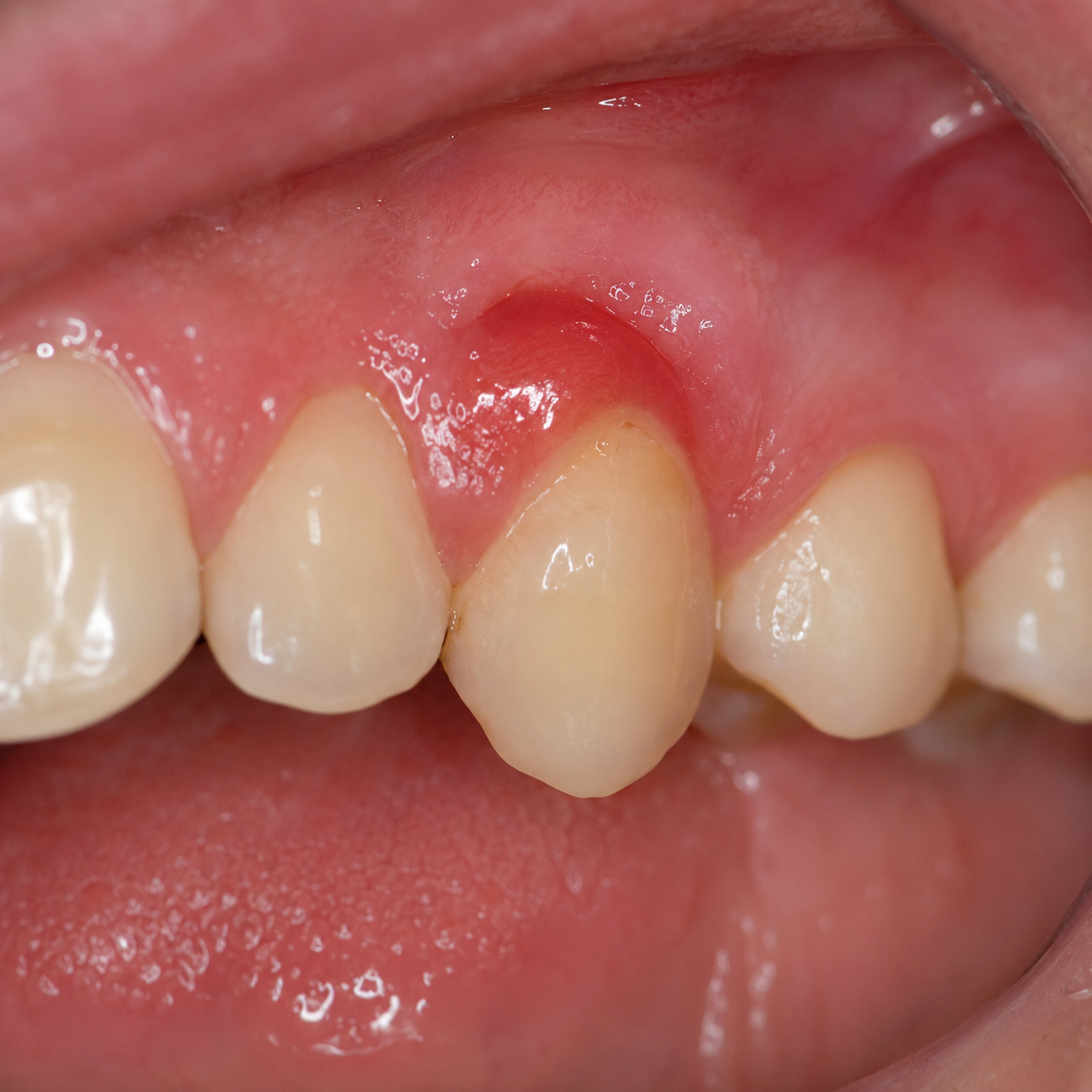
A gum bump, swelling or redness near one tooth — this can mean the infection is already active and needs prompt attention.
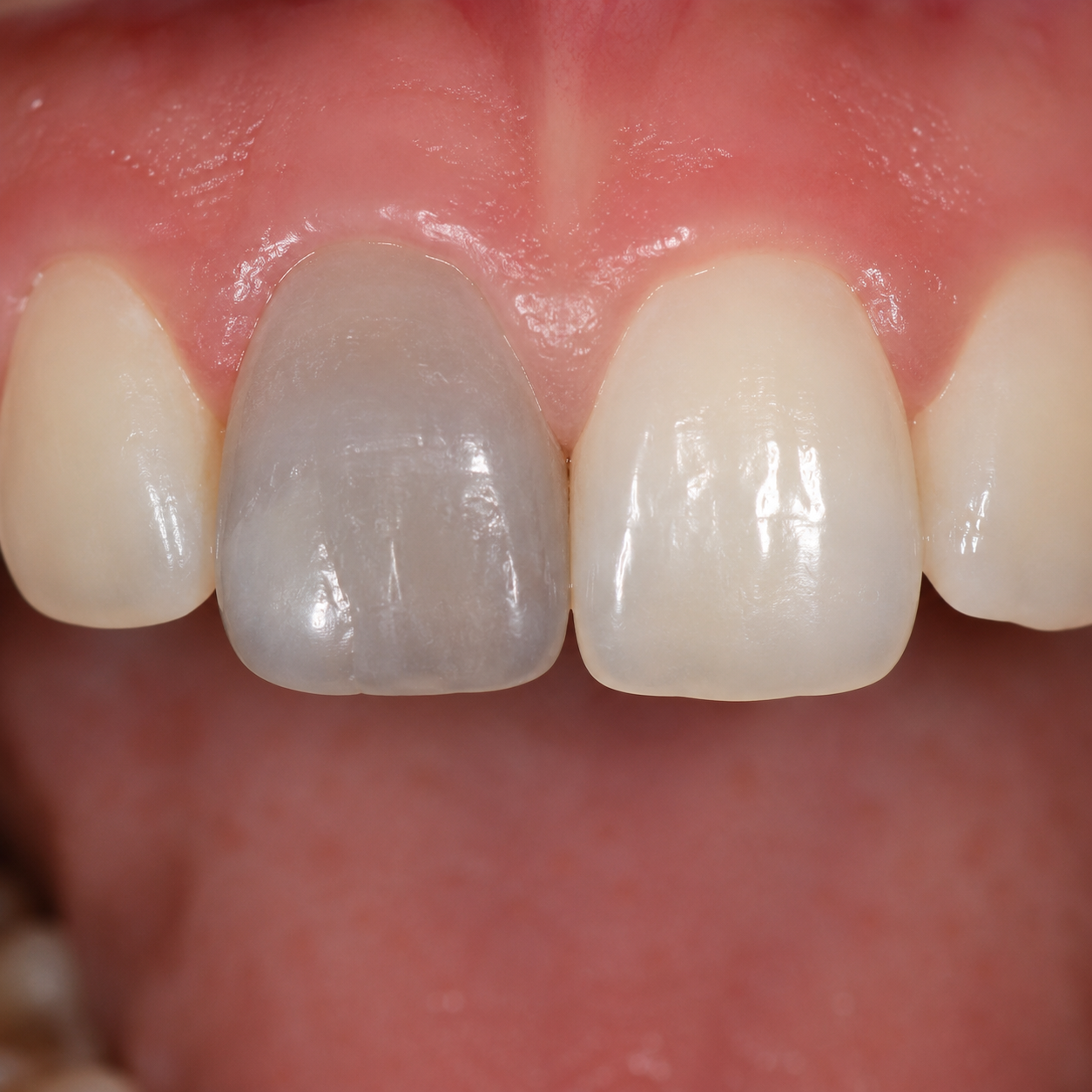
A single tooth turning grey or dark — often from decay or an earlier knock or fall.
Seen in the clinic
A pulpotomy clears the infection in the crown of the tooth and caps it so your child can keep chewing on it. The images below are from cases treated at our clinics.
clinic-photo: decayed baby molar
Clinic-supplied photo or X-ray showing the deep decay reaching the nerve before treatment.
clinic-photo: sealed & crowned tooth
Clinic-supplied photo of the treated tooth sealed and protected with a crown.
What to expect
The whole treatment is usually done in one appointment of about 30 to 45 minutes, carried out by our pediatric dentist. It's planned around keeping your child calm and comfortable — most children walk out the same day and are back to normal within a few hours. Here's exactly what we do:
STEP 1
A little numbing gel goes on first, then local anaesthesia — so your child stays comfortable and doesn't feel the treatment itself.
STEP 2
A soft rubber dam keeps the tooth clean, dry and protected from saliva while we work.
STEP 3
Only the infected pulp inside the crown of the tooth comes out. The healthy pulp in the roots is left untouched, which is what keeps the tooth alive.
STEP 4
We seal the pulp with a modern calcium-silicate material — MTA or Biodentine — which is well tolerated by the tooth and gives the most reliable long-term result.
STEP 5
A pulpotomy leaves the tooth weaker, so we protect it with a stainless steel or tooth-coloured crown for children. The crown keeps the tooth strong enough to chew on until it falls out naturally.
HIGH SUCCESS RATE
Across pooled clinical studies of thousands of children, pulpotomies using MTA or Biodentine succeed in roughly 94–97% of cases — which is why we recommend saving a suitable tooth rather than removing it. Individual results vary.
Recovery is usually quick and uneventful. Your child's lip and cheek may feel numb for an hour or two, so keep an eye out that they don't bite the area. Mild soreness for a day is normal and settles with a children's pain reliever if needed. Stick to soft foods for the first day — curd rice, khichdi, mashed foods — and go back to gentle brushing the same day. A quick review keeps everything on track, and the tooth then simply carries on until it's ready to fall out.
We do this routinely as part of our children's dental care, and because both branches are open every day, treating a child in pain promptly is rarely a scheduling problem. For anxious or very young children, sedation options are available — ask us at the consultation.
How we decide
Parents often ask why we don't just fill the tooth, or just remove it. The honest answer is that it depends entirely on how deep the decay has gone — and each option has a clear place. Here's how we decide:
| Treatment | When it's the right choice | What it involves |
|---|---|---|
| Filling | Decay hasn't reached the nerve yet — it's still in the outer layers. | A single tooth-coloured filling; no nerve treatment needed. |
| Pulpotomy | Decay has reached the nerve in the crown, but the roots are still healthy. | Remove the crown pulp only, seal with MTA/Biodentine, cap with a crown. One visit. |
| Pulpectomy | The whole nerve — crown and roots — is infected or dead. | A full baby-tooth root canal; all pulp removed, then crowned. |
| Extraction | The tooth is broken beyond repair or the infection has spread too far. | Gently remove the tooth, then hold the space so adult teeth don't drift. |
The honest part worth saying plainly: a pulpotomy controls the infection and saves the tooth — it doesn't make the tooth permanent. A baby tooth is meant to fall out anyway. What a pulpotomy buys you is that the tooth falls out on nature's timetable, not years too early — and that matters, because a baby tooth lost too soon lets the neighbouring teeth drift into the gap and crowd the adult tooth trying to come through.
Keeping the tooth is really about protecting your child's future bite. And a pulpotomy isn't right for every tooth: if the roots are already involved, we'll tell you a pulpectomy or removal is the better call rather than doing a treatment that won't last.
Cost
The cost of a pulpotomy depends on a few real factors, and we'll always give you an itemised figure before we begin — never a surprise at the end. What moves the price:
Which tooth it is — a back molar has a larger pulp chamber and takes a little more work than a front tooth.
The crown that caps it — a stainless steel crown is the standard, sturdy option; a tooth-coloured zirconia crown for a visible tooth costs a little more.
How much decay there is — more structure lost can mean a little more restorative work.
X-rays and, occasionally, sedation — if your child is very anxious and we use sedation to keep them comfortable, that's planned and priced up front.
| Part of the treatment | What it covers | Fee |
|---|---|---|
| Consultation & examination | Gentle check of the tooth and a clear treatment plan | ₹300 – ₹500 |
| Dental X-ray (IOPA) | Confirms how deep the infection has reached | ₹200 – ₹300 |
| Pulpotomy (per tooth) | Removing the crown pulp + MTA/Biodentine seal | On assessment |
| Protective crown | Stainless steel or tooth-coloured zirconia cap | On assessment |
For a clear, itemised cost for your child, book a visit.Every tooth is a little different, and a short examination is the surest way to the right treatment and the right cost. R.S. Puram +91 88380 22157 · Saibaba Colony +91 74491 88777.
Who treats your child
Pulp treatment on a small, anxious child is as much about the experience as the dentistry. Children's dentistry at our clinics is led by our dentist (BDS, FAD), who treats children every day in a setting built to keep the visit calm rather than clinical, and explains each step in words a child understands. Because we're a full multispecialty clinic, if the tooth turns out to need a pulpectomy or a specialist opinion, that care is under the same roof.
Get Started
Tell us a little about your child and pick a time that suits their routine. A painful tooth, a dark or broken back tooth, and anxious little ones are all welcome — at whichever branch is closer.
Treating a painful tooth early is simpler and gentler than waiting.
Why Arasu
Pulp treatment sits inside our wider children's dental care, so your child is seen by a team that treats children every day — and if the tooth needs a pulpectomy or a specialist opinion, that care is under the same roof and part of the same plan. No referrals across town.
Children's teeth are treated by a dentist who works with young patients day in, day out, using materials suited to developing teeth.
MTA and Biodentine for the pulp, and durable crowns to protect the tooth until it's ready to fall out.
We'll tell you if a filling is enough, and we won't recommend a crown or a pulpotomy your child doesn't need.
A calm, child-friendly room and sedation available for children who find it hard to sit still through treatment.
10 AM – 8:30 PM, including a dental emergency when a child is in pain and can't wait.
R.S. Puram and Saibaba Colony, so care is close to home — and your child's records move with them between clinics.
Bring your child in — we'll tell you honestly whether the tooth can be saved
R.S. Puram: 129, W Sambandam Road, Coimbatore 641002 · +91 88380 22157 · Saibaba Colony: 160, NSR Road, Coimbatore 641011 · +91 74491 88777. Open 10:00 AM – 8:30 PM · WhatsApp +91 96007 56297.
Patient Reviews
My 5-year-old had a badly decayed back tooth and I was sure it would have to come out. They saved it with a pulpotomy and a little crown in one visit. He was comfortable the whole time and the pain was gone the same day.
Honest advice — the X-ray showed the infection had reached the root, so they explained a pulpotomy wouldn't hold and did a full baby root canal instead. No guesswork, everything explained before starting.
They were so patient with my anxious daughter. The doctor explained each step in words she understood, and the tooth-coloured crown looks natural. Cost was clear before anything began.
Sunday appointment when my son was in pain — no waiting. Numbing gel first, then the treatment, and he didn't feel a thing. Good to have the kids' dentist and everything else in one clinic.

FAQs
The treatment is carried out under local anaesthesia, so your child stays comfortable and doesn't feel it. In fact, a pulpotomy usually relieves the pain your child arrived with. Mild soreness for a day afterwards is normal and settles with a children's pain reliever if needed.
The goal is for the treated tooth to stay strong and functional until it falls out naturally, usually around ages 10–12. Protected with a crown, a successful pulpotomy typically lasts the remaining life of the baby tooth. Results vary with the tooth involved and how deep the decay had gone.
Almost always, yes. A pulpotomy leaves the tooth weaker, and a stainless steel or tooth-coloured crown protects it from cracking so it can do its job until the adult tooth is ready. A large filling alone usually isn't strong enough.
Pulling the tooth can seem simpler, but a baby tooth lost too early lets nearby teeth drift into the gap and crowd the adult tooth coming through — which can mean orthodontic treatment later. Whenever the tooth can be saved, keeping it protects your child's future bite. If it truly can't be saved, we hold the space instead.
A pulpotomy removes only the infected pulp in the crown of the tooth and keeps the healthy root pulp. A pulpectomy removes all the pulp, including from the roots — it's a full baby-tooth root canal, needed when the whole nerve is infected. An X-ray tells us which one your child needs.
Yes. It's one of the most established treatments in children's dentistry, done with materials chosen for developing teeth. Complications are uncommon when the tooth is assessed properly first. If an infection ever persists, the next step is a pulpectomy or removal.
Yes. We're set up for nervous children, with a gentle, child-friendly approach and sedation available for those who find it hard to sit through treatment. We'll talk you through the options at the consultation so your child is as comfortable as possible.
An infected baby tooth doesn't get better on its own. Left untreated, the infection can spread into the root, the gum and even the developing adult tooth underneath — turning a single-visit pulpotomy into a more involved treatment or an extraction. Treating it early is simpler and gentler for your child.
This page is general information, not a diagnosis. A pulpotomy is recommended only after our dentist examines your child and reviews an X-ray. Please consult our dentists for a personalised assessment.
Book your child's consultation at Arasu Dental Care
Bring your child in and we'll examine the tooth, take an X-ray, and tell you honestly whether a pulpotomy, a pulpectomy or another option is right — with a clear cost before anything begins. Open 10 AM – 8:30 PM, all seven days · WhatsApp +91 96007 56297.