Open Bite Treatment: Orthodontic Solutions
If you’ve noticed that your front teeth don’t touch when you close your mouth, you may be dealing with an open bite — and you’re not alone. Open bite treatment is one of the more nuanced areas of orthodontics, because the right solution depends entirely on why the gap exists in the first place. Some open bites trace back to childhood habits, others to jaw structure, and a few to tongue posture you may not even be aware of.
At Arasu Dental Care, our orthodontic team — led by founder and orthodontist Dr. P.S. Sree Cumar (MDS, FWFO-USA) — has guided many patients through this exact concern. In this guide, we’ll explain what an open bite is, what causes it, and the modern orthodontic solutions available, so you can make an informed decision about your next step.
What Is an Open Bite?
An open bite is a type of malocclusion (a “bad bite”) where the upper and lower teeth fail to make contact when the jaws are closed. The American Association of Orthodontists lists it among the common bite problems seen in both children and adults.
Unlike an overbite or underbite, an open bite leaves a visible vertical gap. Depending on where that gap appears, it falls into two main categories.
Anterior Open Bite
This is the most common form. The front teeth (incisors) don’t touch, even when the back teeth are fully in contact. Studies suggest a prevalence of roughly 1.5%–11% depending on population, making it a recognised but manageable concern.
Posterior Open Bite
Far less common, this occurs when the back teeth don’t meet while the front teeth do. It often requires specialised orthodontic evaluation because the underlying causes differ.
What Causes an Open Bite?
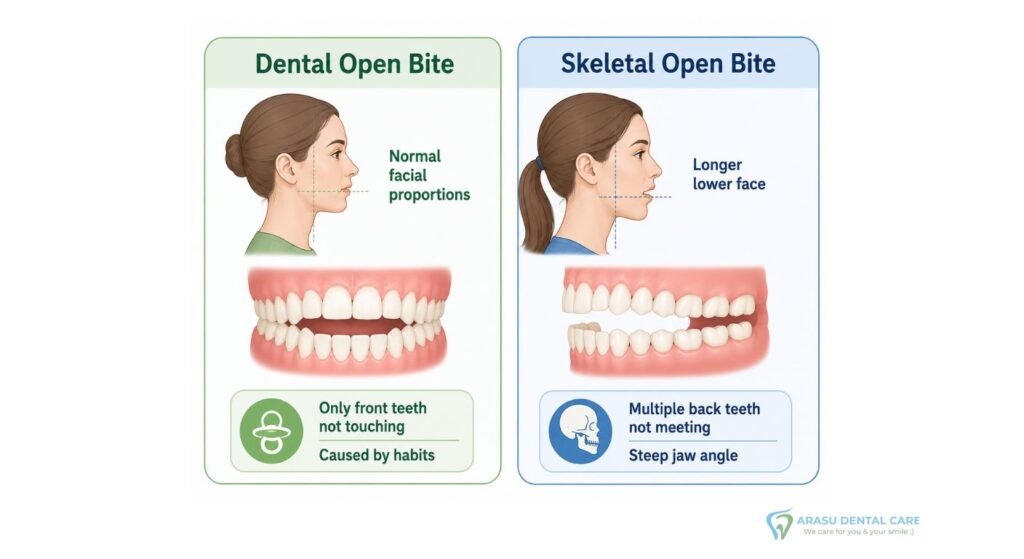
Understanding the cause is the most important part of planning effective open bite treatment. Broadly, open bites are either dental (tooth-related) or skeletal (jaw-related) — and sometimes a combination of both.
|
Cause |
How It Leads to Open Bite |
Common Age Group |
|
Thumb / pacifier sucking |
Prolonged pressure pushes front teeth outward |
Children |
|
Tongue thrusting |
Tongue rests/pushes between teeth during swallowing or speech |
Children & adults |
|
Mouth breathing |
Often linked to airway issues; alters tongue and jaw posture |
All ages |
|
Skeletal growth pattern |
Jaws grow apart vertically rather than parallel (often genetic) |
Teens & adults |
|
Jaw injury or TMJ issues |
Disrupts normal alignment |
Adults |
A key clinical distinction, well documented in research published on PubMed Central, is whether the bite is dentoalveolar (involving only the teeth) or skeletal (involving the jaw structure). This single factor heavily influences treatment choice and long-term stability.
Why Open Bite Treatment Matters
An untreated open bite is rarely just a cosmetic concern. Over time, it can affect daily function and oral health in ways many patients don’t expect.
- Difficulty biting and chewing — especially with foods that require the front teeth, like sandwiches or fruit.
- Speech changes — lisping and altered pronunciation are commonly reported.
- Uneven tooth wear — because the back teeth take on more load, they may wear down or crack.
- Gum and comfort issues — mouth breathing associated with some open bites can lead to gum irritation.
We always frame treatment as an informed choice rather than an urgent push. After evaluating your condition, our role is to explain the available options and help you choose the approach that best suits your needs.
Orthodontic Solutions for Open Bite Treatment
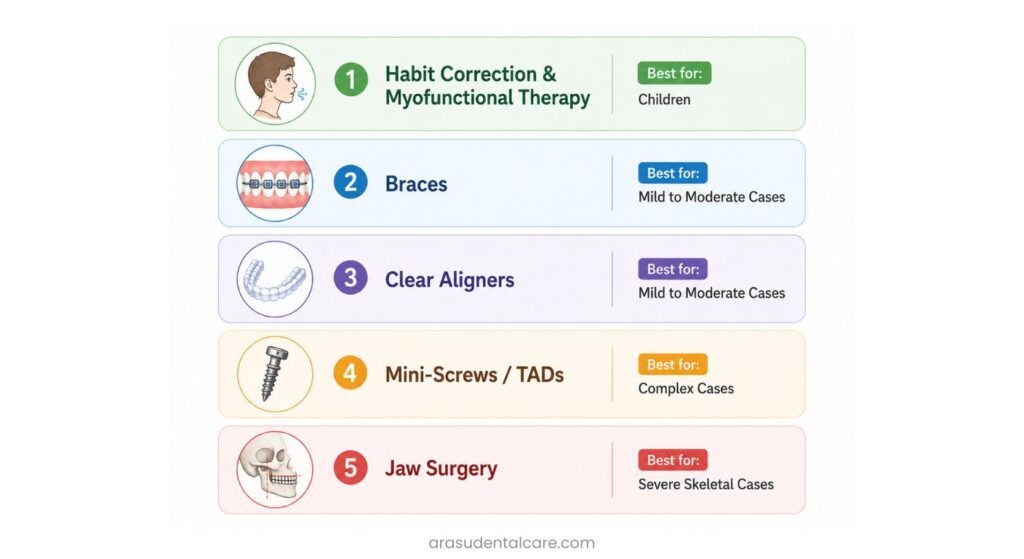
Modern dentistry offers a spectrum of solutions — from gentle habit correction in young children to advanced orthodontic mechanics and, in select cases, surgery. Here’s how they compare.
1. Habit Correction & Early Intervention (Children)
In young children, many simple anterior open bites resolve on their own once a habit (like thumb sucking) stops. Research indicates a high rate of spontaneous correction during the transition to permanent teeth.
For persistent habits, orthodontists may use:
- Tongue cribs — a small appliance that gently discourages tongue thrusting.
- Habit-reminder appliances — to break thumb or finger sucking.
- Orofacial myofunctional therapy (OMT) — exercises that retrain tongue and lip posture.
Early evaluation is valuable. A child’s first orthodontic check is generally recommended around age 7, when emerging adult teeth can be assessed.
2. Braces (Fixed Appliances)
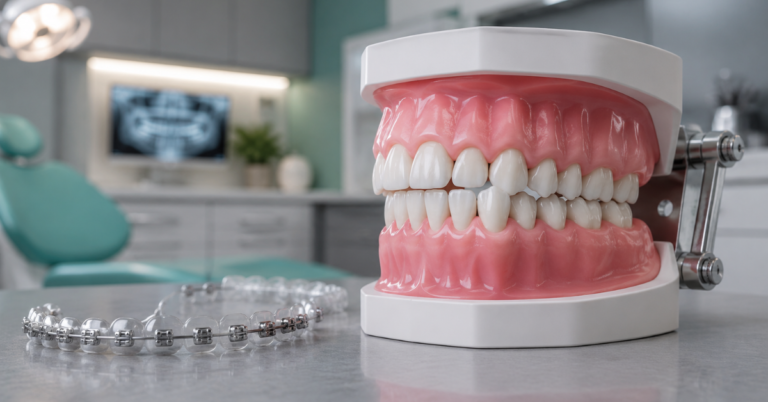
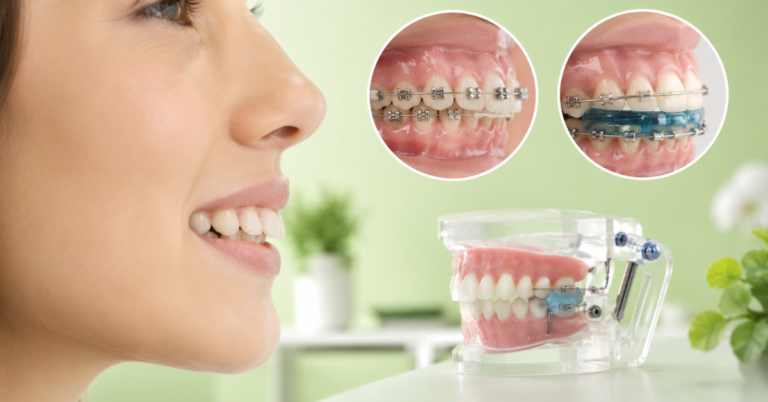
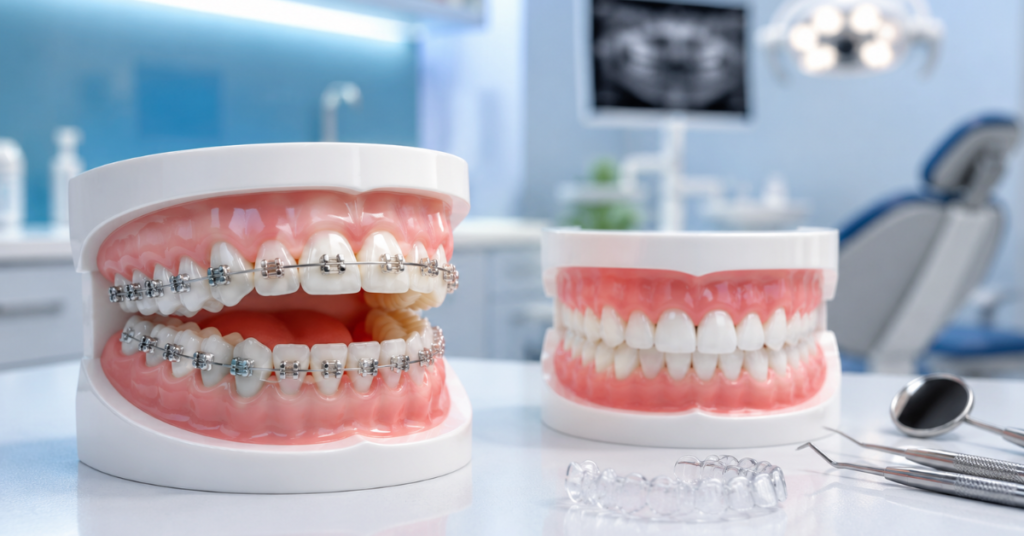
Braces remain a reliable, predictable option for many open bite cases. By applying carefully controlled forces, they can extrude (gently bring together) the front teeth or reposition the bite.
- Metal braces — durable and effective for complex movements.
- Ceramic braces — tooth-coloured for a more discreet look.
Treatment typically spans 18–30 months depending on severity, followed by retainers.
3. Clear Aligners (e.g., Invisalign)
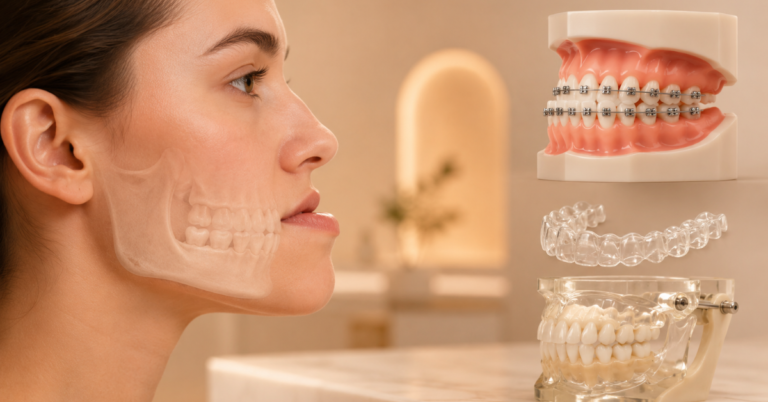
Clear aligners in coimbatore have become an increasingly effective strategy for mild to moderate open bites. A comprehensive review in the Journal of Dental Sciences notes that aligners can support molar control thanks to their posterior coverage, and the plastic itself may help reduce an adaptive tongue thrust.
Their key advantages:
- Virtually invisible
- Removable for eating, brushing and flossing
- No dietary restrictions
For image-conscious adults and professionals, aligners are often the preferred route — provided the case is suitable.
4. Mini-Screws (TADs) for Adult Skeletal Cases
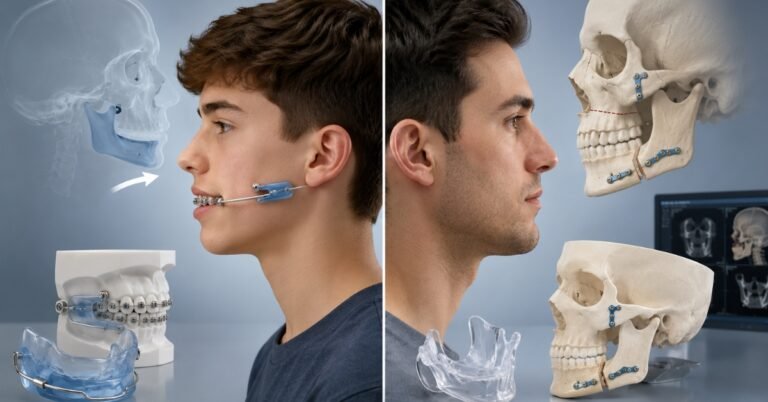
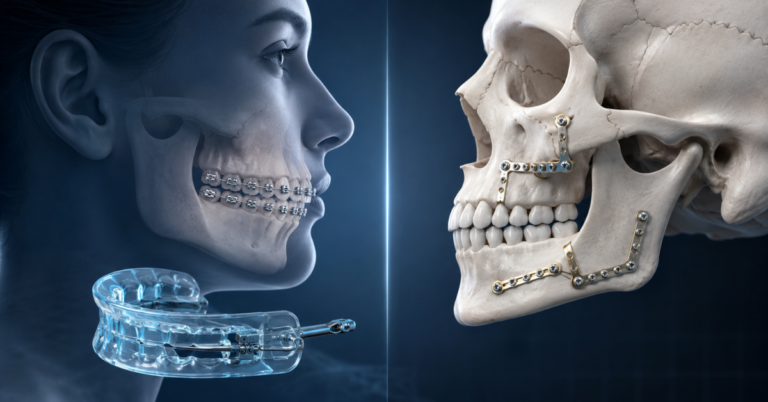
One of the most significant advances in adult open bite treatment is the use of temporary anchorage devices (TADs) — small mini-screws that allow orthodontists to intrude (push up) the back teeth. As the molars move, the jaw rotates forward and closes the bite. This technique has, in many cases, become a viable alternative to surgery for moderate skeletal open bites.
5. Orthognathic (Jaw) Surgery
For severe skeletal open bites — generally greater than 5mm or involving significant jaw discrepancy — a combination of orthodontics and corrective jaw surgery may be recommended. This is always discussed transparently as one of several options, performed under appropriate anesthesia, and reserved for cases where orthodontics alone cannot deliver a stable result.
How Open Bite Treatment Works: Step-by-Step
Here’s what the journey typically looks like at a multispecialty clinic like ours.
- Initial consultation & examination — A thorough assessment of your teeth, jaw, bite and any contributing habits.
- Diagnostics & imaging — Digital X-rays, photographs and, where needed, 3D imaging help distinguish dental from skeletal causes.
- Personalised treatment planning — We explain the suitable options, expected timelines and predictable outcomes, then plan around your needs.
- Active treatment — Whether braces, aligners or appliances, regular check-ups ensure teeth are moving as planned.
- Retention phase — Retainers (often with posterior coverage or tongue-position reminders) protect the result and help prevent relapse.
Treatment by Age Group
|
Age Range |
Typical Approach |
|
0–6 years |
Usually no intervention; limit thumb/pacifier habits |
|
7–10 years |
Habit appliances, tongue cribs, myofunctional therapy |
|
11–17 years |
Braces or aligners; growth modification where suitable |
|
18+ years |
Aligners or braces; TADs for skeletal cases; surgery for severe cases |
The encouraging takeaway: open bite is treatable at any age. It is simply easier and more comfortable to address before the jaw fully matures.
A Note on Stability
Open bite is known among orthodontists as a malocclusion that requires careful attention to long-term stability. Evidence suggests that treatments which address the underlying cause — including habit correction and myofunctional therapy — tend to hold better over time. Extraction-based approaches and TAD-supported molar intrusion have also shown encouraging stability in research.
This is precisely why a correct diagnosis matters so much. Treating only the visible gap, without addressing the cause, risks relapse.
Frequently Asked Questions
1. Can an open bite correct itself?In young children with baby teeth, a mild open bite often resolves once habits like thumb sucking stop. In adults with fully developed jaws, it will not self-correct and requires treatment.
2. Is open bite treatment painful?Treatment is designed to be comfortable. You may feel mild pressure after adjustments or new aligner trays, which usually settles within a day or two. Any surgical option is performed under appropriate anesthesia.
3. Can clear aligners fix an open bite?Yes, for mild to moderate cases. Clear aligners can be very effective and offer a discreet, removable option. A consultation will confirm whether your case is suitable.
4. How long does open bite treatment take?Most orthodontic treatments take between 18 and 30 months, followed by a retention phase. The exact timeline depends on the cause and severity of your open bite.
5. Do I need surgery for an open bite?Not usually. Surgery is reserved for severe skeletal open bites where orthodontics alone cannot achieve a stable result. Many cases are now managed non-surgically using braces, aligners or mini-screws.
6. Will my open bite come back after treatment?Relapse is possible, particularly if the original cause (such as tongue thrusting) isn’t addressed. Wearing retainers as advised and completing any recommended myofunctional therapy greatly improves long-term stability.
7. At what age should my child be evaluated?Around age 7 is ideal. This allows early detection and, if needed, gentle interceptive treatment before the jaw fully develops.
8. Can adults still get open bite treatment?Absolutely. With modern options like aligners and TADs, adults achieve excellent, predictable outcomes — even for cases that once required surgery.
Take the Next Step Toward a Confident Bite
An open bite can affect how