Crossbite Correction: When Is Treatment Necessary?
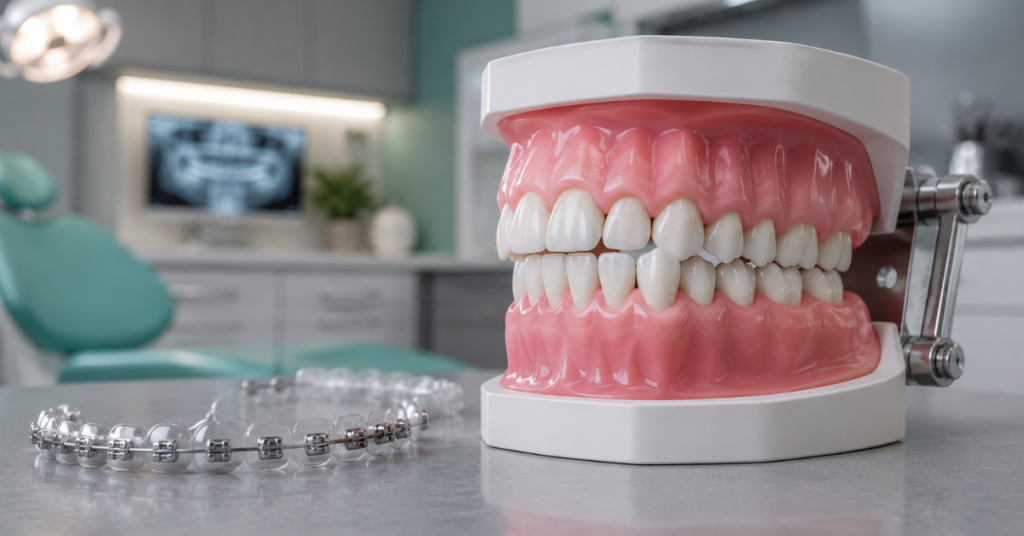
When you bite down, do your top teeth sit inside your bottom teeth instead of slightly overlapping them? If so, you may be dealing with a crossbite — and you’re probably wondering whether crossbite correction is something you genuinely need or something you can safely leave alone.
It’s a fair question. Not every bite irregularity demands immediate intervention, but some crossbites quietly cause damage over years. At Arasu Dental Care, our orthodontic team meets patients every week who delayed treatment simply because no one explained when it actually mattered.
This guide is here to change that. We’ll walk you through what a crossbite is, the different types, the warning signs, and — most importantly — when treatment is truly necessary versus when monitoring is enough.
What Is a Crossbite?
A crossbite is a type of malocclusion (a misalignment of how your upper and lower teeth meet). In a healthy bite, the upper teeth rest slightly outside the lower teeth. In a crossbite, one or more upper teeth sit behind or inside the lower teeth when the mouth is closed.
It can affect a single tooth, a group of teeth, the front of the mouth, or the back — and the cause can be dental (the teeth are tipped), skeletal (the jaw bones are mismatched), or functional (the jaw shifts to one side when closing).
According to the American Association of Orthodontists, a crossbite is one of the most common bite problems and is best evaluated by an orthodontic specialist, ideally during childhood.
The Different Types of Crossbites
Understanding which type you have helps explain why treatment may or may not be needed. Crossbites are usually grouped by location and by what’s causing them.
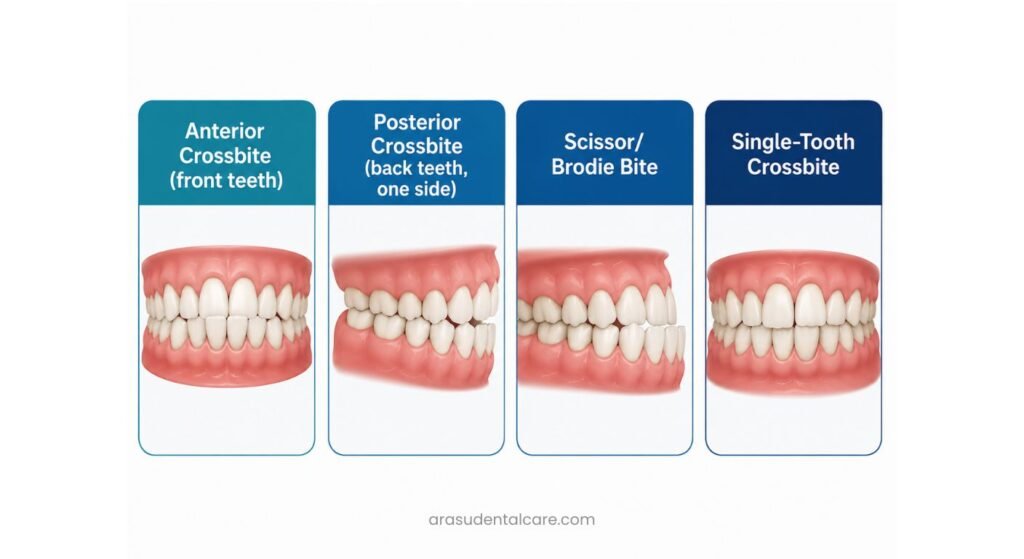
Anterior Crossbite
This occurs in the front of the mouth, where one or more upper front teeth sit behind the lower front teeth. When all the front teeth are affected, it often presents as an underbite.
Posterior Crossbite
This affects the back teeth, where the upper back teeth bite inside the lower ones — on one side (unilateral) or both (bilateral). Research published by Cochrane notes that between 1% and 16% of children with only baby teeth have posterior crossbites, and most persist after the adult teeth come in.
Other Crossbite Variations
|
Type |
What It Means |
|
Scissor (Brodie) bite |
Upper back teeth bite completely outside the lower teeth |
|
Single-tooth crossbite |
One tooth is out of alignment, often from delayed eruption |
|
Dental crossbite |
Caused by tipped or misplaced teeth |
|
Skeletal crossbite |
Caused by a jaw-size or growth discrepancy |
|
Functional crossbite |
The jaw shifts sideways to find a comfortable bite |
What Causes a Crossbite?
Crossbites rarely appear out of nowhere. The most common contributing factors include:
- Genetics — an undersized upper jaw, cleft palate, or inherited jaw shape
- Delayed loss of baby teeth or early loss, disrupting eruption
- Abnormal eruption of permanent teeth before baby teeth fall out
- Prolonged thumb sucking or pacifier use, which alters upper jaw shape
- Mouth breathing linked to enlarged tonsils or chronic nasal congestion, which can hinder upper jaw growth
- Tongue thrusting when swallowing
In children, habits and growth patterns are often the trigger. In adults, the crossbite is usually a long-standing dental or skeletal issue that was never corrected.
Warning Signs and Symptoms to Watch For
Many people live with a crossbite for years without realising it. But here are the symptoms that should prompt a professional evaluation:
- Difficulty or discomfort while chewing
- Repeated cheek biting on one side
- Visible tilting of the jaw or facial asymmetry
- Jaw, neck, or shoulder pain
- Frequent headaches
- Teeth grinding (bruxism)
- Uneven or accelerated tooth wear
- A noticeable shift of the jaw to one side when closing
A child may also show speech difficulties (such as a lisp) or biting the inside of the cheek frequently.
When Is Crossbite Correction Actually Necessary?
This is the question that brings most patients to us — so let’s answer it honestly. A crossbite is not a cosmetic afterthought; it can affect long-term oral health. But the urgency depends on several factors.
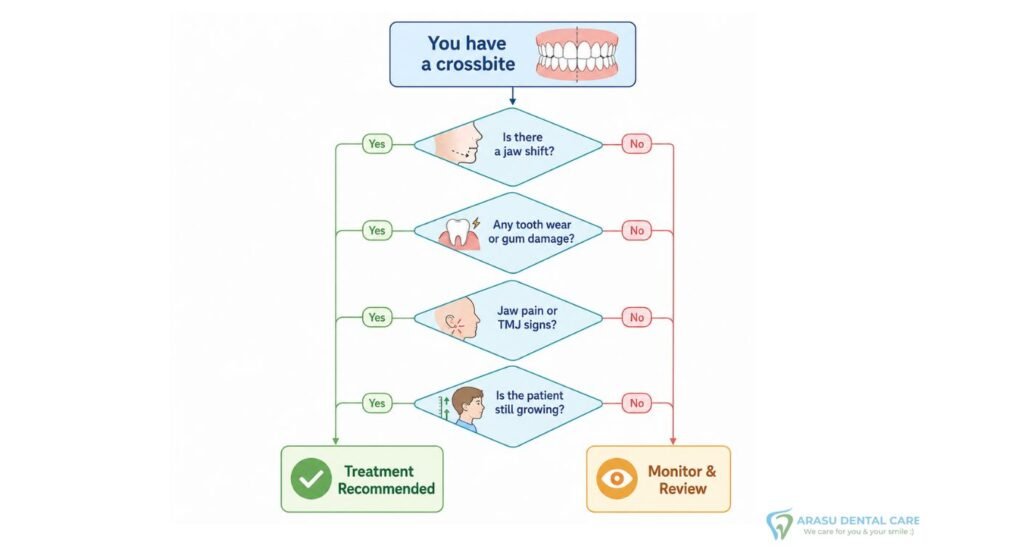
Treatment Is Generally Necessary When:
1. There’s a functional jaw shift.This is the most important red flag. When the lower jaw shifts sideways to find a bite, it can lead to uneven jaw growth, facial asymmetry, and temporomandibular (TMJ) strain over time. Specialists like Dr. Robert Binder, published in Pediatric Dentistry, note that crossbites with a functional shift should be treated as soon as clinically feasible.
2. The crossbite is causing measurable tooth wear or gum damage.Abnormal contact accelerates enamel wear and can lead to gum recession and bone loss around affected teeth.
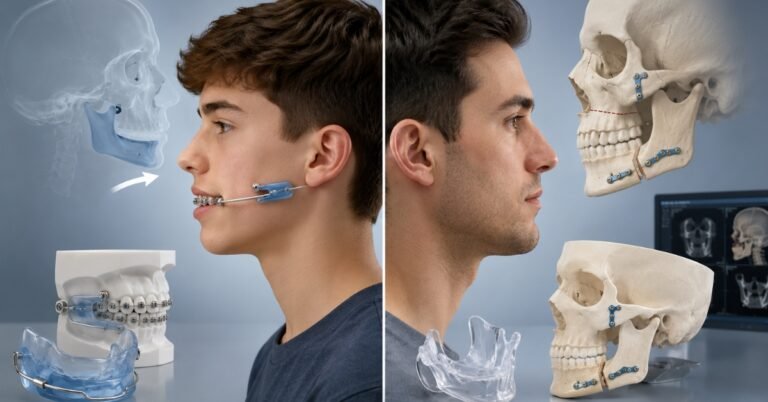
3. It’s affecting a growing child.Childhood is the ideal window because the jaws are still developing. Correcting a crossbite around age 7 can guide healthy jaw growth and prevent more complex problems later.
4. There are signs of TMJ involvement.Jaw pain, clicking, or headaches linked to the bite are strong indicators that intervention is worthwhile — an area our founder, an orthodontist and TMJ specialist in coimbatore, evaluates carefully.
5. Chewing, speech, or self-confidence is affected.Functional and aesthetic concerns are valid reasons to treat.
Monitoring May Be Reasonable When:
- The crossbite is very mild, stable, and causing no symptoms
- A young child is in early dental development and the issue may self-correct with growth
- An adult has a long-standing crossbite with no wear, pain, or functional shift — though this still warrants periodic review
The honest takeaway: a crossbite rarely improves on its own once permanent teeth are in. As one clinical review on crossbite correction confirms, this type of malocclusion does not diminish with age. So while not every case is urgent, most benefit from professional assessment.
How Is a Crossbite Corrected? Treatment Options Explained
The right approach depends on your age, the type of crossbite, and its severity. Here’s an overview of the most common, evidence-based methods.
|
Treatment |
Best For |
How It Works |
|
Palatal expander |
Growing children with a narrow upper jaw |
Gradually widens the upper palate |
|
Braces |
Children, teens, and adults |
Move teeth into correct bite position |
|
Clear aligners (Invisalign) |
Mild to moderate cases |
Discreetly reposition teeth in stages |
|
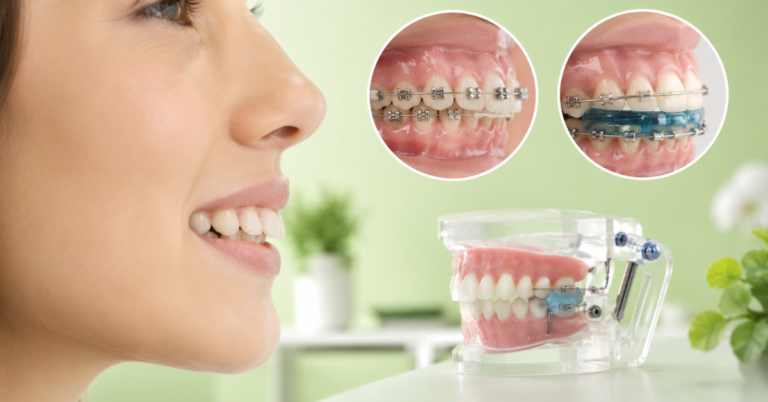
Elastics with braces |
Single or grouped teeth |
Apply targeted directional force |
|
Removable appliances |
Early/mild cases |
Apply gradual pressure to reposition teeth |
|
Myofunctional therapy |
Tongue thrusting / mouth breathing |
Retrains oral muscles |
|
Tooth removal |
Crowding cases |
Creates space for alignment |
|
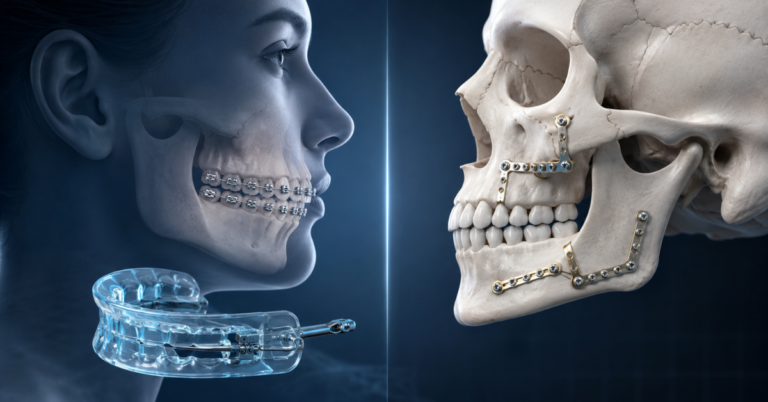
Jaw surgery |
Severe skeletal cases in adults |
Repositions the jaw bone |
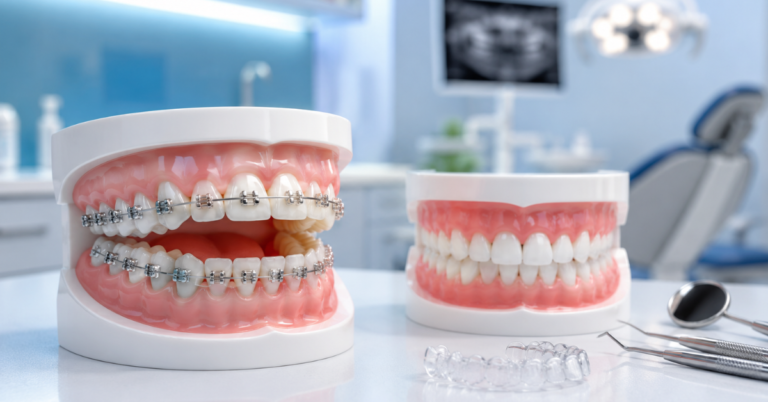
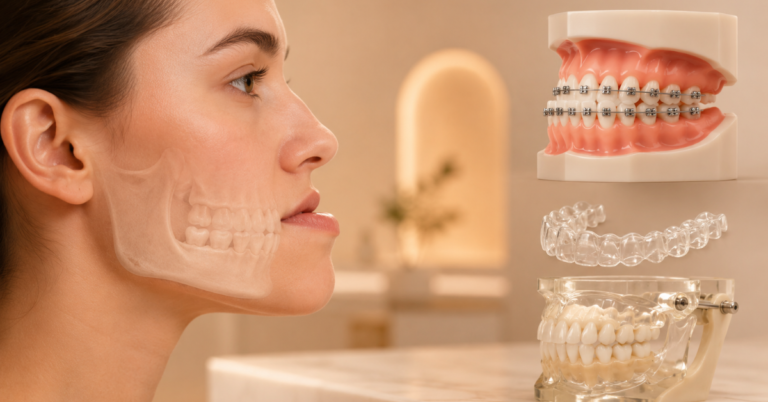
Clear aligners have become a popular choice for suitable cases. According to information shared by Invisalign, aligners can correct many crossbites depending on type, age, and cause — offering an aesthetic, removable alternative to fixed braces.
How to Approach Crossbite Correction: A Simple Step-by-Step
Here’s what a thoughtful, patient-centred treatment journey typically looks like:
Step 1: Comprehensive evaluation.A specialist examines your bite, checks for a functional jaw shift, and takes diagnostic records (scans, X-rays, or models).
Step 2: Diagnosis and explanation.You learn whether your crossbite is dental, skeletal, or functional — and whether it needs treatment now or monitoring.
Step 3: Personalised treatment plan.Your orthodontist explains the available options, expected timeline, and costs transparently so you can make an informed choice.
Step 4: Active treatment.This may involve expansion, braces, aligners, or a combination — adjusted over regular visits.
Step 5: Retention and review.A retainer helps maintain the corrected bite, with periodic follow-ups to ensure stability.
How Long Does Crossbite Correction Take?
There’s no single answer — it depends on the cause and severity. Mild dental crossbites corrected with braces or aligners may take a few months to over a year. Cases involving jaw expansion or surgery typically require longer treatment and recovery.
In children, early intervention can sometimes shorten and simplify the overall process — which is one of the strongest reasons to seek an evaluation around age 7.
Why Choose Arasu Dental Care for Crossbite Correction
Crossbite treatment sits at the heart of what our team does best. Our clinic is led by Dr. P.S. Sree Cumar — an orthodontist, dentofacial orthopedics specialist, and TMJ pain expert, and a Fellow of the World Federation of Orthodontists (USA).
That combination matters for crossbites, because the cases most worth treating often involve a functional jaw shift or TMJ strain — precisely where best orthodontist in coimbatore expertise makes a difference.
You’ll also benefit from:
- A genuine multispecialty team under one roof
- Braces and clear aligner options tailored to your case
- A comfort-first, patient-focused approach for nervous patients and children
- Transparent guidance — we explain when treatment is needed and when it isn’t
- Open all seven days, 10 AM – 8:30 PM, for easy scheduling
Frequently Asked Questions
1. Can a crossbite correct itself without treatment?Generally no. Once permanent teeth have erupted, a