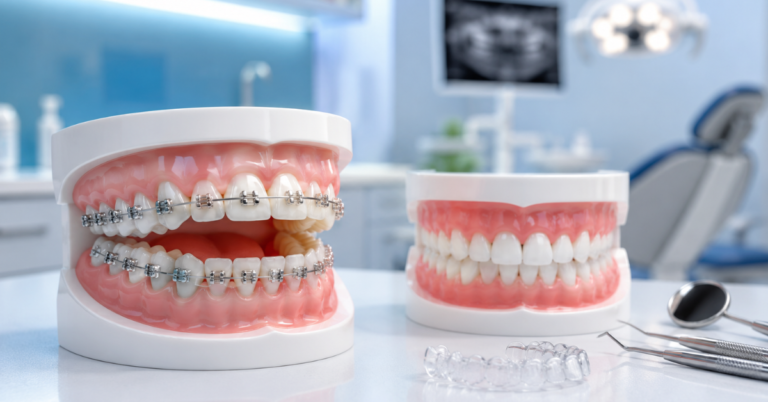
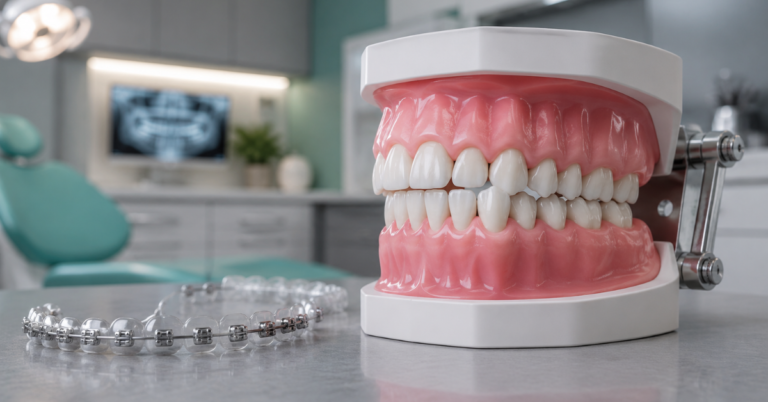
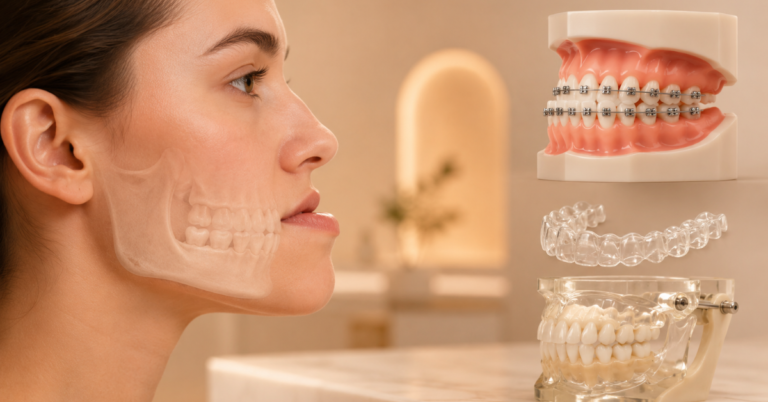
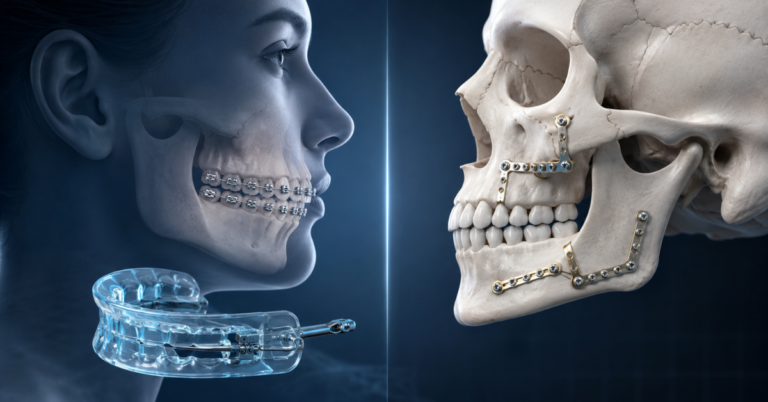
Lingual Braces vs Traditional Braces
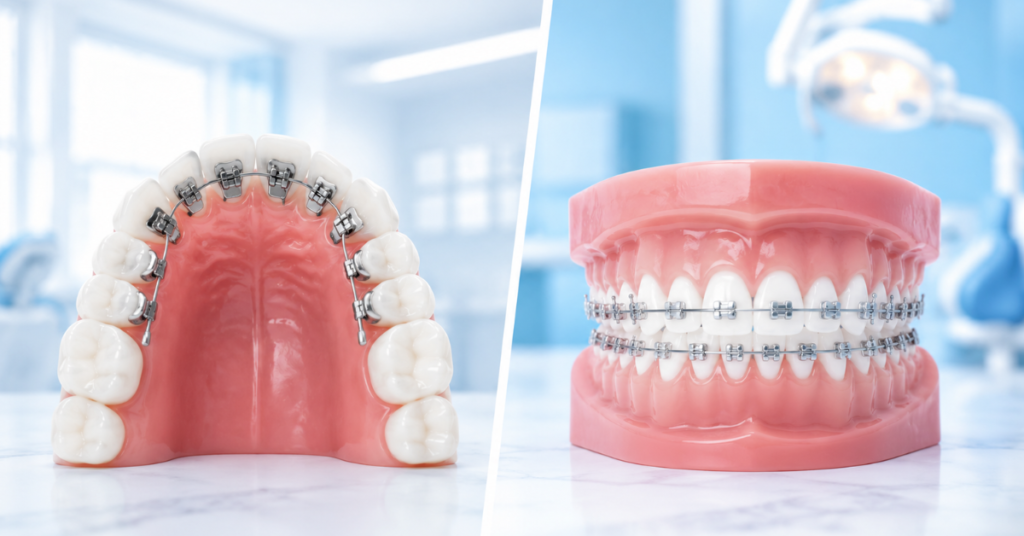
Choosing between lingual braces vs traditional braces is one of the most common questions our orthodontic team hears from adults and teens who want straighter teeth without compromising on how they look during treatment.
Both options move your teeth using brackets and wires. Both can correct crowding, gaps, and bite problems. The real difference comes down to visibility, comfort, cost, and lifestyle fit.
At Arasu Dental Care, our founder Dr. P.S. Sree Cumar — an orthodontist and Fellow of the World Federation of Orthodontists (USA) — has guided hundreds of patients through this exact decision. This guide shares that clinical experience in plain, honest language so you can make an informed choice.
Let’s walk through everything you need to know.
What Are Traditional Braces?
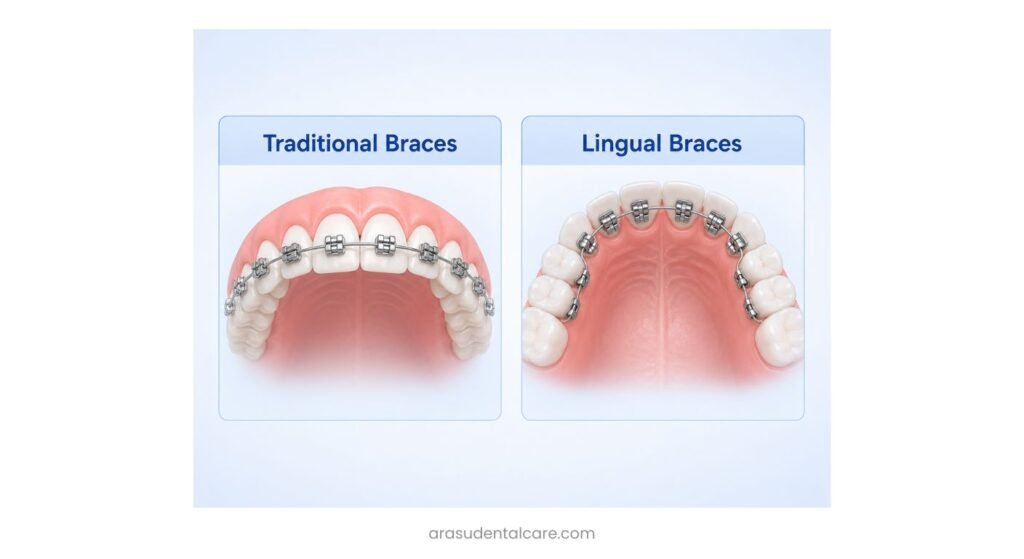
Traditional braces (also called metal braces) are the most familiar orthodontic appliance. They use metal brackets bonded to the front surface of your teeth, connected by an archwire.
That wire applies gentle, continuous pressure that gradually guides teeth into their correct position.
They are highly effective for a wide range of concerns:
- Crowded or overlapping teeth
- Gaps between teeth
- Misaligned bites (overbite, underbite, crossbite)
- Rotated or crooked teeth
Modern metal braces are smaller and more comfortable than older versions, and they remain the most reliable, cost-effective option for complex cases.
What Are Lingual Braces?
The word lingual means “toward the tongue.” So lingual braces are fixed to the back (inner) surface of your teeth, facing your tongue.
Because they sit behind your teeth, they’re nearly invisible when you smile or speak — which is why they’re sometimes called “incognito” or “hidden” braces.
They work on the same principle as traditional braces, but each bracket is usually custom-made to fit the unique shape of the back of each tooth. According to the American Association of Orthodontists, this customisation is part of what makes lingual treatment a specialised, precision-driven approach.
Lingual Braces vs Traditional Braces: How They Work
Both systems rely on the same biological process — controlled, gradual tooth movement.
Traditional braces are placed in a single appointment with standardised brackets and a uniform archwire.
Lingual braces require digital impressions or a 3D scan first. From these, custom brackets and robotically-bent archwires are created in a dental laboratory before placement.
The mechanics are the same. The placement and customisation are what differ.
Key Differences at a Glance
Here’s a side-by-side comparison to make the decision clearer:
|
Feature |
Traditional Braces |
Lingual Braces |
|
Placement |
Front of teeth |
Behind teeth (tongue side) |
|
Visibility |
Clearly visible |
Nearly invisible |
|
Comfort (early days) |
May irritate lips & cheeks |
May irritate tongue |
|
Speech impact |
Minimal |
Temporary lisp possible |
|
Cleaning |
Easier to access |
Requires extra effort |
|
Cost |
More affordable |
Higher (custom-made) |
|
Treatment time |
18–24 months (typical) |
18–36 months (case-dependent) |
|
Best suited for |
All ages, complex cases |
Image-conscious adults & teens |
1. Visibility: The Biggest Difference
For most patients, this is the deciding factor.
Traditional braces are visible on the front of your teeth. Many younger patients actually enjoy this — choosing coloured elastic ties at each visit.
Lingual braces stay hidden behind the teeth. For working professionals, brides, grooms, public speakers, and privacy-minded teens, this discretion can make the entire treatment experience more comfortable emotionally.
The goal isn’t to “hide” treatment out of embarrassment — it’s to let life carry on naturally while your smile improves.
2. Comfort and Adjustment Period
Every orthodontic appliance involves a short adjustment period. The discomfort is different for each type.
Traditional braces may rub against your inner lips and cheeks initially. Orthodontic wax helps ease this.
Lingual braces sit against the tongue, so early soreness tends to affect the tongue area. Most patients adapt within a few weeks.
A helpful tip from our clinic: warm salt-water rinses and orthodontic wax make the first two weeks far smoother for lingual patients.
In both cases, any soreness from tooth movement is temporary and manageable with over-the-counter pain relief.
3. Speech Adjustment
Here’s an honest point many patients appreciate knowing upfront.
Lingual braces can cause a temporary lisp because they sit near the tongue, which forms many speech sounds. The good news? The vast majority of patients adjust within two to four weeks.
Traditional braces rarely affect speech significantly.
Interestingly, patients who play wind instruments often adapt to lingual braces faster.
4. Cleaning and Oral Hygiene
Good oral hygiene matters with any braces, but the approach differs.
Traditional braces are easier to see and reach, making brushing and flossing more straightforward.
Lingual braces sit behind the teeth, so they require extra care. We typically recommend:
- A soft-bristled toothbrush
- Interdental brushes
- A water flosser
- A fluoride rinse, as advised
Research published via the National Library of Medicine (PubMed Central) suggests lingual placement may actually cause less visible decalcification (white marks) on the front of teeth — though diligent cleaning remains essential either way.
Regular professional cleanings help keep both options healthy.
5. Treatment Time
Treatment duration depends far more on your individual case than on the appliance type.
For most patients, both options take a similar amount of time — generally 18 to 24 months, though complex cases may extend longer.
Lingual braces can occasionally require slightly longer treatment or more frequent adjustments because of the precision involved behind the teeth.
Your treatment time ultimately depends on the complexity of your case, your age, and how closely you follow your orthodontist’s guidance.
6. Cost Comparison
Cost is a practical reality, and we believe in discussing it transparently.
Globally, traditional braces are the more economical choice, while lingual braces typically cost more — often 30–40% higher — because of the custom brackets, robotically-bent wires, lab work, and specialised placement involved.
In India, the difference is similar: lingual braces sit at the premium end of the orthodontic treatment in coimbatore spectrum due to their customisation and the advanced skill required to fit them.
Important: Exact pricing depends on your individual case. We provide a clear, personalised cost estimate after your consultation — with no hidden surprises.
How to Choose the Right Option for You
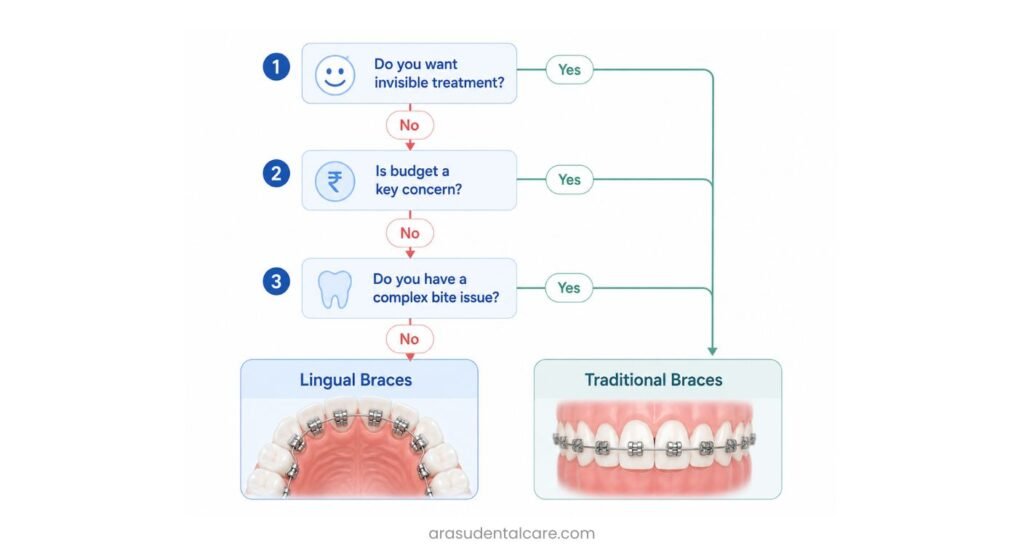
Choosing between lingual and traditional braces comes down to balancing four factors. Here’s a simple framework we use with patients:
Step 1 — Consider visibility.If discreet, hidden treatment matters most, lingual braces are appealing. If you don’t mind visible braces, traditional braces are excellent.
Step 2 — Think about budget.Traditional braces are the more cost-effective choice. Lingual braces are a premium, customised investment.
Step 3 — Assess case complexity.Both handle most issues well. Severe crowding or certain deep bites may be better managed with traditional braces — your orthodontist will advise.
Step 4 — Reflect on lifestyle.Client-facing professionals and image-conscious adults often value lingual discretion. Teens who don’t mind showing braces frequently choose traditional.
The most important step is a professional evaluation. Only a qualified orthodontist can confirm which option suits your bite, anatomy, and long-term stability goals.
Frequently Asked Questions
1. Are lingual braces as effective as traditional braces?Yes. Lingual braces can correct most of the same orthodontic concerns as traditional braces, including crowding, spacing, and many bite issues. The placement differs, but the corrective principle is the same.
2. Do lingual braces hurt more than traditional braces?Neither is “painless,” but discomfort differs in location. Lingual braces may irritate the tongue, while traditional braces may irritate the cheeks and lips. Any soreness is usually temporary and manageable.
3. Will lingual braces affect my speech permanently?No. A temporary lisp is common in the first few weeks as your tongue adjusts. Most patients return to normal speech well before treatment ends.
4. Which is more expensive — lingual or traditional braces?Lingual braces are typically more expensive due to their custom design, laboratory work, and the specialised skill required for placement.
5. Are lingual braces harder to clean?They require a little more effort because they sit behind the teeth. With interdental brushes, a water flosser, and regular dental cleanings, they can be kept perfectly healthy.
6. Can teenagers get lingual braces?Yes, especially teens who maintain consistent oral hygiene. Suitability is always confirmed during the orthodontic consultation.
7. Do both options need retainers afterward?Yes. Retainers are essential after any braces treatment to maintain your results and prevent teeth from shifting back. Retention is a permanent part of responsible orthodontic care.
8. How do I know which option is right for me?The best way is a comprehensive consultation. Your orthodontist will evaluate your teeth, bite, lifestyle, and goals to recommend the most suitable treatment.
Final Thoughts
When comparing lingual braces vs traditional braces, there’s no single “best” choice — there’s only the best choice for you.
Traditional braces offer reliable, cost-effective results for all ages and complexities. Lingual braces offer a discreet, nearly invisible path to the same beautiful outcome, ideal for those who prioritise appearance during treatment.
Both deliver predictable results when guided by an experienced orthodontist.
Ready to Find Your Perfect Smile?
At Arasu Dental Care, our orthodontic team — led by award-winning best orthodontist in coimbatore Dr. P.S. Sree Cumar — will help you understand all your options clearly, so you can choose with confidence and comfort.