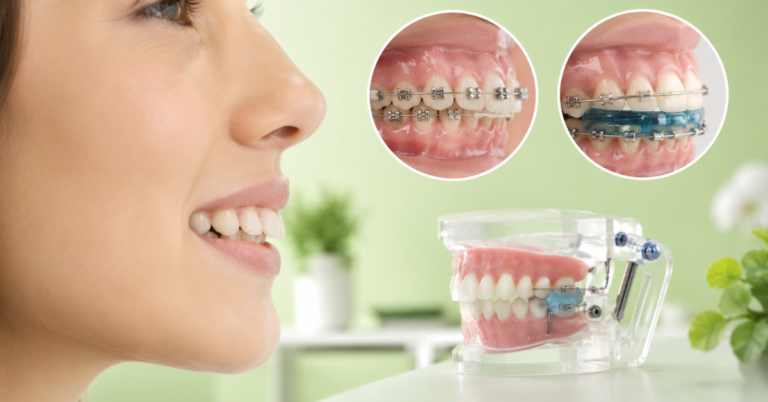
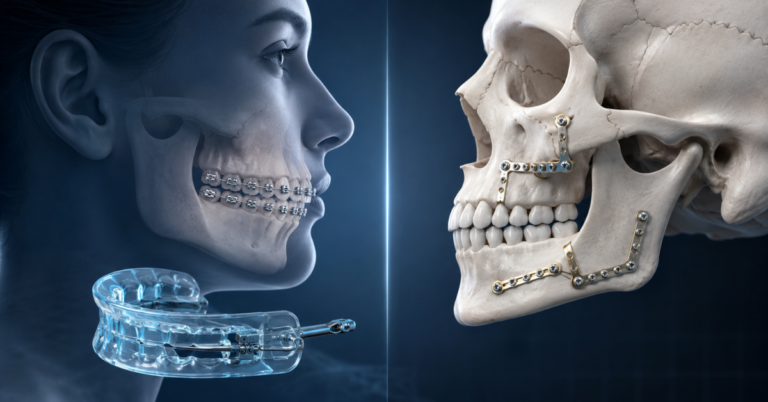
Is It Too Late to Straighten Your Teeth?

If you’ve ever caught your reflection and wondered whether it’s too late to straighten teeth, you’re far from alone. Many adults in Coimbatore quietly assume their chance for a confident, well-aligned smile passed during their school years. The reassuring truth, backed by orthodontic science, is that age is rarely the deciding factor. Teeth can be moved safely and predictably at almost any age — as long as your gums, bone, and overall oral health are sound.
At Arasu Dental Care, our founder Dr. P.S. Sree Cumar — an orthodontist and Fellow of the World Federation of Orthodontists (USA) — regularly meets adults who tell him, “I wish I had done this years ago.” This guide explains exactly what determines whether treatment is right for you, so you can make an informed, confident decision.
Why Age Is Rarely the Real Barrier to Straightening Teeth
There’s a common belief that braces and aligners only work while the jaw is still growing. While it’s true that teeth move slightly faster in children and teenagers, the biology of tooth movement stays the same throughout life.
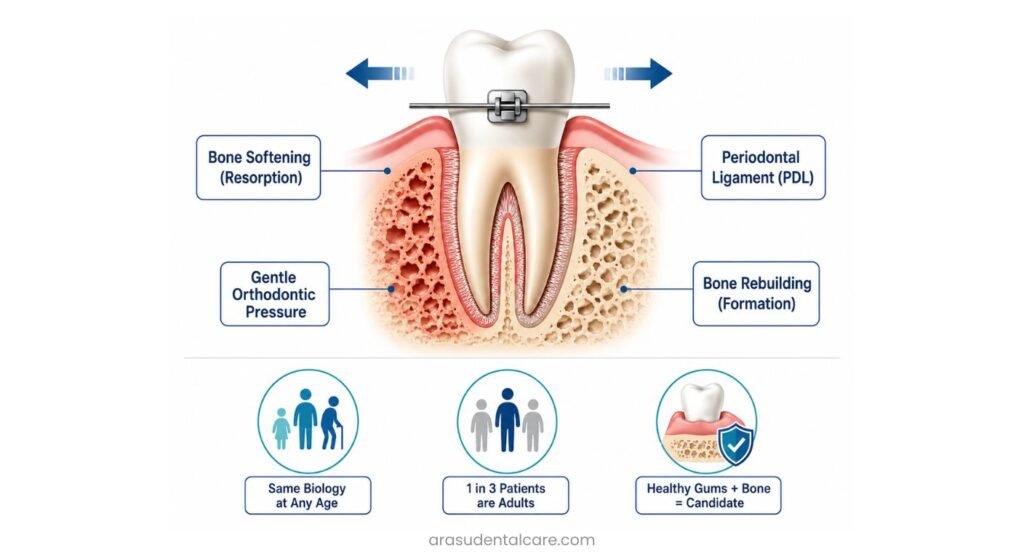
Teeth are held in place by a soft cushion called the periodontal ligament, surrounded by bone. When gentle, consistent pressure is applied, the bone reshapes — softening on one side and rebuilding on the other — allowing the tooth to move into a better position.
This process works at 18, 40, or 70. According to the American Association of Orthodontists, roughly one in three orthodontic patients today is an adult — clear evidence that straightening teeth later in life is both common and effective.
Quick answer: No, it is usually not too late to straighten teeth. As long as your gums and supporting bone are healthy, treatment can succeed at almost any age.
Why More Adults Are Choosing to Straighten Their Teeth
Adult orthodontics has grown steadily, and the reasons go well beyond appearance. In our experience, patients usually arrive for one or more of these reasons:
- Teeth shifting with age — even after childhood braces, teeth gradually drift, especially the lower front teeth.
- Relapse after stopping retainers — a very common reason adults return for treatment.
- Crowding that makes cleaning difficult — raising the risk of cavities and gum disease.
- Bite problems — overbite, underbite, crossbite, or open bite causing uneven wear or jaw strain.
- Preparing for other dental work — such as implants, crowns, or bridges.
- Confidence — a milestone like a wedding, new role, or simply finally investing in oneself.
Many adults spent years focused on careers and family before turning attention to their own health. There’s no “missed window” — only the right moment for you.
Does Straightening Teeth Take Longer for Adults?
Sometimes — but usually not by much. Because adult bone is fully mature and denser, tooth movement can occur slightly more slowly than in a growing teenager.
However, in most cases the complexity of the problem matters far more than your age. A mild case may finish in 8–12 months, while more complex bite corrections can take longer.
Here’s a general guide to what influences treatment time:
|
Factor |
Effect on Treatment Time |
|
Severity of misalignment |
Mild cases finish faster; complex bites take longer |
|
Bone density (adult vs. teen) |
Adults may move slightly slower |
|
Type of appliance chosen |
Varies by case and goals |
|
Patient compliance (aligner wear) |
Consistent wear keeps treatment on track |
|
Gum and bone health |
Healthy tissue supports steady, safe movement |
Your orthodontist can give a personalised timeline only after a full assessment — not before.
Teeth Straightening Options for Adults
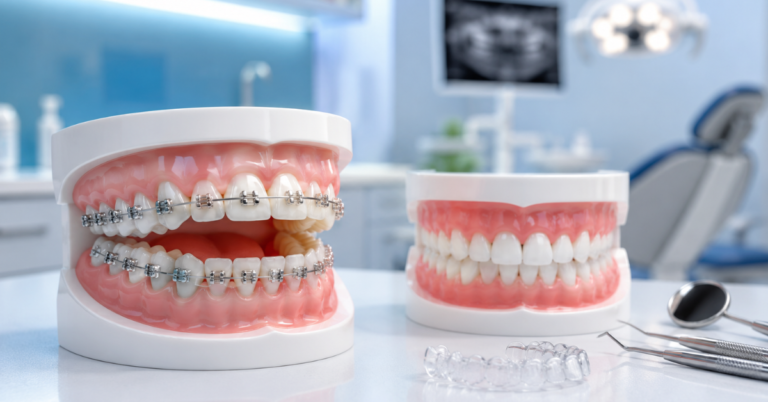
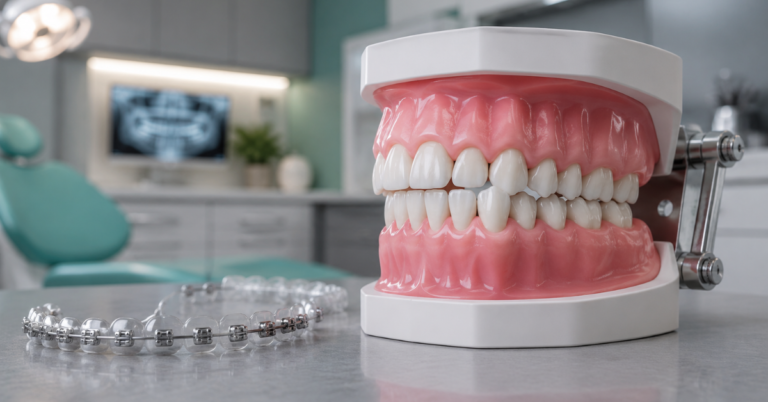
Modern orthodontics offers far more discreet, comfortable options than the bulky metal braces many adults remember. The right choice depends on your bite, lifestyle, and goals.
Traditional Metal Braces
Reliable and highly effective, especially for complex cases requiring precise control. Modern brackets are smaller and more comfortable than older versions.
Ceramic (Clear) Braces
These work like metal braces but use tooth-coloured brackets that blend with your natural teeth — a popular middle-ground for adults wanting something less visible.
Clear Aligners
Removable, nearly invisible trays that gradually shift teeth into position. They’re easy to clean, can be removed for eating, and suit professionals who prefer a discreet look. Not every case is suitable for aligners, so a clinical assessment is essential.
Lingual Braces
Placed behind the teeth, making them virtually invisible. They can take some adjustment for the tongue but are effective and discreet.
Comparing Your Options
|
Option |
Visibility |
Removable |
Best Suited For |
|
Metal braces |
Visible |
No |
Complex cases needing precise control |
|
Ceramic braces |
Less visible |
No |
Aesthetic-conscious patients |
|
Clear aligners |
Nearly invisible |
Yes |
Mild–moderate cases, busy lifestyles |
|
Lingual braces |
Hidden behind teeth |
No |
Those wanting maximum discretion |
A word of caution on direct-to-consumer aligners ordered online: without an in-person examination, underlying gum disease or bite problems can be missed. We always recommend a professional evaluation before starting any teeth-straightening treatment.
The Benefits of Straightening Teeth Later in Life
Straighter teeth offer more than a confident smile. The functional and long-term oral health benefits are genuine:
- Easier cleaning — straight teeth reduce plaque traps, lowering the risk of decay and gum disease.
- Better bite function — improved chewing and more even wear across teeth.
- Reduced jaw strain — correcting misalignment can ease certain bite-related discomfort.
- Support for future dental work — proper alignment can improve outcomes for crowns or implants.
- Greater confidence — a benefit our patients mention again and again.
As WebMD notes, misaligned teeth can lead to uneven wear, damaged fillings, and jaw discomfort — so straightening is often about health, not just looks.
When Age Isn’t the Biggest Factor — What Actually Matters
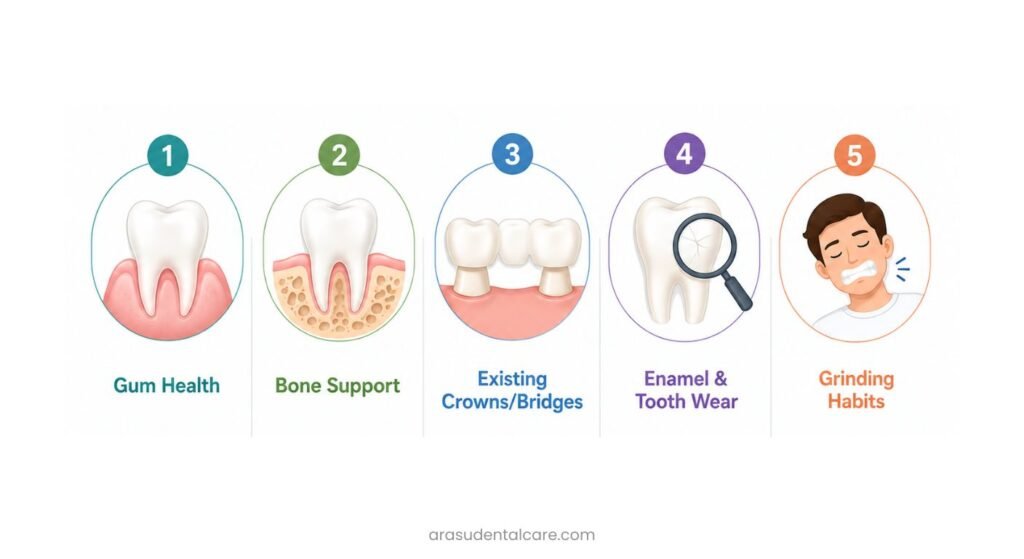
For adults, your orthodontist focuses less on the number of candles on your birthday cake and more on the condition of your mouth. A thorough assessment typically considers:
- Gum (periodontal) health — stable gums are the foundation of safe treatment.
- Bone support — adequate bone is needed to hold teeth securely.
- Existing dental work — crowns, bridges, and implants may affect planning.
- Enamel condition and tooth wear.
- Habits such as grinding or clenching.
This is why patients with treated, stable gum disease can often still proceed, while active, untreated issues need addressing first. Our multispecialty team — including a periodontist and implantologists — allows coordinated care under one roof, which is especially helpful for adults with more complex needs.
How the Adult Orthodontic Journey Works: Step-by-Step
Knowing what to expect can ease any anxiety about starting treatment.
- Initial consultation — Your orthodontist examines your teeth, gums, and bite, and listens to your goals and concerns.
- Records and imaging — Digital scans and X-rays map your teeth and bone, allowing precise planning.
- Personalised treatment plan — You’re shown the available options, expected timeline, and an honest discussion of what each involves.
- Active treatment — Braces are adjusted or new aligners are issued at regular intervals (typically every few weeks).
- Retention — Once teeth reach their ideal positions, retainers maintain the result. Skipping retainers is the most common cause of relapse, so this stage matters for life.
What Treatment Feels Like — An Honest Note
We never describe orthodontic treatment as “painless,” because that wouldn’t be truthful. You may feel mild pressure or tenderness for a day or two after adjustments — a normal sign your teeth are moving.
Most patients describe it as comfortable and entirely manageable. Modern appliances are gentler than older designs, and your care team will guide you on simple ways to stay comfortable throughout.
Frequently Asked Questions
1. Is it too late to straighten teeth in your 40s or 50s?No. Age alone does not prevent treatment. What matters is healthy gums, adequate bone support, and good overall oral health. Many adults in their 40s, 50s, and beyond complete treatment successfully.
2. Can teeth still move after the jaw stops growing?Yes. Tooth movement relies on gentle pressure reshaping the surrounding bone, a process that works throughout adulthood — just sometimes a little slower than in teenagers.
3. Are clear aligners suitable for older adults?They can be, for many mild to moderate cases. Suitability depends on your specific bite and any existing dental work, so a proper clinical assessment is needed.
4. Will straightening my teeth take much longer as an adult?Often only slightly. The complexity of your case usually affects treatment time more than your age. A typical range is 8 months to a couple of years.
5. Do I really need to wear retainers afterwards?Yes. Teeth naturally tend to drift back over time. Retainers protect your investment and are often part of long-term oral care.
6. I have a crown and a missing tooth — can I still get braces?Quite possibly. Crowns and gaps don’t automatically rule out treatment, but they do need careful planning. This is where a multispecialty assessment is valuable.
7. Are online “mail-order” aligners a safe shortcut?We don’t recommend them without an in-person examination. Hidden gum disease or bite issues can be missed, risking your long-term oral health.
8. Is straightening teeth worth it later in life?For many patients, absolutely — both for easier cleaning and oral health and for confidence. The most common regret we hear is simply waiting too long to ask.
Conclusion: Your Smile Has No Expiry Date
So, is it too late to straighten teeth? In the vast majority of cases, the answer is a reassuring no. What truly matters is the health of your gums and bone — not your age. With today’s discreet, comfortable options, achieving a straighter, healthier smile is more accessible than