Is a Dental Bridge Right for You?
If you’ve lost a tooth and find yourself wondering is a dental bridge right for you, you’re asking exactly the right question. A dental bridge is one of the most reliable ways to replace one or more missing teeth — restoring your ability to chew, speak clearly, and smile with confidence.
But a bridge isn’t the only option, and it isn’t right for everyone. The best choice depends on your oral health, the condition of your neighbouring teeth, your budget, and your long-term goals.
In this guide, our specialists at Arasu Dental Care explain how dental bridges work, the different types available, their advantages and limitations, and the key factors that help you make a confident, informed decision.
What Is a Dental Bridge?
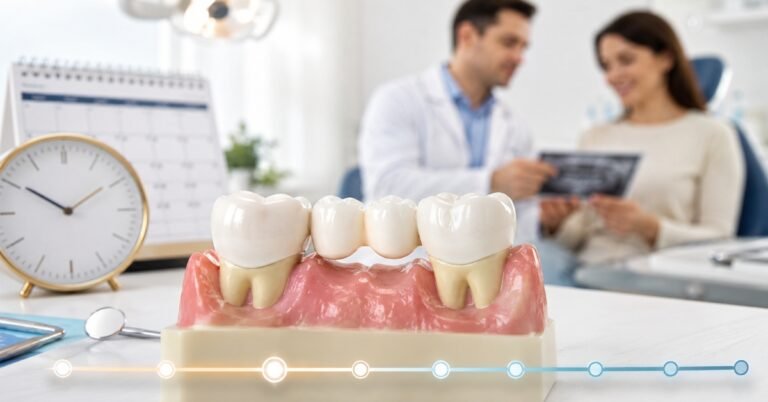
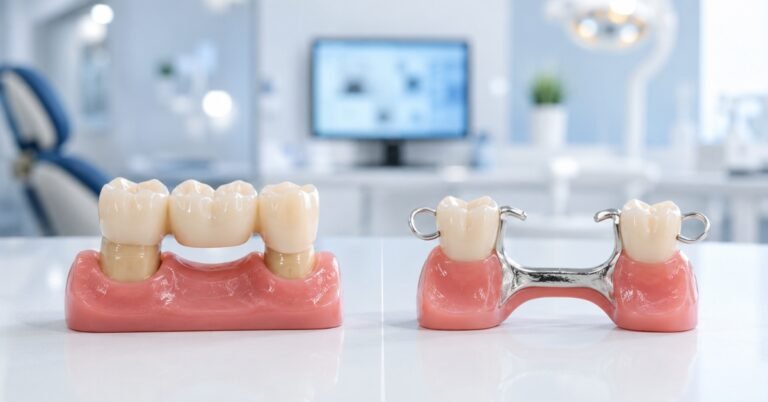
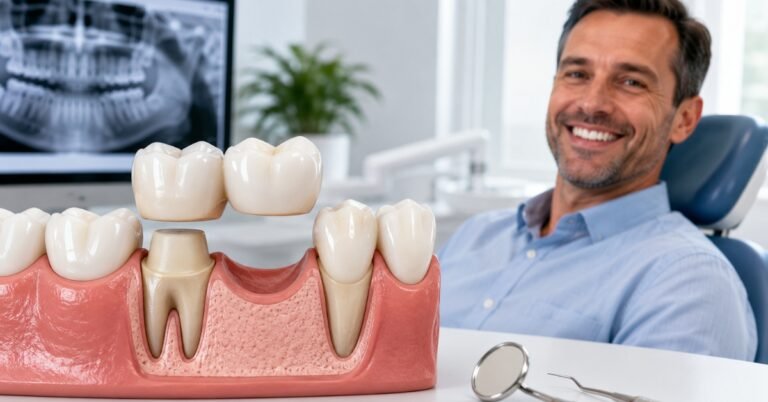
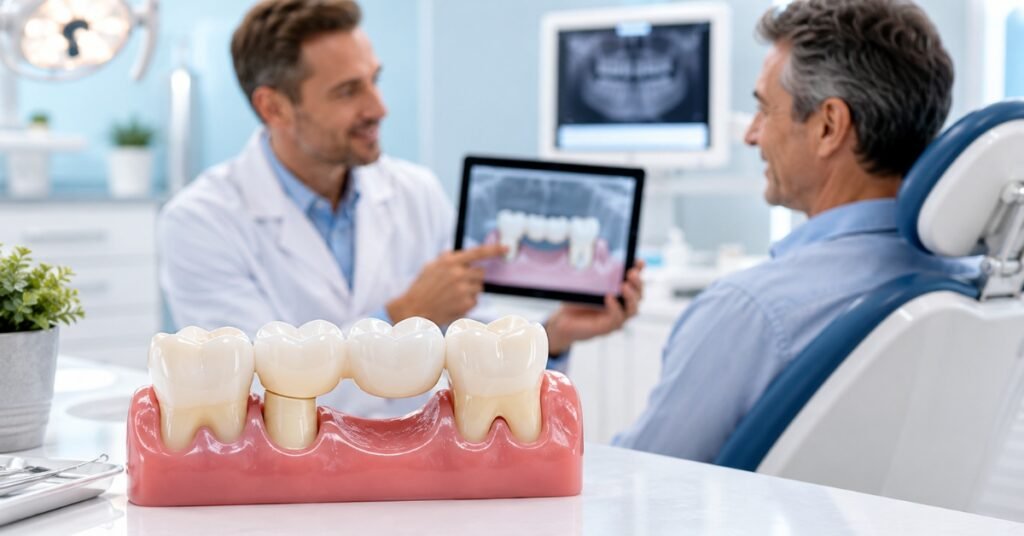
A dental bridge is a fixed (non-removable) prosthetic that “bridges the gap” left by one or more missing teeth. As the name suggests, it spans the empty space and restores both function and appearance.
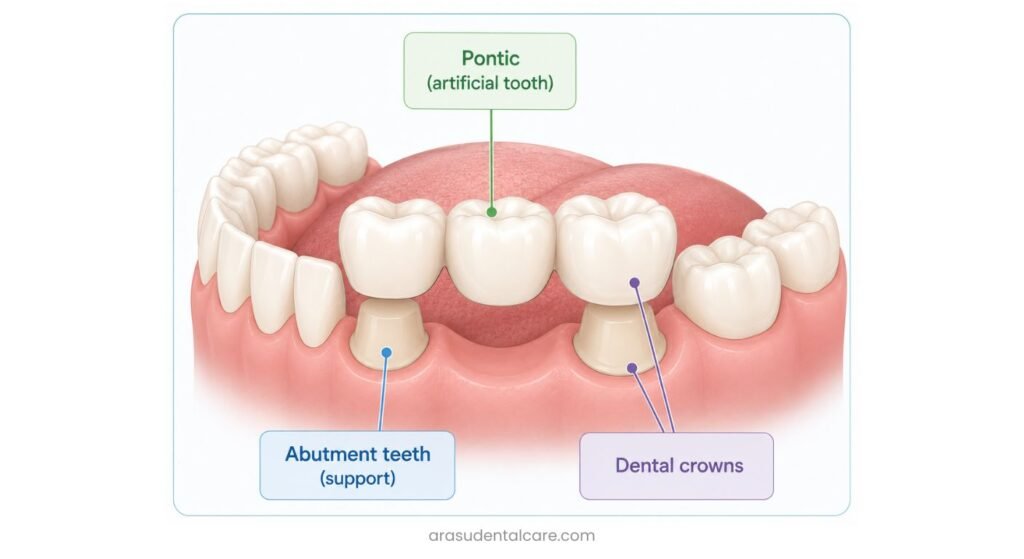
A bridge has two main parts:
- Abutments — the supports for the bridge. These are usually your natural teeth on either side of the gap, but they can also be dental implants.
- Pontics — the artificial teeth that fill the gap and complete your smile.
Modern bridges are custom-made to match the shade and shape of your natural teeth, so they blend in seamlessly. According to the American College of Prosthodontists, bridges are a well-established, proven solution for tooth replacement.
Types of Dental Bridges
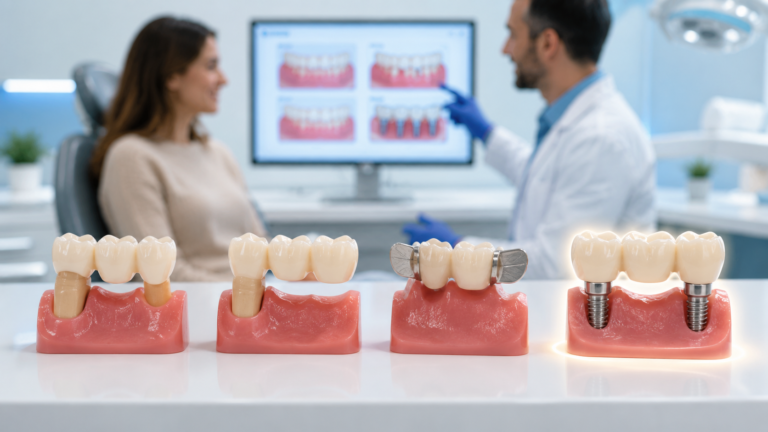
Choosing the right type is the first step in deciding whether a dental bridge is right for you. There are four main types, each suited to different situations.
1. Traditional Dental Bridge
The most common type. It uses dental crowns on the healthy teeth on both sides of the gap, with one or more pontics in between. Ideal when you have strong natural teeth flanking the space.
2. Cantilever Bridge
Similar to a traditional bridge, but it’s supported by a crown on only one side. This is used when there’s a healthy tooth on just one side of the gap. It’s slightly less durable, so it’s typically reserved for areas with lower chewing forces.
3. Maryland Bridge
A more conservative option that uses thin metal or porcelain “wings” bonded to the backs of neighbouring teeth — instead of full crowns. This preserves more of your natural tooth structure and is often used to replace front teeth.
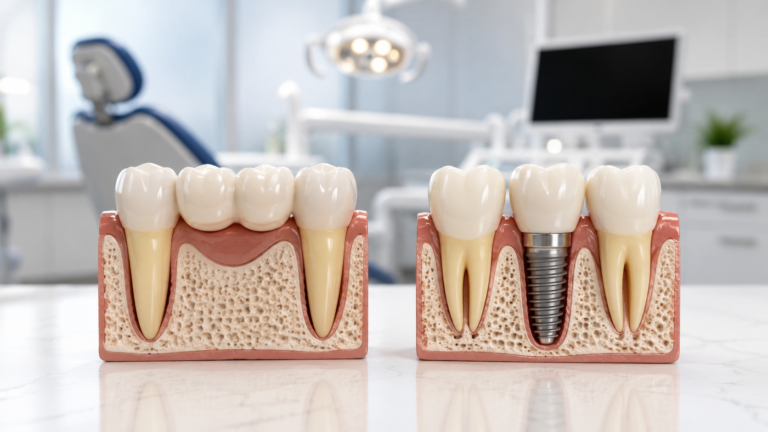
4. Implant-Supported Bridge
Instead of relying on natural teeth, this bridge is anchored to dental implants in coimbatore placed in the jawbone. It’s the most stable and long-lasting option, and is ideal when replacing several teeth in a row or when the neighbouring teeth aren’t strong enough to act as supports.
Quick Comparison Table
|
Type |
Best For |
Support |
Tooth Preparation |
Relative Durability |
|
Traditional |
Healthy teeth on both sides |
Two natural teeth |
Enamel removed from both |
High |
|
Cantilever |
Healthy tooth on one side only |
One natural tooth |
Enamel removed from one |
Moderate |
|
Maryland |
Front teeth, minimal alteration |
Bonded wings |
Minimal |
Lower |
|
Implant-Supported |
Multiple missing teeth |
Dental implants |
None to natural teeth |
Very High |
Benefits of a Dental Bridge
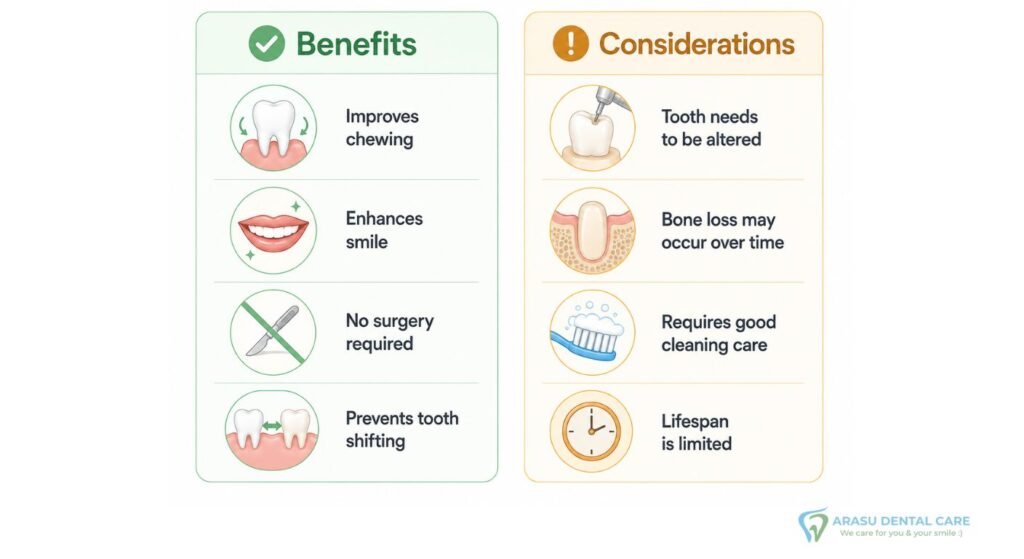
When carefully planned, a dental bridge offers several meaningful advantages:
- Restores chewing and speech — Missing teeth can make eating and speaking difficult. A bridge brings back comfortable, natural function.
- Improves your appearance — A natural-looking pontic fills the gap and helps you smile with confidence again.
- Prevents teeth from shifting — When a tooth is lost, neighbouring teeth can gradually drift into the gap, affecting your bite. A bridge holds everything in place.
- A faster, non-surgical option — Traditional and Maryland bridges usually require no surgery and can be completed in just a couple of visits.
- A practical choice for certain cases — For patients with insufficient bone for implants, a tooth-supported bridge can be a more suitable solution.
Drawbacks to Consider
Every treatment has trade-offs, and being honest about them helps you decide well.
- Alteration of healthy teeth — Traditional and cantilever bridges require reshaping the supporting teeth. This step is irreversible.
- Doesn’t prevent jawbone loss — Because a tooth-supported bridge sits above the gum line, it doesn’t stimulate the underlying bone the way an implant does.
- Cleaning requires extra care — You’ll need to clean under the pontic daily using floss threaders or interdental brushes to prevent decay and gum issues.
- Lifespan — On average, a dental bridge lasts 5 to 15 years with good care. Implants can last considerably longer.
Is a Dental Bridge Right for You? Key Factors to Consider
This is the heart of your decision. Here are the factors our specialists evaluate during a consultation.
1. The Health of Your Neighbouring Teeth
A traditional bridge depends on strong, healthy teeth on either side of the gap. If those teeth have large fillings, decay, or weakened structure, they may not provide reliable support — and an implant-supported option may be better.
2. The Condition of Your Gums
Healthy gums are essential. Any active gum disease needs to be treated first, as it can compromise the long-term success of any restoration.
3. How Many Teeth Are Missing
A bridge works well for one to a few missing teeth in a row. For larger gaps or multiple missing teeth in different areas, an implant-supported bridge or other solution may be more appropriate.
4. Your Jawbone Health
If you have significant bone loss, a tooth-supported bridge may be a practical option since it doesn’t rely on the bone. However, if preserving bone is a priority, implants are worth discussing.
5. Your Budget and Time
Bridges are usually more affordable upfront and faster to complete than implants. If you’re seeking a quicker, non-surgical solution, a bridge may suit you well.
6. Your Long-Term Goals
If longevity is your top priority and you’re a good candidate for surgery, implants may offer better long-term value. The right choice is the one that fits your needs — which is why a personalised evaluation matters.
How Is a Dental Bridge Placed? (Step-by-Step)
Here’s what to expect during a traditional bridge procedure:
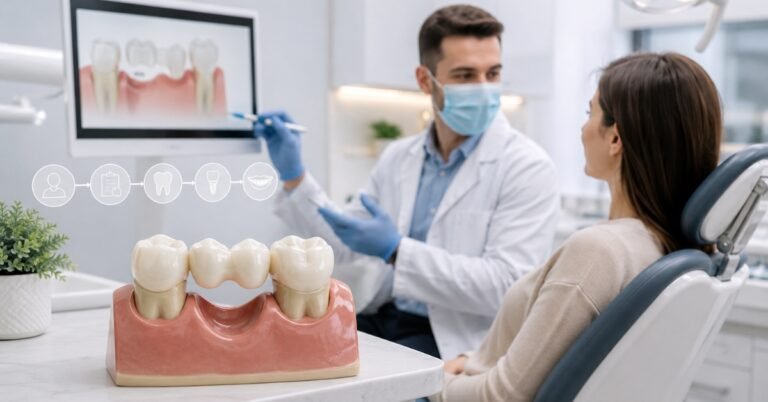
- Consultation & examination — Your dentist evaluates your teeth, gums, and bone, often with an X-ray, and discusses your options.
- Preparing the abutment teeth — A small amount of enamel is reshaped so the crowns can fit. This is done comfortably under appropriate local anaesthesia.
- Taking impressions — Digital or physical impressions are sent to the dental lab, where your custom bridge is crafted to match your natural teeth.
- Temporary bridge — You’ll wear a temporary bridge to protect the prepared teeth while your final bridge is made (usually 1–2 weeks).
- Fitting the final bridge — At your next visit, the fit and shade are checked, and the bridge is securely cemented in place.
For implant-supported bridges, the process includes a healing period for the implants to fuse with the bone (typically a few months) before the bridge is attached.
Bridge vs Implant: Which Should You Choose?
This is one of the most common questions patients ask. Here’s a clear comparison:
|
Factor |
Dental Bridge |
Dental Implant |
|
Surgery required |
Usually no |
Yes |
|
Treatment time |
2 visits over weeks |
Several months |
|
Upfront cost |
Lower |
Higher |
|
Affects neighbouring teeth |
Yes (traditional) |
No |
|
Preserves jawbone |
No |
Yes |
|
Average lifespan |
5–15 years |
15+ years |
According to research published via the National Library of Medicine, dental implants have a high long-term success rate and preserve bone — but bridges remain an excellent, practical choice for many patients depending on their individual situation.
There’s no single “best” answer. The right option depends on your oral health, goals, and preferences — something we’ll explain clearly so you can choose with confidence.
How to Care for Your Dental Bridge
Good maintenance protects your investment and your oral health:
- Brush twice daily with fluoride toothpaste.
- Clean under the bridge daily using floss threaders, superfloss, or interdental brushes.
- Consider using a water flosser for hard-to-reach areas.
- Avoid chewing ice, pens, or very hard foods.
- Visit your dentist regularly for check-ups and professional cleanings.
With consistent care, your bridge can serve you comfortably for many years.
Frequently Asked Questions
1. Is getting a dental bridge painful?No. The procedure is performed under appropriate local anaesthesia to keep you comfortable. You may feel mild sensitivity for a few days afterward, which settles quickly.
2. How long does a dental bridge last?On average, a well-maintained bridge lasts 5 to 15 years. Excellent oral hygiene and regular dental visits can extend its lifespan.
3. Can I eat normally with a dental bridge?Yes. Once you adjust, a bridge restores comfortable chewing. It may take a short while to get used to, much like a new ring on your finger.
4. How many teeth can a bridge replace?Most bridges replace one to three teeth in a row. Larger gaps may need an implant-supported bridge for adequate support.
5. Will a dental bridge look natural?Yes. Bridges are custom-made and colour-matched to your natural teeth, so they blend in seamlessly.
6. How do I clean underneath my bridge?Use floss threaders, superfloss, interdental brushes, or a water flosser to clean beneath the pontic daily. Your dental team will guide you on the best technique.
7. Is a bridge better than an implant?Neither is universally “better.” Bridges are faster and more affordable upfront; implants last longer and preserve bone. The right choice depends on your individual needs.
8. Can a dental bridge be removed and re-cemented?Sometimes. If a bridge becomes loose, it can often be re-cemented. However, in some cases a new bridge may be needed — your dentist will advise based on the situation.
Conclusion: Make a Confident, Informed Choice
A dental bridge can be an excellent, comfortable, and natural-looking way to replace missing teeth — but the right solution always depends on your unique oral health, goals, and preferences.
At Arasu Dental Care, our experienced dental specialists take the time to evaluate your condition, explain all available options, and help you choose the treatment that genuinely suits you — never an unnecessary one. With our multispecialty team under one roof, transparent pricing, and a comfort-first approach, you can make your decision with complete confidence.
Ready to find out if a dental bridge is right for you? Book a consultation with our team at our dental clinic in rs puram or Saibaba Colony, Coimbatore. Call +91 88380 22157 or WhatsApp +91 96007 56297 today — and let us help you smile with confidence again.
We Care for You and Your Smile.