Benefits of Dental Bridges for Missing Teeth
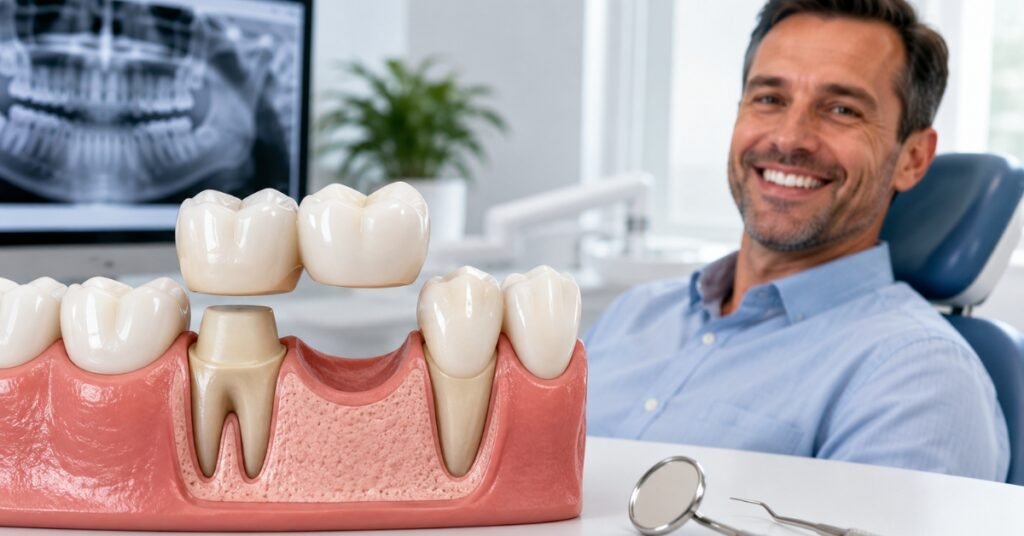
Losing even a single tooth can quietly change how you eat, speak, and smile. If you’ve been weighing your options, understanding the benefits of dental bridges is a great place to start. A dental bridge is a fixed, natural-looking solution that “bridges the gap” left by one or more missing teeth — restoring both function and confidence.
At Arasu Dental Care, we believe you deserve to understand every option before deciding. So in this guide, we’ll walk you through what dental bridges offer, who they suit best, and how they fit into your long-term oral health — clearly and honestly, with no pressure.
What Is a Dental Bridge? A Quick Overview
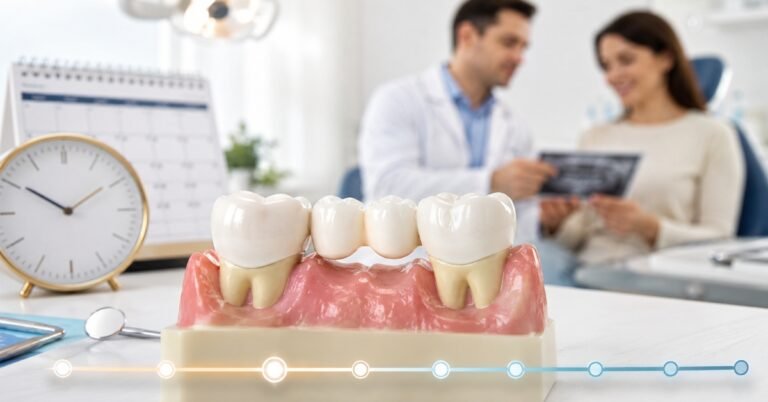
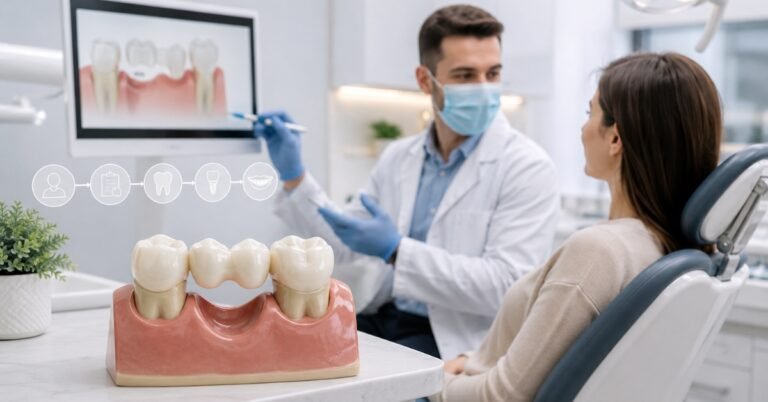
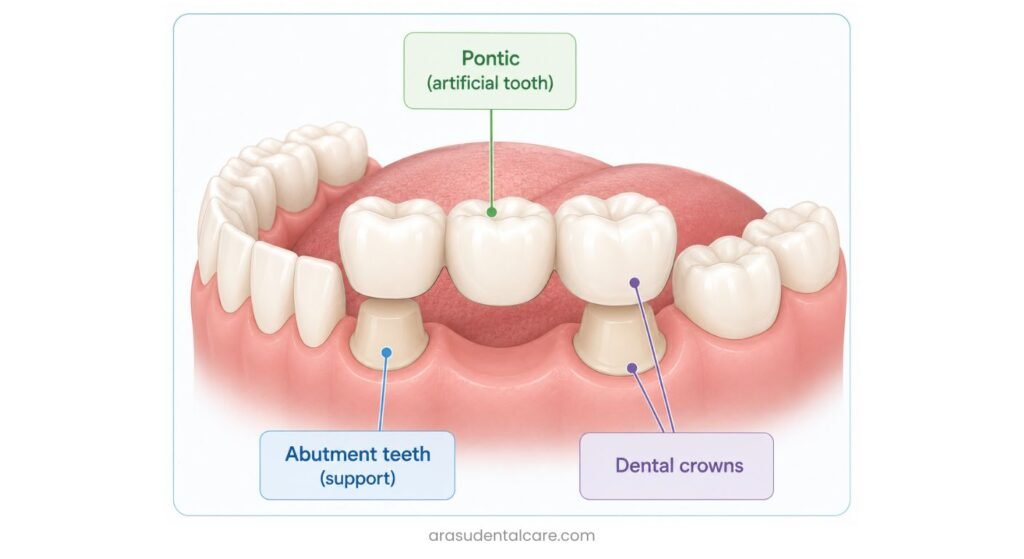
A dental bridge is a custom-made restoration that replaces missing teeth by anchoring an artificial tooth (called a pontic) to the healthy teeth or implants on either side of the gap (called abutments).
Think of it like a small architectural bridge — two supporting pillars on each end, holding a span in the middle that fills the empty space in your smile.
Bridges are typically crafted from porcelain, ceramic, or porcelain-fused-to-metal, all shade-matched to blend seamlessly with your natural teeth.
Common Types of Dental Bridges
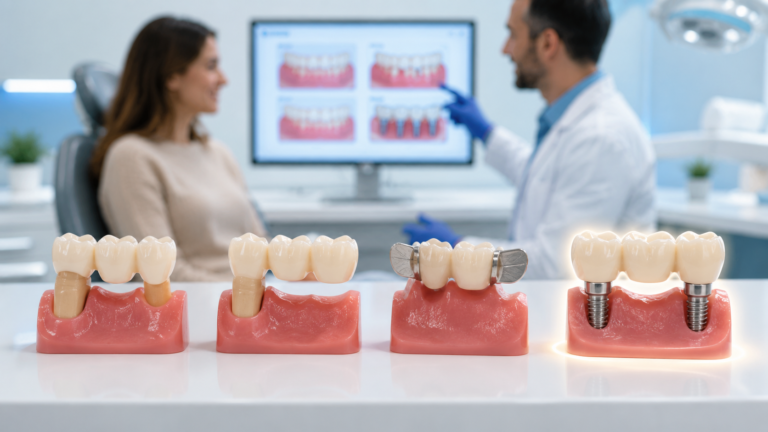
Knowing the types helps you understand which option may suit your situation:
|
Type of Bridge |
How It Works |
Best For |
|
Traditional Bridge |
Crowns on both adjacent teeth support the pontic |
Healthy teeth on both sides of the gap |
|
Cantilever Bridge |
Supported by a crown on only one side |
When only one natural tooth borders the gap |
|
Maryland Bridge |
Metal/porcelain wings bonded behind neighbouring teeth |
Replacing front teeth with minimal alteration |
|
Implant-Supported Bridge |
Anchored to dental implants instead of natural teeth |
Multiple missing teeth in a row; maximum stability |
Your dentist will help you choose the right one based on the location of the gap, the health of surrounding teeth, and your personal preferences.
The Key Benefits of Dental Bridges for Missing Teeth
Here’s where it matters most. Below are the real, evidence-backed advantages of choosing a dental bridge — and what each one means for your daily life.
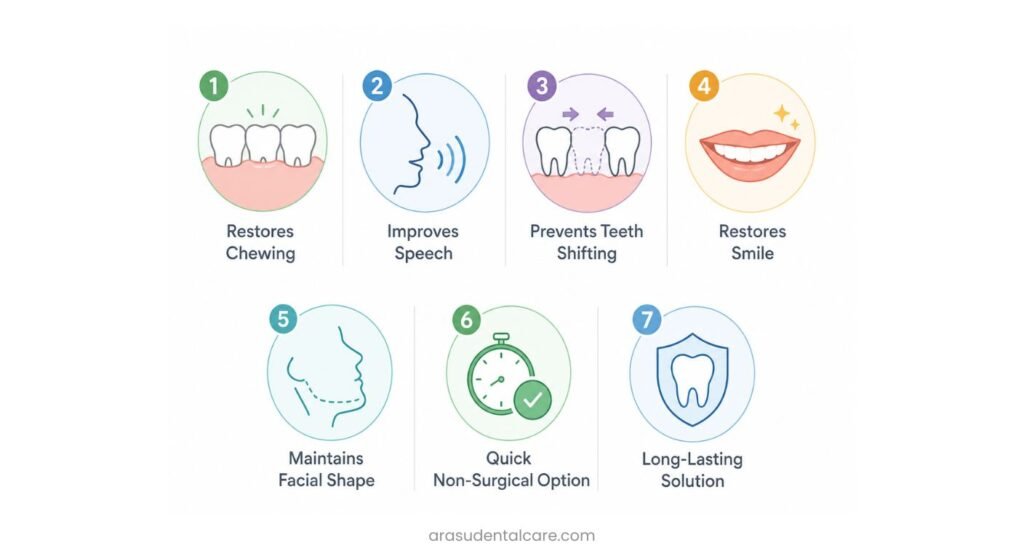
1. Restores Comfortable Chewing and Eating
Missing teeth can make chewing uncomfortable and even change the foods you’re able to enjoy. A dental bridge restores a stable chewing surface, allowing you to eat a wider variety of foods again.
This isn’t just about comfort — proper chewing supports healthy digestion, since food is broken down more effectively before it reaches your stomach.
2. Improves Speech and Pronunciation
Your teeth play a surprisingly important role in how you form sounds. Gaps — especially in the front of the mouth — can cause lisping or unclear speech.
By filling these spaces, a dental bridge helps restore clearer pronunciation, so you can speak naturally and confidently in conversations.
3. Prevents Neighbouring Teeth from Shifting
This is one of the most important long-term dental bridge advantages. When a tooth goes missing, the surrounding teeth slowly drift toward the empty space.
Over time, this shifting can lead to:
- Bite misalignment
- Uneven wear on teeth
- A higher risk of gum disease and decay in hard-to-clean spots
A bridge acts as a placeholder, keeping your remaining teeth in their correct positions and protecting your overall bite.
4. Restores Your Smile and Confidence
A complete smile genuinely affects how you feel about yourself. Many patients tell us they had quietly stopped smiling in photos or felt self-conscious in social and professional settings.
Because bridges are colour-matched and custom-shaped, they’re designed to look like your natural teeth — helping you smile, laugh, and engage with others freely again.
5. Helps Maintain Your Natural Facial Shape
When teeth are missing, the soft tissues and structures of your face can lose support, sometimes leading to a “sunken” appearance over time.
By replacing the visible portion of missing teeth and restoring proper bite forces, a dental bridge helps preserve the natural contours of your face.
6. A Predictable, Time-Efficient Solution
For many patients, a traditional or Maryland bridge can be completed in just two visits over a few weeks — without surgery.
This makes bridges an excellent option for those who want a reliable, comfortable result with a shorter treatment timeline, or who may not be candidates for implant surgery.
7. Durable and Long-Lasting with Proper Care
According to the American Dental Association, dental bridges can last many years with good oral hygiene and regular dental visits — typically 5 to 15 years, and often longer.
That durability makes a bridge a worthwhile, practical investment in your long-term oral health.
Dental Bridges vs. Other Tooth Replacement Options
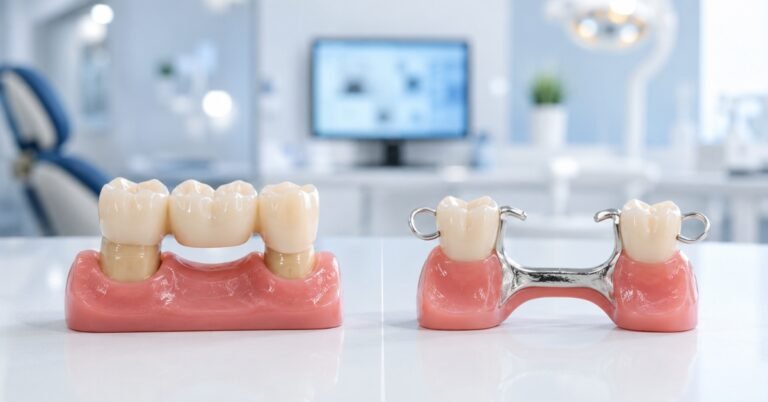
To make a confident, informed decision, it helps to see how bridges compare to other common options.
|
Factor |
Dental Bridge |
Dental Implant |
Removable Denture |
|
Surgery required |
Usually no |
Yes |
No |
|
Treatment time |
2–4 weeks |
3–6 months |
A few weeks |
|
Stability |
Fixed, secure |
Fixed, very secure |
Removable |
|
Bone preservation |
Limited |
Excellent |
Limited |
|
Affordability |
Moderate |
Higher |
Most affordable |
|
Feels natural |
Very natural |
Most natural |
Less natural |
There’s no single “best” option for everyone. As the Cleveland Clinic notes, the right choice depends on your individual oral health, bone condition, budget, and goals.
This is exactly why we take the time to explain all available options and help you choose what genuinely suits your needs — never an upsell.
Who Is a Good Candidate for a Dental Bridge?
A dental implant in coimbatore or bridge may be a strong option for you if you:
- Are missing one to a few teeth in a row
- Have healthy natural teeth on either side of the gap to provide support
- Maintain good oral hygiene
- Prefer a non-surgical tooth replacement option
- Want a comfortable, natural-looking result within a shorter timeline
During a consultation, your dentist will assess the health of your gums, the strength of neighbouring teeth, and your bite to confirm whether a bridge is the right fit — or whether another option might serve you better.
How the Dental Bridge Procedure Works (Step-by-Step)
Here’s what you can typically expect with a traditional dental bridge — performed comfortably under appropriate local anaesthesia.
Step 1 — Consultation & Examination:Your dentist examines your teeth and gums, may take X-rays, and discusses your options and goals with you.
Step 2 — Preparing the Abutment Teeth:The supporting teeth are gently reshaped to make room for the crowns that will hold your bridge.
Step 3 — Taking Impressions:Detailed impressions are taken and sent to a dental laboratory, where your custom bridge is crafted to match your natural teeth.
Step 4 — Temporary Bridge:A temporary bridge protects the prepared teeth while your permanent one is being made.
Step 5 — Fitting the Final Bridge:At your next visit, your dentist checks the fit, comfort, and appearance, then securely cements the bridge in place.
Step 6 — Follow-Up:A short follow-up ensures everything feels natural and comfortable as you settle in.
Caring for Your Dental Bridge
A bridge is a long-term investment, and good care helps it last. Caring for it is simple and similar to caring for natural teeth:
- Brush twice daily with a fluoride toothpaste
- Floss daily, using a floss threader or interdental brush to clean beneath the pontic
- Avoid biting down on very hard items like ice or pens
- Maintain a balanced, tooth-friendly diet
- Visit your dentist regularly for cleanings and check-ups
The American College of Prosthodontists emphasises that consistent home care and professional cleanings are key to the long-term success of any fixed restoration.
Frequently Asked Questions (FAQs)
1. How long do dental bridges last?With proper care, dental bridges typically last 5 to 15 years, and many last even longer with good oral hygiene and regular dental visits.
2. Is getting a dental bridge a comfortable procedure?Yes. The procedure is performed under appropriate local anaesthesia to keep you comfortable throughout. Most patients experience only mild, temporary sensitivity afterward.
3. Will a dental bridge feel like my natural teeth?It may take a short time to adjust, but once you do, a well-fitted bridge generally feels natural and comfortable for everyday eating and speaking.
4. How many teeth can a dental bridge replace?A bridge commonly replaces one to three teeth in a row. Longer spans may require implant support for adequate stability — your dentist will advise the best approach.
5. Dental bridge or implant — which is better?Both are effective. Implants help preserve jawbone and are very long-lasting, while bridges are non-surgical and faster to complete. The right choice depends on your specific needs, which your dentist will help you evaluate.
6. Can I eat normally with a dental bridge?Yes. Once your bridge is fitted and you’ve adjusted, you can comfortably enjoy most foods. We simply recommend avoiding extremely hard or sticky items to protect it.
7. How do I keep a dental bridge clean?Brush and floss daily, use a floss threader or interdental brush to clean under the bridge, and attend regular professional cleanings.
8. What happens if I don’t replace a missing tooth?Over time, neighbouring teeth may shift, your bite can change, and cleaning becomes harder — increasing the risk of further dental issues. Replacing missing teeth promptly helps protect your overall oral health.
Take the Next Step Toward a Complete Smile
Missing teeth don’t just affect your smile — they can quietly impact your chewing, speech, and long-term oral health. The good news is that a dental bridge offers a comfortable, natural-looking, and predictable way to restore all of it.
At Arasu Dental Care, our experienced dental specialists will carefully evaluate your condition, explain every available option in plain language, and help you choose the treatment that truly fits your needs, comfort, and budget — with complete transparency. As a trusted dental clinic coimbatore patients rely on, we’re committed to delivering quality care at our dental clinic in rs puram and dental clinic in saibaba colony coimbatore branches.
📞 Book your consultation today at our R.S. Puram or Saibaba Colony branch in Coimbatore. Open all seven days, 10:00 AM – 8:30 PM.
Call us: +91 88380 22157 (R.S. Puram) · +91 74491 88777 (Saibaba Colony)WhatsApp: +91 96007 56297
Let us help you smile with confidence again — because we genuinely care for you and your smile.