Can Clear Aligners Close Gaps?
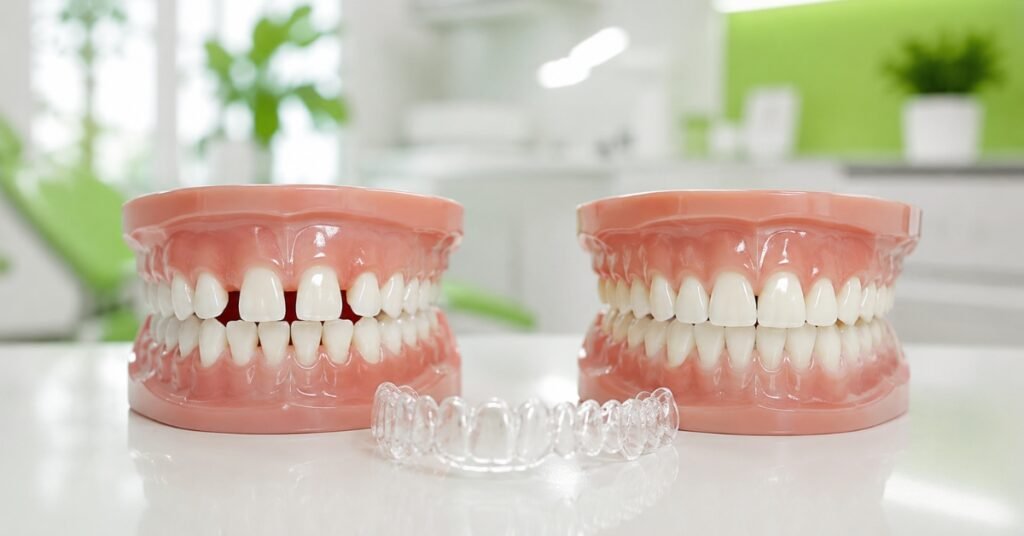
If you’ve ever felt self-conscious about a space between your teeth, you’ve probably searched for a discreet way to fix it. The good news: clear aligners for gaps are one of the most effective and comfortable ways to close diastema (the clinical term for a gap between teeth) without metal braces. As an orthodontist-led practice, we help patients close gaps every week — and in this guide, we’ll explain exactly how it works, what’s realistic, and how to make a confident decision.
This isn’t a sales pitch. It’s an honest, evidence-based look at what clear aligners can and cannot do for spacing — so you walk away knowing your next step.
What Causes a Gap Between Teeth (Diastema)?
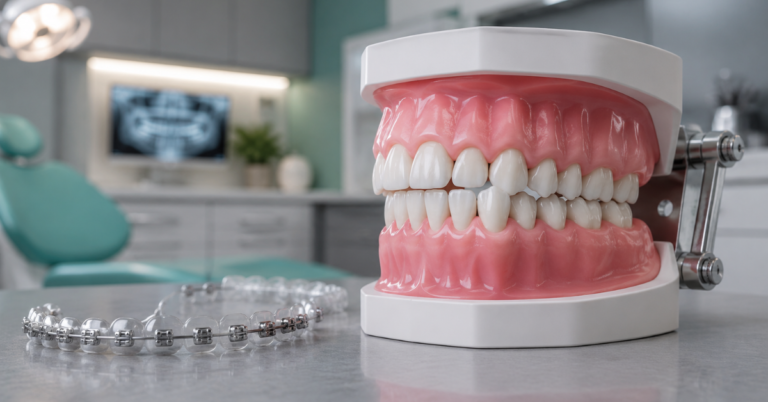
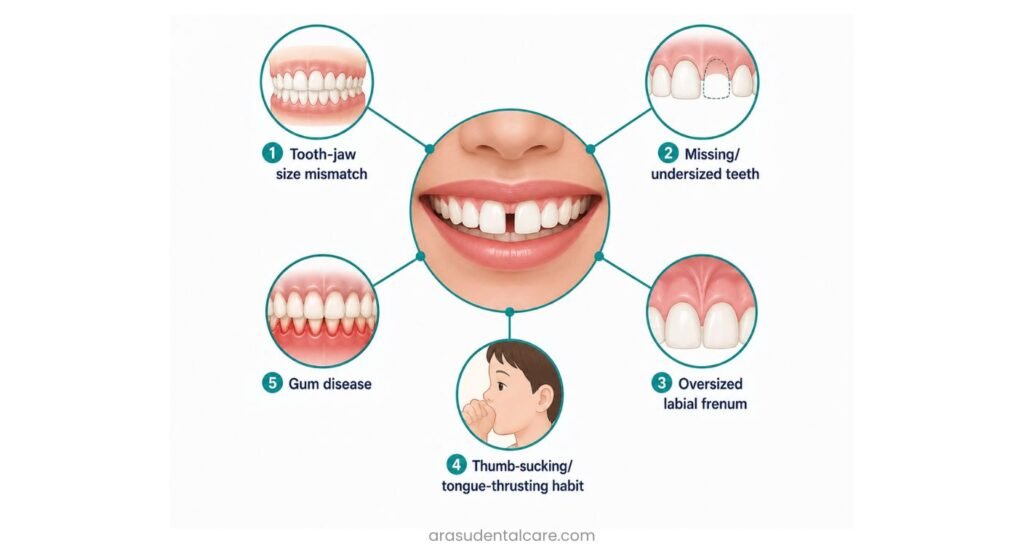
A gap between teeth, medically known as diastema, can appear anywhere in the mouth, but it most commonly shows up between the two upper front teeth. Understanding why the gap formed matters, because the cause directly shapes the treatment plan.
Here are the most common reasons gaps develop:
- Tooth–jaw size mismatch: When your jawbone is relatively large compared to your tooth size, natural spaces appear. This trait often runs in families.
- Missing or undersized teeth: Small or absent teeth (such as peg-shaped lateral incisors) leave space that neighbouring teeth drift into.
- Oversized labial frenum: The tissue connecting your upper lip to your gums can overgrow and force the front teeth apart.
- Childhood habits: Prolonged thumb-sucking or tongue-thrusting can push teeth forward over time.
- Gum (periodontal) disease: When the supporting bone weakens, teeth can shift and widen gaps.
Because the underlying cause influences whether aligners alone will work — or whether they need support from bonding, veneers, or gum treatment — a proper clinical evaluation is essential before any treatment begins.
Can Clear Aligners Close Gaps? The Short Answer
Yes — clear aligners are a clinically proven, predictable method for closing gaps in most mild to moderate cases. Research supports this: a scoping review published in Orthodontics & Craniofacial Research found clear aligner therapy to be effective and predictable for spacing and minor alignment corrections.
Clear aligners work by applying gentle, controlled, continuous pressure to specific teeth, guiding them gradually toward each other until the space closes. Unlike a quick cosmetic fix, this is true orthodontic tooth movement — the teeth move through the bone in a biologically safe, planned sequence.
For larger or more complex gaps, aligners may be combined with other treatments. We’ll always explain the available options so you can choose what suits your needs — never an unnecessary up-sell.
How Clear Aligners Close Teeth Gaps: The Process
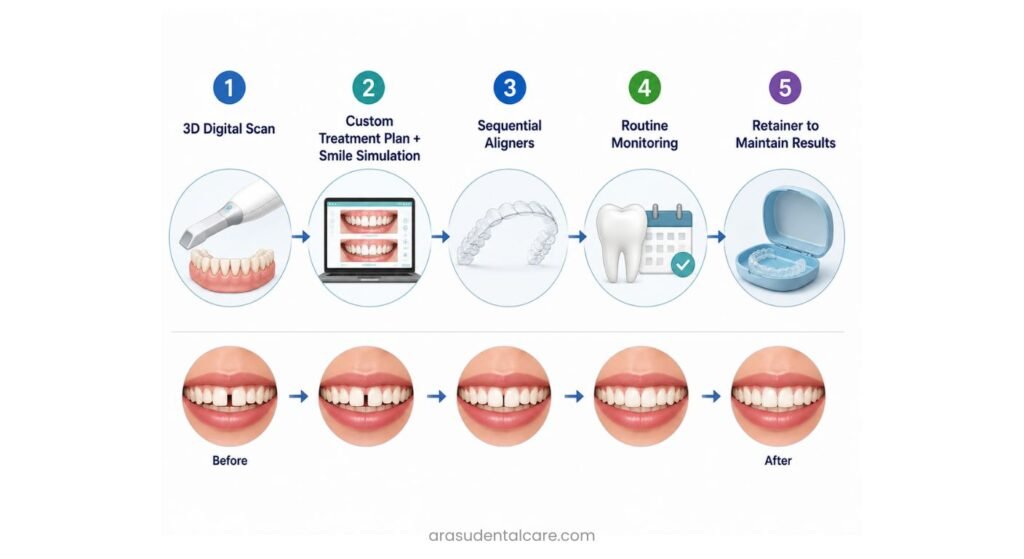
The treatment journey is precise, technology-driven, and supervised throughout. Here’s how it works step by step.
Step 1: Digital Examination & 3D Scanning
Your treatment begins with a detailed orthodontic assessment — clinical photos, digital X-rays, and an intraoral 3D scan. This identifies the size and cause of the gap before any aligner is made.
Step 2: Customised Treatment Planning & Simulation
Using digital orthodontic software, your orthodontist maps every tooth movement. Many patients receive a 3D smile simulation showing the predicted final result before treatment starts — giving you clarity and confidence.
Step 3: Sequential Aligners
You receive a series of custom-made aligners. Each set shifts your teeth a small, controlled amount. Most patients switch to a new set every 10–14 days as directed.
Step 4: Routine Monitoring
Periodic check-ins (in-clinic or remote) ensure the teeth are moving safely, hygiene is maintained, and progress stays on track.
Step 5: The Retention Phase
Once the gap closes, a retainer holds the teeth in their new position. This step is essential — skipping it is the most common reason gaps reopen.
How Long Do Clear Aligners Take to Close Gaps?
Treatment time depends on the size of the gap, the number of teeth involved, and how consistently you wear your aligners. Aligners must be worn 20–22 hours per day for predictable results.
Here is a realistic, evidence-informed timeline range:
|
Gap Severity |
Approximate Treatment Time |
|
Small / single gap |
3 – 6 months |
|
Moderate spacing |
6 – 9 months |
|
Larger or multiple gaps |
9 – 18 months |
These are general estimates. Your personalised plan will give you an accurate timeline after your scan.
Clear Aligners vs Braces for Closing Gaps
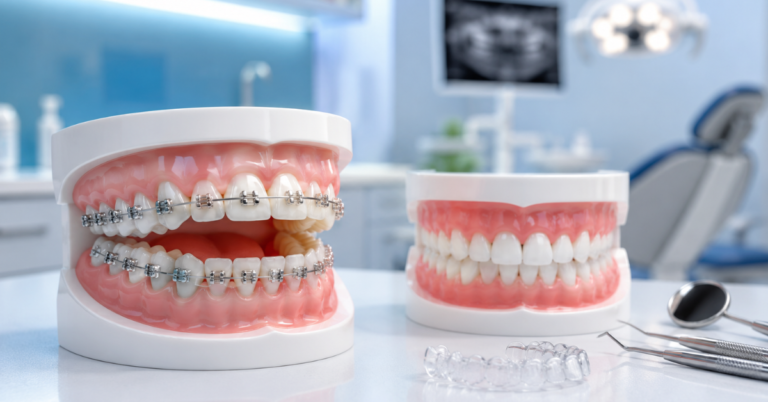
Both braces and aligners can close gaps effectively. The right choice depends on your case, lifestyle, and preferences. Here’s a transparent comparison:
|
Feature |
Clear Aligners |
Traditional Braces |
|
Appearance |
Nearly invisible |
Highly visible |
|
Comfort |
Smooth, removable |
Wires can irritate cheeks/gums |
|
Oral hygiene |
Easy — remove to brush & floss |
Harder to clean around wires |
|
Diet |
No restrictions (remove to eat) |
Several food restrictions |
|
Visits |
Fewer, often shorter |
More frequent adjustments |
|
Best for |
Mild–moderate spacing |
Complex bite & severe cases |
Comfort matters, too. A randomized clinical trial in the American Journal of Orthodontics and Dentofacial Orthopedics reported that patients found aligners more comfortable than fixed braces during the early stages of treatment.
For many adults and teens seeking a discreet solution, aligners offer a genuinely lifestyle-friendly path to a confident smile.
Are Clear Aligners Safe for Closing Gaps?
When supervised by a qualified orthodontist, clear aligners are a safe and effective treatment. The aligners are made from medical-grade, BPA-free material and are custom-fitted to your teeth.
The key word, however, is supervision. Teeth move through living bone, and uncontrolled movement can cause bite problems, gum recession, or even tooth mobility. This is why we caution strongly against DIY or unsupervised mail-order aligner kits for gap closure — without a clinical diagnosis, a hidden issue like gum disease or a missing tooth can be missed entirely.
Safe gap closure depends on three things: an accurate diagnosis, a carefully planned movement sequence, and ongoing professional monitoring.
Will the Gap Stay Closed? Understanding Relapse
A common — and important — question. Yes, results are long-lasting if you wear your retainer as advised.
Teeth have a natural tendency to drift over time. Without retention, a closed gap can slowly reopen. Consistent retainer use after treatment is what makes your new smile permanent. We provide and guide you through retention as a standard part of every aligner plan, so your results are protected for the long term.
Why Choose Specialist-Led Aligner Treatment?
Closing a gap looks simple, but it requires expert planning and biologically safe tooth movement. With orthodontist-led care, you benefit from:
- Accurate diagnosis of the cause, not just the symptom
- Digitally planned, predictable tooth movement
- Continuous monitoring for safety and progress
- A clear, honest explanation of all your options
- A long-term retention plan to keep results stable
Our patient-first approach means we explain your condition, walk you through every choice, and help you make an informed decision — so you always feel you’re in safe hands.
FAQs: Clear Aligners for Gaps
1. Can clear aligners really close gaps between teeth?Yes. For most mild to moderate gaps, clear aligners apply gentle, controlled pressure to move teeth together predictably. Larger gaps may need a combined approach, which your orthodontist will explain.
2. How long does it take for aligners to close a gap?Most gap-closure cases take between 4 and 9 months, though small gaps may close faster and larger ones may need up to 18 months. Your exact timeline depends on your case and wear-time consistency.
3. Are aligners safe for both small and large gaps?Yes, when supervised by an orthodontist. Small gaps respond easily, while larger or multiple gaps need a longer, carefully monitored plan — sometimes alongside other treatments.
4. Do clear aligners hurt?You may feel mild tightness for a day or two when starting a new set. This is normal and indicates the teeth are moving. Discomfort is generally less than with traditional braces.
5. Will my gap reopen after treatment?Only if retainers aren’t worn as advised. Teeth naturally tend to shift, so consistent retainer use keeps your gap closed permanently.
6. Can aligners close a gap caused by a missing tooth?Sometimes. However, gaps from missing teeth often need a replacement option such as an implant or bridge alongside aligner therapy. A clinical evaluation will determine the best approach.
7. How many hours a day must I wear aligners?For predictable, timely results, aligners should be worn 20–22 hours per day — removed only for eating, drinking (anything other than water), and cleaning.
8. Are aligners better than braces for gap closure?For most spacing cases, aligners offer a more comfortable, discreet, and hygiene-friendly experience. Both are effective; the right choice depends on your specific case and goals.
Conclusion: Take the First Step Toward a Confident Smile
So, can clear aligners close gaps? For most people with mild to moderate spacing — absolutely. With precise digital planning, gentle controlled movement, and proper retention, clear aligners in coimbatore offer a discreet, comfortable, and predictable path to closing a gap between your teeth.
The most important step is a proper evaluation by an experienced orthodontist clinic near me who can identify the cause of your gap and design a treatment plan suited to you.
At Arasu Dental Care, our orthodontist-led team combines years of clinical experience with modern aligner technology to deliver predictable, patient-focused results — with transparent pricing and no pressure. Open all seven days, we’re here whenever it suits you.
**Ready to find out if clear aligners are right