How Long Does It Take to Get a Dental Bridge?
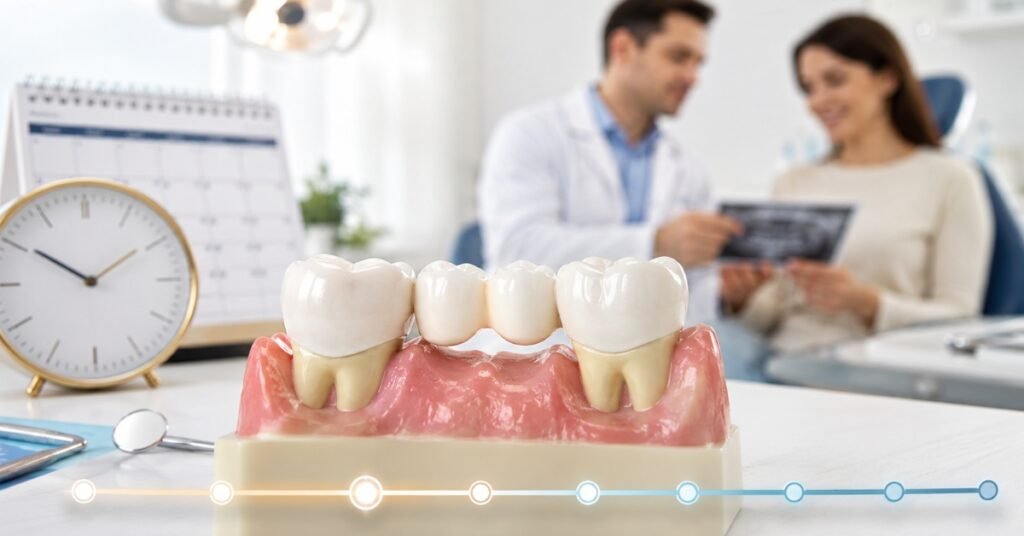
If you’re missing a tooth and considering a fixed replacement, one of your first practical questions is likely: how long does a dental bridge take? The honest answer is reassuring — most traditional dental bridges are completed within two to four weeks across two or three appointments.
That makes a bridge one of the faster permanent tooth-replacement options available today. At Arasu Dental Care, we believe patients make confident decisions when they understand the full process. So in this guide, we’ll walk you through each stage, explain what affects the timeline, and help you know exactly what to expect.
What Is a Dental Bridge? A Quick Overview
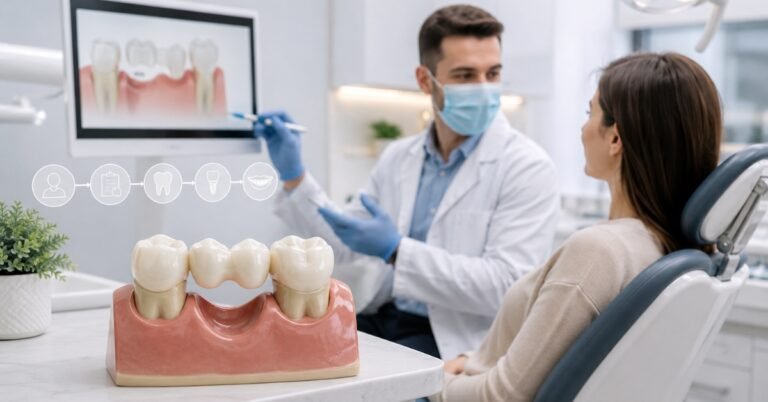
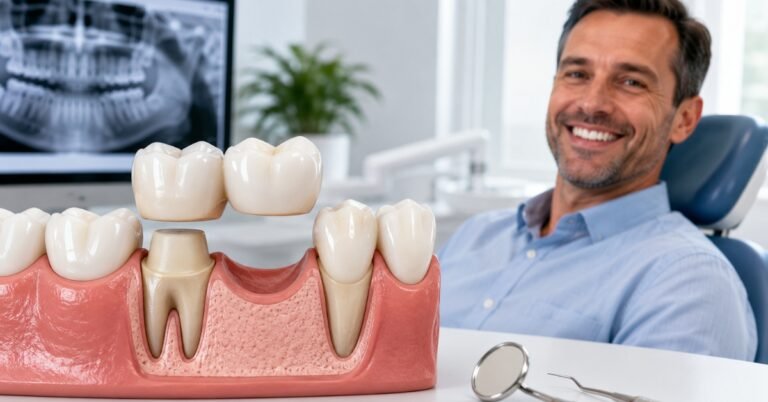
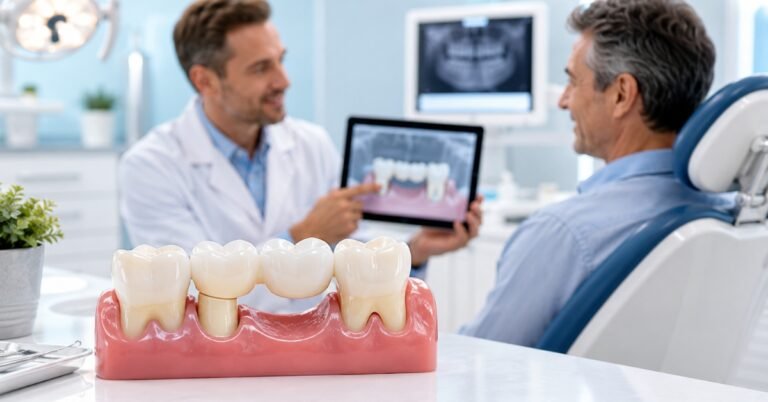
A dental bridge is a fixed restoration that “bridges the gap” left by one or more missing teeth. It relies on the healthy teeth on either side of the gap (called abutment teeth) for support.
The bridge itself has two main parts:
- Abutments — the support structures, usually crowns placed over your natural teeth.
- Pontics — the artificial teeth that fill the visible gap.
Unlike removable dentures, a bridge stays fixed in your mouth. Only your dentist can remove it. According to the American College of Prosthodontists, bridges are a trusted, well-established solution for restoring both chewing function and a natural-looking smile.
How Long Does a Dental Bridge Take? The Short Answer
For most patients receiving a traditional dental bridge, the complete timeline looks like this:
|
Stage |
Typical Duration |
What Happens |
|
Initial consultation |
30–45 minutes |
Examination, X-rays, treatment planning |
|
Preparation appointment |
60–120 minutes |
Tooth shaping, impressions, temporary bridge fitted |
|
Laboratory fabrication |
10–14 days |
Your permanent bridge is crafted off-site |
|
Fitting appointment |
45–60 minutes |
Bridge tried in, adjusted, and permanently cemented |
|
Total elapsed time |
2–4 weeks |
From first visit to final smile |
The single biggest factor in this timeline is the laboratory stage. Crafting a precise, natural-looking bridge takes skilled technicians 10–14 days — and quality work simply cannot be rushed.
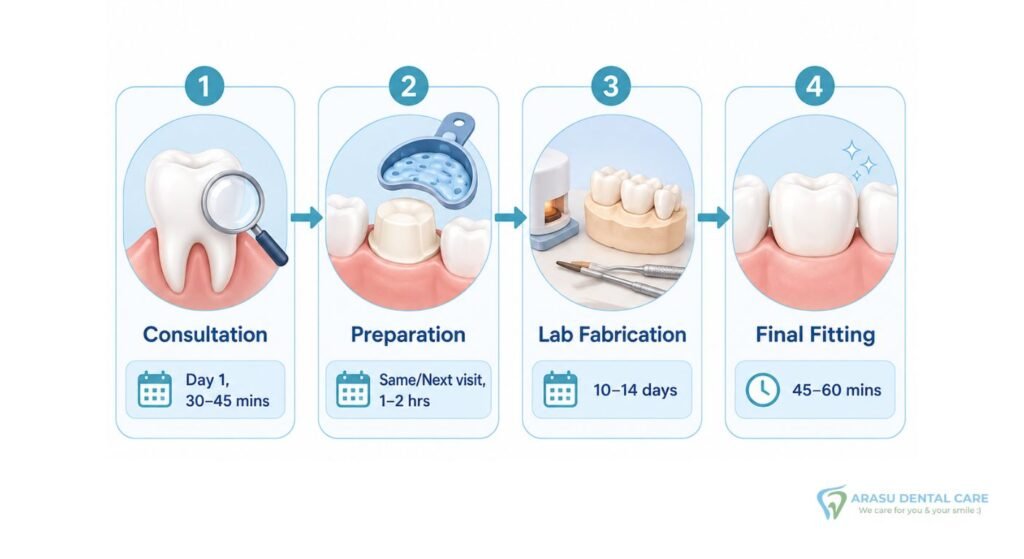
Step-by-Step: The Dental Bridge Timeline Explained
Here’s a closer look at what happens at each stage so there are no surprises along the way.
Step 1: The Consultation (30–45 minutes)
Your journey begins with a thorough examination. Your dentist will:
- Assess the condition of the abutment teeth on either side of the gap.
- Check the health of your gums and supporting bone.
- Take X-rays if needed to plan accurately.
- Discuss which type of bridge best suits your situation.
If your gums need treatment or a tooth needs care first, this is addressed before anything else. Healthy foundations are essential for a bridge to last.
For straightforward cases, the consultation and preparation may be combined into a single visit.
Step 2: Tooth Preparation and Impressions (60–120 minutes)
This is typically the longest appointment. Your dentist will:
- Administer local anaesthesia so the procedure is comfortable from start to finish.
- Reshape the abutment teeth by removing a small, precise amount of enamel to create room for the crowns.
- Take detailed impressions (or a digital scan) to capture the exact shape of your teeth.
- Fit a temporary bridge to protect the prepared teeth and let you eat and speak normally while you wait.
You may feel pressure and vibration during preparation, but the procedure itself is performed comfortably under appropriate anaesthesia.
Step 3: The Laboratory Stage (10–14 days)
Your impressions travel to a dental laboratory, where skilled technicians fabricate your permanent bridge. They match the colour, shape, and size to your natural teeth as closely as possible.
This waiting period is the main reason a bridge takes a few weeks overall. It’s an investment in a result that looks natural and feels right.
Step 4: Fitting the Permanent Bridge (45–60 minutes)
At your final visit, your dentist will:
- Remove the temporary bridge.
- Try in the permanent bridge and check the fit against your gum and opposing teeth.
- Make small bite adjustments — these are common and entirely normal.
- Permanently cement the bridge once you’re both happy with the result.
A final bite check ensures everything feels comfortable before you leave with your restored smile.
Does the Type of Bridge Affect How Long It Takes?
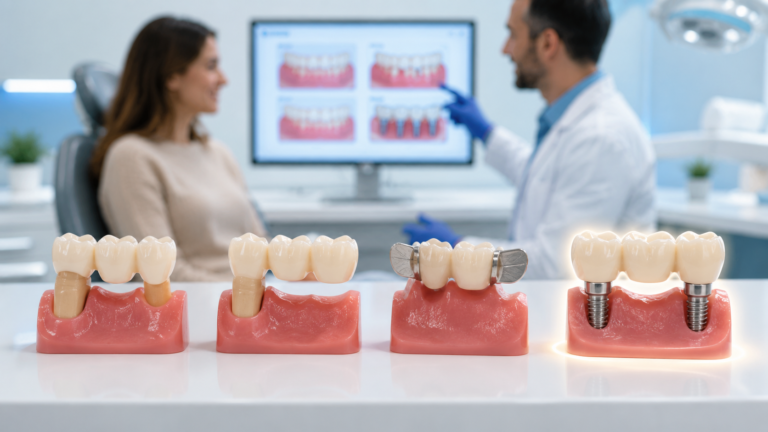
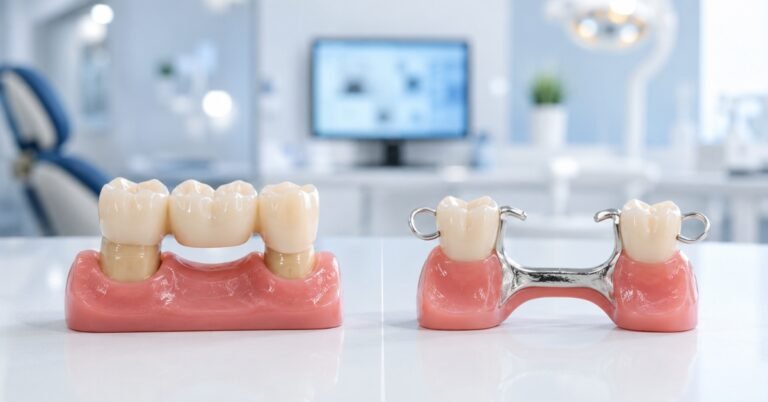
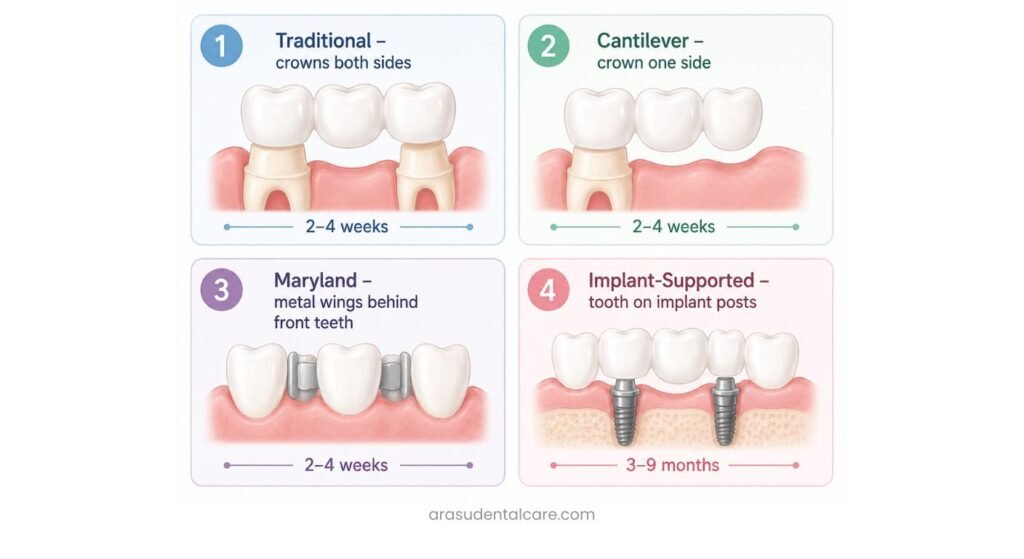
Yes. The four main types of bridges have slightly different timelines and complexity levels.
|
Bridge Type |
Best For |
Typical Timeline |
|
Traditional |
Healthy teeth on both sides of the gap |
2–4 weeks |
|
Cantilever |
A natural tooth on only one side |
2–4 weeks |
|
Maryland (resin-bonded) |
Front teeth, minimal tooth removal |
2–4 weeks |
|
Implant-supported |
Several missing teeth in a row |
3–9 months |
The first three follow a similar two-to-four-week pattern. The key difference is implant-supported bridges.
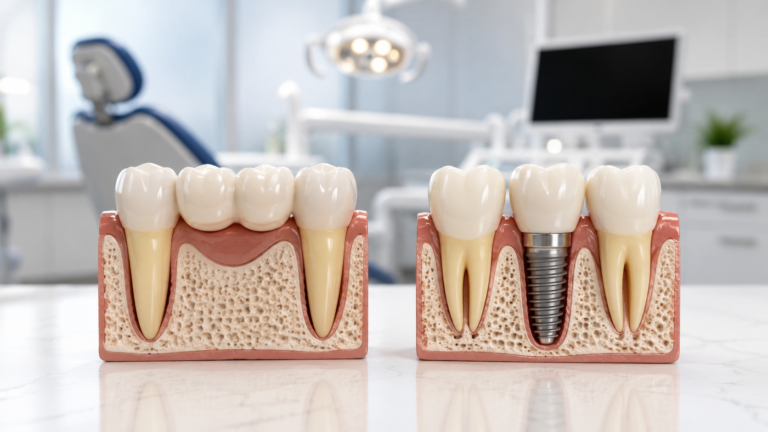
Because dental implants must first fuse with your jawbone — a process called osseointegration — this type takes considerably longer. The Cleveland Clinic notes this healing process averages three to six months, and sometimes longer depending on your situation.
What Can Make the Process Take Longer?
In some cases, your timeline may extend beyond the typical two to four weeks. Common reasons include:
Pre-treatment needs. If gum disease or tooth decay must be treated first, this adds time. It’s always better to build on a healthy foundation than to rush.
Recent extraction. If a tooth was recently removed, your gums and bone may need a few months to heal before a bridge is placed.
Complex cases. Bridges spanning multiple teeth, unusual bite considerations, or longer spans may require extra appointments.
Implant-supported bridges. As mentioned, implants need months to integrate before the bridge is attached.
A transparent treatment plan from the start helps you understand your personal timeline clearly — with no hidden surprises.
What to Expect After Your Bridge Is Fitted
Once your permanent bridge is in place, there’s usually a short adjustment period of one to three weeks.
During this time, you may notice:
- The bridge feels slightly unfamiliar at first.
- Mild sensitivity around the prepared teeth.
- A small adjustment to how you bite and chew.
This is completely normal and tends to settle as you get used to the restoration. Begin with softer foods and gradually return to your normal diet as your confidence grows.
If your bite feels uneven after the first week or discomfort persists, contact your dental team — a quick adjustment usually resolves it.
How to Make Your Dental Bridge Last
A well-cared-for bridge can last 10 years or more, according to the American Dental Association. Here’s how to protect your investment:
- Brush twice daily with a fluoride toothpaste.
- Clean beneath the bridge using floss threaders or interdental brushes.
- Avoid biting hard items like ice, pens, or fingernails.
- Limit very hard or sticky foods.
- Visit your dentist regularly for check-ups and cleanings.
Good oral hygiene is the single biggest factor in how long your bridge will serve you.
Frequently Asked Questions
How long does a dental bridge take from start to finish?
A traditional dental bridge typically takes two to four weeks across two or three appointments. The laboratory fabrication stage (10–14 days) accounts for most of this time. Implant-supported bridges take longer — usually three to nine months.
Can a dental bridge be done in one day?
In some cases, yes. Practices using CAD/CAM technology can design and mill a bridge in-office during a single appointment. However, most bridges still require a lab stage, so two visits remain the standard approach.
How long does the bridge preparation appointment take?
The preparation appointment is usually the longest, lasting one to two hours. This depends on how many teeth are involved and the complexity of your case.
Does getting a dental bridge hurt?
The procedure is performed comfortably under local anaesthesia, so you shouldn’t feel pain during preparation. Some mild soreness or sensitivity afterwards is normal and usually managed with over-the-counter pain relief.
Why does the laboratory stage take so long?
Skilled technicians craft your bridge by hand to match the exact shape, size, and colour of your natural teeth. This precision takes 10–14 days and cannot be rushed without compromising quality.
How long does it take to get used to a new bridge?
Most patients adjust within one to three weeks. The bridge may feel unfamiliar at first, but it soon feels natural — much like getting used to a new ring on your finger.
Is a bridge faster than a dental implant?
Yes. A traditional bridge takes two to four weeks, while a single dental implant often takes three to six months because the implant must fuse with the jawbone first. Speed is one reason many patients choose a bridge.
How long can I wait before getting a bridge?
It’s best to replace a missing tooth as soon as possible. Waiting allows neighbouring teeth to shift into the gap, which can complicate treatment later. Your dentist will advise on the right timing for your situation.
Ready to Restore Your Smile?
A dental bridge is one of the quickest, most comfortable ways to replace a missing tooth and restore confident chewing, speaking, and smiling. Understanding the timeline helps you plan with clarity — and know exactly what to expect at every step.
At Arasu Dental Care, our experienced specialists combine modern dental techniques with a comfort-first, patient-focused approach. We’ll evaluate your needs, explain all your options clearly, and guide you toward the solution that’s right for you — with transparent pricing and no pressure.
📞 Call us at +91 88380 22157 (R.S. Puram) or +91 74491 88777 (Saibaba Colony) to book your consultation.🦷 Open all seven days, 10:00 AM – 8:30 PM, in Coimbatore.
We Care for You and Your Smile.